
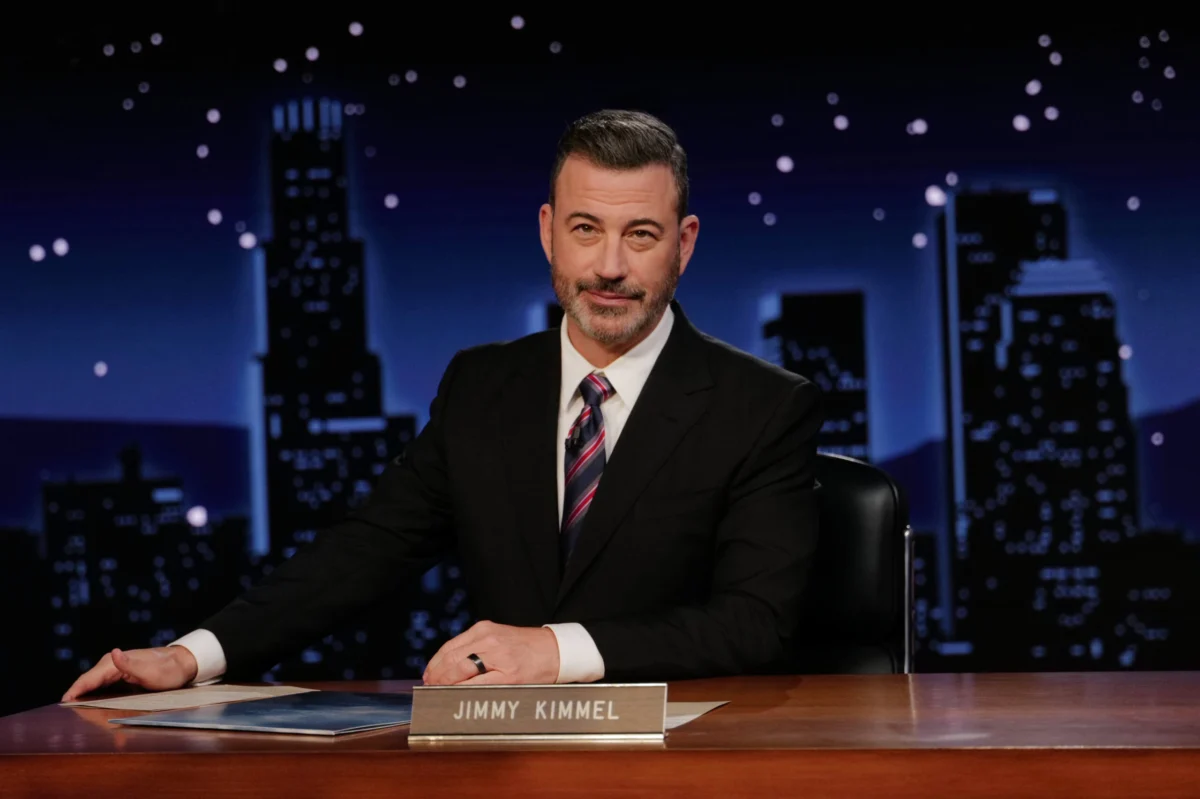
In an escalating confrontation between late-night television and federal regulators, Jimmy Kimmel announced Wednesday night that he would preempt the national television broadcast of an interview with Democratic U.S. Senate candidate James Talarico. The segment, which features a prominent challenger in a high-stakes Texas race, will instead be relegated to the show’s YouTube channel on Thursday, marking a strategic retreat necessitated by what the host described as threats from the Federal Communications Commission (FCC) against the Disney-owned ABC network.
This decision underscores a deepening rift between the Trump administration and mainstream media conglomerates. Kimmel stated that the shift in platform was made specifically to shield ABC’s local affiliates from potential legal and regulatory repercussions, citing an environment where editorial independence is increasingly viewed through a partisan lens. The FCC has not yet issued a formal response to the host’s claims, but the move highlights the precarious position of late-night talk shows in an era where the boundary between entertainment and political discourse is being aggressively policed.
The Regulatory Backdrop: Bona Fide News vs. Entertainment
At the center of the dispute is the regulatory classification of late-night programs. Under the Communications Act, broadcast stations are generally required to provide "equal time" to political candidates. However, there is a crucial exemption for "bona fide news programs." In January 2026, the FCC, under the leadership of Chairman Brendan Carr, began questioning whether long-running talk shows such as Jimmy Kimmel Live! and The View qualify for this exemption.
By challenging the "bona fide" status of these programs, the FCC effectively threatens to force stations to grant equal airtime to every political opponent of any guest featured on the show. For a program that relies on rapid-fire, guest-heavy formats, such a requirement would be operationally and logistically impossible to manage, essentially forcing the shows to abandon political coverage entirely.
Legal experts observe that this is a departure from historical norms. For decades, the FCC has largely deferred to the editorial judgment of networks regarding what constitutes a news program. The current administration’s shift in policy suggests a more interventionist approach, one that critics argue is designed to limit the reach of platforms that have historically provided a stage for political candidates outside of traditional news desks.
Chronology of Escalating Tensions
The friction between the current administration and the Disney-ABC umbrella did not emerge in a vacuum; it is the culmination of a series of events spanning the last 18 months.
- September 2025: Following a monologue regarding the killing of Charlie Kirk, ABC faced a firestorm of criticism. Amidst intense pressure, the network suspended Jimmy Kimmel Live! for approximately one week. The incident served as a flashpoint for debates regarding the responsibilities of late-night hosts and the corporate appetite for political risk.
- January 2026: The FCC formally initiated an inquiry into the classification of talk shows, signaling that the "bona fide news" exemption would face stricter scrutiny.
- April 2026: In what many analysts viewed as a retaliatory maneuver, the FCC launched an early renewal process for ABC-owned broadcast licenses. The agency cited investigations into the network’s diversity, equity, and inclusion (DEI) practices, a move the network characterized as a pretext for deeper regulatory oversight.
- August 2026: The ongoing tension reached a judicial threshold when Disney-ABC filed a lawsuit against the FCC, alleging that the regulatory pressure constitutes a "retaliatory campaign" and violates First Amendment protections.
- October 2026: Kimmel’s announcement regarding the James Talarico interview represents the latest tactical maneuver in this ongoing legal and regulatory tug-of-war.
The Stakes of the Texas Senate Race
The interview with James Talarico is particularly sensitive due to the volatile nature of the Texas U.S. Senate race. Talarico, a Texas state representative, is currently polling in a dead heat against incumbent Attorney General Ken Paxton. Paxton, a staunch ally of President Donald Trump, has faced significant political turbulence, including a state-level impeachment process over corruption allegations. Though Paxton was acquitted by the state Senate, the lingering impact of these proceedings has made the seat one of the most competitive in the 2026 election cycle.
By hosting Talarico, Kimmel would have provided the candidate with a national platform during a critical juncture in the campaign. The decision to move the interview to YouTube—an unregulated space in terms of FCC broadcast rules—allows the conversation to occur without triggering the equal-time requirements that would apply to a traditional television signal.
The Broader Implications for Broadcasting Rights
The potential chilling effect on broadcast media cannot be overstated. Should the FCC succeed in reclassifying talk shows, the industry could face a radical restructuring of content. Broadcasters rely on the flexibility of their late-night programming to attract demographics that are otherwise disengaged from traditional news broadcasts. If these shows are forced to invite every minor political candidate to satisfy equal-time mandates, the resulting content would likely become unwatchable, leading to a decline in viewership and advertising revenue.
Furthermore, the lawsuit filed by Disney-ABC in August remains a pivotal test case for the judiciary. If the courts find that the FCC’s actions are indeed retaliatory, it could curb the agency’s power to use license renewals as a weapon against editorial content. Conversely, a ruling in favor of the FCC would grant the federal government unprecedented leverage to influence the programming decisions of major media networks.
Industry and Legal Perspectives
Legal scholars specializing in the First Amendment have noted that the "equal time" rule was originally designed to prevent the monopolization of the airwaves by incumbent politicians. However, the application of this rule to late-night satire and talk programs presents a complex constitutional dilemma.
"The fundamental question is whether the government can use the mechanism of broadcast licensing to dictate the editorial tone of a program," says one media law expert. "Historically, the answer has been no. But we are currently seeing a reinterpretation of that precedent that favors government intervention over editorial independence."
For the audience, the impact is a diminished ability to engage with political figures in an informal, long-form setting. Kimmel’s comment that "in the America we live in right now, that is the best we can do" reflects a sentiment shared by many in the creative community: that the environment for political commentary on broadcast television is currently under a state of siege.
Looking Toward November
As the November elections approach, the scrutiny of Jimmy Kimmel Live! and other ABC properties is expected to intensify. With the regulatory framework for broadcast licenses now being actively litigated, both the network and the FCC are positioning themselves for a long-term battle over the definition of modern journalism.
While Kimmel continues to produce his show, the self-censorship regarding the Talarico interview indicates that the threat of regulatory action is already achieving its intended effect. Whether this leads to a permanent alteration of the late-night format or is eventually struck down by the courts remains the most significant unresolved question in the current media landscape. For now, the show remains a lightning rod, and the gap between what is said on the television screen and what is shared online continues to widen.