When Brandon Riegg joined Netflix a decade ago to spearhead the streaming giant’s foray into unscripted programming, his strategic focus was centered on a singular, formidable incumbent: ABC’s long-standing franchise, The Bachelor. For decades, the network television model for romance-based reality TV had relied on a specific aesthetic of high-glamour dates, curated group outings at international chateaus, and a rigid, almost ritualistic competition for affection. Riegg, however, viewed this established formula as increasingly disconnected from the lived experiences of modern singles. To Riegg, the "tug-of-war" dynamics and polished artifice of traditional dating shows felt "contrived." His objective was to pivot toward a format that prioritized what he describes as "authenticity," seeking to capture the complexities and vulnerabilities inherent in contemporary courtship.
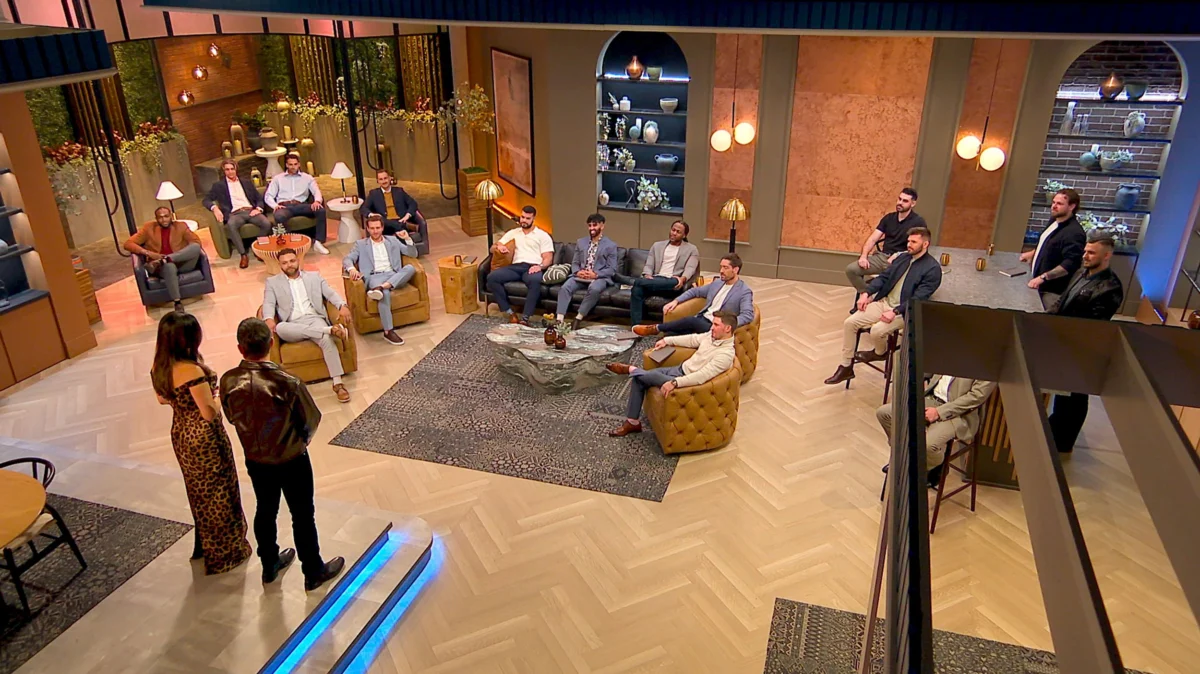
The culmination of this vision arrived in 2020 with the debut of Love Is Blind, a social experiment that challenged participants to form emotional connections in isolated "pods" without ever seeing their partners. The premise—blind dating leading to an immediate engagement—struck a chord with a global audience. Since its inception, the series has garnered over 215 million views and has been successfully localized in nine international markets. It has become the cornerstone of a burgeoning reality TV empire at Netflix, which now includes diverse offerings such as Love on the Spectrum, a series following individuals on the autism spectrum as they navigate the dating world, and the recently launched Age of Attraction. The latter, which has already secured a second-season renewal, explores age-gap relationships by having contestants withhold their ages until after a commitment is made—a format that recently featured a pairing between a 60-year-old man and a 27-year-old woman.
The Evolution of the Unscripted Slate and the Quest for Authenticity
The rise of Netflix’s reality division marks a significant shift in the television landscape. By moving away from the "rose ceremony" tropes of the early 2000s, Netflix sought to reflect a more diverse and perhaps more volatile social reality. However, the pursuit of authenticity has brought the platform into direct contact with the fractured nature of modern American discourse. While early seasons of Love Is Blind were praised for their innovative approach, more recent iterations have faced intense scrutiny from critics and viewers alike.
Central to these criticisms is the perception that the show’s casting has increasingly leaned toward individuals associated with the "conservative manosphere"—a digital subculture often characterized by traditionalist views on gender roles and, in some cases, extreme rhetoric. This tension reached a boiling point during the show’s recent season set in Ohio. Viewers were introduced to contestants like Chris Fusco, who drew controversy for comparing himself to polarizing influencer Andrew Tate, boasting of a "dominant" personality, and ultimately ending a relationship over his partner’s perceived lack of physical fitness. Another contestant, Alex Henderson, openly identified as a "crypto bro" and expressed strong support for former President Donald Trump.
These casting choices, combined with recurring themes of traditional family pressures and complex racial dynamics—where some participants appeared visibly uncomfortable when discovering their partner was a person of color—have led to allegations that Netflix may be intentionally courting a right-leaning audience. The presence of these ideologies in a show marketed as a search for "pure" love has raised questions about whether the platform is reflecting reality or inadvertently amplifying divisive cultural trends.
Editorial Neutrality and the Geography of Casting
Brandon Riegg, now Netflix’s Vice President of Nonfiction Series and Sports, maintains that any perceived political tilt is a byproduct of the show’s commitment to geographical diversity rather than a deliberate editorial shift. Speaking on the matter, Riegg emphasized the statistical reality of the American electorate. "Half the country voted for Trump, right?" Riegg noted. "Depending on where you go, you’re going to have just luck of the draw in terms of whether it’s more left-leaning or more right-leaning. And I think we’re neutral on that."
Netflix has intentionally moved the production of Love Is Blind across a variety of American cities, including Denver, Minneapolis, Washington D.C., and Charlotte, North Carolina. Each location brings a different demographic profile and cultural milieu. In Riegg’s view, if a season filmed in a Midwestern state features contestants with conservative values, it is an honest reflection of that region’s social fabric rather than a top-down mandate from the studio.
However, some participants suggest that the production process may be sanitizing the very political tensions that define modern dating. Jessica Barrett, a liberal-leaning physician who appeared in the Ohio season, revealed in post-show interviews that she had specifically screened her potential partners by asking about their political affiliations and whether they supported Donald Trump. According to Barrett, these conversations were pivotal to her decision-making process, yet they were entirely omitted from the final broadcast. Riegg suggests that such omissions are rarely ideological; instead, they are driven by the logistical demands of narrative television. Producers, he explains, prioritize "story" and the emotional arc of a relationship over political debate, though he acknowledges that political compatibility is a significant source of anxiety for many singles today.
Statistical Context: The Great Dating Divide
The friction observed on screen mirrors a broader sociological trend in the United States. Data suggests that the "political divide" is no longer just a matter of voting booths but is fundamentally altering the romantic landscape. According to a 2025 survey conducted by DatingAdvice.com in partnership with the Kinsey Institute, there is a measurable rise in celibacy among young adults, particularly Gen Z. The study found that among Gen Z women who identify as voluntarily celibate, 64 percent cited political differences as a primary reason for their withdrawal from the dating market.
This "dating gap" is further exacerbated by a perceived shortage of compatible partners. Riegg himself touched on this broader social issue, noting that the difficulty in finding "quality men" is a sentiment he hears frequently in his personal life. "You know how many great female friends I have? And I do not have nearly enough great guy friends to set them up with," Riegg said, suggesting that the casting struggles faced by reality producers are reflective of a larger "manhood crisis" or social disconnect that transcends the television industry.
From The Biggest Loser to a New Standard of Care
Riegg’s perspective is shaped by a long career in traditional network television. Before his tenure at Netflix, he oversaw major hits for NBC and ABC, including The Voice, America’s Got Talent, and The Biggest Loser. The latter, along with other early-2000s staples like America’s Next Top Model, has recently become the subject of retrospective documentaries—many of them hosted on Netflix—that expose the psychological toll and ethical lapses of early reality TV production.
In light of this history, Riegg asserts that Netflix has implemented a more rigorous "duty of care" standard. This includes providing cast members with access to professional therapy during and after filming. While critics argue that the very nature of reality television is exploitative—relying on the manipulation of emotions for entertainment—Riegg contends that the industry has matured. He points out that twenty-five years after Survivor revolutionized the genre, participants are no longer naive to the risks involved. "You’re not forcing anybody to do anything," he stated, adding that most contestants are well aware of the potential "pros and cons" of public exposure.
The Collapse of Traditional Competitors
The shift in the reality landscape is also highlighted by the recent struggles of Netflix’s original inspiration: ABC’s The Bachelor franchise. The veteran series recently faced a significant crisis after canceling a planned season following a domestic violence incident involving Taylor Frankie Paul, a high-profile social media personality who was slated to be a lead. This incident, combined with declining ratings and accusations of being out of touch with modern sensibilities, has left the franchise in what industry analysts describe as a "tailspin."
In contrast, Netflix’s model of releasing entire seasons at once and utilizing global data to refine its content has allowed it to remain agile. By embracing the messy, often uncomfortable realities of political and social friction, Netflix has positioned itself as the dominant force in unscripted media, even as it navigates the minefield of cultural criticism.
Broader Implications and the Future of Reality TV
As Netflix continues to expand its unscripted slate, the tension between reflecting reality and shaping it will likely remain a central theme. The success of shows like Love Is Blind suggests that audiences are drawn to the "train wreck" elements of modern romance, but there is also a growing demand for ethical production and representative casting.
The "neutrality" claimed by executives like Riegg will continue to be tested as the American political climate remains polarized. If reality TV is to truly serve as a mirror to society, it must grapple with the fact that in 2024, the personal is inherently political. Whether Netflix chooses to lean into these conflicts or continue to edit them out in favor of "story" will determine the next decade of unscripted entertainment. For now, the streamer remains committed to its experiment, betting that the quest for "authentic" love—no matter how politically charged—will continue to keep millions of viewers hitting the "play" button.