
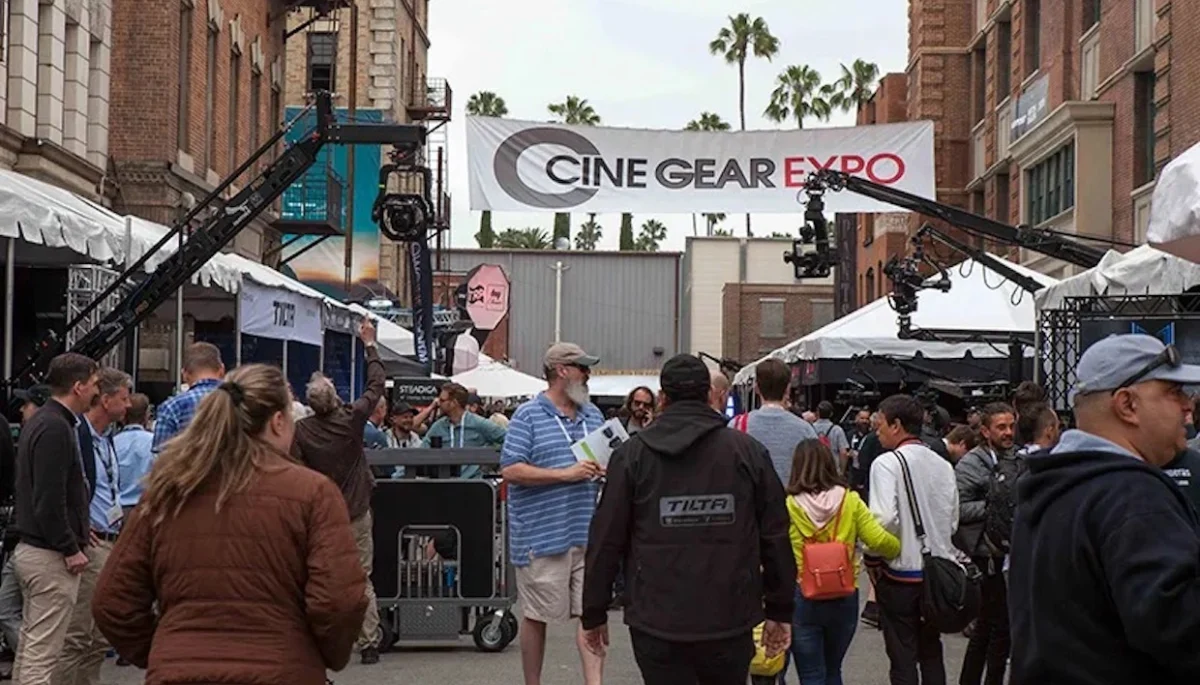
The annual Cine Gear Expo returned to the Universal Studios Lot for its 2026 iteration, offering a distinct counterpoint to the broader, more generalized tech conventions that dominate the entertainment industry calendar. While events like the National Association of Broadcasters (NAB) Show increasingly grapple with cinema’s diminishing footprint relative to corporate video and streaming infrastructure, Cine Gear maintains an unyielding focus on the traditional and modern craft of filmmaking. Operating as a premier two-day nexus for Los Angeles-based cinematographers, gaffers, lighting technicians, and equipment manufacturers, the expo serves as both a marketplace for cutting-edge optical and grip technology and a vital social anchor for a largely freelance community.
Historical Context and Industry Evolution
Established decades ago as a specialized regional showcase, Cine Gear Expo has evolved into an international destination for high-end production equipment. Historically rotating between prominent Los Angeles production facilities—including previous stints on the Warner Bros. studio lot—the event immerses attendees directly into a functioning Hollywood backlot. This environment fosters a unique intersection between working studio professionals and hardware developers.
The 2026 expo arrived during a period of significant technical transition. The industry is currently balancing a surging nostalgic appetite for analog workflows—evidenced by a renewed interest in celluloid film and vintage glass—alongside rapid advancements in digital sensor engineering, wireless lighting control, and LED color science. Unlike broadcast-heavy conventions that prioritize multi-platform distribution and cloud workflows, Cine Gear remains stubbornly dedicated to the physical tools of image capture and on-set execution.
Chronology and Spatial Dynamics of the 2026 Expo
Spanning two intensive days, the event exhibited a logistical profile typical of large-scale backlot conventions. Friday’s opening morning attracted a demographic heavily skewed toward film school undergraduates and early-career independent contractors, capturing an optimistic energy following recent independent film successes. In contrast, Saturday historically draws a more traditional, union card-carrying demographic of seasoned crew members.
The physical layout of the Universal Studios Lot presented distinct logistical challenges for attendees navigating the grounds. Key keynote panels featuring high-profile cinematographers required extensive queueing under direct sunlight, while the primary vendor exhibitions housed within temporary tent structures were separated from the seminar zones by a significant shuttle distance. Despite these navigational hurdles, the atmosphere retained the communal cadence of a boutique film festival, characterized by industry networking, panel discussions, and widespread promotional distribution.
Key Technical Exhibitions and Hardware Innovations
Lighting Technology and Control Systems
Lighting vendors at Cine Gear 2026 emphasized rapid iterations in LED technology, a stark departure from the historical dominance of tungsten, HMI, and fluorescent fixtures over the past century. Local 728 gaffers Drew Moe and Jeffrey Taylor, operators of the boutique rental house Canary Yellow, highlighted the accelerated pace of hardware updates. Manufacturers are continuously refining LED chipsets and proprietary color engines, such as Aputure’s Blair CG color engine, to meet rigorous cinematic standards.
Concurrently, software control systems experienced a notable evolution. Ian Peterson showcased V3, the latest update to the Blackout Lighting Console. By integrating visual control components into workflows traditionally dependent on numerical values, the V3 update—controlled fluidly via iPad interface—signals a shift toward more intuitive on-set management for complex lighting rigs.
Hybrid Capture and the Cinelux Sixteen
One of the most heavily discussed hardware developments on the backlot was the Cinelux Sixteen, a 16mm camera prototype developed by Cinelux Cinema Tools and exhibited at the CSLA rental house booth. Designed by a small engineering team over a two-and-a-half-year period, the camera represents a rare endeavor in contemporary physical film camera manufacturing.
The Cinelux Sixteen is engineered to record to film and digital media simultaneously, capturing an SD card proxy at 3.2K resolution complete with an applied film-emulation LUT. Chief engineer Caz Voorhees noted that while sensor integration utilizing existing Sony architecture proved relatively straightforward, engineering the physical film magazine within a constrained, frictionless space presented the primary design hurdle. To encourage industry adoption and repair accessibility, the development team plans to open-source the magazine schematics, enabling users to 3D-print replacement parts in the field. Production estimates project a finalized commercial release by mid-2027.
Optical Engineering and Vintage Rehousing
The optics sector demonstrated a robust demand for customized and restored cinema glass. Zero Optik, a prominent lens rehousing firm, showcased its ongoing work converting vintage photographic lenses into high-performance cinema tools. Operations manager Alex Baxter detailed the company’s expansion from restoring 1930s Bausch & Lomb Ultra Baltar lenses—popularized by cinematographers such as Ed Lachman on features like El Conde and Maria—to contemporary glass from Leica, Olympus, and Nikon.
Notably, Zero Optik was commissioned by the American Society of Cinematographers (ASC) to restore a rare set of 1950s Todd-AO 65mm prime lenses discovered in the society’s archives. Working alongside cinematographer Greig Fraser to ensure optical consistency, the company restored the lenses for exclusive rental distribution through Keslow Camera.
Similarly, Atlas Lens Co., founded by Dan Kanes, presented its expansive lineup of anamorphic lenses. Originating from Kanes’ background in lighting, DIT work, and wireless transmitter development, Atlas has expanded its offerings from the flagship Orion series to the newly announced Kaizen series. Designed for large-sensor digital cameras such as the Fujifilm GFX Eterna 55, Arri Alexa 265, and Blackmagic Design Ursa Cine 17K, the Kaizen lenses maintain parallel field curvature, allowing multiple actors to remain sharply in focus across wide horizontal frames without the focus drop-off characteristic of older vintage anamorphic designs.
Institutional Insights: The ASC Panel and Seminars
The educational programming of Cine Gear 2026 culminated in the annual American Society of Cinematographers panel, which brought together 15 ASC members, including Jeff Cronenweth, Rachel Morrison, Karl Walter Lindenlaub, and Natasha Braier. The panel opened with a retrospective montage celebrating over a century of the Society’s contributions to visual storytelling, highlighting landmark works such as John Toll’s cinematography on The Thin Red Line.
Panelists discussed the psychological and physiological elements of visual composition. Steven Fierberg emphasized the concept of body consciousness on set, noting the intuitive physical placement of the camera during active shooting. Natasha Braier drew a direct line between her upbringing under an Argentine military dictatorship—an environment defined by subtext and hidden realities—and her distinct approach to visual storytelling and the unconscious mind.
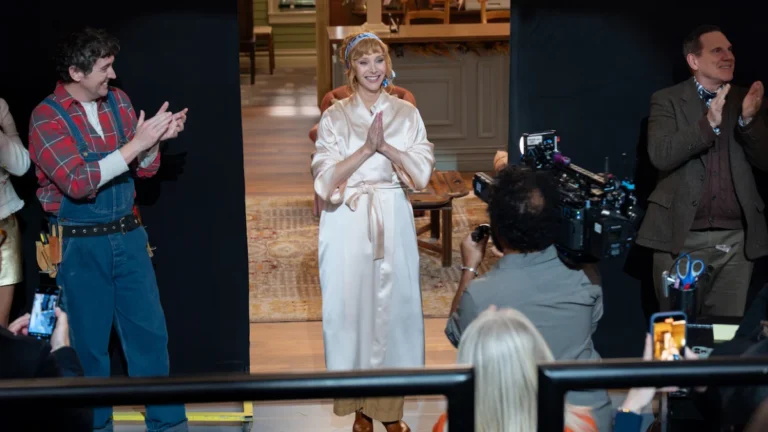
The event concluded with an extensive technical seminar led by cinematographer M. David Mullen, hosted by Red Digital Cinema. Mullen dissected the precise multi-camera mechanics of a complex tracking shot from The Marvelous Mrs. Maisel, offering practical pedagogical insights to an audience of working professionals and students.
Broader Industry Implications
The convergence of professionals at the Universal Studios Lot underscored the resilience of the physical production ecosystem in Los Angeles. Despite macroeconomic pressures, shifting studio spending, and the pervasive expansion of virtual production pipelines, Cine Gear Expo 2026 reaffirmed that tactile craftsmanship—ranging from mechanical film magazines and custom-rehoused vintage glass to advanced LED color science—remains central to the identity of cinematic art. By bridging the gap between historical preservation and forward-looking hardware innovation, the expo continues to serve as an indispensable barometer for the health and direction of the global cinematography community.