The entertainment industry stands at a critical juncture, caught between the accelerating capabilities of generative artificial intelligence and a traditional production model that many insiders describe as increasingly unsustainable. In response to these shifting dynamics, Innovative Dreams has officially launched as a pioneering hybrid production services company designed to integrate cutting-edge AI tools directly into the filmmaking workflow. Backed by industry heavyweights including Amazon Web Services (AWS) and the $4 billion generative AI startup Luma, the studio aims to redefine how content is created, from the initial stages of pre-production through to the final frames of post-production.
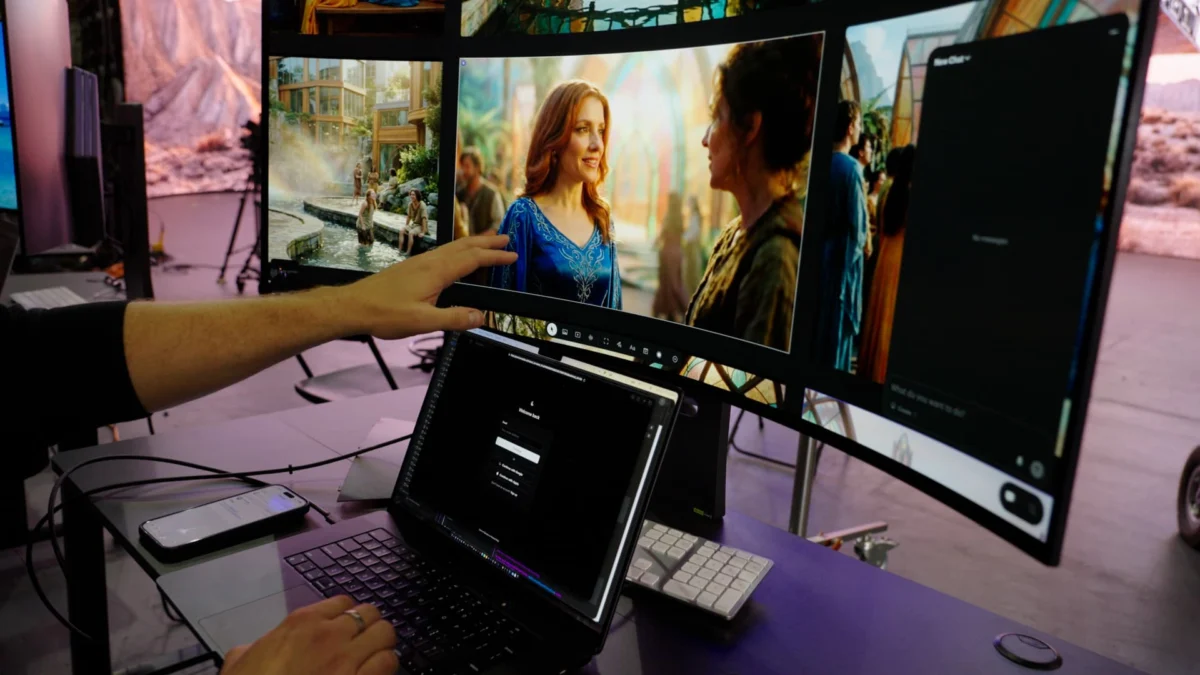
The venture represents a strategic attempt to merge the physical and digital realms of cinema. By utilizing a sophisticated soundstage equipped with massive LED walls—a technology known as virtual production—and advanced motion capture systems, Innovative Dreams allows filmmakers to apply AI enhancements in real-time. This methodology utilizes a suite of high-end tools, including Luma’s generative models, Google’s Nano Banana, and ByteDance’s SeeDream, to streamline the creative process. According to the company’s leadership, this integration can result in profound reductions in both production timelines and overhead costs, potentially offering a lifeline to an industry currently grappling with severe economic contraction.
A New Paradigm: Merging Performance with Digital Assets
At the heart of Innovative Dreams is a philosophy that seeks to augment, rather than replace, the human element of filmmaking. CEO Jon Erwin, an established filmmaker and founder of the production studio Wonder Project, emphasizes that the studio’s approach is rooted in the preservation of the actor’s craft. The process involves capturing a live performance—including the nuances of a camera’s lens choice and the actor’s physical movements—and then "mapping" that performance onto digital assets.
This hybrid workflow allows for the seamless application of digital wardrobe, makeup, and environments without discarding the fundamental elements of traditional directing. "We visually design and explore the world, then we take the footage that we filmed and start mapping that performance capture to these digital assets," Erwin explained. This method ensures that the creative intent of the director and the emotional weight of the actor’s performance remain the focal point, while the AI handles the complex visual transformations that would traditionally require months of manual labor in post-production.
The Technological Backbone: AWS and Luma AI
The sheer computational power required to generate high-fidelity AI video in real-time is immense, necessitating robust infrastructure partners. To meet this demand, Innovative Dreams has secured a strategic partnership with AWS. The cloud computing giant provides the necessary AI infrastructure and cloud services to power the studio’s real-time tools. This collaboration is part of a broader push by AWS to establish itself as the primary backbone for the next generation of media and entertainment technology.
Samira Bakhtiar, General Manager of Media, Entertainment, Games, and Sports at AWS, noted that the goal is to provide tools that enable filmmakers to work in ways that were previously impossible. The partnership focuses on accelerating production cycles at scale, allowing for faster collaboration and significantly cheaper output. By moving the heavy lifting of rendering and data processing to the cloud, Innovative Dreams can operate with a level of agility that traditional studios, tethered to local hardware and lengthy rendering queues, cannot match.
Simultaneously, the involvement of Luma provides Innovative Dreams with direct access to some of the most advanced generative AI models currently available. Luma, which recently reached a valuation exceeding $4 billion, has introduced a new "agent" tool that facilitates a collaborative workspace for multiple AI generation services. Through this partnership, Erwin and his team are not merely users of the technology but active contributors to its development. By providing feedback based on real-world production needs, they are helping to shape the tools to fit the specific demands of professional cinematography.
Case Studies in Efficiency: From House of David to Moses
The genesis of Innovative Dreams can be traced back to Erwin’s work on the historical epic House of David, produced for Amazon Prime Video. Faced with the challenge of recreating ancient, far-flung locales on a manageable budget, Erwin turned to AI to generate historical scenes. The success of this experiment served as a proof of concept, revealing a gap in the market for a studio dedicated to this specific workflow.
The studio’s first official project under the new model is a three-part series titled The Old Stories: Moses, starring Academy Award-winner Ben Kingsley. The production serves as a stark example of the efficiency gains promised by the hybrid model. The series, which features actors in 40 different global locations, was filmed in its entirety in just one week on a virtual soundstage. Traditional production methods would have required five to six weeks of shooting, plus the astronomical costs of transporting cast and crew to dozens of international sites. By utilizing footage from around the world and projecting it onto the studio’s LED screens, Innovative Dreams was able to achieve a massive scale that would have been financially unfeasible under a standard production budget.

The Economic Context: A Hollywood in Crisis
The launch of Innovative Dreams comes at a time when the entertainment industry is reeling from a series of systemic shocks. The dual impact of the COVID-19 pandemic and the 2023 writers and actors strikes has left the production landscape in Southern California severely diminished. Since 2022, Los Angeles County has seen the loss of over 40,000 entertainment industry jobs. Production activity in the region has plummeted to its lowest levels since 1995, as studios prioritize cost-cutting, consolidation, and a reduction in overall content spending.
The standoff between the guilds (WGA and SAG-AFTRA) and the major studios was driven largely by existential fears regarding AI. Writers and actors expressed deep concerns that AI could be used to exploit their intellectual property, replicate their likenesses without consent, and eventually render their roles obsolete. Against this backdrop, any move toward AI-driven production is met with a high degree of scrutiny and apprehension.
Entertainment attorney Jonathan Handel highlights the precarious state of the industry, noting that construction, consolidation, and cost-cutting have led to a 25% to 35% decline across the board compared to pre-pandemic levels. The primary concern among labor advocates is whether AI will serve as a tool for "job augmentation"—allowing workers to do more with less—or "job displacement," where entire departments are eliminated in favor of automated systems.
The Labor Debate: Displacement vs. Innovation
The rise of digital sets, wardrobe, and makeup poses a direct threat to traditional crafts such as costume design, set construction, and practical makeup artistry. If a character’s outfit or the environment they inhabit can be generated or altered via AI after the cameras roll, the demand for on-set physical assets may decline.
Handel points out that while top-tier talent may adapt to these tools, the impact on entry-level positions could be devastating. The "on-ramps" to the industry—assistant roles and junior positions where newcomers learn their craft—are often the first to be automated, potentially shrinking the pipeline for future generations of filmmakers.
However, Jon Erwin offers a different perspective, arguing that the current trajectory of Hollywood is already leading to job losses because production is fleeing California for cheaper international locales or tax-friendly states. He contends that by lowering the cost of high-quality production, Innovative Dreams can make filming in Los Angeles viable again. "There’s just an alarming lack of green lights, especially in America," Erwin said. "I think this is a method that allows us to film here again."
Erwin views AI as a necessary evolution to save an unsustainable business model. By reducing the reliance on massive physical footprints and long-distance travel, he believes the industry can stabilize and eventually grow. In his view, the "best" workers will adapt their skills to the new technology, much as they did during the transitions from silent film to "talkies," or from film to digital.
Implications and Future Outlook
The success or failure of Innovative Dreams will likely serve as a bellwether for the broader adoption of AI in Hollywood. If the studio can consistently produce high-quality, commercially successful content like The Old Stories: Moses at a fraction of the traditional cost, other major players will be forced to follow suit to remain competitive.
The broader implications for the entertainment ecosystem are profound:
- Democratization of Scale: Smaller independent studios may soon be able to produce "blockbuster-scale" content without the need for $200 million budgets, provided they have access to the right AI infrastructure.
- Shift in Skillsets: The demand for traditional physical crafts may shift toward digital artistry, prompt engineering, and virtual production management.
- Regional Competition: If AI-powered soundstages can truly bring production back to Southern California, it may force other production hubs to re-evaluate their tax incentives and technological offerings.
As the industry continues to navigate the "post-strike" era, the tension between technological progress and labor protection remains high. Innovative Dreams represents a bold bet that the future of cinema lies in a collaborative relationship between human creativity and machine intelligence—a bet that, if successful, could reshape the map of Hollywood for decades to come. For now, the eyes of the industry remain fixed on the upcoming debut of Moses this spring, which will serve as the first major test of whether AI can truly deliver on its promise of cinematic grandeur at a sustainable price point.