


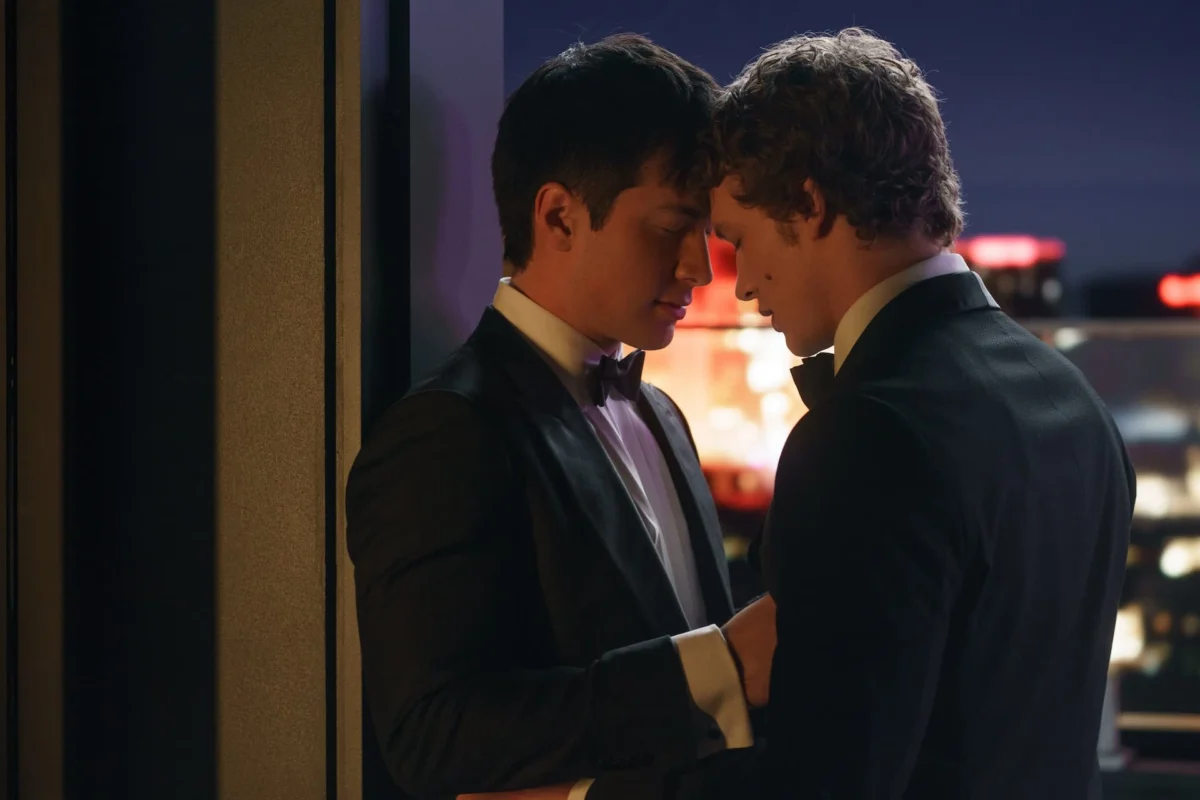
When the holiday season arrived last year, Margaret Hecox, 23, found herself bridging a generational gap through a television recommendation. In a card addressed to her grandmother, Hecox detailed the merits of "Heated Rivalry," a breakout Canadian television series available on HBO Max that chronicles a secret, high-stakes romance between two professional hockey players. After watching several episodes together, Hecox noted that her grandmother was quickly won over by the narrative, joining a demographic that has increasingly become the primary engine behind the success of male-to-male (M/M) romance content.
The grandmother-granddaughter duo represents a significant and growing segment of the entertainment market: women who consume books, films, and television series centered on love stories between men. While this subgenre has existed for decades—rooted in the "yaoi" and "boy love" (BL) traditions of Japanese manga and anime—industry experts and consumption data suggest that the surge in popularity surrounding titles like "Heated Rivalry" has pushed this corner of LGBTQ+ media into the American mainstream. This shift is not merely a cultural curiosity but a substantial economic movement, as major streaming platforms and publishers pivot to meet the demands of a largely female, often heterosexual, audience.
The Cultural Evolution of the Boy Love Subgenre
To understand the current resonance of "Heated Rivalry," it is necessary to examine the historical trajectory of the M/M romance subgenre. Originating in Japan during the 1970s, "yaoi" (a term for self-published or underground male-male romance) and "boy love" (the more commercialized counterpart) were created by women, for women. These stories often prioritized emotional intensity, complex interpersonal dynamics, and idealized romance over the pornographic elements found in traditional gay erotica.
For decades, this content remained a niche interest in the West, circulated through fan-translated manga and online fanfiction repositories such as Archive of Our Own (AO3). However, the digital age has accelerated the visibility of these stories. On TikTok, the hashtag "fujoshi"—a Japanese slang term for female fans of the genre—has garnered over 900,000 video posts. Google Search data from late last year indicated that interest in yaoi-related terms reached unprecedented levels in the United States, suggesting that what was once a subculture has developed a robust domestic footprint.
Shampaigne Graves, a consultant and host of a podcast focusing on female consumer behavior, describes this as a "coming out" moment for women who have long been invested in the genre. Graves notes that while the consumption of M/M romance is not a new phenomenon, the current social climate has allowed women to feel comfortable sharing and discussing these interests openly, removing the "closeted" nature of the fandom.
Statistical Analysis of the Female Audience
The data supporting this shift is stark. HBO Max reported that approximately two-thirds of the viewership for "Heated Rivalry" identified as women. This trend is mirrored across other major media releases. According to Nielsen data, "Red, White & Royal Blue," a 2023 political romantic comedy produced by Amazon MGM Studios, saw a viewership that was 61% female. The film quickly became one of the highest-watched romcoms in Prime Video’s history, prompting the greenlighting of a sequel.
The phenomenon extends to more dramatic and literary adaptations as well. Sony’s "Call Me By Your Name," a 2017 coming-of-age drama starring Timothée Chalamet and Armie Hammer, maintains a lopsided gender demographic in its fan base. On the movie review platform Letterboxd, the film ranks as the ninth most-favorited narrative feature among female-identifying users. In contrast, it sits 46 slots lower on the equivalent list for male-identifying users. Nielsen reported that during the first quarter of 2026, nearly 70% of the film’s viewers were women.
Even older titles are seeing a resurgence in female viewership due to the renewed interest in the genre. Lionsgate shared data with CNBC indicating that women accounted for 60% of the audience for "The Perks of Being a Wallflower" since the beginning of last year. The film, which includes a subplot involving a same-sex romance between a popular football player and another male student, continues to resonate with female audiences over a decade after its release.
The Literary Engine: From BookTok to Bestsellers
While streaming platforms are reaping the benefits of on-screen adaptations, the literary world serves as the foundational engine for this trend. Author Rachel Reid, who wrote the "Heated Rivalry" book series upon which the show is based, has become a central figure in the "BookTok" community. Her novels have consistently ranked among the top-read e-books on Scribd’s Everand subscription service and the book discussion platform Fable.
Kim Allee, the marketing director for Fable, suggests that M/M romance has effectively unseated "romantasy" (romance-fantasy) as the most popular subgenre among their users. Allee notes that the interest is not a fleeting trend but a significant shift in reading habits. Jennifer Bokal, president-elect of the Romance Writers of America, observed that at the BookCon convention in April, "Heated Rivalry" merchandise was ubiquitous, signaling that the franchise has reached a level of cultural saturation comparable to mainstream giants like "Twilight" or "Fifty Shades of Grey."
The appeal, according to readers, lies in the "yearning"—a term that has become a buzzword within the community. Gianna Saad, a 30-year-old reader, explains that these stories often provide a deeper level of emotional exploration. By removing traditional gender roles and the power imbalances often present in heterosexual romance, the genre allows readers to focus on the raw mechanics of love, vulnerability, and mutual respect.
Hollywood’s Strategic Response and the Sports Playbook
The success of "Heated Rivalry" has provided a blueprint for Hollywood producers looking to capture the attention of the female demographic, which traditionally accounts for the majority of audiences for scripted entertainment. Tom Nunan, a producer and former network executive who lectures at the UCLA School of Theater, Film and Television, believes that the industry will likely attempt to replicate this "playbook" by focusing on gay love stories within the world of professional sports.
The juxtaposition of hyper-masculine environments—like the NHL or the NFL—with clandestine, tender romances creates a narrative tension that is highly marketable. Nunan argues that the broader lesson for studios is the importance of authenticity and original storytelling. When a show like "Heated Rivalry" succeeds, it serves as a reminder to the industry that diverse, thought-provoking plots that explore "rich parts of life" can yield high rewards if executed with genuine intent.
However, the expansion of the genre is not without its challenges. While M/M romance is thriving in the commercial sector, broader LGBTQ+ representation in Hollywood appears to be in flux.
The Representation Paradox: Commercial Success vs. Industry Decline
Despite the fanfare surrounding high-profile releases like "Red, White & Royal Blue" and "Heated Rivalry," data from advocacy groups suggests a contraction in overall LGBTQ+ visibility. GLAAD, a non-profit organization that monitors media representation, reported that the share of LGBTQ-inclusive scripted films from major distributors dropped by approximately 14% between 2023 and 2024. Furthermore, the number of LGBTQ+ characters on television plummeted by 23% in the 2024-2025 season compared to three years prior.
Katherine Sender, a professor at Cornell University who researches LGBTQ+ media, suggests a cautious approach to the current boom. While the excitement over "Heated Rivalry" is encouraging for fans and authors, it may represent a "hyper-focus" on a specific, commercially palatable type of queer story—often involving attractive, cisgender, white men—while other identities within the LGBTQ+ spectrum remain marginalized or see their representation decrease.
Nuance in Audience Demographics
It is also important to note that the female-dominated audience is not a universal rule for all male-male romance content. Shows like "Heartstopper" on Netflix and the film "Love, Simon" from Disney’s 20th Century Fox have shown a more balanced gender split, skewing slightly toward male viewers in certain quarters. This suggests that while the "fujoshi" or female fan base is a powerful market force, there is a distinct difference between content designed for a general LGBTQ+ audience and content that aligns with the tropes of the M/M romance subgenre.
Furthermore, the fan base is not limited to heterosexual women. During a CNN New Year’s Eve broadcast, musician Brandi Carlile expressed her own obsession with "Heated Rivalry," indicating that the show’s emotional core resonates across different sexual orientations within the female community.
Future Outlook and Implications
As the entertainment industry moves forward, the "Heated Rivalry" effect is expected to influence upcoming production slates. With second installments for both "Heated Rivalry" and "Red, White & Royal Blue" in development, the commercial viability of M/M romance is no longer in question. The trend reflects a broader cultural shift where audiences are increasingly seeking stories that challenge traditional romantic structures while providing the emotional satisfaction of classic genre fiction.
For publishers and streaming services, the data is clear: the female audience is looking for "yearning," emotional depth, and authenticity. As long as creators can deliver stories that meet these criteria, the subgenre is likely to remain a dominant force in the literary and cinematic landscape. The challenge for the industry will be to balance this commercial success with a commitment to broader, more diverse representation that reflects the full spectrum of the LGBTQ+ experience, ensuring that the boom in M/M romance benefits the community it depicts as much as the audience that consumes it.