

A Poignant Narrative of Identity and Otherness
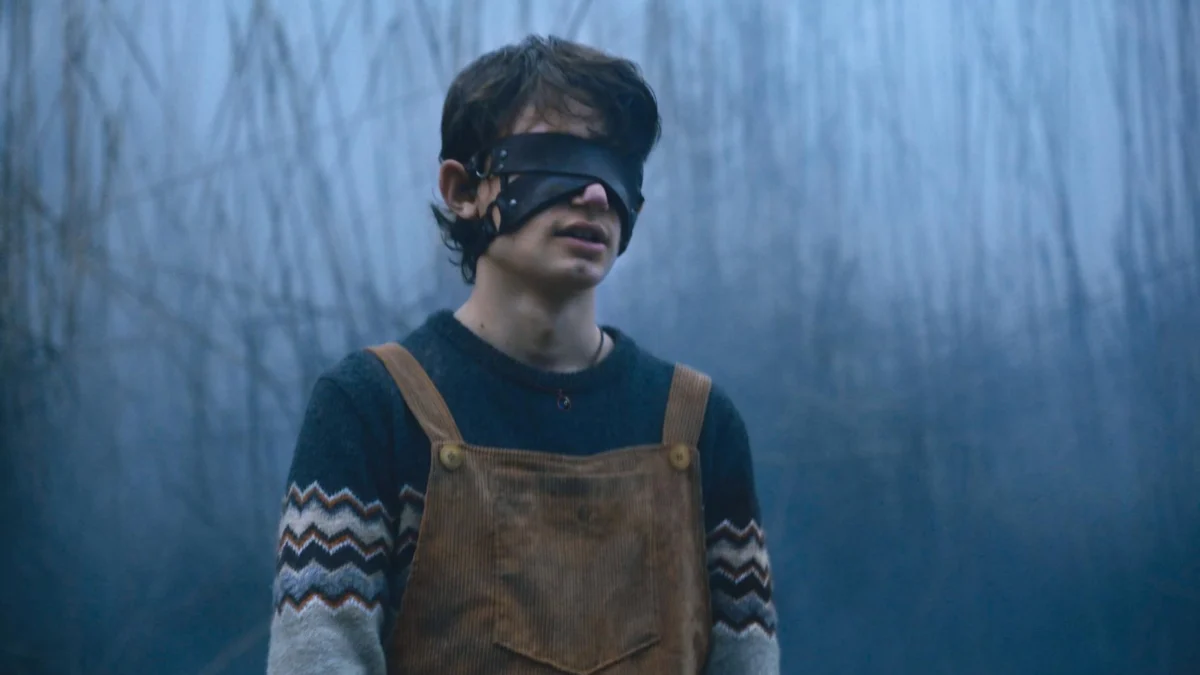
At its core, The Boy With the Light-Blue Eyes presents a deeply resonant, queer coming-of-age narrative. The story centers on Petros, portrayed by Giorgos Karydis, a young boy compelled to conceal his light-blue eyes behind a mask. This enforced secrecy is dictated by his strict grandmother and the village mayor in their remote mountain community, where blue eyes are viewed as a source of deep-seated fear and superstition. The film thus explores the profound psychological and social impact of enforced conformity and the struggle for self-acceptance in a world that shuns difference. This allegorical framework positions the film to resonate with diverse audiences globally, touching upon universal experiences of marginalization and the arduous journey toward authenticity. The setting, while timeless, evokes a sense of tradition and isolation, intensifying the pressures on Petros and highlighting the power dynamics within the village structure.
SXSW London 2026: A Prestigious Platform
The selection of The Boy With the Light-Blue Eyes for a world premiere at SXSW London 2026 underscores its perceived artistic merit and potential for international acclaim. SXSW, originally known for its Austin, Texas, iteration, has expanded its reach, establishing SXSW London as a significant European hub for showcasing innovation across film, music, and interactive media. The Screen Festival component of SXSW London has rapidly gained a reputation for spotlighting groundbreaking independent cinema, often serving as a launchpad for emerging talents and unconventional narratives. For a debut feature, a world premiere at such a festival provides unparalleled exposure, attracting distributors, critics, and cinephiles from across the globe.
Past editions of SXSW London have consistently featured a curated selection of films that push genre boundaries and address pressing social issues, making it an ideal venue for Neofotistos’s work. The festival’s programming often prioritizes films that spark dialogue and challenge conventional storytelling, aligning perfectly with the allegorical depth and genre-bending nature of The Boy With the Light-Blue Eyes. The June 4 premiere date positions the film early in the festival’s cinematic offerings, potentially allowing it to build significant buzz throughout the event.
Director’s Vision: From Dinosaurs to Deeper Truths
Thanasis Neofotistos, who co-wrote the screenplay with Grigoris Skarakis, shared insights into his formative cinematic inspirations, revealing a surprising yet profound connection to classic filmmaking. Ahead of the premiere, Neofotistos recounted to The Hollywood Reporter how his initial fascination with cinema was ignited by "good old-school cinema," citing Steven Spielberg’s monumental 1993 blockbuster, Jurassic Park.
"My biggest role model, my inspiration, is what I call ‘good old-school cinema,’ for example, Jurassic Park by Steven Spielberg," Neofotistos explained. "That was the first film I ever saw in the cinema, and I got fascinated with dinosaurs because of it. I felt that dinosaurs really existed in real life when I was less than 10 years old. This was my main inspiration to be a filmmaker." This early encounter with Spielberg’s masterpiece, with its groundbreaking blend of practical effects and nascent CGI, evidently left an indelible mark on the young Neofotistos, instilling in him a deep appreciation for immersive storytelling and meticulous craft. The director’s personal connection to the film is subtly woven into his debut, with eagle-eyed viewers promised to spot dinosaur-related elements in Petros’s room, a direct homage to this foundational inspiration.
Neofotistos’s admiration extends beyond the narrative of Jurassic Park to the craft behind its creation. He lauded Spielberg’s innovative use of animatronics and handcrafted materials, which lent an unparalleled sense of realism to the prehistoric creatures. "He used animatronics, he used materials that they handmade, handcrafted," the Greek creative enthused. "It was not VFX, or AI now. It felt so real. The story felt so unique, and I got into this universe. That’s why I wanted to be a storyteller." This emphasis on tangible, in-camera effects and world-building through practical means became a guiding principle for Neofotistos in the production of The Boy With the Light-Blue Eyes.
A Commitment to Handcrafted Cinema in the Digital Age
In an era increasingly dominated by advanced visual effects and the burgeoning influence of artificial intelligence in filmmaking, Neofotistos and his team deliberately embraced a "handcrafted" approach for The Boy With the Light-Blue Eyes. This commitment reflects a conscious choice to prioritize authenticity and a tangible aesthetic over purely digital creations. "I really love to create universes," Neofotistos told THR. "So, my goal here was to create something unique and very handcrafted. We didn’t use any AI. We used minimal VFX. Everything was made in the shooting [process]."
This philosophy stands in stark contrast to many contemporary productions and signals a return to a more tactile form of filmmaking. It suggests that the film’s visual language will be rich in practical details, atmospheric textures, and a grounded sense of reality, even within its allegorical framework. This approach can often imbue a film with a unique character and a timeless quality, allowing the audience to feel more deeply immersed in the world presented on screen without the potential distractions of overt digital manipulation. It also speaks to a broader artistic movement within independent cinema that values artisanal production methods and a distinct authorial voice over blockbuster-style polish.
Echoes of Greek Masters: Angelopoulos and Lanthimos
Beyond Spielberg, Neofotistos draws significant inspiration from the rich tapestry of Greek cinema, specifically referencing two of its most internationally acclaimed figures: Theo Angelopoulos and Yorgos Lanthimos. The influence of these masters suggests a profound engagement with Greek cinematic tradition while simultaneously striving for innovation.

Neofotistos cited Theo Angelopoulos’s debut feature, The Reconstruction (1970), as a key influence. "His work is also very much inspired by some Greek filmmakers," he stated. "For example, the first film of [Theo] Angelopoulos, The Reconstruction, which was made close to my hometown and gives a great representation of societies." Angelopoulos, a titan of European arthouse cinema, was renowned for his slow-paced, visually stunning, and often politically charged films that explored Greek history, identity, and the human condition. The Reconstruction, with its stark portrayal of a murder in a remote village, is a foundational work of modern Greek cinema, noted for its observational style and deep social commentary. Neofotistos’s appreciation for its "great representation of societies" hints at a similar ambition to use his film as a mirror to societal anxieties and structures, albeit through an allegorical lens. The proximity of Angelopoulos’s filming location to Neofotistos’s hometown adds a personal layer to this artistic lineage.
Furthermore, Neofotistos acknowledged the impact of contemporary Greek auteur Yorgos Lanthimos, whose distinctive "magical realism" has garnered significant international recognition, culminating in Oscar wins and nominations for films like The Favourite and Poor Things. "And Yorgos Lanthimos, a case of a Greek filmmaker who became huge – the magical realism that he uses is something that I’m inspired by," Neofotistos remarked. Lanthimos’s work is characterized by its unsettling, often absurd, and meticulously constructed worlds that operate under their own twisted logic, probing themes of control, conformity, and human nature. This influence suggests that The Boy With the Light-Blue Eyes might incorporate elements of heightened reality or surrealism, blending its allegorical narrative with a unique, perhaps disquieting, aesthetic that challenges audience expectations. The blend of Angelopoulos’s social observation with Lanthimos’s stylized absurdity could create a truly unique cinematic experience.
The Production Team and International Distribution
The collaborative effort behind The Boy With the Light-Blue Eyes extends to a talented production team. Co-written by Neofotistos and Grigoris Skarakis, the screenplay promises a nuanced exploration of its complex themes. Cinematography by Djordje Arambasic is expected to contribute significantly to the film’s unique visual identity, given Neofotistos’s emphasis on handcrafted aesthetics. Panagiotis Angelopoulos handled the editing, a crucial role in shaping the film’s rhythm and narrative flow, especially for a genre-bending feature.
Significantly, U.S. sales for The Boy With the Light-Blue Eyes are being handled by Gersh, a prominent talent and literary agency with a robust film division. Gersh’s involvement is a strong indicator of the film’s commercial potential and its appeal to international markets. Their expertise in navigating the complex landscape of independent film distribution suggests that The Boy With the Light-Blue Eyes is poised to reach audiences beyond the festival circuit, potentially securing broader theatrical releases or streaming deals. This partnership is vital for a debut feature aiming for global recognition, providing the necessary infrastructure to market and distribute the film effectively.
Broader Implications for Greek Cinema
The emergence of The Boy With the Light-Blue Eyes and its world premiere at SXSW London is a testament to the continued vibrancy and international appeal of contemporary Greek cinema. In recent decades, Greek filmmaking has experienced a notable resurgence, often referred to as the "Greek Weird Wave," spearheaded by directors like Lanthimos and Athina Rachel Tsangari. This movement gained critical attention for its distinctive, often minimalist and darkly humorous style, addressing themes of social alienation and existential angst.
While Neofotistos’s film appears to draw from and expand upon these traditions, his specific blend of inspirations—from Spielberg’s epic storytelling to Angelopoulos’s social realism and Lanthimos’s magical surrealism—signals a new wave of filmmakers who are synthesizing diverse influences to forge their own unique voices. The film’s allegorical nature and exploration of a queer coming-of-age story also reflect a growing trend in Greek cinema towards more diverse and inclusive narratives, tackling contemporary social issues with artistic depth.
This international exposure at SXSW London not only elevates Neofotistos’s profile but also shines a brighter spotlight on the entire Greek film industry. It encourages further investment in local talent, stimulates co-productions, and reinforces Greece’s position as a significant contributor to global arthouse cinema. The success of films like The Boy With the Light-Blue Eyes can inspire a new generation of Greek filmmakers and help to secure crucial funding for future projects, fostering a sustainable ecosystem for independent cinema in the region.
Conclusion: A Cinematic Allegory for Our Times
The Boy With the Light-Blue Eyes promises to be more than just a debut feature; it is positioned as a significant artistic statement from a director with a clear vision and a profound understanding of cinematic heritage. By tackling universal themes of exclusion, identity, and the pursuit of freedom through the lens of a queer coming-of-age story, Neofotistos’s film is poised to provoke thought and foster empathy.
The blend of handcrafted filmmaking, drawing inspiration from both classic Hollywood blockbusters and esteemed Greek auteurs, suggests a film that is both deeply personal and universally resonant. As audiences gather for its world premiere at SXSW London 2026, they will not only witness the unveiling of a new cinematic voice but also engage with a powerful allegory that speaks directly to the challenges and triumphs of embracing one’s true self in a world often resistant to difference. The subtle nod to dinosaurs, a personal touch from the director’s childhood, serves as a charming reminder of the unexpected wellsprings of creativity that can shape a filmmaker’s journey and infuse a narrative with unique character.