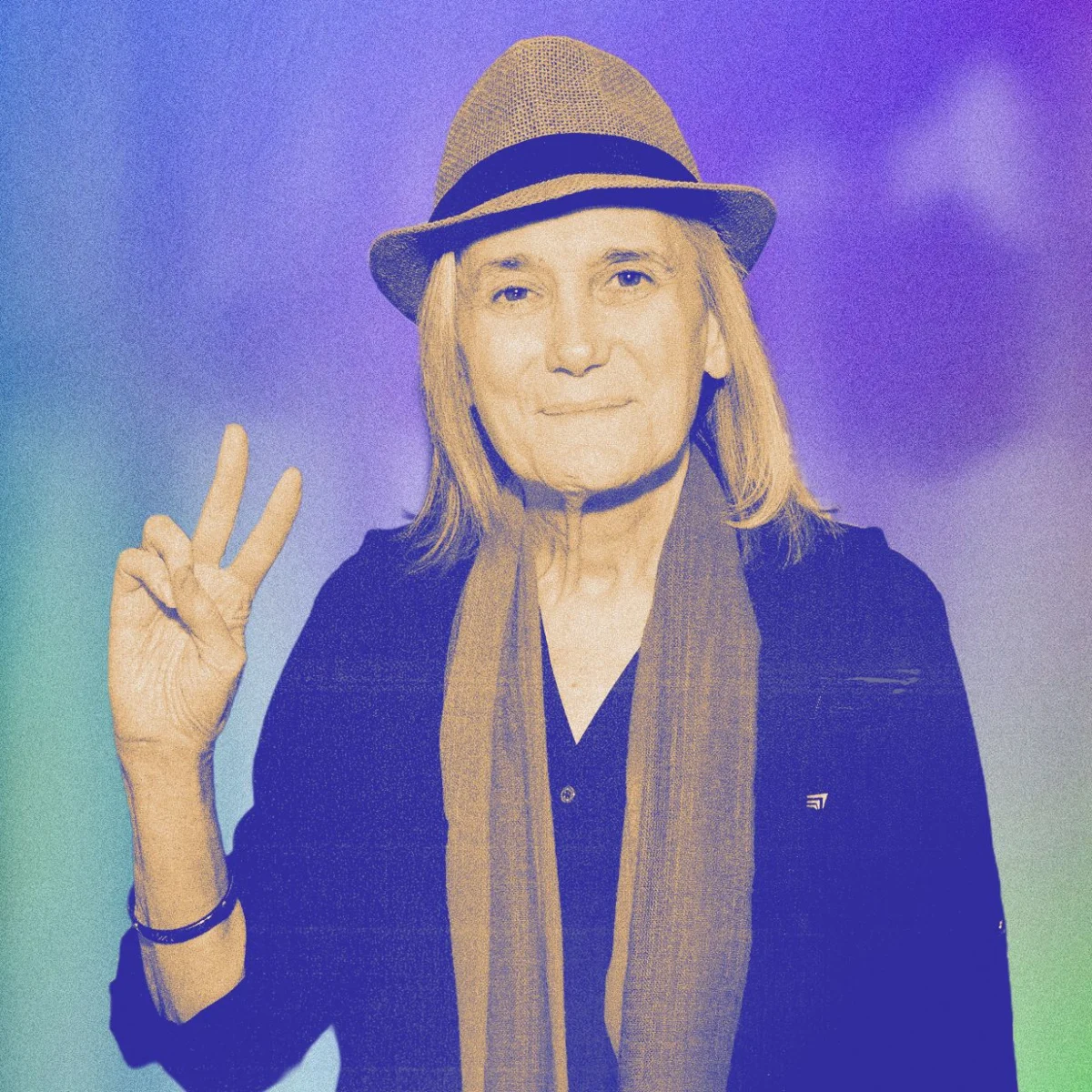
The new documentary film directed by Oscar-nominated filmmakers Tia Lessin and Carl Deal offers an intimate yet professional examination of Amy Goodman and the three-decade evolution of the independent news organization Democracy Now!. Opening with a high-tension sequence at a climate conference in Katowice, Poland, the film captures Goodman, the program’s co-founder and longtime host, relentlessly pursuing P. Wells Griffith III, a senior Trump administration adviser. The scene serves as a microcosm of Goodman’s career: undeterred by closed doors or dismissive aides, she remains stationed in the hallway, questions ready, representing a brand of adversarial journalism that has become increasingly rare in the contemporary media landscape.
Through a blend of archival footage and contemporary interviews, the documentary explores how an upstart radio program, launched in 1996 on a handful of Pacifica Radio stations, transformed into a global multimedia powerhouse. Today, Democracy Now! is broadcast on more than 1,500 public radio and television stations worldwide and maintains a massive digital footprint. The film’s title, Steal This Story, Please!, functions as a manifesto for Goodman’s journalistic ethics, reflecting her belief that information serves the public good and that "exclusivity" is a failure of the mission to inform the electorate.
A Chronology of Independent Reporting
The trajectory of Democracy Now! is inextricably linked to the major geopolitical shifts of the late 20th and early 21st centuries. The documentary provides a chronological roadmap of the outlet’s most significant coverage, beginning with Goodman’s early investigative work.
In 1991, prior to the official founding of the program, Goodman and colleague Allan Nairn reported from East Timor. They witnessed the Santa Cruz massacre, where Indonesian soldiers opened fire on a peaceful funeral procession, killing more than 250 people. Goodman was severely beaten by soldiers while attempting to protect Nairn; the footage they smuggled out played a pivotal role in bringing international attention to the genocide in East Timor. This event established the "on-the-ground" ethos that would define Democracy Now! five years later.
By the turn of the millennium, the program had moved into a permanent home at the Downtown Community Television Center in New York City. On September 11, 2001, Democracy Now! was one of the few outlets located blocks away from the World Trade Center. While mainstream networks focused on the immediate geopolitical response, Goodman’s team began a decades-long project of examining the "War on Terror" from the perspective of civil liberties and the human cost of conflict in the Middle East.
In the 2010s, the program shifted its focus toward domestic social movements. In 2016, Goodman traveled to the Standing Rock Sioux Reservation in North Dakota to cover the protests against the Dakota Access Pipeline. Her reporting on the use of attack dogs and pepper spray against Native American protesters went viral, leading to an arrest warrant for "riot" charges. Though the charges were eventually dismissed by a judge, the incident highlighted the increasing legal risks faced by journalists covering dissent in the United States.
The Economics of Independence and "Trickle-Up Journalism"
A central theme of the documentary is the sustainability of the Democracy Now! business model. Unlike many of its contemporaries in the digital age, the outlet has shunned corporate sponsorship, government funding, and advertising. As a 501(c)(3) nonprofit, it relies entirely on listener and viewer donations. This financial independence allows Goodman to maintain what she calls "trickle-up journalism."
Traditional corporate media often relies on a "top-down" approach, prioritizing interviews with high-ranking government officials, corporate CEOs, and a rotating cast of pundits. In contrast, Democracy Now! privileges the voices of grassroots activists, community leaders, and subject-matter experts who are directly impacted by policy decisions. Goodman argues that this "authentic voice" is what drives the audience to provide financial support. "We don’t believe in turning to the pundits, who know so little about so much," Goodman states in the film, emphasizing that the program’s loyalty lies with the public rather than stakeholders.
Data regarding the decline of mainstream media provides a stark contrast to the growth of independent outlets. According to a 2023 report from the Pew Research Center, newsroom employment in the United States dropped by 26% between 2008 and 2020. Furthermore, the rise of "news deserts"—communities with no local news coverage—has accelerated. In this environment, Democracy Now!’s model of providing a free, un-paywalled daily news hour has become a critical resource for smaller community stations that lack the resources for original investigative reporting.
Technological Adaptation and the AI Frontier
While Democracy Now! is rooted in the tradition of public radio, it has consistently been an early adopter of new technologies to bypass traditional gatekeepers. Julie Crosby, the nonprofit’s executive director, notes in the documentary that the outlet utilized the RSS protocol in its infancy to distribute MP3 files to radio stations, long before podcasting became a mainstream medium.
The organization’s relationship with modern tech platforms is one of "opportunistic caution." While YouTube serves as a primary distribution channel, the outlet refuses to monetize its videos through the platform’s advertising system to maintain its editorial integrity. This strategy inoculates the organization against the "algorithm shifts" that have decimated other digital media startups.
Regarding the emergence of Artificial Intelligence, the documentary reveals a conservative internal policy. While Democracy Now! uses AI for transcription and basic translation services to increase accessibility, Crosby stresses that AI-generated content is strictly prohibited. The organization views human oversight and the "on-the-ground" presence of reporters as the only way to maintain the audience trust that is essential for a donation-based model.
Official Responses and Political Friction
The adversarial nature of Goodman’s work has frequently drawn the ire of political figures across the spectrum. The documentary revisits a famous 2000 interview with then-President Bill Clinton. What was intended to be a brief get-out-the-vote call turned into a 28-minute interrogation regarding the sanctions on Iraq and the death penalty. Clinton, visibly frustrated, labeled Goodman’s questioning as "hostile and combative" and "disrespectful."
This friction is not limited to any single administration. The film documents the program’s vigilant coverage of the Trump administration’s environmental policies and the Biden administration’s handling of the conflict in Gaza. By maintaining a consistent distance from the centers of power, the program avoids the "access journalism" trap, where reporters soften their coverage to maintain relationships with high-level sources.
Broader Impact and the Future of Dissent
As the documentary reaches its conclusion, it addresses the current state of the American media industry, characterized by mass layoffs and corporate consolidation. Goodman expresses deep concern over the recent merger discussions between major media conglomerates like Paramount and Warner Bros. Discovery, as well as the decision by large outlets to settle defamation lawsuits rather than fight for the First Amendment.
"Independent media is essential to the functioning of a democratic society," Goodman asserts. "We have to make the country safe for dissent."
The implications of the Democracy Now! model extend beyond the survival of a single program. Analysts suggest that the success of Goodman’s outlet provides a blueprint for the future of journalism in an era of declining trust in traditional institutions. By focusing on community-driven movements and maintaining a transparent, audience-supported financial structure, independent media can fill the void left by the contraction of corporate newsrooms.
Steal This Story, Please! serves as both a retrospective of a remarkable career and a cautionary tale about the fragility of press freedom. It positions Amy Goodman not just as a reporter, but as a guardian of a specific type of public service journalism that prioritizes the marginalized over the powerful. As the film rolls its final credits, the message remains clear: the survival of a democratic society depends on the existence of journalists who are willing to wait outside closed doors until they open, if only by a crack.