

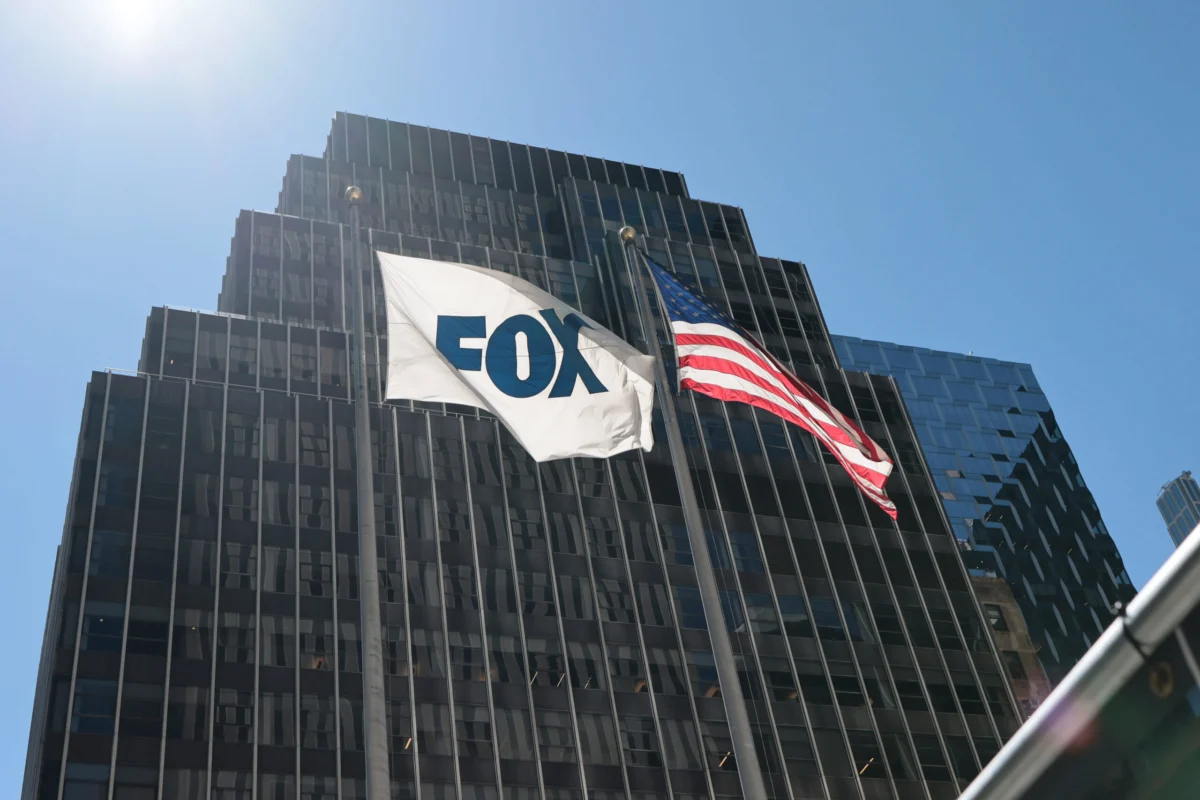
In a move that has sent shockwaves through the global media and technology sectors, Fox Corp. announced on Monday, June 15, 2026, that it has entered into a definitive agreement to acquire Roku Inc. for approximately $22 billion. The deal represents one of the most significant realignments in the entertainment industry since the 2019 divestiture of Fox’s entertainment assets to Disney, marking a bold transition for the Murdoch-led company from a content-focused linear broadcaster to a vertically integrated technology and distribution powerhouse.
The acquisition, which includes Roku’s industry-leading streaming platform, its hardware division, and its burgeoning free ad-supported streaming television (FAST) service, The Roku Channel, is expected to close in the first half of 2027, pending regulatory approvals. While the strategic rationale for the merger has been praised by industry analysts as a "future-proofing" necessity, the immediate reaction from Wall Street was one of skepticism. Fox Corp. shares plummeted 16% on Monday following the announcement, hitting a 52-week low, and continued their descent on Tuesday with an additional 4% decline.
The Financial Mechanics and Market Volatility
The $22 billion price tag represents a significant premium for Roku, which had seen its stock price surge by 50% earlier in 2026 amid rumors of a potential sale. For Fox, the acquisition is being financed through a combination of cash on hand and new debt issuance. It is this increase in leverage that appears to have unsettled investors, many of whom had valued Fox for its relatively conservative balance sheet and high liquidity.
Despite the sharp drop in share price, financial analysts from Piper Sandler and MoffettNathanson have urged a long-term view. "Big media deals often get punished in the short term because they introduce uncertainty," noted Mike Proulx, Forrester’s vice president and research director. "Investors are likely questioning the near-term cost-benefit, but the market is missing the long-term strategic importance. It is far from just a content play; the value is in owning the platform, the data, and the ad stack."
Fox’s leverage, while increasing, is projected to remain within manageable limits compared to industry peers who have undergone similar "mega-mergers." Analysts expect the company’s leverage ratio to stabilize quickly post-close, provided the integration of Roku’s high-margin advertising business offsets the capital expenditures required for hardware maintenance.
A Strategic Pivot: From Content to Distribution
For the better part of a decade, Fox Corp. has operated as a "lean" media company. Following the $71 billion sale of its film and television studios to Disney in 2019, the "New Fox" focused almost exclusively on live sports, news, and its broadcast network. This strategy allowed the company to avoid the massive losses incurred by competitors like Disney, Paramount, and Warner Bros. Discovery as they spent billions chasing subscription-based streaming (SVOD) dominance.
However, the rapid decline of the traditional cable bundle has forced a reconsideration of that "sideline" strategy. By acquiring Roku, Fox is no longer just a tenant on other people’s platforms; it is now the landlord.
Roku currently stands as the leading streaming platform in the United States, integrated into millions of smart TVs and dedicated streaming sticks. By controlling the operating system (OS), Fox gains unprecedented control over the "home screen"—the primary gateway through which consumers access content. This gives Fox significant leverage in carriage negotiations with other streaming giants, such as Netflix, Disney+, and HBO Max, who must share a portion of their ad revenue and subscriber fees with Roku for the privilege of being on the platform.
Chronology of Fox’s Digital Evolution
The path to the Roku acquisition has been marked by several key milestones that signaled Fox’s growing interest in the digital ecosystem:
- March 2019: Fox completes the sale of 21st Century Fox assets to Disney for $71 billion, refocusing on live news and sports.
- April 2020: Fox acquires Tubi for $440 million, marking its first major entry into the FAST (Free Ad-Supported Streaming TV) market.
- 2024: Industry shifts occur as Walmart acquires Vizio, signaling a trend of retailers and distributors seeking to own the "glass" or the TV hardware.
- Early 2025: Fox launches "Fox One," a direct-to-consumer (DTC) service consolidating Fox News, Fox Sports, and local station content.
- June 2026: Fox announces the $22 billion acquisition of Roku, merging the top FAST service (Tubi) with the top streaming platform (Roku).
The Power of Combined Scale
The merger creates a streaming titan with a reach that rivals the largest players in the industry. According to estimates from MoffettNathanson, the combined viewership share of Tubi and The Roku Channel will position the new Fox entity as the third-largest player in the U.S. by share of viewing time, trailing only YouTube and Netflix. This combined scale actually edges out the total domestic viewing time of Disney’s streaming suite, which includes Disney+, Hulu, and ESPN+.
"The combined company will span broadcast, cable, local, and streaming in a way no other entity currently does," said Thomas Champion, an analyst at Piper Sandler. This vertical integration is particularly valuable for advertisers. Fox can now offer a unified "ad stack," allowing brands to target audiences across linear TV, live sports, and digital streaming using Roku’s deep well of first-party user data.
Implications for Live Sports and the NFL
One of the most critical drivers of this deal is the escalating cost of sports rights. Fox currently holds a massive portfolio of rights, including the NFL, MLB, and the FIFA World Cup. As the NFL begins its next cycle of media rights negotiations—already underway for competitors like Paramount-Skydance—the acquisition of Roku provides Fox with a powerful tool to monetize these expensive assets.
Owning the distribution platform allows Fox to offer a more sophisticated "watch-and-buy" experience for sports fans, integrating betting, merchandise, and interactive advertising directly into the broadcast. Furthermore, the data collected from Roku users will allow Fox to prove higher ROI to advertisers for sports broadcasts, potentially offsetting the multi-billion dollar fees required to keep the NFL on its airwaves.
Competitive Pressures and Regulatory Hurdles
The deal comes at a time of intense pressure on Roku. While the company has been a pioneer in the streaming hardware space, it has recently faced existential threats from two sides. First, the consolidation of content providers has given platforms like Disney and Warner Bros. Discovery more power to dictate terms. Second, the 2024 acquisition of Vizio by Walmart threatened Roku’s dominance in the smart TV market, as the world’s largest retailer began pushing its own proprietary OS.
By joining Fox, Roku gains the financial backing and "must-have" content (specifically Fox News and the NFL) necessary to defend its market share against Amazon, Google, and Walmart.
However, the deal is expected to face rigorous scrutiny from federal regulators. The Department of Justice (DOJ) and the Federal Trade Commission (FTC) have expressed increasing concern over vertical integration in the tech and media sectors. Regulators will likely examine whether Fox could use its control of the Roku OS to unfairly prioritize its own content (like Fox News or Tubi) over competitors, or whether it could use its content dominance to force other TV manufacturers to adopt Roku’s software.
The Future of the "New Fox"
The acquisition of Roku marks the end of an era for Fox as a "legacy" broadcaster. By embracing the "innovator’s dilemma" and pivoting toward a platform-based model, Fox is betting that the future of media lies not just in who makes the shows, but in who owns the gateway to the screen.
While the 16% drop in stock price suggests that the investment community remains wary of the debt and integration risks, industry insiders view the move as a necessary defensive and offensive play. As LightShed Partners analysts noted, "Fox has repeatedly been criticized for being under-leveraged and staying on the sidelines. This is a bold move that finally gives them a seat at the head of the table in the streaming era."
If the deal successfully clears regulatory hurdles and the integration proceeds as planned, the 2027 media landscape will look fundamentally different. Fox Corp. will no longer be defined by its cable networks alone, but by its status as a digital infrastructure giant, controlling the data, the advertising, and the very platform upon which the rest of the industry must play. For a company that once sold off its entertainment crown jewels, the Roku acquisition represents a $22 billion bet on a new kind of empire.