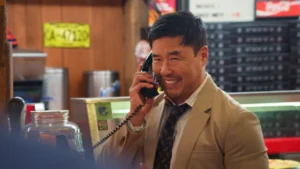

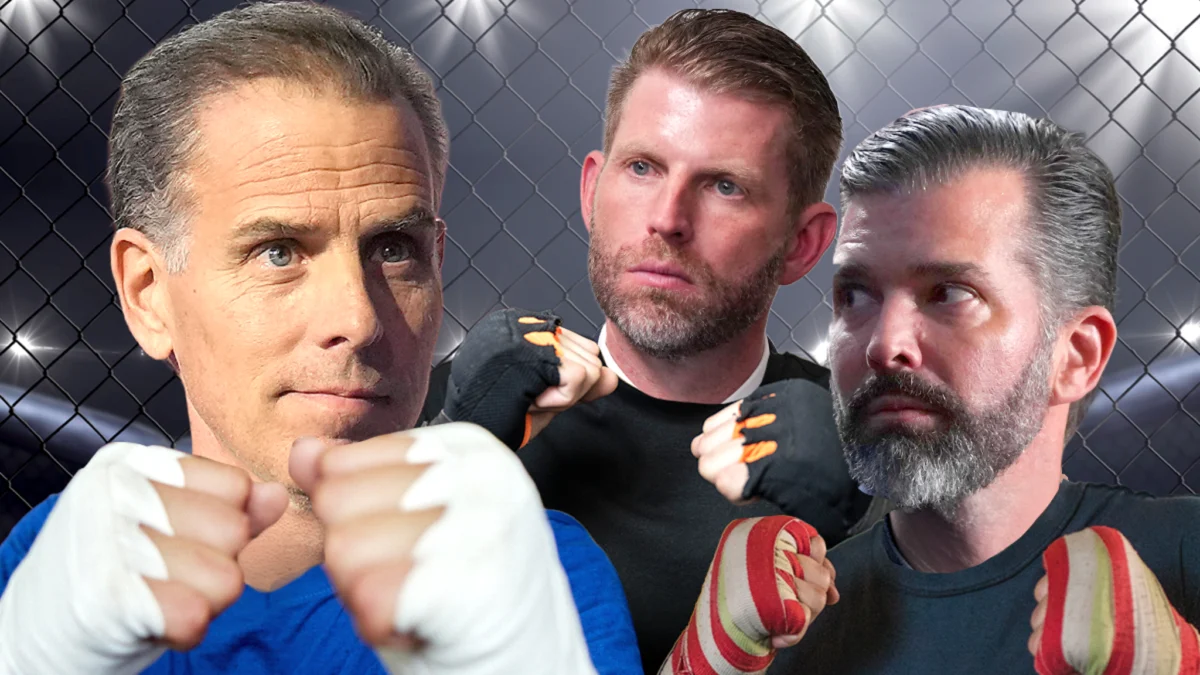
In an unexpected development that further blurs the lines between political commentary, reality television, and combat sports, Hunter Biden, son of the sitting President, has issued a direct challenge to Donald Trump Jr. and Eric Trump, sons of former President Donald Trump. The challenge, delivered via a video message posted on April 9, 2026, suggests a potential cage match, a proposition reportedly being explored by YouTube personality and journalist Andrew Callaghan of Channel 5. This audacious call-out has ignited a firestorm of discussion across social media platforms and traditional news outlets, raising questions about the evolving nature of political engagement and public spectacle in contemporary America.
The Gauntlet Thrown: A Political-Personal Challenge
The announcement came as Hunter Biden revealed his intention to join Andrew Callaghan on his Channel 5 YouTube channel’s upcoming tour. During the video, Biden casually, yet emphatically, disclosed, "Andrew is trying to organize a cage match between Eric, Don Jr., and me." His subsequent declaration left no room for ambiguity: "I told him I’d do it — 100 percent in if he can pull it off." This statement, delivered with a mix of defiance and apparent eagerness, immediately sent ripples through the political and entertainment spheres. It marks an unprecedented escalation in the long-standing, often acrimonious rivalry between the Biden and Trump families, moving from rhetorical battles and legal skirmishes to a potential physical confrontation within the confines of a combat sports arena. The challenge is perceived by many as a highly provocative maneuver, deliberately designed to draw a response from the Trump brothers and further inject the intensely personal family feuds into the national discourse. The precise rules, location, and potential sanctioning body for such an event remain entirely speculative, adding to the mystique and public fascination surrounding the proposal.
Unpacking the "Cage" Rhetoric: A Loaded Term
Crucially, Hunter Biden’s choice of the term "cage match" carries significant political baggage, a detail not lost on observers. The original report leading to this challenge explicitly stated, "Oh, how the tables have turned … instead of young immigrants, now Donald Trump’s own children might be thrown into a cage for a change." This pointed reference harks back to the controversial immigration policies of the Trump administration, particularly the "zero tolerance" policy implemented in 2018, which led to the separation of migrant families at the U.S.-Mexico border and images of children housed in chain-link enclosures. The use of "cage" by Hunter Biden is widely interpreted as a direct, and deeply provocative, callback to that period, weaponizing a highly sensitive political issue against his adversaries. By framing the proposed match with this historical context, Biden effectively elevates the personal challenge into a broader political statement, implying a sense of poetic justice or a reversal of fortunes. This rhetorical strategy ensures that the potential combat event would not merely be a physical contest but a deeply symbolic one, imbued with layers of political meaning and historical grievance, resonating with different segments of the American public based on their political affiliations and interpretations of past events. The term’s deliberate application adds a layer of sharp, acerbic wit to the challenge, transforming it from a mere stunt into a potent piece of political theater.
Andrew Callaghan and Channel 5: Architects of the Spectacle
Central to this unfolding narrative is Andrew Callaghan and his Channel 5 YouTube platform, known for its distinctive brand of "gonzo journalism" and often unconventional, raw interviews. Callaghan, who rose to prominence with his previous work on "All Gas No Brakes," has carved out a niche by immersing himself in various subcultures and events across America, often capturing candid, unfiltered perspectives from individuals on the fringes or at the heart of contentious issues. His style frequently blurs the lines between serious reporting, satirical commentary, and performance art, making him an ideal facilitator for such an audacious proposal. Channel 5’s audience, largely composed of younger demographics, is accustomed to its host’s willingness to engage with provocative subjects and personalities, often yielding viral content. Hunter Biden’s decision to join Callaghan’s tour, and his revelation about Callaghan’s role in attempting to organize this cage match, signals a strategic alliance designed to maximize public attention and leverage Callaghan’s platform for a wider reach. This collaboration suggests an intentional move to circumvent traditional media gatekeepers and deliver a message directly to a highly engaged online audience, further emphasizing the shift towards new forms of public engagement and political communication in the digital age. Callaghan’s involvement ensures that the event, if it materializes, would be presented through a lens that is both irreverent and deeply embedded in contemporary internet culture, amplifying its reach and impact.
The Trump Sons’ Silence and Anticipated Response
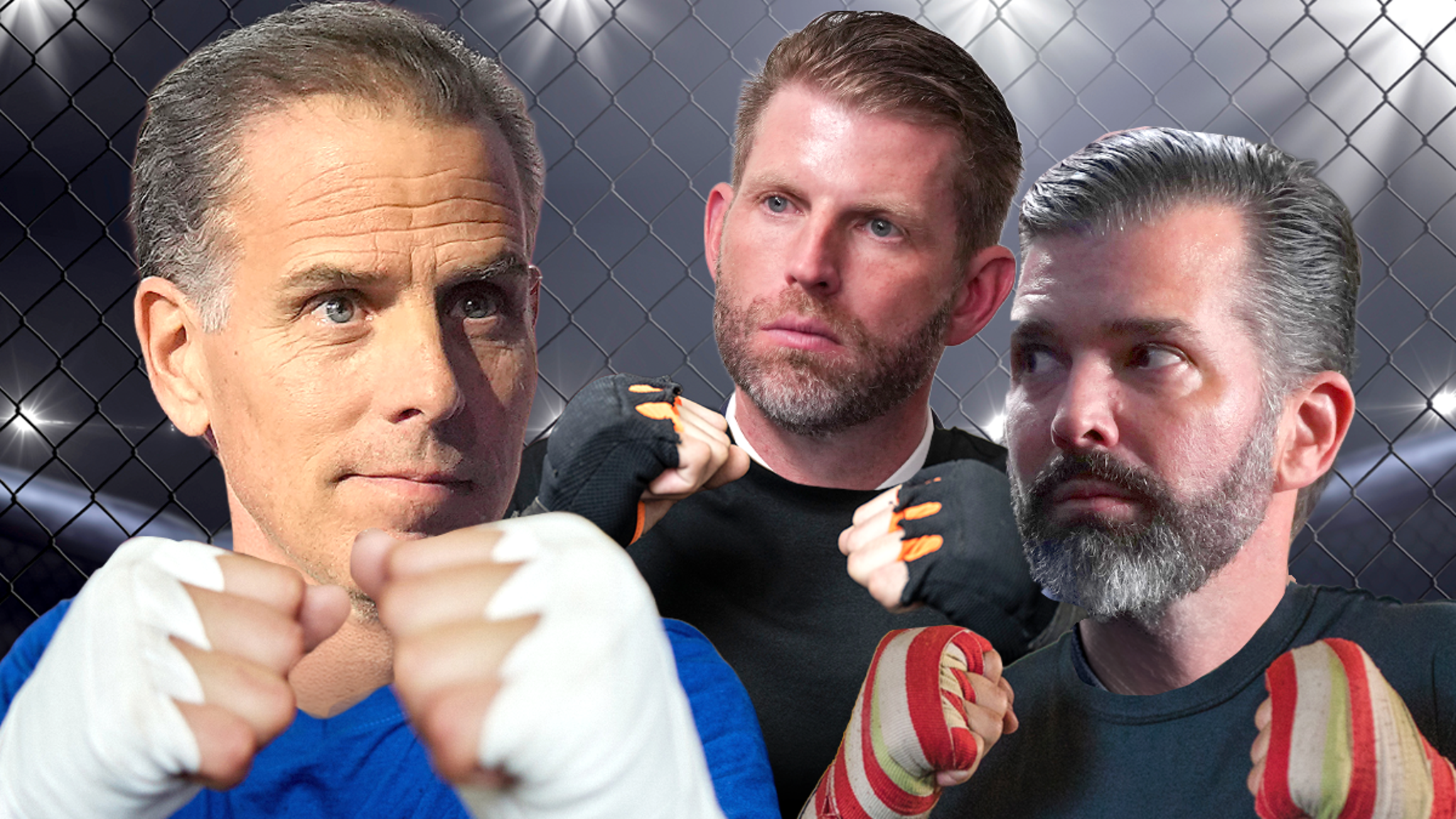
As of the immediate aftermath of Hunter Biden’s announcement, there has been no official or public response from Donald Trump Jr. or Eric Trump. This silence, however, is being closely watched and analyzed. The Trump brothers are known for their outspoken nature and frequent engagement in political discourse, often employing aggressive rhetoric against their perceived opponents. Their non-response could be interpreted in several ways: a strategic pause to formulate a measured reply, a dismissal of the challenge as beneath their notice, or even an internal deliberation on the potential public relations ramifications of either accepting or rejecting such a high-profile dare.
Accepting the challenge would undoubtedly generate immense media attention and could be framed by their supporters as a display of strength and willingness to fight. However, it also carries inherent risks, including potential injury, negative optics if they were to lose, and the criticism that they are trivializing serious political discourse. Conversely, rejecting the challenge might be perceived by some as cowardice or an unwillingness to confront a political rival, potentially undermining their image among certain segments of their base. Political analysts suggest that the Trump campaign apparatus would be weighing the public relations benefits against the potential downsides, considering how such an event would play out with their core electorate and the broader American public. Their eventual response, or continued silence, will undoubtedly shape the next phase of this extraordinary narrative, contributing to the ongoing political spectacle that defines the current era. The challenge places them in a difficult position, where any move carries significant political weight.
UFC Freedom 250 and the Blurring Lines of Politics and Combat Sports
The context provided by the original report mentions a hypothetical or rumored event, "UFC Freedom 250," slated to take place at the White House later in the summer of 2026. While details about this specific event remain sparse and its veracity unconfirmed, its inclusion within the narrative of Hunter Biden’s challenge is significant. It suggests a broader trend or a perceived shift towards the integration of combat sports into political landscapes, a phenomenon that has been gaining traction in recent years. The idea of a "UFC Freedom 250" at the White House, even if purely speculative, signifies a cultural moment where the highest office in the land could potentially host events that blend political figures with the raw physicality of mixed martial arts.
This aligns with a growing global trend where public figures, from influencers and celebrities to actual politicians, have increasingly participated in boxing and MMA matches, often for charity or entertainment. Such events capitalize on public curiosity, generate massive viewership, and serve as potent vehicles for brand building or political messaging. The allure lies in the spectacle, the perceived authenticity of physical confrontation, and the ability to cut through the noise of traditional media. If the proposed Hunter Biden-Trump sons cage match were to materialize, it would undoubtedly become the most high-profile example of this trend to date, further blurring the distinctions between political discourse, sports entertainment, and personal feuds. It underscores a shift where traditional political debates are increasingly being overshadowed by more theatrical, and sometimes gladiatorial, forms of public engagement, reflecting a society hungry for spectacle and direct confrontation. The mention of the White House as a potential venue for "UFC Freedom 250" lends a quasi-official, almost surreal, gravitas to the notion of political figures engaging in sanctioned combat.
Hunter Biden’s Tour: Beyond the Ring
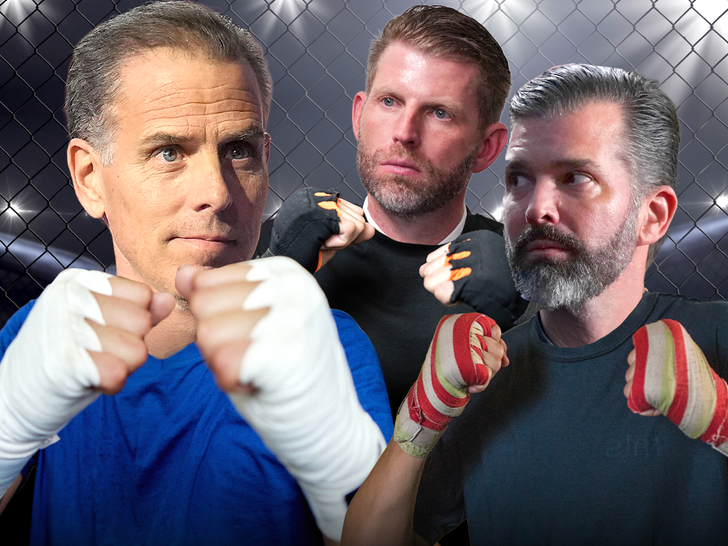
Regardless of whether the cage match with the Trump brothers materializes, Hunter Biden’s announced participation in Andrew Callaghan’s Channel 5 tour is set to proceed. The tour includes scheduled stops in prominent American cities such as Phoenix, San Diego, and Albuquerque. While the precise nature of Hunter Biden’s role on the tour has not been fully detailed, it is anticipated that he will engage in discussions, interviews, and perhaps even participate in Callaghan’s signature style of street-level interactions. This tour provides Hunter Biden with a unique platform to engage directly with the public, potentially offering insights into his personal experiences, his legal battles, and his perspective on the political landscape, all filtered through the unconventional lens of Channel 5.
For Callaghan, Hunter Biden’s involvement is a significant coup, bringing a high-profile political figure into his sphere and likely attracting an even broader audience to his content. The tour itself is expected to feature Callaghan’s characteristic blend of humor, social commentary, and unfiltered interviews, with Hunter Biden adding an unprecedented layer of political intrigue. Andrew Callaghan himself hinted at "plenty of surprises in store" for the tour, suggesting that Hunter Biden’s presence might involve more than just traditional speaking engagements. This collaboration represents a novel approach for a presidential son to engage with the public, bypassing traditional media channels and opting for a more direct, internet-native form of interaction, further highlighting the evolving strategies for public figures to connect with their audiences in the digital age.
Implications and the Future of Political Spectacle
The proposition of a cage match between Hunter Biden and the Trump sons carries profound implications for the future of political engagement and public discourse in the United States. Firstly, it signifies a further erosion of traditional boundaries between politics, entertainment, and personal celebrity. In an era already characterized by political figures leveraging social media and reality television tactics, this challenge takes the spectacle to an unprecedented level. It risks trivializing serious policy debates and democratic processes, reducing political contention to a literal slugfest.
Secondly, the event, if it were to occur, would undoubtedly be a logistical and security nightmare. Organizing a sanctioned combat event involving such high-profile figures, potentially at a venue like the White House (as suggested by "UFC Freedom 250"), would involve immense planning, security protocols, and regulatory oversight. The ethical implications for political figures participating in such events would also be scrutinized, raising questions about the dignity of public office and the appropriate avenues for resolving political differences.
From a strategic standpoint, the challenge could be seen as a calculated move by Hunter Biden to reframe his public image, injecting an element of defiance and unconventional strength into a narrative often dominated by his legal troubles and personal struggles. For the Trump sons, their response will be crucial in shaping their own public perception and political standing. The broader impact lies in the potential normalization of such extreme forms of political performance. If this challenge gains significant traction and sets a precedent, it could lead to an even more theatrical and confrontational political landscape, where personal grievances are settled not through debate or policy, but through direct, physical challenges, further blurring the lines between statesmanship and showmanship. This incident reflects a growing trend where the political arena increasingly mirrors the entertainment industry, prioritizing spectacle and viral moments over substantive discussion, ultimately reshaping how citizens engage with and perceive their leaders.
The audacious challenge issued by Hunter Biden to Donald Trump Jr. and Eric Trump for a cage match represents an extraordinary moment in American political theater. Fuelled by the unique vision of Andrew Callaghan and his Channel 5 platform, this proposition transcends traditional political rivalries, pushing the boundaries of public engagement into uncharted territory. While the logistical complexities and ethical considerations are immense, the very suggestion of such an event underscores the increasing fusion of politics with entertainment, and the insatiable public appetite for spectacle in the digital age. As the nation awaits a response from the Trump brothers and further details from Callaghan’s tour, one thing remains clear: the lines between political discourse, personal feuds, and public entertainment continue to blur, ushering in an era where the unexpected has become the new normal.