


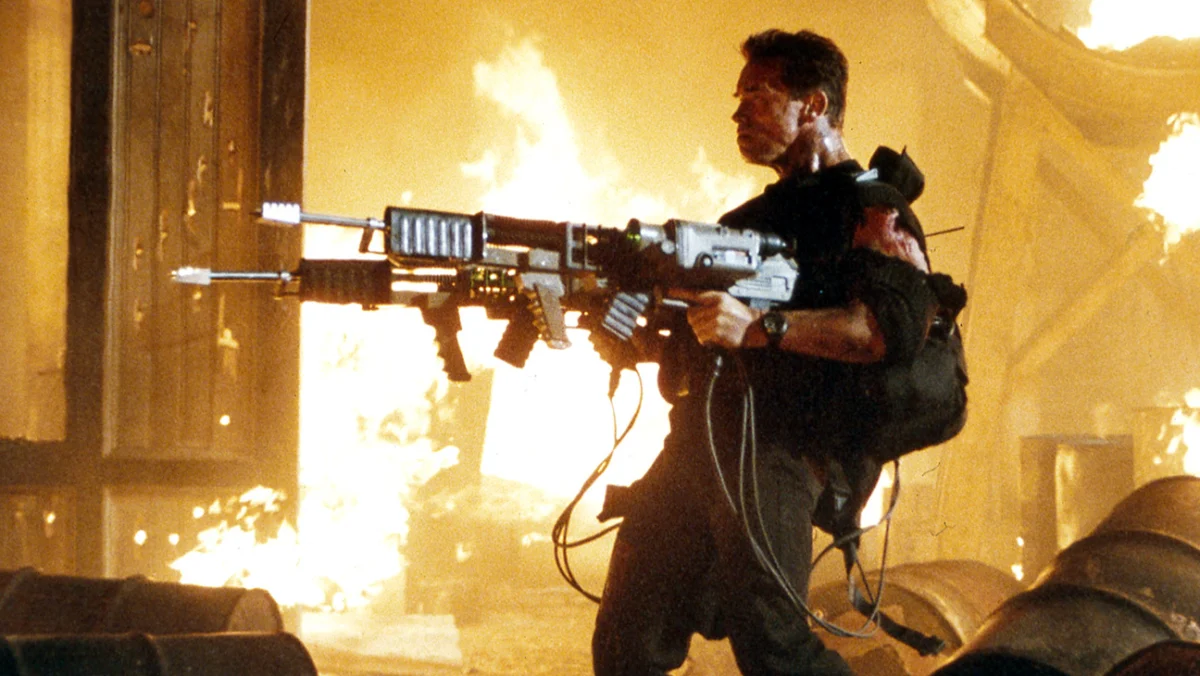
As Warner Bros. marks the 30th anniversary and 4K release of the 1996 action blockbuster Eraser, director Chuck Russell has offered a rare glimpse into the intense pressures and unforeseen challenges that shaped the Arnold Schwarzenegger-led film. In a recent interview, Russell revealed two critical, last-minute crises that threatened to derail the production and its theatrical release: a startling overlap with a major action sequence in Brian De Palma’s Mission: Impossible and a legal entanglement over a villainous company’s name. These behind-the-scenes struggles underscore the high stakes and rapid-fire decision-making inherent in crafting a tentpole Hollywood film in the mid-1990s.
The Genesis of a 90s Action Icon
Eraser was released at the zenith of Arnold Schwarzenegger’s career, following his colossal success in films like True Lies (1994) and Terminator 2: Judgment Day (1991). The film cemented his status as a leading man capable of anchoring large-scale action spectacles. For Chuck Russell, Eraser represented a significant shift in his directorial trajectory. Having made his mark in the horror genre with A Nightmare on Elm Street 3: Dream Warriors (1987) and then surprised audiences with the wildly successful comedy The Mask (1994), Russell was keen to explore the action genre. This genre fluidity was a deliberate choice, as he recounts, driven by a desire to avoid being pigeonholed and a personal "jones to do an action movie."

Schwarzenegger, reportedly a fan of The Mask, actively sought Russell for the project, providing the director with an invaluable opportunity to work within the full studio system. This was a considerable step up from The Mask, which, despite its polished appearance and studio distribution, was an independent film. Eraser offered Russell the "bells and whistles" of a major Warner Bros. production, commanding hundreds of crew members, dozens of trucks, and extensive pyrotechnics and complex action sequences. The film’s narrative, penned by Tony Puryear and Walon Green, centers on U.S. Marshal John "Eraser" Kruger, a specialist in the Witness Protection Program (WITSEC) who stages the deaths of compromised witnesses and erases their identities. His most dangerous assignment arrives with Lee Cullen (Vanessa Williams), an executive who uncovers her employer, the defense contractor Cyrez, planning to illicitly sell advanced electromagnetic rail guns to terrorists. This premise, blending high-tech espionage with Schwarzenegger’s signature blend of physicality and stoicism, positioned Eraser as a quintessential 90s action thriller.
The "Mission: Impossible" Conundrum: A Race Against Coincidence
Perhaps the most astonishing revelation from Russell concerns a near-identical action sequence shared with Mission: Impossible, which premiered just a month before Eraser in May 1996. Russell vividly recalls catching wind during Eraser‘s production that Brian De Palma and Tom Cruise had just filmed a virtually identical third-act set piece for Mission: Impossible. The scene in question involved a protagonist, suspended by wires, infiltrating a high-security CIA facility to retrieve sensitive data. For Eraser, Schwarzenegger’s character was initially slated to execute a strikingly similar maneuver to extract a disc from the CIA.
The implications of this coincidence were immediate and severe. With Eraser scheduled for a June 1996 release, following so closely on the heels of Cruise’s burgeoning action franchise, presenting an identical scene was simply not an option. Studio executives, undoubtedly keen to avoid accusations of plagiarism or a lack of originality, would have exerted immense pressure. Russell and his team were forced into a frantic, eleventh-hour rewrite. "I had Arnold doing almost exactly the same thing to get a disc out of the CIA, and we had to rewrite it to instead have Arnold get into the enemy company, Cyrez, another way," Russell explained. This meant jettisoning weeks, possibly months, of conceptualization, pre-visualization, and planning for a pivotal action sequence. The competitive nature of Hollywood meant that speed and creative agility were paramount. Russell, possessing a competitive streak himself, embraced the challenge: "Okay, we’re going to do an even better scene, but we’ve got to write it tonight. We have to get a move on it." This forced pivot resulted in the revised sequence where Arnold infiltrates Cyrez through alternative means, showcasing the character’s resourcefulness and the film’s commitment to delivering fresh action. While Vanessa Williams’ character also covertly downloads information onto an optical disc, a narrative element that drew parallels, Russell clarified that the Schwarzenegger wire-drop scene was the primary concern for modification, underscoring the distinction in their respective cinematic tones.

The Cyrix/Cyrez Crisis: A Post-Production Nightmare
Just as the production team navigated the creative tightrope of avoiding cinematic déjà vu, another unforeseen obstacle emerged during post-production, threatening Eraser‘s hard-won release date. The villainous defense contractor in the film was initially named "Cyrex." However, a "hysterical coincidence" unfolded when a sound technician, out of curiosity, dialed directory assistance for the fictional company name and was connected to a real company in Texas called Cyrix. This real-world Cyrix was not only an active entity but was also involved in government contracts for weapons manufacturing, creating a significant legal quandary for Warner Bros.
In the mid-1990s, intellectual property laws and corporate branding were fiercely protected, and the prospect of a fictional antagonist sharing a name with a real-world company engaged in similar, albeit legitimate, activities was a non-starter. Warner Bros. attempted to negotiate a settlement, offering the company "some money," but Cyrix firmly declined, asserting that their business was too central to their identity to be bought off. This forced an immediate and unprecedented scramble to alter the company name throughout the entire film.
The scale of this task in 1996 was "breathtaking," as Russell describes. Unlike today’s digital workflows where such changes might be managed with relative ease, the team had to physically alter the letters "in at least 70 shots." The name "Cyrex" was omnipresent: emblazoned on helicopters, the tops of buildings, and even the caps worn by security guards. This monumental visual effects challenge necessitated distributing the work to "every effects company" available, demanding rapid turnaround within a single week. The technological limitations of the era meant dealing with "physical film" rather than digital files, adding layers of logistical complexity and time constraints. The mad dash almost caused Eraser to miss its scheduled delivery ahead of its major opening. Russell particularly lamented how this eleventh-hour crisis impacted the final color timing for the CGI crocodiles, a sequence he felt suffered from being "too bright" due to the rushed schedule. This episode serves as a stark reminder of the immense technical hurdles faced by filmmakers in the nascent stages of digital visual effects.

Authenticity, Innovation, and Enduring Legacy
Despite these formidable challenges, Eraser managed to weave a compelling narrative, bolstered by Russell’s commitment to both authenticity and innovation. The film’s depiction of the Witness Protection Program benefited from the consultation of advisors from the CIA and the U.S. Marshals’ WITSEC program. Russell found the internal disagreements among these experts on operational protocols particularly useful, allowing him to craft a storyline that felt grounded while still being entertaining. He also candidly informed the CIA advisors that their agency would not be portrayed as "the good guys" in the film, ensuring their understanding and cooperation.
Perhaps the most memorable technological innovation introduced by Russell was the miniaturized electromagnetic rail gun. The original script merely had characters pursuing a disc, a plot device Russell found overused. Leveraging his personal familiarity with the technology, he proposed the inclusion of a "long rifle size" rail gun, transforming a theoretical military concept into a tangible, deadly weapon for the big screen. This "near-future" element resonated deeply, even earning a "back-channel compliment from Naval Intelligence" for its accuracy. The rail gun not only distinguished Eraser from other action films but also became one of its most iconic and frequently remembered elements.
Looking back 30 years later, Russell reflects on how much the filmmaking process has evolved. While proud of the film’s ambitious physical scope, extensive sets, and practical action, he notes that much of Eraser‘s action would likely be rendered via CGI today. He champions the tangible suspense that practical stunts bring, believing that audiences can "sense that the stunt was actually risky," which in turn enhances the actors’ performances and the overall thrill of the movie. A personal memory that still recurs for him is the perilous boxcar stunt at the film’s climax, where he felt a profound loss of control once "action" was called, a testament to the inherent risks and triumphs of practical filmmaking.

Russell also cleared up lingering rumors about friction with producer Arnold Kopelson, clarifying that any perceived conflict likely stemmed from his insistence on elevating the original script’s "typical" action into three ambitious, never-before-seen set pieces. Schwarzenegger himself embraced Russell’s vision, leading to a synergistic collaboration that ultimately delivered a box office success, grossing over $242 million worldwide against a budget of $100 million. The film’s enduring appeal, now amplified by its 4K release, speaks to the resilience and creative ingenuity of a team that navigated unexpected obstacles to deliver a definitive 90s action spectacle. And for those with a keen eye for cinematic trivia, Russell finally acknowledged the "odd coincidence" of Schwarzenegger’s character being named John Kruger, a subtle, unintentional echo of Freddy Krueger from his earlier horror classic, a detail that had surprisingly gone unmentioned for three decades.