The annual Overlook Film Festival, a beacon for horror aficionados, recently concluded its latest edition in the historic and notoriously haunted city of New Orleans, Louisiana. Renowned for its immersive programming and dedication to celebrating horror in all its multifaceted forms, the festival once again delivered an electrifying array of cinematic experiences, from groundbreaking features and inventive short films to live interactive events and insightful industry panels. This year’s showcase firmly cemented Overlook’s reputation as a pivotal platform for both emerging artists pushing genre boundaries and established mainstays continuing to innovate, featuring a robust lineup that included upcoming releases from major studios, anticipated Shudder Originals, and independent gems still seeking distribution. While the sheer volume of compelling content made it an impossible feat to attend every single screening, the festival offered a tantalizing glimpse into the future of fear.
The Overlook Experience: A Convergence of Fear and Artistry
Held in a city steeped in supernatural lore and gothic charm, the Overlook Film Festival leverages its unique location to enhance the overall experience. New Orleans, with its voodoo traditions, centuries-old cemeteries, and tales of spectral inhabitants, provides an unparalleled backdrop for a festival dedicated to horror. Beyond traditional film screenings, Overlook is celebrated for its interactive elements, including escape rooms, ARG (Alternate Reality Game) experiences, and live performances that blur the lines between audience and narrative, creating a truly communal and often terrifying engagement with the genre. This distinctive approach draws a passionate global audience, making it a crucial stop on the genre festival circuit alongside events like Fantastic Fest and FrightFest. The festival serves not just as a screening platform but as a crucible for discussions on horror’s evolving role in cultural commentary, psychological exploration, and artistic expression.
The 2024 feature film lineup, curated with an eye for both thematic depth and visceral impact, showcased a diverse range of horror subgenres. From psychological thrillers that delve into the fragility of memory to satirical takes on childhood nostalgia and socially conscious monster narratives, the selections underscored the genre’s remarkable versatility and its capacity to reflect contemporary anxieties. The films highlighted below, presented alphabetically, represent some of the most memorable and impactful offerings that thrilled and chilled attendees.
Feature Film Highlights: A Deep Dive into the Dark Arts
Affection: A Haunting Debut of Memory and Identity
BT Meza’s directorial debut, Affection, emerged as a standout psychological horror, masterfully weaving a narrative of disorientation and dread. The film centers on Ellie Carter, portrayed by genre favorite Jessica Rothe, who awakens to a terrifying new reality: a house she doesn’t recognize, a name that feels alien, a husband (Joseph Cross) she doesn’t know, and a daughter (Julianna Layne) she cannot recall. Her husband attributes her memory loss, tremors, and hallucinations to a traumatic brain injury. However, Ellie’s gnawing suspicion points to a more sinister, deliberate truth.
Meza’s direction is characterized by a twisty narrative that evokes comparisons to M. Night Shyamalan’s early work, particularly in its pastoral setting and its emphasis on the subjective nature of belief and perception. The film’s strength lies in its effective use of a small ensemble cast, fostering a palpable sense of connection that, when strained, escalates the tension to agonizing levels. Jessica Rothe, celebrated for her dynamic physical performances in the Happy Death Day franchise, here delivers a more somber, harrowing portrayal, demonstrating a remarkable range as her character endures profound physical and psychological torment. With innovative practical effects, unsettling body horror, and a deeply compelling narrative, Affection signals a highly promising start to Meza’s filmmaking career. The film is slated for release in select theaters on May 8, setting the stage for a wider audience to experience its unsettling depths.
American Dollhouse: Deconstructing Domestic Nightmares
John Valley, known for his provocative work like The Pizzagate Massacre, offers a disturbing new take on Christmas horror with American Dollhouse. The film follows Sarah (Hailey Lauren), a woman adrift and haunted by her past, who inherits her childhood home, viewing it as a chance for a much-needed fresh start. Despite her brother Michael’s (Tinus Seaux) legitimate concerns about the dilapidated property and Sarah’s lingering immaturity, she believes the move will force her to confront her traumatic upbringing. Her aspirations for peace are immediately shattered by Sandy (Kelsey Pribilski), her ever-watchful neighbor – an adult woman dressed in a childlike pink sweatsuit, obsessed with enforcing her vision of Christmas traditions, specifically the outdoor lights her mother used to put up.
Sarah’s defiant refusal and apparent disregard for conventional decor instantly put her at odds with Sandy, whose own deeply troubled past fuels increasingly unhinged and uncomfortable confrontations. Valley describes American Dollhouse as a "proto slasher," a term suggesting a deconstruction of the genre’s foundational elements while simultaneously dissecting the idealized American family unit, its rituals, and its often-fragile values. While Sarah attempts to bury the painful fragments of her past, Sandy desperately strives to stitch together a distorted vision of home, leading to a bloody, frightening showdown between two women grappling with vastly different, and violently clashing, definitions of "home for the holidays." The film’s bold commentary and unsettling performances mark it as a memorable entry into the subgenre of holiday horror.
Boorman and the Devil: Reappraising a Controversial Classic
David Kittredge’s documentary, Boorman and the Devil, embarks on a fascinating journey to re-evaluate John Boorman’s much-maligned 1977 sequel, Exorcist II: The Heretic. Often cited as one of Hollywood’s most notorious failures—a critical and financial disaster that contributed to the decline of the New Hollywood era—Boorman’s ambitious follow-up to William Friedkin’s iconic 1973 film has, despite its detractors, cultivated a devoted cult following. Kittredge’s documentary makes a compelling case for the sheer artistry and dedication involved in its production, regardless of one’s ultimate opinion of the film itself.
Featuring extensive interviews with Boorman, original cast members Louise Fletcher and Linda Blair, various crew members, and respected film critics, Kittredge’s film offers a comprehensive look into the storied production, the ensuing disastrous fallout, and the film’s complex position within cinematic history. The documentary skillfully balances humor and heartbreak, providing a genuine sense of the immense pressures faced by the director, crew, and actors as they navigated conflicting studio demands, lofty creative ambitions, audience expectations, and personal goals. It stands as a powerful celebration of technical prowess, storytelling aspiration, and the inevitable "messes made in the process of art." As Kittredge astutely observed at the film’s screening, there is often more profound interest in a grand, imperfect artistic "swing" than in a merely "good" film, precisely because such audacious attempts are increasingly rare in a risk-averse industry. Boorman and the Devil ultimately serves as an inspirational call to filmmakers, encouraging them to prioritize inventiveness and unwavering belief in their unique stories over the pursuit of a flawless, safe product.
Buddy: A Satirical Descent into Childhood Nightmares
Casper Kelly, the visionary behind the viral sensation Too Many Cooks, delivers what could easily become the next horror-comedy icon with Buddy. The film opens innocuously enough, mimicking a typical 90s Barney-esque children’s TV program, "It’s Buddy!" In this colorful world, four children, guided by a towering bipedal orange and purple unicorn named Buddy (voiced by Keegan-Michael Key), learn wholesome lessons in kindness and responsibility. However, this saccharine facade soon dissolves into a horrifying nightmare. Buddy is revealed to be far from the benevolent friend he appears, possessing a deeply possessive nature and a murderous temper whenever the strict rules of his world—populated by fearful, sentient furniture, a mailbox, and flowers—are transgressed.
As the children—Freddy (Delaney Quinn), Oliver (Tristan Borders), Wade (Caleb Williams), and Hannah (Madison Polan)—desperately attempt to escape Buddy’s tyranny by venturing into the forbidden woods beyond their clubhouse, a parallel narrative unfolds in the real world. Grace (Cristin Milioti) feels an inexplicable, strange connection to the obscure children’s show, despite there being no discernible record of its existence, leading her husband Ben (Topher Grace) to believe she is losing her grip on reality. What ensues is a gory, anxiety-inducing, and often hilarious odyssey that oscillates between the worlds of fiction and reality. Kelly expertly eviscerates the comforting nostalgia of childhood media, twisting the lens through which children’s television is traditionally viewed and revealing a gleefully mean-spirited underbelly. The film’s sharp satire and shocking violence make it a standout horror-comedy for contemporary audiences.
Goody Goody: The Agony and Ecstasy of Pregnancy Horror
Raymond Creamer’s feature debut, Goody Goody, makes an impressive and distinct contribution to the burgeoning pregnancy horror subgenre. Diverging from the more common focus on the gestation period or the supernatural aftermath of a birth, Creamer’s film zeroes in exclusively on the harrowing process of actual labor. This intensely intimate setting amplifies the high stakes, fragile emotions, and the literal life-and-death situation involving two lives. Inspired by a family member’s successful home birth and historical accusations of witchcraft, Goody Goody skillfully blends elements of scientific realism with ancient superstition. The film depicts a natural home birth process, where Goody (Samantha Robinson) and Jayson (Colby Hollman) anticipate welcoming their son into their secluded cabin. However, their midwife, Sarah (Colleen Foy), soon senses that something may be profoundly wrong with the baby.
Trapped by a sudden snowstorm and a loss of power, Sarah and Jayson’s sister, Candace (Zoe Renee), desperately try to manage the escalating crisis. It quickly becomes apparent that their predicament is far from natural. Creamer’s direction builds tension patiently and effectively, cultivating a strong, oppressive atmosphere. The film maintains a gripping pace, thanks to assured performances and the steadily ratcheting tension that masterfully balances the supernatural unknown with squirm-inducing body horror. Yet, it also interjects moments of genuine hope and empathy, occasionally creating a deceptive sense of security before plunging viewers back into terror. Goody Goody is scheduled for release on Shudder later this year, promising to be a significant addition to the streaming platform’s horror catalog.
Hokum: Irish Folklore and Psychological Torment
In a remarkably short span of six years, Irish filmmaker Damien McCarthy has risen from relative obscurity in indie horror to become the director behind some of the year’s most anticipated genre films. Following his acclaimed debut Caveat (2020) and the widely praised Oddity (one of 2024’s best horror films), McCarthy continues his distinct blend of Irish folklore and genuinely terrifying cursed objects with Hokum. This film, lauded as one of the best horror offerings of the first half of the year, further solidifies his unique voice in the genre.
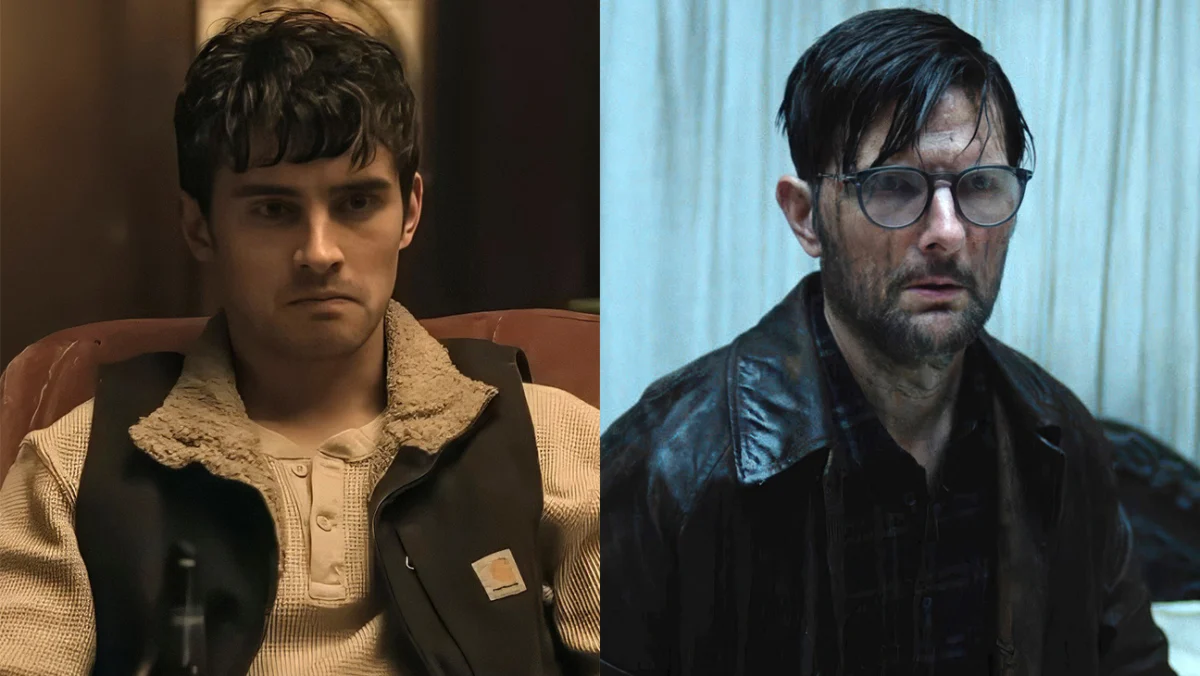
Hokum follows Ohm Bauman (Adam Scott), a depressed and rather cruel author, who travels to Ireland—the honeymoon destination of his deceased parents—in an attempt to complete the final novel in his best-selling "Conquistador Trilogy." The hotel he chooses, however, offers more than just inspiration, particularly through local legends of a witch trapped in the building’s locked Honeymoon Suite. After a personal tragedy preys on Ohm’s pre-existing guilt, he decides to remain at the hotel after it closes for the season, determined to search for clues. Encouraged by Jerry (David Wilmot), a scene-stealing local outcast and paranormal enthusiast, Ohm breaks into the sealed-off Honeymoon Suite. Despite his initial skepticism, dismissing the supernatural as mere "hokum," he is soon beset by horrors that exploit his deepest fears, forcing him to confront whether he deserves the torment he is experiencing. McCarthy’s approach creates a "funhouse" of terror, where jump scares are masterfully crafted, ranging from playful to profoundly shocking. In true Irish fashion, the film grounds itself in the rich tradition of oral and written folklore, emphasizing the importance of history and place, while still retaining an ancient sense of mystery that feels intrinsically tied to the land. With a strong central character arc, haunting imagery, and memorable set pieces, Hokum is a true bone-rattler poised to bring McCarthy’s distinctive vision to a broader mainstream audience. It is scheduled for theatrical release on May 1st.
Obsession: The Terrifying Price of Twisted Desire
There is an undeniable, electric charge emanating from Curry Barker’s Obsession, a film that not only raises the hairs on the back of one’s neck but leaves a persistent, unsettling sensation. Barker, who garnered a significant YouTube following for his anxiety-inducing short films and darkly comedic sketches, amplifies his signature style for his theatrical feature debut. The result is one of the most upsetting, unhinged, and shockingly effective horror films of the year thus far, a status it is likely to retain. For many, including this reviewer, it stands not only as a favorite but as a film demanding an immediate rewatch.
The narrative follows Bear (Michael Johnston), an unconfident, somewhat pathetic music store employee secretly in love with his co-worker and childhood friend, Nikki (Inde Navarrette). Lacking the courage to confess his feelings, Bear uses a "One Wish Willow"—a novelty item from a local crystal shop—to wish that Nikki would love him more than anyone else in the world. Miraculously, the wish works, but at the devastating cost of Nikki’s personality and sanity. This transformation deeply concerns Bear’s friends, Ian (frequent Barker collaborator Cooper Tomlinson) and Sarah (Megan Lawless). What initially appears to be Bear’s dream come true quickly becomes suffocating as Nikki refuses to leave his side. This suffocation soon spirals into outright horror as it becomes terrifyingly clear that the entity that looks like Nikki is no longer the Nikki Bear loved. The disturbing intricacies of their relationship are best experienced firsthand, but the mental and physical alterations Nikki undergoes are genuinely nightmare-inducing.
Despite being early in his career, Barker demonstrates a seasoned understanding of how to simultaneously scare audiences and elicit laughter, tapping into modern social anxieties with surgical precision. His multi-hyphenate talents are on full display: his editing skills create an almost preternatural sense of timing for maximum emotional impact, and his writing crafts characters whose conversations feel authentically overheard, grounding the film in a claustrophobic reality. Crucially, Barker excels at showcasing his actors’ unique talents. While the entire cast delivers strong performances, Inde Navarrette’s portrayal is nothing short of incredible. Her ability to contort her facial expressions and manipulate the pitch of her voice is so uncanny and alarming that her performance itself borders on the supernatural, leaving audiences shaking, laughing, and often moved to tears by its sheer intensity. Obsession is a performance and a film that will be discussed for years to come, deserving to be seen on the big screen with a crowd eager to gasp, laugh, and scream in unison. It will be released in theaters on May 15.
Saccharine: Body Horror for the Ozempic Age
Natalie Erika James, acclaimed for her work on Relic and the upcoming Apartment 7A, brings a chilling dose of body horror to the burgeoning weight loss drug industry with Saccharine. The film introduces Hana (Midori Francis), a frustrated med-student grappling with her weight and an intense crush on her gym trainer, Alanya (Madeleine Madden). Desperate, she turns to an experimental, non-FDA-approved weight loss pill shared by a former high school classmate. Unable to afford the pills, Hana illicitly uses her school’s lab to reverse-engineer the ingredients, only to make a horrifying discovery: the pill is composed of human ash. Driven by her desperation to be attractive to Alanya and her inability to control binge eating, Hana begins incinerating parts of the cadaver she and her med-student group are dissecting for class.
Despite concerns from her friend Josie (Danielle Macdonald) and Alanya regarding her rapid weight loss, Hana develops an uncontrollable dependency on the pills. Her addiction soon manifests in terrifying ways: she begins seeing the ghostly figure of the cadaver she’s been desecrating, a specter that grows increasingly larger and more corporeal, eventually consuming Hana from within. Thematically, Saccharine is poised to spark significant debate, presenting a myriad of often-disagreeable ideas and depictions concerning body dysmorphia and body acceptance culture. Regardless of one’s stance on the film’s messaging, James’s direction ensures a visually stunning experience, replete with overlapping, visceral imagery and an pervasive sense of dread. Saccharine offers potent, timely scares for an era increasingly obsessed with quick fixes and societal pressures surrounding body image. The film is set to be released on Shudder later this year.
Trauma, or Monsters All: Fessenden’s Grand Monster Finale
Larry Fessenden, a preeminent voice in the independent horror scene whose work has inspired countless filmmakers showcased at this very festival, concludes his ambitious monster quadrilogy with Trauma, or Monsters All. This monumental film unites the iconic creatures from his previous works: Sam the vampire (Fessenden himself) from Habit (1995), Adam the Frankenstein of the Hudson (Alex Breaux) from Depraved (2019), and Charley the wolf man of Talbot Falls (Alex Hurt) from Blackout (2023). This monster mash is nearly three decades in the making, culminating in a profound narrative.
The story begins as Cassandra (Laetitia Hollard), a young biracial writer, moves to Talbot Falls to research a book on the revolutionary scientist and inventor George Washington Carver. She soon finds herself drawn into the town’s local history and persistent rumors of monsters after witnessing a Frankenstein’s monster-like figure outside her bedroom window. Compelled to investigate further, Cassandra publishes an article exposing the town’s hidden past, inadvertently placing a target on her back from those who prefer to ignore history. Her actions also threaten the precarious peace found by Adam and Charley, who have forged an unlikely alliance on the outskirts of town. Meanwhile, Sam the vampire arrives in Talbot Falls, drawn by the presence of other monsters, and immediately stirs trouble by turning Charley’s beleaguered love interest, Sharon (Addison Timlin), into a vampire. Concurrently, the sinister Polidori (Joshua Leonard) returns, determined to reclaim Adam, whom he views as his intellectual property and business asset. As Cassandra becomes an outcast in her new home, hunted by a racist group of ne’er-do-wells and the very monsters she exposed, she and her love interest, Agnes (Aitana Doyle), are forced to reexamine their responsibilities to history and to themselves.
Trauma serves as a heartfelt ode to the Universal Monster films of yesteryear, even featuring a direct recreation of the poster art from Frankenstein Meets the Wolf Man (1943) during a pivotal battle between Adam and Charley. Yet, in true Fessenden fashion, the film transcends mere homage, offering a potent societal critique. It fundamentally challenges the very notion of what constitutes a "monster" in contemporary America. Themes of race, sexuality, history, and environmental concerns play crucial roles in shaping the narratives presented and how they are perceived. The film subtly suggests that modern society has become distracted by manufactured enemies, while the true monsters reside not only in plain sight but often in the highest echelons of power. While remembering history is undeniably crucial, Fessenden posits that it is the innovative spirit of great individuals, like Carver, to whom we must turn to forge a better future. There is revolutionary potential in science and art, a path forward that moves beyond the cyclical history of oppression in America. Trauma has indelibly shaped individuals and the nation, but to truly progress and effect change, society must learn to release some of that past to heal and unite, forming a more intelligent and better-equipped force against the true horrors that persist. Fessenden’s latest work masterfully continues the thematic threads initiated with his first feature, No Telling (1991), and his initial Frankenstein film, offering profound insights—if not definitive answers—on how to combat the complex modern horrors we collectively face.
Broader Implications and the Future of Horror
The lineup at the Overlook Film Festival this year paints a compelling picture of the current horror landscape. It highlights a genre that is increasingly diverse, socially conscious, and unafraid to experiment with narrative and visual styles. The strong presence of films like Affection and Obsession underscores a resurgence in psychological horror that deeply explores human fragility and the dark corners of the psyche. Meanwhile, American Dollhouse and Buddy demonstrate horror’s potent satirical capabilities, dismantling cherished cultural institutions and childhood nostalgia to expose underlying anxieties.
The festival also reinforced the vital role of streaming platforms like Shudder, which continue to be key distributors for independent and genre-pushing films such as Goody Goody and Saccharine, ensuring these works reach a dedicated audience. The critical re-evaluation offered by Boorman and the Devil speaks to a broader trend within film scholarship and fandom: a willingness to revisit and find value in films once dismissed, appreciating the ambition even in perceived failures. Finally, Larry Fessenden’s Trauma, or Monsters All exemplifies the genre’s capacity for profound social commentary, using classic monstrous archetypes to critique contemporary societal ills and inspire collective healing.
The Overlook Film Festival remains a vital nexus for the horror community, not merely showcasing films but fostering dialogue and pushing the boundaries of what horror can achieve. The films unveiled this year suggest a vibrant, intellectually stimulating, and viscerally terrifying future for the genre, promising audiences both new nightmares and compelling reflections on the human condition. As these films begin their wider releases, they are poised to shape conversations and provide new perspectives on fear, identity, and society itself.