



The Intellectual Architect of Post-Colonialism
Edward Said, a professor of English and Comparative Literature at Columbia University, achieved international prominence for his 1978 seminal work, Orientalism. In this text, Said argued that Western academic and artistic representations of the Middle East—the “Orient”—were constructed to justify imperial ambitions. He famously contended that these depictions were not objective observations but rather projections of Western power, creating an "other" that served to validate colonial dominance.
This thesis sent shockwaves through the humanities, effectively birthing the field of post-colonial studies. Critics within the academy initially dismissed his work as overly polemical, while supporters heralded it as a necessary reckoning with the history of Western imperialism. By examining how knowledge is linked to power, Said transformed the way scholars, journalists, and policymakers approached the Middle East. The documentary effectively captures this tension, highlighting how Said’s intellectual rigor made him both a beacon for those seeking to understand the Palestinian narrative and a polarizing figure for those aligned with traditional geopolitical stances.
Chronology of an Exile
Born in 1935 in the Talbiya neighborhood of Western Jerusalem, Said was raised in an affluent, Christian Palestinian family. His early life was defined by the rapid disintegration of the British Mandate and the subsequent 1947–1949 Palestine War. When his family left Jerusalem in 1947, Said became part of the growing Palestinian diaspora. This experience of forced displacement—a theme he would later articulate in his memoir, Out of Place—served as the emotional and intellectual foundation for his later activism.
- 1947: Said and his family depart Jerusalem, marking the beginning of his life in exile.
- 1950s–1960s: Said pursues higher education in the United States, eventually earning his Ph.D. from Harvard University and joining the faculty at Columbia University.
- 1978: Publication of Orientalism, a landmark text that challenges the foundational biases of Western scholarship on the Arab world.
- 1979: Publication of The Question of Palestine, wherein Said critiques Zionism through the perspective of those displaced by its implementation.
- 1991–2003: Said battles chronic lymphocytic leukemia while continuing his work as a public intellectual, teacher, and member of the Palestinian National Council.
- 2003: Edward Said passes away in New York City.
Archival Depth and Personal Context
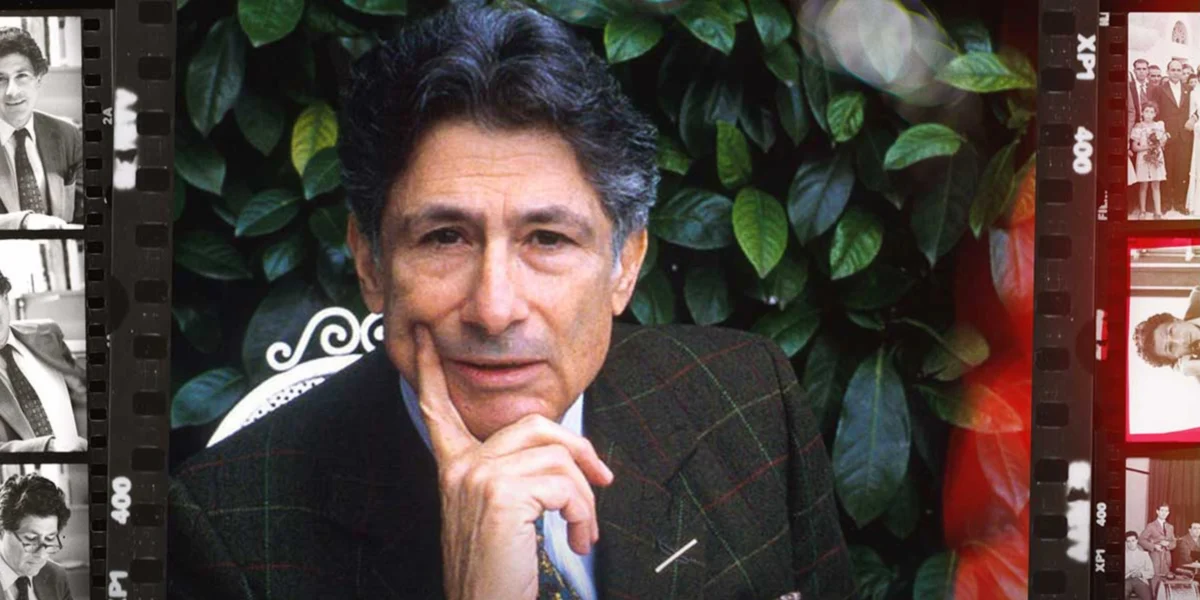
Baird’s documentary distinguishes itself through its access to the Said family archives. The inclusion of rare home video footage, some captured by Said’s father, provides a visual record of a pre-1948 Jerusalem that has since been irrevocably altered. This archival material does more than serve as a backdrop; it provides the empirical evidence for Said’s claims regarding his own identity as a man without a country. His passport, which simply lists his birthplace as "Jerusalem" without a sovereign state, acts as a potent symbol of the legal and existential liminality that characterized his life.
The film utilizes these materials to humanize the often-demonized figure. By showing Said in domestic settings—preparing for interviews, engaging with his students, and discussing his musical interests—Baird balances the image of the "outspoken critic" with that of the private individual. This multi-dimensional approach is critical to understanding why Said’s work resonated so deeply: he was not merely an academic, but a man articulating a lived experience of loss that he felt compelled to explain to an often-uncomprehending American public.
Analyzing the Impact of the Documentary
The primary challenge of Edward Said: Between Worlds lies in its editorial choice to rely almost exclusively on Said’s own perspective. By allowing his voice to guide the narrative, the film achieves a high level of intimacy, yet it intentionally avoids the "he-said, she-said" structure common in traditional news documentaries. For viewers familiar with the polarization surrounding the Israel-Palestine conflict, the film’s uncritical alignment with Said’s viewpoints may appear to be a lack of balance. However, from a biographical perspective, this choice is defensible: the film seeks to document the internal life and intellectual evolution of the subject rather than relitigate the historical disputes themselves.
The implication of this approach is that the audience is invited to engage with the world through the lens of Said’s intellectual framework. By focusing on his methodology—his insistence on "speaking truth to power" and his belief that the intellectual has a moral obligation to represent the marginalized—Baird forces the viewer to confront the human cost of the conflict. The film functions as an extension of Said’s own efforts to bridge the gap between Western cultural values and the Palestinian struggle for self-determination.
Broader Geopolitical Implications
The relevance of Said’s work has only intensified in the decades since his passing. His critique of how language, media, and academic discourse shape the public’s perception of conflict remains a core component of modern media literacy. Supporters point to his work as an early warning of the dangers of dehumanization in political rhetoric. Conversely, his critics continue to argue that his framing of Zionism as a form of settler-colonialism ignores the historical complexities of Jewish ties to the land and the necessity of statehood for Jewish survival.
By framing the story of Palestine through the lens of Said’s life, the documentary provides a coherent, if subjective, entry point into the "Gordian knot" of Middle Eastern politics. The film captures the irony that even as Said was vilified by his political opponents, his influence grew, shaping the next generation of activists and scholars. His insistence that the Palestinian story be told in a language that the West could comprehend—a language of human rights, self-determination, and historical truth—remains the blueprint for much of the advocacy surrounding the region today.
Conclusion: A Legacy Re-examined
Edward Said: Between Worlds is not a detached historical analysis; it is an immersive biographical study that successfully maps the life of one of the 20th century’s most significant intellectuals. By connecting the personal trauma of exile to the broader regional history, Maiken Baird provides a clear window into the motivations behind Said’s work. The film succeeds in its objective to show how a single individual, armed with nothing more than his intellect and a sense of displacement, managed to alter the trajectory of global discourse on Palestine.
While the film leaves room for debate regarding its lack of opposing viewpoints, it stands as a significant contribution to the study of public intellectuals and the politics of identity. In an era where the debate over Palestine remains as contentious and volatile as ever, this documentary serves as an essential companion to the writings of Edward Said, reminding audiences that behind every geopolitical statistic lies a human story, a legacy of exile, and an ongoing quest for historical recognition. As the world continues to grapple with the issues Said identified decades ago, his voice—captured so clearly in this film—remains a necessary, if challenging, presence in the modern conversation.