


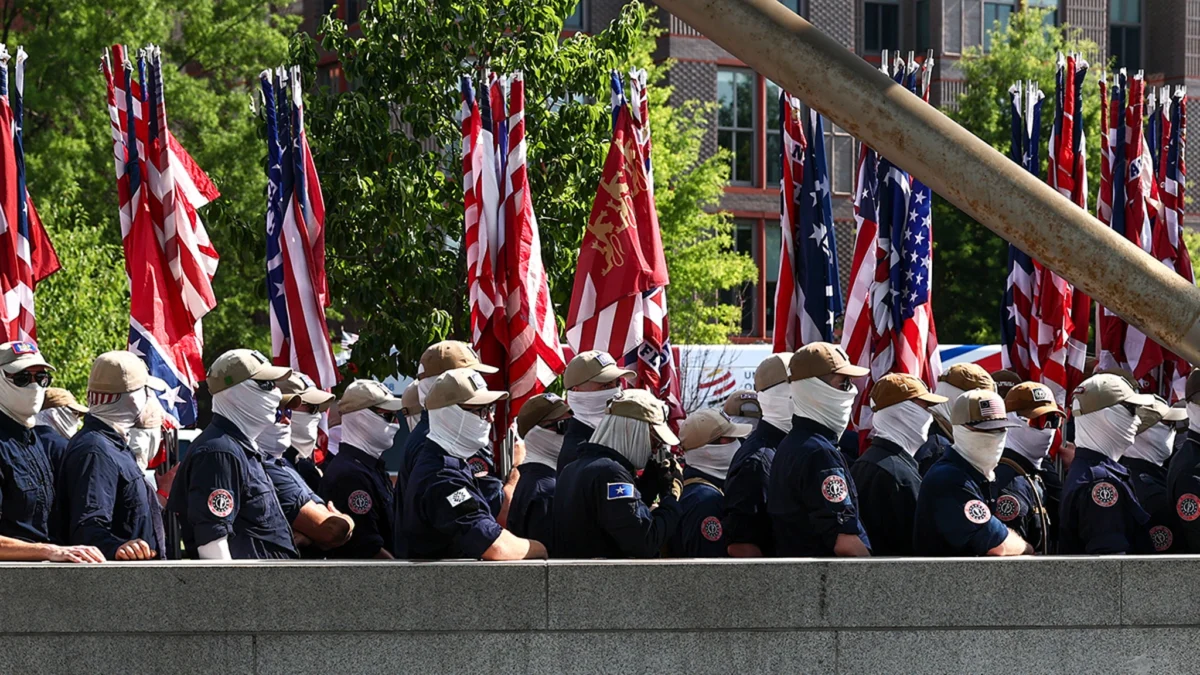
On Saturday, July 4, 2026, as the United States marked its semiquincentennial — 250 years since its Declaration of Independence — the nation’s capital became the stage for a deeply divisive demonstration. Hundreds of members of the Patriot Front, an organized white supremacist group, marched through Washington, D.C., openly displaying both American flags and the controversial Confederate battle flag, much to the dismay and condemnation of many citizens and civil rights advocates. This provocative display unfolded amidst sweltering heat that had already led to the cancellation of the city’s official Independence Day parade, casting a pall over what was intended to be a celebratory national milestone.
The March Through the Capital
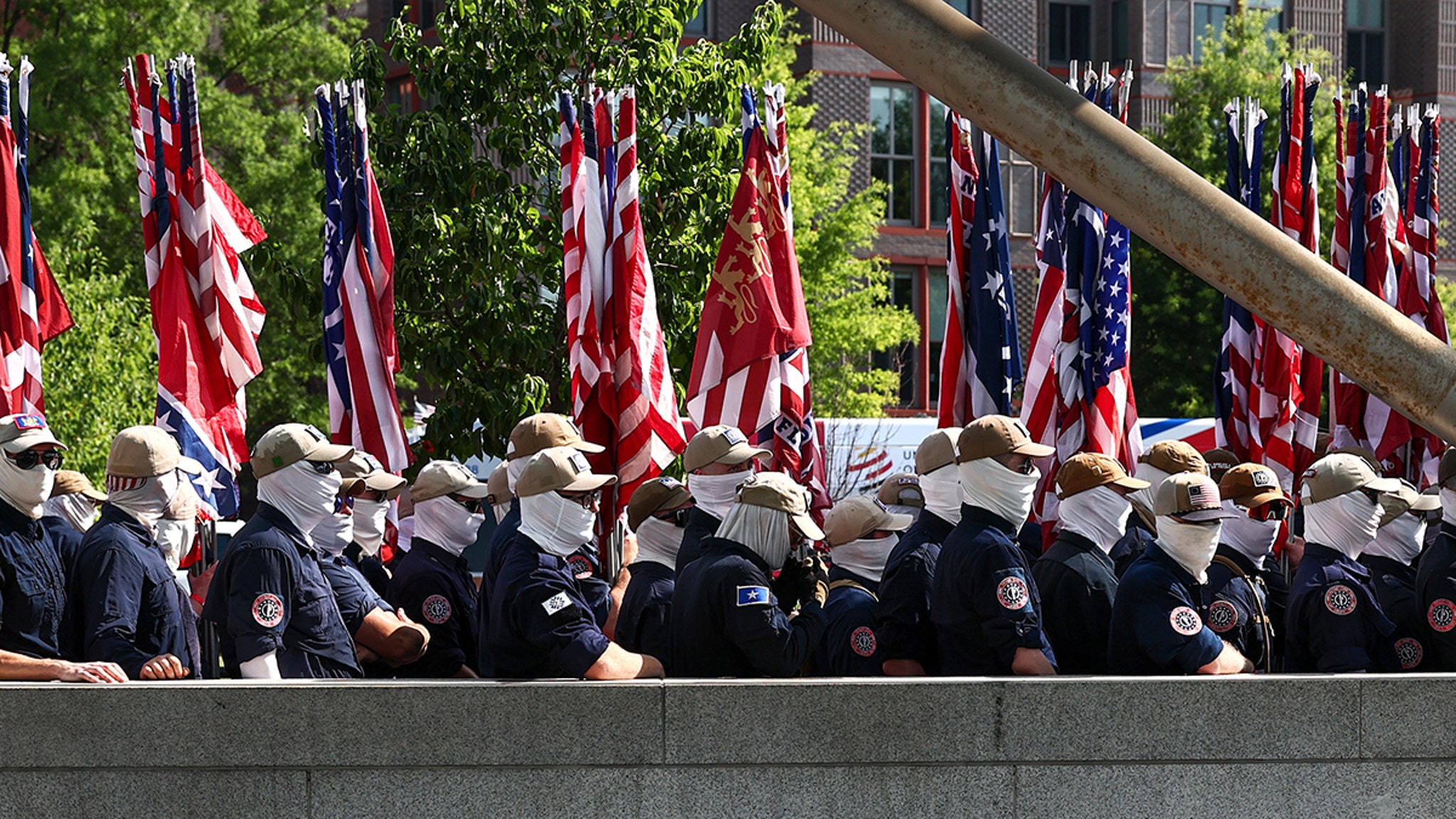
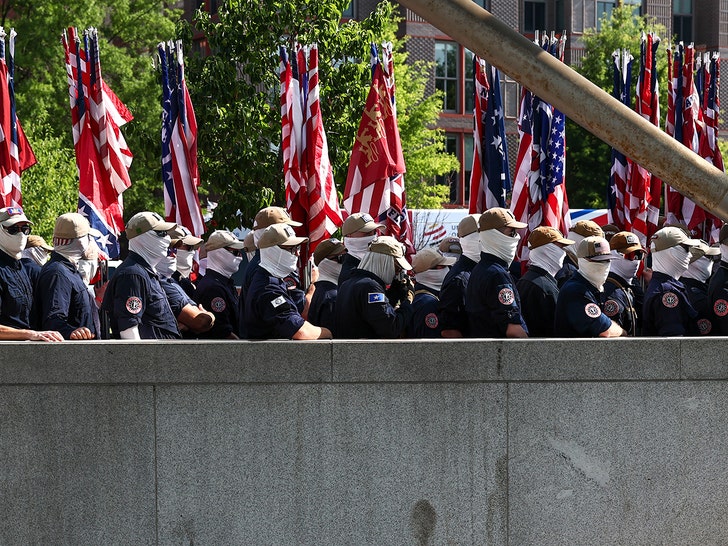
The demonstration commenced in the late morning, with an estimated 400 members of the Patriot Front converging near a public transit station. Dressed in a uniform of blue shirts, khaki pants, and white masks designed to obscure their identities, the group presented a stark and unsettling visual. Their synchronized movements and attire are characteristic tactics used by the Patriot Front to project an image of discipline and strength while maintaining anonymity for individual participants.
Eyewitnesses and journalists documented the march as it progressed through various parts of Washington, D.C., including the historic Capitol Hill area. The group carried a mix of U.S. flags and, most notably, numerous Confederate battle flags, a symbol widely associated with slavery, racial oppression, and white supremacy. The presence of these flags in the nation’s capital, particularly on a day commemorating national unity and freedom, was seen by many as a direct affront to American values.
Video footage captured the Patriot Front members navigating the city’s infrastructure, including boarding a D.C. Metro train heading eastbound towards New Carrollton, Maryland. The sight of masked white supremacists occupying public transportation alongside regular commuters sparked immediate discomfort and alarm. Throughout their march, the group encountered a limited number of counterprotesters who voiced their opposition, shouting condemnations at the Patriot Front members. While verbal confrontations occurred, the protest remained largely peaceful in terms of physical altercations, though the ideological tension was palpable. Journalists diligently filmed the proceedings, ensuring broad public awareness of the demonstration.
Patriot Front: Ideology and Origins
The Patriot Front is identified by organizations like the Anti-Defamation League (ADL) and the Southern Poverty Law Center (SPLC) as a white supremacist hate group. It emerged in the aftermath of the infamous "Unite the Right" rally in Charlottesville, Virginia, in August 2017. That event, which saw white supremacists, neo-Nazis, and other far-right extremists clash with counterprotesters, resulted in the death of Heather Heyer and numerous injuries, exposing the virulent undercurrent of organized hate in the United States. Following the internal dissolution of Vanguard America, one of the groups present in Charlottesville, Thomas Rousseau founded Patriot Front, retaining much of the original group’s ideology and recruitment strategies.
The core tenet of the Patriot Front’s ideology, as detailed by the ADL, is the creation of an "all-white ethnostate" in the United States. They propagate the belief that white Americans are entitled to the country because their ancestors "conquered" it and bequeathed it to them. This nativist and ultranationalist stance is coupled with strong anti-immigrant, anti-Semitic, and racist rhetoric, portraying non-white populations and Jewish people as existential threats to American identity. The group’s propaganda often focuses on a fabricated narrative of "white genocide" and aims to instill fear and resentment among its target audience.
The decision by Patriot Front to march on July 4th, particularly the 250th anniversary, is highly symbolic. Extremist groups often co-opt national symbols and holidays to legitimize their radical agendas, attempting to present themselves as true patriots. By displaying the American flag alongside the Confederate flag, the Patriot Front seeks to conflate their white supremacist vision with mainstream American patriotism, despite the profound historical and ideological contradictions inherent in such a pairing. The Confederate battle flag, in particular, is a potent symbol of racial hatred and a rejection of the principles of equality and freedom for all that the United States ostensibly represents.
Reactions and Condemnation
The presence of a white supremacist group in the nation’s capital on such a significant day quickly drew widespread condemnation. Online platforms buzzed with outrage, as countless Americans decried the Patriot Front’s demonstration as an act of discord and division, fundamentally undermining the spirit of unity and celebration that the 250th anniversary of the Declaration of Independence should embody.
Civil rights organizations were swift to respond, albeit often through established channels rather than immediate on-site statements. Representatives from the ADL and SPLC, while not issuing specific statements regarding this particular march by the time of publication, have consistently monitored and condemned the Patriot Front. Their past statements emphasize the group’s dangerous ideology and the threat it poses to democratic values and social cohesion. They frequently highlight the insidious nature of such demonstrations, which aim to normalize hate speech and recruit new members.
While official statements from Washington, D.C., city officials were not immediately available, the sentiment from the Mayor’s office and local governance has historically been one of strong opposition to hate groups. Mayor Muriel Bowser’s administration has previously reiterated the city’s commitment to diversity and inclusion, often denouncing extremist activities within its jurisdiction. The cancellation of the official July 4th parade due to extreme heat, while unrelated to the Patriot Front’s march, ironically meant that the white supremacist demonstration gained more prominence in the absence of other large-scale public events.
Broader Context and Implications
The July 4, 2026, demonstration by the Patriot Front is not an isolated incident but rather fits into a broader pattern of increasing visibility and activity by white supremacist and other extremist groups across the United States. Since the "Unite the Right" rally, there has been a notable shift in how these groups operate, moving from often clandestine activities to more overt public displays, particularly in politically charged environments. This strategy aims to test public tolerance, recruit new members, and project an image of growing strength and influence.
The choice of Washington, D.C., as a venue is particularly significant. As the seat of American democracy and a symbol of national identity, the capital offers a highly visible platform for extremist groups seeking to amplify their messages and provoke a reaction. The march also underscores the ongoing challenge faced by law enforcement agencies in balancing the protection of free speech rights with the need to maintain public order and prevent the incitement of hatred or violence. While the First Amendment protects even hateful speech, it does not protect incitement to violence or true threats, a distinction that often requires careful navigation by authorities.
Furthermore, the demonstration serves as a stark reminder of the persistent ideological battles within the United States. On a day meant to celebrate the nation’s founding principles of liberty and equality, the Patriot Front’s march exposed a deep-seated vein of white nationalism that actively seeks to undermine those very ideals. The group’s attempt to rewrite American history and appropriate national symbols for its exclusionary agenda highlights the ongoing struggle to define what it means to be an American in an increasingly diverse society.
The public outcry following the event reflects a widespread rejection of the Patriot Front’s ideology. Many Americans, regardless of political affiliation, view the Confederate flag and the tenets of white supremacy as antithetical to the foundational values of the United States. This national sentiment creates a crucial counter-narrative to the extremist message, reaffirming the country’s commitment to pluralism and civil rights.
Looking Ahead
The July 4, 2026, Patriot Front demonstration in Washington, D.C., leaves an indelible mark on the nation’s 250th anniversary. It serves as a potent reminder that while the United States celebrates centuries of progress and resilience, it continues to grapple with the enduring challenges posed by organized hate and extremist ideologies. The event will likely spur renewed discussions among policymakers, civil rights advocates, and community leaders about effective strategies to counter white nationalism, protect vulnerable communities, and foster a more inclusive national identity. The vigilance of the public, the media, and anti-hate organizations remains crucial in exposing and confronting groups like the Patriot Front, ensuring that their divisive messages do not gain undue traction in the public discourse.