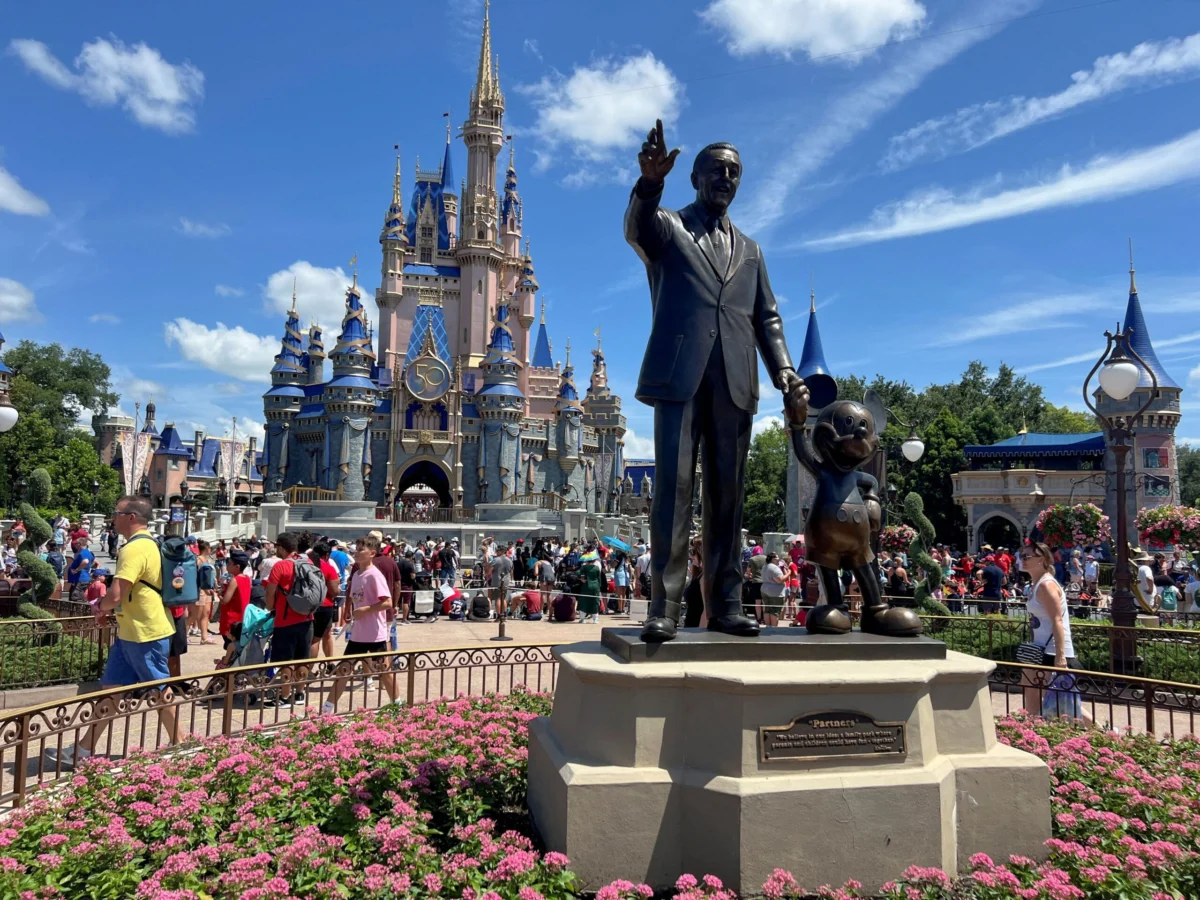
The Walt Disney Company is preparing to initiate a significant new phase of its ongoing cost-cutting strategy, a move that is expected to result in approximately 1,000 layoffs across the organization. This latest round of personnel reductions marks the first major structural adjustment under the leadership of Josh D’Amaro, who officially assumed the role of Chief Executive Officer in mid-March. According to sources familiar with the internal deliberations, the layoffs are primarily concentrated within the company’s marketing operations, signaling a broader effort to streamline a department that was recently centralized to increase operational efficiency and reduce redundant expenditures.
This workforce reduction follows a period of immense transformation for the Burbank-based entertainment giant. The decision to trim the marketing workforce comes on the heels of a massive consolidation of Disney’s various promotional arms. In January, while Bob Iger was still serving as CEO, the company established a new enterprise-wide marketing organization. This unit brought together the disparate marketing teams for Disney’s three primary business segments—Entertainment, Experiences, and Sports—under a single leadership structure. Asad Ayaz, a longtime Disney veteran, was appointed as the company’s first-ever Chief Marketing and Brand Officer to oversee this unified division.
The move to reduce headcount within this newly formed unit suggests that the company is identifying significant overlaps and efficiencies following the merger of these previously independent teams. Ayaz, who reports directly to D’Amaro and Dana Walden, Disney’s President and Chief Creative Officer, is tasked with maintaining the global resonance of the Disney brand while navigating a rapidly changing media landscape where traditional advertising and promotional strategies are being disrupted by digital-first platforms and shifting consumer behaviors.
The D’Amaro Transition and a New Strategic Chapter
Josh D’Amaro’s ascent to the CEO position in March concluded a highly scrutinized succession process that lasted several years. D’Amaro, who previously served as the Chairman of Disney Experiences—overseeing the company’s global portfolio of theme parks, cruise lines, and consumer products—was seen as the natural successor to Bob Iger due to his success in maintaining the profitability and brand loyalty of the parks division during the post-pandemic recovery.
Upon taking the helm, D’Amaro inherited a company that had already undergone significant "fortification," as described by Iger. During his return to the CEO role in late 2022, Iger was tasked with correcting the course of a business facing declining linear television revenues, mounting losses in the direct-to-consumer streaming space, and a stock price that had reached multi-year lows. Iger’s tenure was defined by a ruthless focus on "reigniting creativity" and "improving performance," which included a massive $5.5 billion cost-cutting initiative and the elimination of 7,000 jobs in 2023.
In his first official address as CEO during the company’s recent investor day, D’Amaro emphasized that while the groundwork for long-term growth had been laid, the company must continue to operate from a "place of strength" to remain competitive. The current layoffs represent the "next phase" of that philosophy—ensuring that the company’s overhead remains lean as it pivots toward a digital-first future dominated by Disney+ and a reimagined ESPN.
Chronology of Disney’s Restructuring Efforts
To understand the current layoffs, it is essential to examine the timeline of Disney’s corporate restructuring over the past three years:
- November 2022: Bob Iger returns as CEO, replacing Bob Chapek. Iger immediately begins a restructuring plan to return creative control to division heads.
- February 2023: Disney announces a sweeping reorganization into three segments: Disney Entertainment, ESPN, and Disney Parks, Experiences, and Products. A goal of $5.5 billion in cost savings is announced, alongside 7,000 job cuts.
- January 2024: The company consolidates its marketing efforts. Asad Ayaz is named Chief Marketing and Brand Officer, bringing Entertainment, Experiences, and Sports under one marketing umbrella for the first time in the company’s history.
- March 2026: Josh D’Amaro officially succeeds Bob Iger as CEO. D’Amaro signals a shift from "restructuring" to "turbocharging" the existing business units.
- April 2026: Reports emerge of 1,000 additional layoffs, primarily targeting the consolidated marketing department as the company seeks further efficiencies.
Strategic Justification for Marketing Consolidation
The decision to focus the current layoffs on the marketing department is a direct consequence of the organizational changes made in early 2024. Historically, Disney’s business units operated with a high degree of autonomy. The film studios (Disney Entertainment) had their own marketing machines, as did the theme parks (Experiences) and the sports networks (ESPN). While this allowed for specialized focus, it often led to redundant spending and inconsistent brand messaging across the global enterprise.
By creating the Enterprise Marketing Organization under Asad Ayaz, Disney aimed to leverage its massive scale more effectively. However, consolidation almost inevitably leads to the discovery of redundant roles. For example, social media teams, media buying departments, and creative services that once existed in three separate silos are now being integrated. The 1,000 layoffs likely represent the "synergies" identified through this integration process.
Furthermore, the shift in how entertainment is consumed has changed the requirements for a modern marketing workforce. As Disney focuses more heavily on its streaming platforms, the need for traditional "above-the-line" advertising experts is being supplemented—or replaced—by data scientists, performance marketers, and digital engagement specialists. This workforce reduction may also be a "re-skilling" effort, allowing the company to cut legacy roles while potentially hiring in more specialized technical areas.
Financial Performance and Market Sentiment
Wall Street’s reaction to the news of the layoffs was relatively muted, with Disney’s stock trading slightly lower in the afternoon following the reports. Investors have grown accustomed to the "efficiency" narrative surrounding major media companies over the last two years. As the initial excitement of the streaming wars has faded, the market has pivoted to demanding profitability and disciplined capital allocation.
For Disney, the financial stakes are high. While the "Experiences" segment (the theme parks) has remained a reliable engine of cash flow, the "Entertainment" segment is still navigating the transition from a lucrative cable-bundle model to a more fragmented streaming model. Disney+ has reached several milestones regarding subscriber growth, but achieving consistent, high-margin profitability remains the primary objective for D’Amaro’s first year.
The $5.5 billion in cost savings initiated by Iger was a critical first step in stabilizing the balance sheet. However, as inflationary pressures persist and the global economy remains uncertain, D’Amaro appears determined to prove to shareholders that he can find additional savings without compromising the creative output that defines the company.
Broader Implications for the Media Industry
Disney’s move is emblematic of a broader trend across the media and entertainment landscape. Rivals such as Warner Bros. Discovery, Paramount Global, and NBCUniversal have all undergone similar rounds of layoffs and consolidations as they grapple with the decline of linear television and the high costs of content production.
The "consolidated marketing" model adopted by Disney is being watched closely by industry peers. If Disney can successfully maintain its brand dominance and drive box office and streaming numbers with a smaller, more centralized marketing team, it will likely serve as a blueprint for other media conglomerates. Conversely, if the reduction in marketing headcount leads to a decline in brand awareness or a failure to effectively launch new intellectual properties, it may signal that the "efficiency" drive has gone too far.
Future Outlook Under Josh D’Amaro
As Josh D’Amaro settles into his role, the 1,000 layoffs represent a clear signal of his management style: a focus on operational precision and a willingness to make difficult decisions to protect the company’s bottom line. D’Amaro’s previous experience running the Parks division—an area defined by complex logistics and high overhead—likely informs his approach to the broader corporate structure.
The company’s focus will now turn to its upcoming slate of theatrical releases and the continued integration of ESPN into a digital-first ecosystem. With the marketing department now "right-sized," according to internal logic, the burden of proof will be on Asad Ayaz and his team to deliver results with a leaner organization.
For the employees affected, the layoffs are a stark reminder of the volatility currently facing the media sector. While Disney continues to operate from a "place of strength," as D’Amaro stated, that strength is increasingly being defined by how effectively the company can minimize costs while navigating the most significant technological shift in its century-long history. The coming months will be a critical test for D’Amaro’s vision and Disney’s ability to remain the world’s premier storytelling entity in a more austere economic environment.