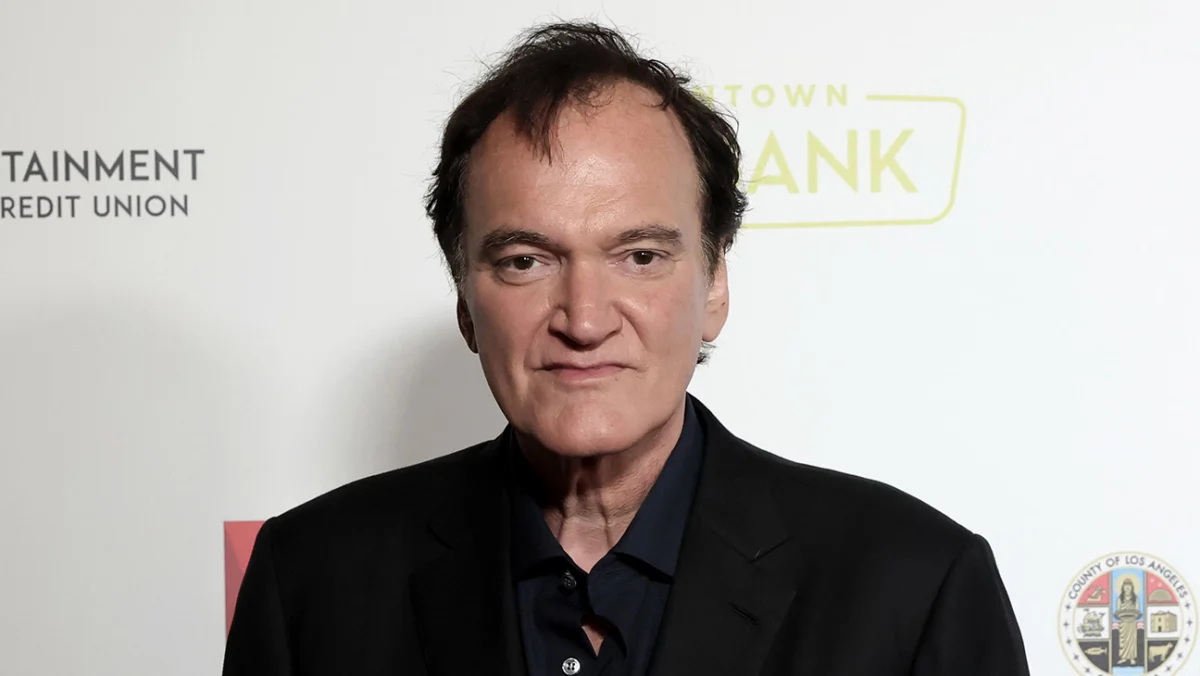
Renowned filmmaker Quentin Tarantino has delivered a searing indictment of contemporary cinema, articulating a profound disillusionment with the quality of new releases since the onset of the global pandemic. In a provocative op-ed penned for the esteemed Sight and Sound magazine, the visionary director behind classics like Pulp Fiction and Kill Bill lambasted current productions, decrying what he perceives as a pervasive decline into "just plain stupid shit" emanating from what he termed "the flavorless sausage factory that used to call itself Hollywood." This outspoken critique from one of cinema’s most influential auteurs has ignited considerable debate within the industry and among cinephiles, prompting reflection on the evolving landscape of filmmaking.
The Provocative Critique: Deconstructing Tarantino’s Stance
Tarantino’s commentary, published recently, lays bare a deep-seated frustration that he suggests has become increasingly pronounced in the post-pandemic era. He confessed that he finds it "almost impossible for a new movie to come out that I don’t pick to death." His critical gaze, honed over decades of meticulous film study and creation, now seems to find insurmountable obstacles to enjoyment in modern productions. He meticulously listed the elements that "torpedo" these films: "Flaws, implausibilities, audience pandering, miscast performers or just plain stupid shit." This comprehensive condemnation points to a perceived systemic issue rather than isolated incidents, suggesting a fundamental shift in the creative integrity and execution within the industry.
His metaphor of "the flavorless sausage factory" is particularly stinging, implying a mechanized, uninspired production line churning out homogenous, unoriginal content devoid of distinct artistic flavor. This echoes long-standing criticisms from various corners of Hollywood regarding the increasing reliance on established intellectual property (IP), sequels, reboots, and formulaic narratives designed for broad, often international, appeal. The director’s frustration culminates in a stark historical comparison: "These days, the entire concept of what is a movie is more inclined to inspire contempt in me than generosity. Which is fair enough, because by comparison the movies of the last six years make the 80s seem like the 30s." This hyperbolic statement, while characteristic of Tarantino’s dramatic flair, underscores the depth of his perceived decline, suggesting a regression in cinematic artistry so severe that even a widely criticized decade like the 1980s now appears as a golden age relative to the present. The 1930s, often celebrated for its foundational studio system and emergence of sound cinema, serves as the ultimate benchmark, further emphasizing the perceived chasm between past and present quality.
Auteur’s Perspective: Tarantino’s History and Cinematic Philosophy
Quentin Tarantino, born in Knoxville, Tennessee, in 1963, rose to prominence in the early 1990s with his distinctive blend of non-linear narratives, stylized violence, pop culture references, and sharp, witty dialogue. From his debut feature Reservoir Dogs (1992) to the Palme d’Or-winning Pulp Fiction (1994), he quickly established himself as a singular voice, an auteur deeply steeped in film history. His filmography, including Jackie Brown (1997), Kill Bill: Vol. 1 & 2 (2003, 2004), Death Proof (2007), Inglourious Basterds (2009), Django Unchained (2012), The Hateful Eight (2015), and Once Upon a Time in Hollywood (2019), consistently demonstrates a profound knowledge and love for various genres, from blaxploitation and spaghetti westerns to kung fu and grindhouse cinema.
Tarantino is famously a self-taught filmmaker, having gained his encyclopedic knowledge of movies while working at Video Archives, a video rental store in Manhattan Beach, California. This background fostered a deep appreciation for the craft, the power of storytelling, and the unique magic of the cinematic experience. Throughout his career, he has been an ardent champion of celluloid film, resisting the digital transition, and a vocal advocate for the communal experience of watching films in a theater. His critical pronouncements, therefore, are not merely casual observations but come from a place of intense personal investment and a comprehensive understanding of cinematic tradition. He has often expressed strong opinions on the industry, including his oft-stated intention to retire after directing ten films, a decision that underscores his commitment to maintaining a perfect, curated filmography rather than succumbing to the pressures of endless production. His current critique is thus consistent with his long-held principles regarding artistic integrity and the sanctity of cinema as an art form.
The Pandemic’s Shadow: A Catalyst for Disillusionment?
Tarantino explicitly links his growing disillusionment to the period "since the pandemic." The COVID-19 pandemic, which began its global disruption in early 2020, undeniably wrought seismic changes upon the film industry, accelerating trends and introducing unprecedented challenges. Cinema closures worldwide deprived audiences of the theatrical experience, leading to a dramatic shift in distribution models. Studios, facing uncertain futures, increasingly pivoted to direct-to-streaming releases or hybrid models, fundamentally altering how films were consumed and perceived.
Production halts, stringent safety protocols, and supply chain disruptions led to significant delays and increased costs, often forcing studios to prioritize "safe bets"—films with pre-existing fanbases or proven franchise potential—over original, risky ventures. Data from organizations like Comscore and Box Office Mojo illustrate a sharp decline in theatrical attendance and revenue in 2020 and 2021, with a slow, uneven recovery thereafter. While global box office revenue began to rebound in 2022 and 2023, it has yet to fully reach pre-pandemic levels, and the types of films dominating the charts have largely been tentpole blockbusters. This environment, characterized by financial insecurity and a push towards homogenization for mass appeal, could certainly be perceived by a filmmaker of Tarantino’s sensibilities as detrimental to artistic innovation and genuine cinematic quality. The intimate, communal magic he cherishes might indeed feel harder to find in a landscape shaped by digital delivery and a cautious, corporate-driven approach to content creation.
A Landscape of Franchises and IP: The "Sausage Factory" Reality
Tarantino’s "flavorless sausage factory" metaphor finds resonance in broader industry trends observed over the past decade, which were only exacerbated by the pandemic. The contemporary Hollywood ecosystem is heavily reliant on established intellectual property (IP), primarily superhero franchises, reboots, sequels, and adaptations of popular books or video games. A significant portion of top-grossing films each year belongs to expansive cinematic universes, such as the Marvel Cinematic Universe, DC Extended Universe, Star Wars saga, and various Disney live-action remakes.
According to analysis by financial news outlets and film industry trackers, original screenplays, particularly those for mid-budget dramas, thrillers, or comedies, have found it increasingly difficult to secure significant studio backing or wide theatrical releases. For instance, data from The Numbers and Box Office Mojo consistently show that films based on existing IP often account for over 70-80% of annual box office revenue. This trend minimizes financial risk for studios but can stifle creative originality and lead to a perceived uniformity in storytelling and visual style. The emphasis often shifts from character-driven narratives or artistic vision to spectacle, fan service, and global marketability.
While streaming services initially offered a perceived haven for diverse, original content, even these platforms have increasingly invested in their own blockbuster-scale productions and franchise development, mimicking traditional studios. The pressure to generate subscriber numbers often translates into a preference for broadly appealing content, sometimes at the expense of distinct artistic voices. This environment could easily lead a discerning viewer like Tarantino to feel that the "entire concept of what is a movie" has been diluted, prioritizing commercial algorithms over genuine artistic expression.
The Exceptions: What Tarantino "Liked" (But Didn’t Love)
Despite his sweeping criticisms, Tarantino did acknowledge seeing a handful of films since the pandemic that he "liked." However, his phrasing suggested a notable distinction: none of them truly "held me in its grip and swept me away to the magical land of enjoyment that I used to visit and was the reason why I loved movies above all artforms." The films he cited were Steven Spielberg’s West Side Story (2021) and Kevin Costner’s ambitious two-part Western saga, Horizon: An American Saga – Chapter 1 & 2 (both 2024).
West Side Story was a critically acclaimed musical, lauded for its vibrant direction, strong performances, and respectful yet fresh take on the classic material. Spielberg, like Tarantino, is a director with a deep reverence for cinematic history and craftsmanship. Tarantino’s appreciation for it likely stems from its technical prowess and its fidelity to a classic form, representing a high-quality execution within a recognized genre. However, the absence of being "swept away" might suggest that even a master like Spielberg couldn’t fully rekindle that unique, immersive magic Tarantino seeks.
His inclusion of Horizon: An American Saga is particularly intriguing. Kevin Costner’s passion project is a sprawling, multi-part Western epic, a genre that Tarantino himself deeply admires and has explored in films like Django Unchained and The Hateful Eight. The sheer ambition and commitment to a large-scale, character-driven narrative, especially in a genre often considered less mainstream today, might appeal to Tarantino’s appreciation for grand storytelling and classical filmmaking approaches. That he "liked" it suggests an appreciation for its scope and perhaps its defiance of current trends, even if it didn’t fully transport him. This selection hints that Tarantino’s dissatisfaction isn’t necessarily with specific genres but with the general execution and artistic soul of most modern productions.
The Unlikely Champion: Joe Carnahan’s The Rip
Amidst his pervasive disappointment, a single film managed to break through Tarantino’s critical defenses and genuinely "grab" him: Joe Carnahan’s The Rip, a Netflix original starring Matt Damon and Ben Affleck. Tarantino’s praise for The Rip was effusive and specific, highlighting precisely what he found lacking in so many other contemporary works. He described it as "an exciting cop thriller with a novel premise that manages to deliver the goods in really clever ways."
He lauded the film’s comprehensive package: "Carnahan’s direction, the splendid cast, the look of the film (courtesy of cinematographer Juan Miguel Azpiroz) — but the real powerhouse component of this splendid collection is the sensational screenplay by Carnahan and Michael McGrale." This detailed praise underscores Tarantino’s appreciation for fundamental cinematic elements: a compelling story, expert direction, strong performances, visual aesthetics, and, above all, exceptional writing. His emphasis on the screenplay as the "powerhouse component" is telling, aligning with his own reputation as a master screenwriter whose films are celebrated for their dialogue and intricate plotting.
Joe Carnahan, known for gritty, intense thrillers like Narc (2002), Smokin’ Aces (2006), and The Grey (2011), often delivers high-octane, character-driven narratives that prioritize tension and clever plotting. The Rip‘s success in capturing Tarantino’s attention suggests a preference for well-crafted, genre-specific films that prioritize storytelling and execution over sheer spectacle or franchise potential. It indicates that even in the age of streaming and blockbusters, a well-executed, original thriller can still resonate deeply with a seasoned cinephile like Tarantino, offering a glimmer of hope amidst his overall gloom.
Legal Challenges and Public Scrutiny: The Rip‘s Defamation Lawsuit
Ironically, the one film Tarantino championed, The Rip, has found itself in the headlines for reasons unrelated to its cinematic merit. The film’s production company, Artists Equity, founded by Matt Damon and Ben Affleck, is currently facing a defamation lawsuit. Two Miami-Dade police officers have alleged that The Rip has caused them reputational damage by blending fictionalized details with facts from their real-life experiences.
The lawsuit claims that the film, a suspenseful cop thriller, draws too heavily from actual events and individuals, blurring the lines between fiction and reality in a manner that negatively portrays the plaintiffs. This legal challenge highlights the delicate balance filmmakers must strike when drawing inspiration from real-world incidents, particularly in genres like crime thrillers where the stakes for individuals’ reputations can be high. While this lawsuit does not directly pertain to the film’s artistic quality, it adds a layer of public scrutiny and controversy to the production, underscoring the complexities inherent in creative endeavors that touch upon real-life narratives. For a film that Tarantino singled out for its "novel premise" and clever execution, this legal entanglement presents a curious footnote to its unexpected moment in the spotlight.
Beyond the Screen: Tarantino’s Theatrical Venture
Perhaps as a corollary to his disillusionment with the current state of film, Quentin Tarantino is now venturing into a new artistic medium: the stage. He is currently working on his first stage play, titled The Popinjay Cavalier, which is slated to open on London’s prestigious West End in 2027. The play is described as "a rambunctious comedy of deception and disguise inspired by the grand swashbuckling epics of stage and screen."
This foray into theater is a significant development for a director who has almost exclusively worked in film. It suggests an exploration of different creative avenues, potentially seeking a more immediate and controlled artistic environment away from the industrial pressures of Hollywood. The description of the play, with its nod to "grand swashbuckling epics," resonates with Tarantino’s known affection for classic storytelling and genre conventions. This move could be interpreted not only as a natural evolution for an artist committed to storytelling but also as a strategic pivot, allowing him to exercise his creative muscles in a space that might offer greater artistic freedom and purity, unencumbered by the "flavorless sausage factory" he so readily critiques in the film world. It also aligns with his stated intention to retire from filmmaking after his tenth movie, suggesting a continuation of his artistic journey, albeit on a different platform.
Implications for Hollywood and Film Criticism
Tarantino’s outspoken criticism is not merely the grumbling of an established artist; it carries significant weight. As one of the most recognizable and critically revered filmmakers of his generation, his words are likely to resonate deeply within Hollywood and spark considerable debate among industry professionals, critics, and audiences. His comments underscore a perennial tension in the film industry: the conflict between artistic ambition and commercial viability. In an era dominated by global conglomerates and quarterly earnings reports, the pressure to produce universally appealing, often formulaic, content is immense.
His critique serves as a potent reminder of the importance of original storytelling, compelling characters, and meticulous craftsmanship – elements that he feels are increasingly scarce. Will Hollywood heed such a call from one of its most celebrated figures, or will it be dismissed as the lament of an "old guard" artist out of step with modern tastes and market realities? The conversation Tarantino ignites is crucial for the future of cinema, challenging stakeholders to consider whether the pursuit of profit is inadvertently eroding the very artistic foundation that makes film such a powerful and beloved medium. It invites both filmmakers and audiences to reflect on what constitutes true cinematic quality and whether the industry is adequately serving the art form it purports to uphold.
In conclusion, Quentin Tarantino’s recent op-ed is more than a simple critique; it is a passionate plea from a lifelong cinephile for a return to the "magical land of enjoyment" that movies once universally offered him. His deep disappointment with the current output of what he sees as a "flavorless sausage factory" reflects a broader sentiment among some critics and viewers regarding the state of modern blockbusters and the perceived decline of original, impactful storytelling. While he found a singular exception in The Rip, his overall lament casts a long shadow over the contemporary cinematic landscape, prompting essential questions about the direction and artistic integrity of one of the world’s most influential art forms.