

The Walt Disney Company is moving forward with a significant new phase of corporate restructuring, a move that is expected to result in approximately 1,000 layoffs across various divisions. This decision, confirmed by sources familiar with the internal proceedings, marks the first major workforce adjustment under the leadership of Josh D’Amaro, who assumed the role of Chief Executive Officer in mid-March. The reductions are primarily targeted at the company’s marketing operations, signaling a continued effort to streamline the entertainment giant’s massive global footprint and eliminate redundancies created during recent organizational consolidations.
This latest round of job cuts follows the appointment of Asad Ayaz as Disney’s first-ever Chief Marketing and Brand Officer. In this centralized role, Ayaz oversees marketing strategies across Disney’s three primary pillars: Entertainment, Experiences, and Sports. The decision to bring these disparate units under a single marketing umbrella was designed to create a more cohesive brand identity, but it has also highlighted overlapping roles within the legacy marketing structures of the individual divisions. As Disney seeks to optimize its spending in a volatile media landscape, the elimination of these redundant positions has become a strategic priority for the new administration.
The Evolution of Leadership and Corporate Strategy
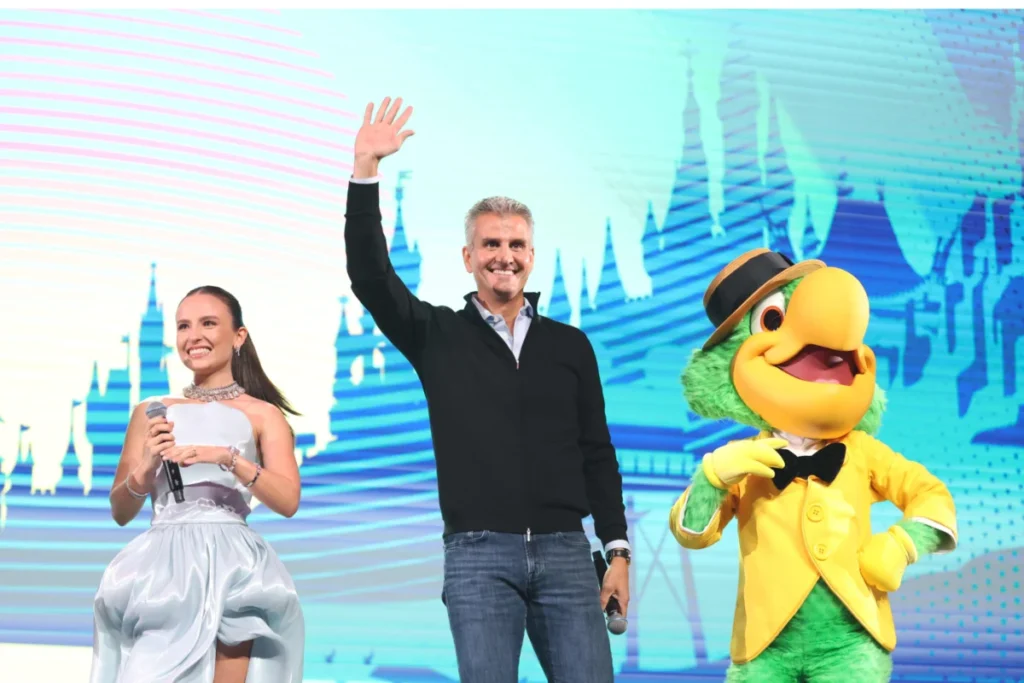
The transition from Bob Iger to Josh D’Amaro represents a pivotal moment in Disney’s century-long history. D’Amaro, who previously served as the Chairman of Disney Experiences, was a central figure in the company’s post-pandemic recovery, overseeing the record-breaking performance of its global theme parks and cruise lines. His elevation to CEO was the culmination of a high-stakes succession process that followed Bob Iger’s return to the company in late 2022.
Iger’s second tenure was defined by a rigorous "turnaround" mandate. Upon his return, he faced a company grappling with a depressed stock price, widening losses in the streaming sector, and a bloated corporate hierarchy. In February 2023, Iger announced a sweeping reorganization that included $5.5 billion in cost savings and the elimination of 7,000 jobs. By the time D’Amaro took the helm, the company had largely achieved those initial savings targets, but the pressure to deliver sustained margin expansion remains a primary concern for Wall Street.
In his first official address as CEO, D’Amaro emphasized that the groundwork laid by Iger had moved Disney from a defensive posture to one of offensive growth. He noted that the company is now operating from a "place of strength," with a focus on "turbocharging" the parks and experiences segment while finalizing the digital transformation of ESPN. However, the current layoffs suggest that "operating from strength" still requires a lean operational model to fund the massive capital expenditures planned for the coming decade.
Centralization of the Marketing Apparatus
The concentration of layoffs within the marketing department is a direct consequence of the organizational changes initiated in January. By naming Asad Ayaz as the Chief Marketing and Brand Officer, Disney effectively dismantled the siloed marketing departments that once operated independently within Pixar, Marvel, Lucasfilm, and the Disney Live Action studios.
Ayaz, who reports to both CEO D’Amaro and Dana Walden, Disney’s President and Chief Creative Officer, was tasked with ensuring that the Disney brand remains consistent across all consumer touchpoints. While this centralization allows for more efficient cross-promotion—such as integrated campaigns that link a theatrical release to a theme park attraction or a Disney+ series—it naturally renders many middle-management and specialized marketing roles obsolete.
Industry analysts suggest that this "enterprise-wide" approach to marketing is becoming the standard for media conglomerates. By reducing the headcount in marketing, Disney can reallocate resources toward content production and technological infrastructure for its streaming services. The marketing cuts are expected to impact both domestic and international offices, as the company seeks a more agile, digitally focused promotional strategy.
Financial Context and Market Reaction
The news of the layoffs coincided with a period of moderate volatility for Disney’s stock. Following the initial reports, Disney shares saw a slight decline in afternoon trading, reflecting a cautious but generally supportive investor sentiment regarding cost-management efforts. Investors have been laser-focused on Disney’s ability to reach sustained profitability in its Direct-to-Consumer (DTC) segment, which includes Disney+, Hulu, and ESPN+.
Data from recent quarterly earnings reports indicate that while Disney’s streaming losses have narrowed significantly, the company is still navigating a shift in consumer behavior. The legacy linear television business, once a reliable "cash cow," continues to face headwinds from cord-cutting, putting more pressure on the Experiences segment to drive the bottom line.
To support long-term growth, Disney recently announced an ambitious $60 billion investment plan for its Parks, Experiences, and Products division over the next ten years. This capital-intensive strategy requires a disciplined approach to operating expenses. By reducing the workforce in administrative and marketing functions, D’Amaro is effectively "self-funding" the innovations required to maintain the company’s competitive edge in the global tourism and entertainment markets.
A Chronology of Disney’s Restructuring (2022–2026)
To understand the current layoffs, one must look at the sequence of events that led to D’Amaro’s current mandate:
- November 2022: Bob Iger returns as CEO, replacing Bob Chapek, amid investor dissatisfaction and a declining stock price.
- February 2023: Disney announces a massive restructuring plan involving 7,000 layoffs and $5.5 billion in cost cuts. The company is divided into three segments: Disney Entertainment, ESPN, and Disney Parks, Experiences, and Products.
- January 2024: Asad Ayaz is named Chief Marketing and Brand Officer, beginning the process of consolidating global marketing teams.
- Late 2025: The succession committee intensifies its search for Iger’s permanent replacement, ultimately identifying D’Amaro as the successor.
- March 2026: Josh D’Amaro officially takes over as CEO. On his first day, he highlights the "fortified" nature of the business but stresses the need for continued efficiency.
- Present: The "next phase" of cost-cutting begins, with 1,000 layoffs primarily focused on the consolidated marketing organization.
Broader Implications for the Media Industry
Disney’s workforce reduction is not an isolated event but rather a reflection of a broader trend across the media and technology sectors. In the past 18 months, major players including Warner Bros. Discovery, Paramount Global, and Netflix have all undergone various rounds of layoffs as they pivot from a "growth at all costs" streaming model to a "profitability and cash flow" model.
The focus on marketing efficiency specifically highlights how much the landscape has changed. Traditional television advertising and expensive "for your consideration" campaigns are being scrutinized in favor of data-driven digital marketing and organic social media engagement. For Disney, which possesses some of the most recognizable intellectual property (IP) in the world, the belief is that the brands—Marvel, Star Wars, and Mickey Mouse—can maintain their market dominance with a leaner, more centralized promotional team.
Furthermore, the layoffs signal D’Amaro’s intent to be a decisive leader. By initiating these cuts early in his tenure, he is signaling to the board and shareholders that he is willing to make difficult choices to protect the company’s margins. It also allows him to clear the path for his own hand-picked leadership team to execute his vision for the company’s future.
Looking Ahead: The D’Amaro Era
As the 1,000 affected employees receive notification, the internal culture at Disney remains in a state of transition. D’Amaro is known for his high-energy, "cast-member-first" reputation from his time in the parks division, and maintaining morale during a period of layoffs will be one of his most significant challenges.
However, the company’s strategic direction appears clear. Disney is doubling down on its core strengths: high-quality storytelling and immersive physical experiences. The integration of marketing under Asad Ayaz and the financial discipline enforced by the new CEO are intended to ensure that Disney remains the preeminent name in global entertainment for its second century of operation.
While the layoffs represent a difficult chapter for the individuals involved, the broader corporate narrative is one of refinement and modernization. By shedding the weight of legacy structures, Disney aims to become a more nimble competitor in a digital-first world, ensuring that its vast portfolio of assets is leveraged as efficiently as possible. As the company moves toward its next earnings call, analysts will be looking for further details on how these cost savings will be reinvested into the "turbocharged" growth initiatives D’Amaro has promised.