Warner Bros. Discovery (WBD) announced on Tuesday that it will officially reopen negotiations with Paramount Skydance (PSKY) following a strategic seven-day waiver granted by Netflix. This pivotal development allows the legacy media giant to explore what it describes as "deficiencies" in Paramount’s competing offer to acquire the company in its entirety. The waiver, which expires on February 23, 2026, marks a significant shift in a high-stakes corporate battle that has pitted the world’s largest streaming service against a consortium of traditional media interests and private equity.
The decision to re-engage with Paramount Skydance comes as WBD navigates a complex merger agreement with Netflix for its streaming and studio assets. Paramount Skydance, led by David Ellison, launched a hostile tender offer directly to WBD shareholders at $30 per share after an initial bidding war saw WBD’s board favor Netflix’s proposal. The newly granted one-week window is intended to provide clarity to WBD stockholders and force Paramount Skydance to present its "best and final" proposal, potentially breaking a months-long deadlock that has roiled the entertainment industry.
The Evolution of a Media Mega-Merger: A Chronology of Events
The current corporate tug-of-war is the culmination of a volatile period for Warner Bros. Discovery. To understand the gravity of the current negotiations, it is essential to trace the timeline of the bidding process:
- December 5, 2025: Warner Bros. Discovery and Netflix announce a pending transaction. The deal, valued at roughly $27.75 per share in an all-cash offer, focuses on WBD’s core studio and streaming assets, including the Max platform and the historic Warner Bros. film and television library.
- December 8, 2025: Following the Netflix announcement, Paramount Skydance enters the fray with a hostile tender offer. By bypassing the WBD board and appealing directly to shareholders, PSKY offers $30 per share for the entire company, including WBD’s linear television networks—assets Netflix’s bid largely avoids.
- January 20, 2026: Netflix solidifies its position, reaffirming its $27.75 per share cash offer. Netflix leadership argues that their deal offers more "certainty" and a faster path to regulatory approval than the PSKY alternative.
- February 10, 2026: Paramount Skydance "sweetens" its offer with additional enhancements regarding governance and debt management but stops short of raising the $30 per share price tag.
- February 17, 2026: WBD reveals that a senior Paramount representative has indicated a willingness to raise the bid to $31 per share if formal talks are reopened. Netflix grants the seven-day waiver to allow these discussions to proceed.
- March 20, 2026: The scheduled date for a special meeting of WBD shareholders to vote on the original Netflix merger.
Analyzing the Competing Proposals: Netflix vs. Paramount Skydance
The two offers represent fundamentally different visions for the future of Warner Bros. Discovery’s assets. The Netflix deal is a surgical acquisition of high-value content and digital distribution infrastructure. By acquiring the Warner Bros. studios and the Max streaming service, Netflix seeks to cement its dominance in the global streaming market while avoiding the declining revenues associated with WBD’s linear cable networks, such as CNN, TNT, and TBS.
In contrast, the Paramount Skydance bid is a total-company acquisition. Backed by the Ellison family and a consortium involving significant Middle Eastern investment, PSKY intends to merge the two legacy giants to create a media powerhouse capable of competing with Disney and Netflix on every front. The $30-to-$31 per share offer provides a higher immediate premium to shareholders compared to Netflix’s $27.75. However, WBD’s board has expressed concerns regarding the "actionability" of the PSKY bid, citing unresolved deficiencies in the merger agreement’s terms.
WBD CEO David Zaslav emphasized that the board’s primary objective remains the maximization of shareholder value. "Every step of the way, we have provided PSKY with clear direction on the deficiencies in their offers and opportunities to address them," Zaslav stated. "We are engaging with PSKY now to determine whether they can deliver an actionable, binding proposal that provides superior value and certainty."

The Strategic Waiver and Netflix’s Position
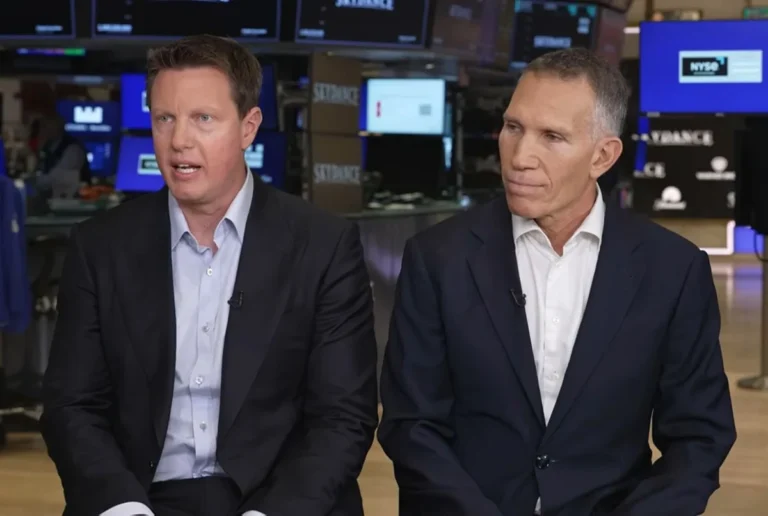
The decision by Netflix to grant a waiver is viewed by industry analysts as a tactical move to clear the "fog" of the bidding war. Netflix co-CEO Ted Sarandos told CNBC that the waiver was granted because Paramount had been "flooding the zone with confusion" by floating hypothetical offers and bypassing the board. By allowing a formal seven-day window, Netflix is essentially "calling the bluff" of Paramount Skydance, forcing them to put a definitive, legally binding offer on the table.
Despite the waiver, Netflix maintains significant leverage. Under the terms of the existing merger agreement, Netflix retains "matching rights." If Paramount Skydance submits a higher bid that the WBD board deems "superior," Netflix has the contractual right to match that price to keep its deal alive. Sarandos has remained tight-lipped about how high Netflix is willing to go, stating, "Let them make a move, and then we’ll see where the next step takes us."
Regulatory Hurdles and Geopolitical Complications
Regardless of which suitor wins the favor of WBD shareholders, any final deal faces a grueling regulatory gauntlet. The potential merger of WBD with either Netflix or Paramount Skydance raises distinct antitrust and national security concerns.
The Netflix Antitrust Challenge
A Netflix-WBD merger would unite two of the most significant players in the streaming space. Critics argue that such a consolidation could lead to reduced competition, fewer choices for creators, and higher subscription prices for consumers. Netflix has countered this by arguing that the merger would preserve jobs in a media sector currently defined by mass layoffs and economic instability. The company believes that its status as a "known and trusted entity" in international markets will help it clear regulatory hurdles in Europe and the United States.
The Paramount Skydance Foreign Investment Concern
The PSKY bid faces a different set of challenges. The offer is partially financed by sovereign wealth funds from Saudi Arabia, Abu Dhabi (UAE), and Qatar. While Paramount has stated that these entities would be "purely passive investors" with no governance rights, the deal is expected to undergo rigorous review by the Committee on Foreign Investment in the United States (CFIUS).
Netflix has been vocal in highlighting these risks. In a statement, Netflix suggested that European authorities would likely be "skeptical" of claims regarding the passivity of Middle Eastern investors. Furthermore, a PSKY-WBD merger would consolidate two major film studios (Paramount and Warner Bros.) and two massive portfolios of pay-TV channels, potentially creating a monopoly in the linear television and theatrical distribution markets.
Market Reaction and Investor Sentiment
The financial markets responded positively to the news of reopened talks. Shares of Warner Bros. Discovery rose nearly 3% on Tuesday, while Paramount saw a 5% gain. Investors appear optimistic that the competitive bidding will drive the final sale price higher, whether the buyer is Netflix or Paramount Skydance.

However, the "uncertainty" mentioned by both Zaslav and Sarandos remains a primary concern for institutional investors. The March 20 special meeting looms as a definitive deadline. If Paramount Skydance fails to produce a binding, superior offer by the end of the seven-day waiver period on February 23, the WBD board is expected to move forward with its unanimous recommendation for the Netflix merger.
The Broader Impact on the Entertainment Landscape
The outcome of these negotiations will serve as a bellwether for the future of the entire media industry. The sale of Warner Bros. Discovery—a company that owns iconic brands like HBO, DC Comics, and the Harry Potter franchise—represents the largest consolidation of intellectual property in a decade.
If Netflix succeeds, it signals the final victory of the streaming model over the traditional studio system, as one of Hollywood’s "Big Five" studios would essentially become a content engine for a tech-first platform. If Paramount Skydance succeeds, it represents a "last stand" for the integrated media model, attempting to find safety in scale by combining two legacy giants to weather the digital transition.
The role of the U.S. government also remains a wildcard. While President Donald Trump has recently stated he does not plan to involve himself in the process, the regulatory agencies under his administration will ultimately decide if either deal violates the Clayton Antitrust Act or poses a threat to national interests.
As the seven-day clock begins to tick, the eyes of Wall Street and Hollywood are fixed on the negotiations between WBD and Paramount Skydance. The coming week will determine whether the "deficiencies" in the Paramount bid can be cured, or if the path is finally clear for Netflix to absorb one of the most storied names in cinema history.