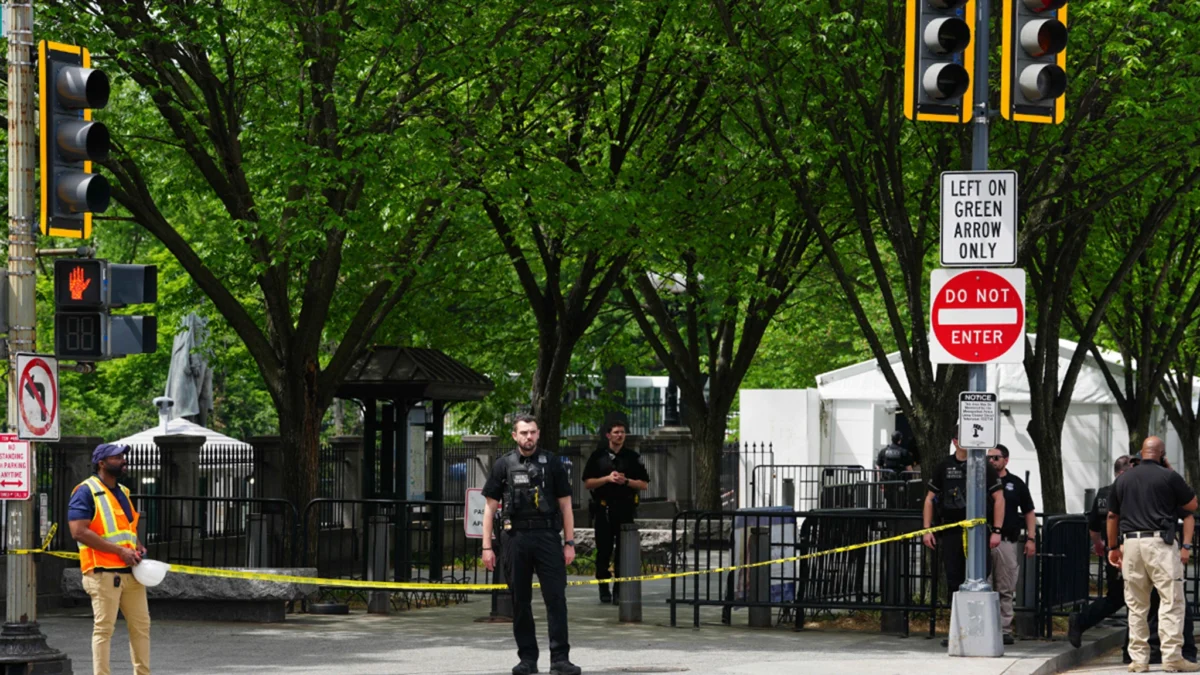
The U.S. Secret Service successfully intercepted and detained an individual who attempted to breach the security perimeter of the White House complex on Thursday, April 16, 2026. The incident, which occurred shortly after 11:30 AM PDT, involved a man jumping over a vehicle bollard near the Treasury Building on the northeast side of the presidential residence. The swift response by uniformed Secret Service officers led to the suspect’s immediate apprehension, though not without a physical confrontation that resulted in a non-life-threatening injury to one officer. Both the detained individual and the injured officer were subsequently transported to a local hospital for evaluation and treatment.
Detailed Chronology of the Incident
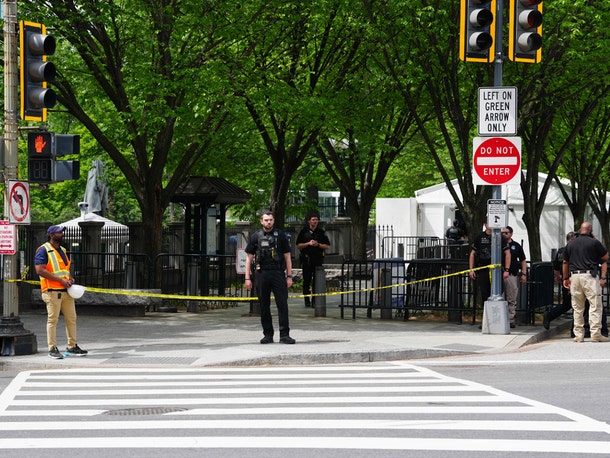
The security breach unfolded rapidly on a seemingly ordinary Thursday morning in Washington D.C. At approximately 11:30 AM PDT (2:30 PM EDT), the individual approached the highly fortified perimeter of the White House complex, specifically targeting an area adjacent to the historic Treasury Building. This section of the perimeter is characterized by robust vehicle bollards and pedestrian gates, designed to deter both vehicular and foot traffic intrusion.
Eyewitness accounts, corroborated by preliminary Secret Service reports, indicate the man abruptly scaled one of the fixed vehicle bollards, designed primarily to prevent unauthorized vehicle access, demonstrating a clear intent to enter the secure zone. Within moments of the attempted breach, uniformed U.S. Secret Service police officers, who maintain a constant, vigilant presence around the complex, converged on the individual.
Upon encountering the officers near a designated pedestrian gate, the suspect reportedly engaged in a physical altercation. The Secret Service’s training emphasizes immediate and decisive action in such scenarios to neutralize potential threats and prevent further penetration into the secured area. During the struggle, one officer sustained a non-life-threatening laceration. Despite the resistance, the officers quickly brought the situation under control, subduing and taking the individual into custody.
Following the detainment, standard security protocols were immediately activated. The area was momentarily secured and assessed for any residual threats, though none were identified. Emergency medical personnel were dispatched to the scene, attending to both the injured officer and the suspect. Both individuals were then transported to a nearby medical facility for comprehensive evaluation, as is standard procedure for any individual involved in a physical incident with federal law enforcement, and for any injured officer. The prompt and coordinated response underscored the readiness and effectiveness of the Secret Service’s protective measures.
The White House Security Perimeter: A Multi-Layered Defense
The White House, as the residence and principal workplace of the President of the United States, is one of the most heavily guarded structures globally. Its security perimeter is a complex, multi-layered system designed to detect, deter, and neutralize a wide array of threats, ranging from opportunistic trespassers to sophisticated attacks. The incident on Thursday highlights the critical role of each component in this defense network.
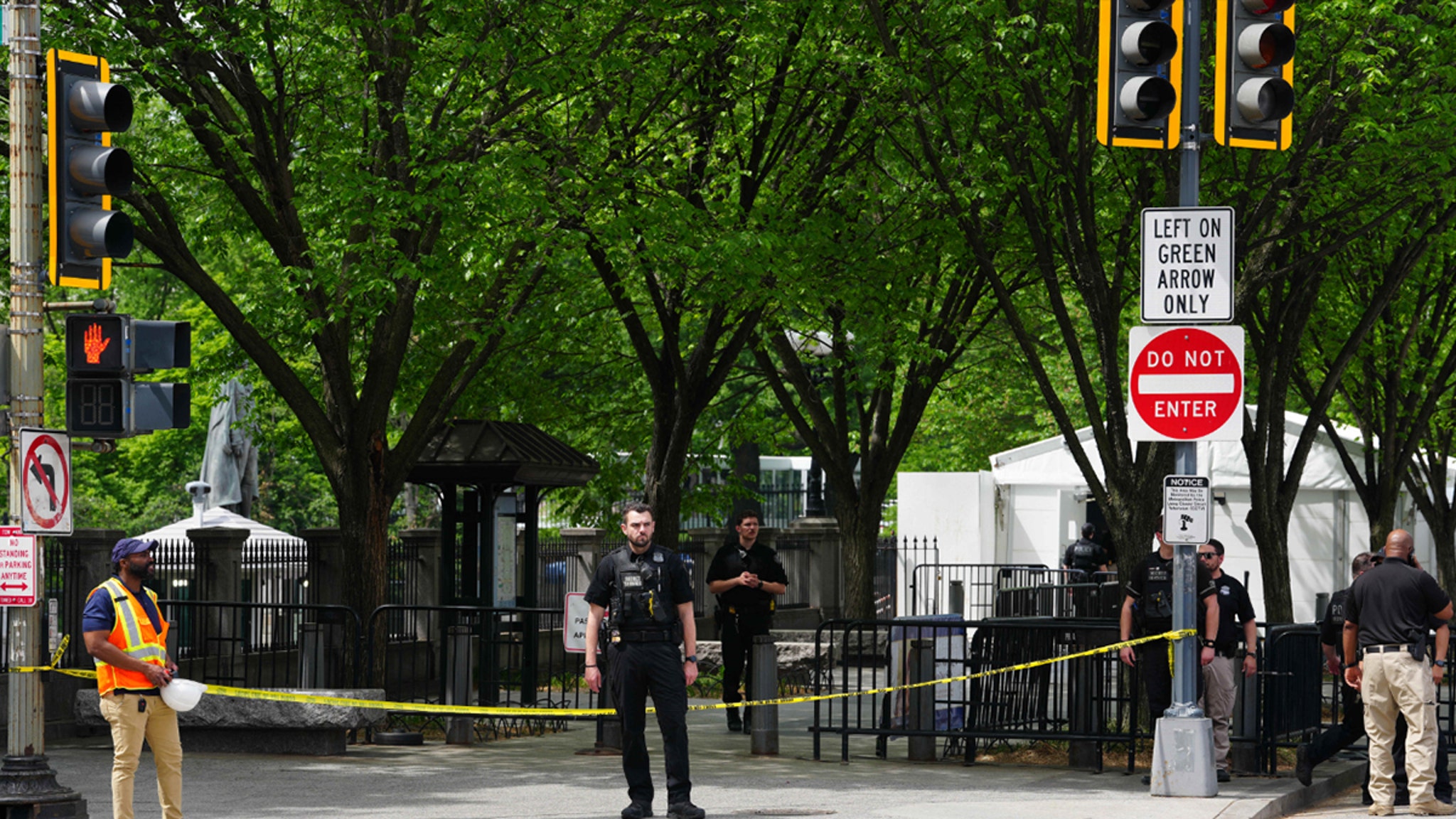
Vehicle bollards, such as the one jumped by the suspect, are a crucial element of the outer security layer. These robust, often reinforced concrete or steel posts, are strategically placed to prevent unauthorized vehicles from gaining proximity to the buildings. They are engineered to withstand significant impact, effectively forming an impenetrable barrier against car bombs or vehicle ramming attempts. While primarily vehicle deterrents, their presence also serves as a physical barrier for pedestrians, even if not explicitly designed for that purpose.
Beyond the physical barriers like bollards and wrought-iron fences, the perimeter is continuously monitored by an extensive network of surveillance cameras, ground sensors, and highly trained personnel. The U.S. Secret Service Uniformed Division forms the frontline of this defense, with officers strategically positioned at checkpoints, patrol routes, and observation posts around the clock. These officers undergo rigorous training in threat assessment, de-escalation, defensive tactics, and emergency response, enabling them to react decisively to any security challenge. Plainclothes Secret Service agents also operate within and around the complex, adding another layer of covert protection.
The constant evolution of security threats necessitates ongoing adaptation of the White House’s defenses. Following notable breaches in the past, particularly a series of fence-jumping incidents in the mid-2010s, significant enhancements were implemented. These included raising the height of the perimeter fence, adding anti-climb features, and increasing the number of surveillance technologies and personnel. These upgrades were part of a broader effort to harden the complex against both persistent and novel threats, ensuring that any attempt to breach the perimeter is met with an immediate and overwhelming response.
Background of White House Security Incidents
While the Secret Service successfully contained Thursday’s incident, it serves as a stark reminder of the persistent challenges involved in protecting such a high-profile target. The White House has, throughout its history, been the site of numerous security incidents, ranging from peaceful protests that spill over into unauthorized areas to more aggressive and dangerous breaches.
One of the most widely publicized incidents occurred in September 2014 when Omar Gonzalez, an Iraq War veteran, successfully scaled the White House fence and entered the East Room before being apprehended. This alarming breach prompted a comprehensive review of White House security protocols and led directly to the significant physical upgrades seen today, including the installation of anti-climb spikes and improved perimeter fencing. Similarly, in April 2017, another individual, Joseph Caputo, scaled a different section of the fence, leading to a temporary lockdown.
Statistics on security incidents around the White House reveal a consistent pattern of attempted intrusions. While many attempts are quickly thwarted far from the Executive Mansion, actual breaches of the immediate perimeter remain rare due to the multi-layered defense. However, each incident, regardless of its severity, triggers an internal review and often leads to further refinement of security measures. These attempts underscore the need for constant vigilance and the ever-present threat environment surrounding the seat of American executive power. The Secret Service routinely arrests individuals for trespassing, disorderly conduct, and other infractions in the vicinity of the White House, highlighting the daily challenges faced by its protective detail.
Official Response and Ongoing Investigation
In the immediate aftermath of the incident, the U.S. Secret Service released a preliminary statement confirming the detainment and the injury to one of its officers. A spokesperson for the agency affirmed, “The U.S. Secret Service promptly detained an individual who attempted to breach the White House security perimeter near the Treasury Building. Our officers acted swiftly and professionally to neutralize the threat. An investigation into the motive and circumstances of the incident is currently underway.” The Secret Service emphasized its commitment to maintaining the highest levels of security for the President, the First Family, and the White House complex.
Sources within the White House indicated that President Donald Trump was briefed on the incident shortly after its occurrence. While no public statement was immediately issued from the President himself, the White House Press Secretary is expected to address the matter, likely reiterating confidence in the Secret Service and affirming that the President’s security was never compromised. Such statements typically serve to reassure the public and project an image of calm and control in the face of security challenges.
The suspect, whose identity has not yet been publicly released, will face federal charges. Depending on the specifics of the altercation and the intent behind the breach, these charges could include trespassing on restricted grounds, assault on a federal officer, and potentially other offenses related to unlawful entry or disturbing the peace. Federal prosecutors will work in conjunction with Secret Service investigators to build a case, which will involve reviewing surveillance footage, interviewing witnesses, and assessing the suspect’s background and mental state. The legal process will likely begin with an arraignment in federal court, where the suspect will be formally charged and a bail determination made.
Medical Care and Officer Well-being
The Secret Service officer who sustained a non-life-threatening laceration during the physical altercation received immediate medical attention at the scene before being transported to a local hospital. While the exact nature and severity of the injury have not been disclosed, the categorization as "non-life-threatening" is a reassuring detail. Federal law enforcement agencies, including the Secret Service, have robust protocols in place for line-of-duty injuries, ensuring officers receive comprehensive medical care and support during their recovery. This includes access to physical therapy, psychological counseling, and administrative leave as needed.
The well-being of its personnel is a paramount concern for the Secret Service, whose officers operate under immense pressure in high-stakes environments. Incidents like these, even when quickly resolved, can take a toll on officers, both physically and psychologically. The agency maintains a strong support network for its employees, recognizing the unique stresses associated with presidential protection. The swift and professional response of the officers involved in this incident is a testament to their rigorous training and dedication to their mission, even when facing personal risk.
Implications for Security and Public Perception
While the incident was quickly contained, it inevitably triggers an internal review of security protocols and response mechanisms within the Secret Service. Even if no immediate systemic failures are identified, every breach attempt provides valuable data points for analysis, leading to potential refinements in deployment strategies, technology integration, or training methodologies. Such continuous evaluation is critical to maintaining the adaptability and effectiveness of White House security against evolving threats.
The incident also plays into the broader public perception of national security, particularly given its occurrence during President Donald Trump’s second administration. President Trump has historically emphasized a strong stance on law and order and robust national security, often drawing parallels between border security and the integrity of national institutions. While this incident is distinct from border issues, any perceived vulnerability at the nation’s most symbolic address can resonate with public concerns about overall safety and governmental control. The rapid resolution, however, serves to reinforce confidence in the federal agencies tasked with protecting critical infrastructure and personnel.
The symbolic importance of the White House as a target cannot be overstated. It represents the enduring strength and stability of American democracy. Any attempt to breach its security, regardless of the perpetrator’s motive or ultimate success, sends a message that necessitates a firm and visible response. The successful containment of Thursday’s incident underscores the unwavering commitment of the U.S. Secret Service to defend this vital national symbol and ensure the safety of its occupants and operations. The ongoing investigation will aim to uncover the full scope of the incident, ensuring all lessons are learned and applied to further strengthen the formidable defenses of the White House complex.