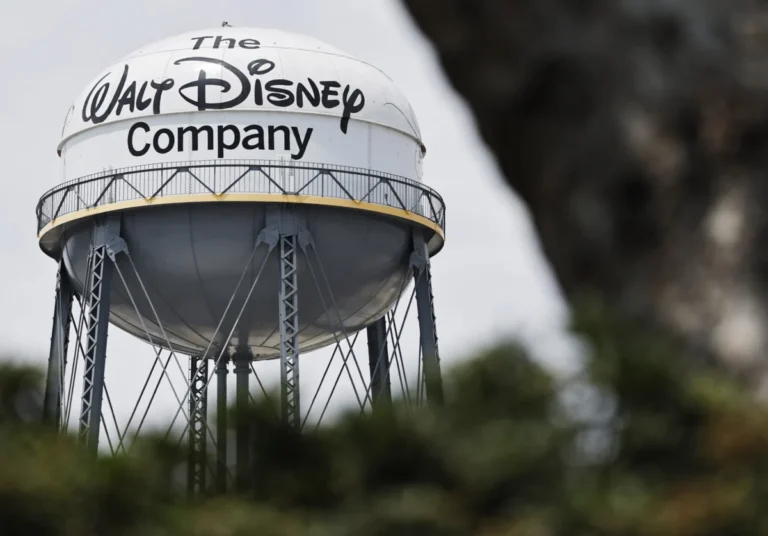
The Walt Disney Company has signaled the commencement of its latest phase of corporate restructuring, a move that is expected to result in the elimination of approximately 1,000 positions across various segments of the media and entertainment giant. This strategic reduction in headcount comes on the heels of a significant leadership transition, as Josh D’Amaro officially assumed the role of Chief Executive Officer in mid-March, succeeding Bob Iger. According to sources familiar with the internal developments, the layoffs are primarily targeted at the company’s marketing operations, reflecting a broader effort to streamline workflows and eliminate redundancies following a period of intense organizational change.
The decision to trim the workforce serves as one of D’Amaro’s first major administrative actions since taking the helm of the storied institution. While the company has not yet issued a formal public statement regarding the specific number of affected employees, the move aligns with a multi-year trajectory of fiscal discipline intended to bolster profit margins and satisfy investor demands for increased efficiency. The focus on the marketing department follows a significant consolidation of the company’s promotional arms under the leadership of Asad Ayaz, who was appointed as Disney’s first-ever Chief Marketing and Brand Officer earlier this year.
The Consolidation of Disney’s Global Marketing Brand
Under the newly established organizational structure, Asad Ayaz oversees marketing strategies for the entirety of Disney’s vast portfolio, which is now categorized into three primary segments: Entertainment, Experiences, and Sports. Ayaz, who reports directly to CEO Josh D’Amaro and Dana Walden, Disney’s President and Chief Creative Officer, was tasked with creating a unified brand voice for the company’s diverse assets, ranging from the Marvel Cinematic Universe and Star Wars to the global theme park empire and ESPN.
Historically, Disney’s various divisions operated with a high degree of autonomy, maintaining independent marketing teams for film studios, television networks, and streaming services. However, the recent centralization of these functions was designed to create a more cohesive enterprise-wide marketing strategy. While this consolidation was intended to enhance brand synergy, it also created overlapping roles and logistical redundancies. Industry analysts suggest that the current round of layoffs is a natural, albeit difficult, consequence of this integration, as the company seeks to operate a leaner, more agile marketing organization that can respond rapidly to the shifting landscape of digital media and consumer behavior.
A Legacy of Restructuring: From Iger to D’Amaro
To understand the current climate at Disney, it is necessary to examine the period of volatility that preceded D’Amaro’s appointment. Bob Iger, who had previously led the company for fifteen years, returned from retirement in late 2022 to replace Bob Chapek. Iger’s second tenure was defined by a sense of urgency to "right the ship" after a series of quarterly earnings misses and a precipitous decline in stock value.
In February 2023, Iger announced a massive reorganization plan aimed at achieving $5.5 billion in cost savings—a target that was later increased to $7.5 billion. This initiative resulted in the elimination of 7,000 jobs, representing roughly 3% of Disney’s global workforce at the time. The restructuring also saw the company move away from a centralized distribution model back to a structure that gave creative leads more control over their budgets and content strategies.
When Josh D’Amaro was named as Iger’s successor, the transition was viewed by many as a move toward long-term stability. D’Amaro, who previously served as the Chairman of Disney Experiences, was widely credited with navigating the Parks and Resorts division through the challenges of the COVID-19 pandemic and subsequently driving record-breaking revenue in that sector. On his first day as CEO, D’Amaro acknowledged the groundwork laid by Iger, stating that the company was now operating from a "place of strength" and was ready to pivot from defense to offense. However, the current layoffs indicate that "operating from strength" still requires a rigorous commitment to overhead reduction.
Financial Context and Market Performance
The timing of the layoffs coincides with a complex financial backdrop for the entertainment industry. On the day the news of the job cuts surfaced, Disney’s stock saw a slight decline in afternoon trading, reflecting the cautious sentiment of investors who are weighing the company’s cost-cutting successes against the challenges facing its traditional linear television business.
Disney’s financial health is currently a tale of two trajectories. On one hand, the "Experiences" segment, which includes theme parks, cruise lines, and consumer products, has remained a powerhouse of profitability. On the other hand, the "Entertainment" segment is grappling with the ongoing transition from traditional cable to streaming. While Disney+ has made significant strides toward profitability—narrowing its losses significantly over the past four fiscal quarters—the decline in advertising revenue for linear networks like ABC and Disney Channel continues to put pressure on the bottom line.
By reducing the headcount in marketing, Disney is likely attempting to offset the rising costs of content production and the capital-intensive nature of its streaming expansion. The company has also committed to a massive $60 billion investment in its parks and experiences over the next decade, a move that requires significant liquidity and a lean corporate structure to sustain.
Timeline of Recent Major Disney Milestones
The current workforce reduction is the latest in a series of pivotal events that have reshaped The Walt Disney Company over the last 24 months:
- November 2022: Bob Iger returns as CEO, replacing Bob Chapek amid investor dissatisfaction.
- February 2023: Disney announces a plan to cut 7,000 jobs and save $5.5 billion in costs.
- January 2024: Asad Ayaz is named Chief Marketing and Brand Officer, centralizing marketing for the first time in company history.
- February 2024: Disney increases its cost-cutting goal to $7.5 billion and reports improved streaming margins.
- March 2024: Josh D’Amaro officially succeeds Bob Iger as CEO, marking the end of a long-awaited succession process.
- May 2024: Reports emerge of a new wave of 1,000 layoffs, primarily within the consolidated marketing department.
Broader Industry Implications and Analysis
Disney is not alone in its pursuit of a leaner corporate structure. The entire media and entertainment sector is currently undergoing a "great recalibration." Rivals such as Warner Bros. Discovery, Paramount Global, and Netflix have all implemented various forms of layoffs and restructuring over the past year. The primary driver is the realization that the "growth at all costs" era of the streaming wars is over, replaced by an era where profitability and free cash flow are the primary metrics of success.
For Disney, the layoffs in the marketing department suggest a shift in how the company views its promotional spend. In an age of data-driven digital marketing, the need for large, siloed teams has diminished. By centralizing marketing under Ayaz, Disney can leverage data across its entire ecosystem—using insights from theme park visitors to better target streaming subscribers, or using movie-goer demographics to drive merchandise sales. While this efficiency is beneficial for the balance sheet, it inevitably leads to the elimination of redundant administrative and mid-level management roles.
Furthermore, these layoffs may be seen as a strategic "clearing of the decks" for D’Amaro. By addressing staffing levels early in his tenure, the new CEO can enter the next fiscal year with a budget that reflects his specific priorities. D’Amaro has been vocal about his desire to "turbocharge" the parks and integrate technology more deeply into the guest experience. Funding these innovations requires a disciplined approach to traditional corporate overhead.
Potential Impacts on Workforce Morale and Brand Perception
While the layoffs are a pragmatic financial move, they present challenges for internal culture and external brand perception. Disney has long been regarded as one of the world’s most desirable employers, known for its emphasis on creativity and "the magic" of its workplace. Repeated rounds of job cuts can lead to "survivor guilt" among remaining employees and a potential brain drain as talent seeks more stable environments.
However, from a management perspective, the consolidation of marketing is framed as an opportunity for better storytelling. By having one chief marketing officer, the company ensures that the Disney brand remains consistent across all touchpoints. Whether a consumer is watching a film in a theater, booking a cruise, or buying a toy, the messaging is now synchronized. This holistic approach is intended to strengthen the emotional connection consumers have with the brand, which is arguably Disney’s most valuable asset.
Looking Ahead: The D’Amaro Era
As Josh D’Amaro settles into his role, the industry will be watching closely to see how he balances the company’s storied legacy with the brutal realities of a changing media landscape. The 1,000 layoffs in marketing are a clear signal that the era of aggressive cost-management initiated by Bob Iger will continue under the new leadership.
The focus now shifts to Disney’s upcoming quarterly earnings reports, where investors will look for evidence that these cuts are translating into improved operating margins. The company’s ability to successfully transition its sports business, ESPN, into a fully digital entity while simultaneously expanding its physical footprint in theme parks will be the ultimate test of D’Amaro’s strategy.
In the immediate term, the departure of 1,000 colleagues marks a somber chapter for the workforce, but for the leadership in Burbank, it is viewed as a necessary step in ensuring that the House of Mouse remains competitive for the next century of storytelling. The evolution of the marketing department under Asad Ayaz will serve as a litmus test for whether a centralized, lean approach can maintain the global dominance of one of the world’s most recognizable brands.