


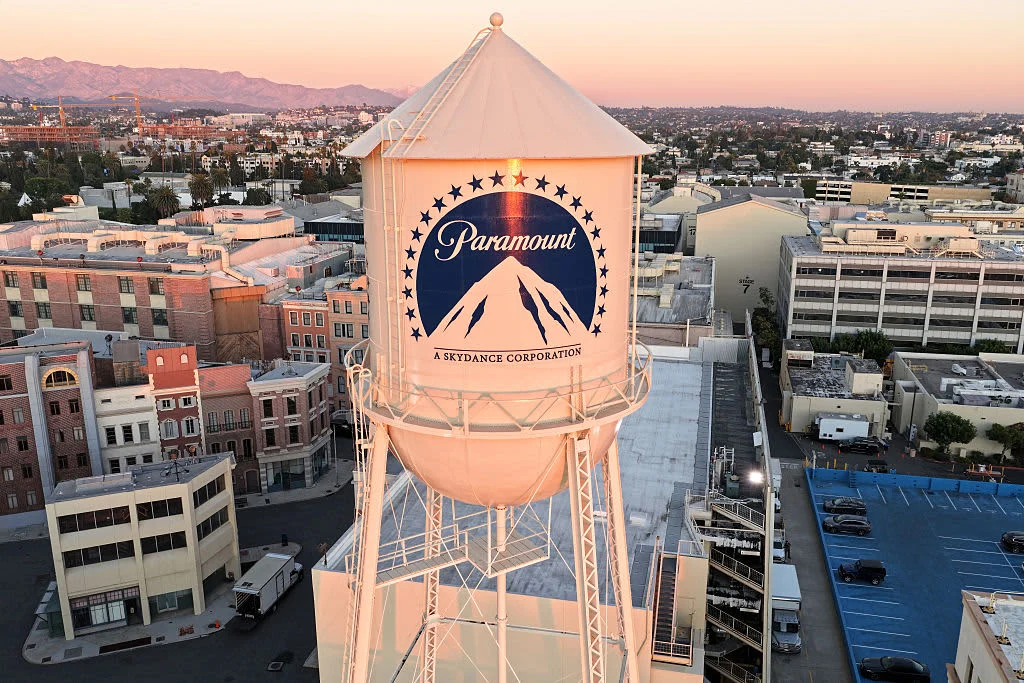
Warner Bros. Discovery (WBD) announced on Tuesday that it has entered into a critical seven-day negotiation window with Paramount Skydance (PSKY) to explore a potential "best and final" acquisition offer, a move facilitated by a limited waiver granted by Netflix. This strategic pivot comes as the legacy media giant seeks to provide clarity to its shareholders ahead of a scheduled March 20, 2026, special meeting. Under the terms of the waiver, WBD leadership is permitted to engage with Paramount Skydance through February 23, 2026, to address what the board has described as "unresolved deficiencies" in Paramount’s previous proposals.
The announcement marks a significant escalation in the multi-billion-dollar battle for control of Warner Bros. Discovery’s expansive portfolio, which includes the Max streaming platform, HBO, the Warner Bros. film studio, and a deep library of intellectual property ranging from the DC Universe to Harry Potter. While WBD’s board of directors continues to unanimously recommend a pending merger with Netflix, the emergence of a higher, all-cash bid from Paramount Skydance has forced the company to reopen discussions to satisfy its fiduciary duties to stockholders.
The Terms of the Seven-Day Waiver
The decision to reopen talks was made possible only through the cooperation of Netflix, which currently holds a definitive merger agreement with WBD. Netflix granted a narrow, one-week waiver of its exclusivity rights to allow WBD to seek a "binding proposal" from Paramount Skydance that could potentially be deemed a "Superior Proposal" under the existing contract.
Netflix co-CEO Ted Sarandos characterized the move as an effort to cut through market "noise." Speaking to CNBC, Sarandos noted that Paramount Skydance had been "flooding the zone with confusion," often bypassing the WBD board to communicate directly with shareholders. By allowing this seven-day window, Netflix aims to force Paramount Skydance to formalize its hypothetical offers into a concrete, actionable agreement.
Once the seven-day period expires on February 23, Netflix will resume its full suite of rights, including "matching rights" that allow it to counter any superior offer presented by a rival bidder.
Comparative Bid Analysis: Netflix vs. Paramount Skydance
The bidding war has placed WBD shareholders in a complex position, weighing the certainty of the Netflix deal against the higher face value of the Paramount Skydance offer.

- The Netflix Offer: Currently stands at $27.75 per share in an all-cash transaction. This deal focuses primarily on WBD’s streaming and studio assets. The WBD board has favored this path due to its perceived higher "certainty of closing" and the strategic fit within Netflix’s global distribution network.
- The Paramount Skydance Offer: Initially launched as a hostile tender offer at $30 per share, the bid was recently "sweetened" with additional enhancements. On Tuesday, WBD revealed that a senior Paramount representative indicated a willingness to raise the price to $31 per share if formal talks were reopened.
WBD CEO David Zaslav emphasized that while the price point is higher, the "deficiencies" in the Paramount bid—largely related to regulatory risks and financing structures—remain a primary concern. "Our sole focus has been on maximizing value and certainty," Zaslav stated, noting that the board needs an "actionable, binding proposal" rather than a series of hypothetical figures.
Chronology of the 2025-2026 Media Megamerger
The path to this week’s announcement has been defined by aggressive corporate maneuvering and shifting alliances within the entertainment sector:
- December 5, 2025: Warner Bros. Discovery and Netflix announce a definitive agreement for Netflix to acquire WBD’s studio and streaming businesses, a move intended to consolidate the "Streaming Wars."
- December 8, 2025: Paramount Skydance, fresh off its own internal merger, launches a hostile tender offer for WBD at $30 per share, appealing directly to shareholders after being rebuffed by the WBD board.
- January 20, 2026: Netflix formalizes its $27.75 per share all-cash offer, emphasizing its path to regulatory approval and financial stability.
- February 10, 2026: Paramount Skydance "sweetens" its bid with improved terms regarding debt assumption and governance but maintains the $30 per share price tag.
- February 17, 2026: WBD announces the seven-day waiver from Netflix, revealing a potential $31 per share path with Paramount Skydance.
- March 20, 2026: Scheduled date for the WBD special meeting of shareholders to vote on the Netflix transaction.
Regulatory Scrutiny and Foreign Investment Concerns
Perhaps the most significant hurdle for either transaction is the global regulatory environment. Both proposed deals face intense scrutiny, albeit for different reasons.
The Netflix-WBD Antitrust Challenge:
Regulators in the United States and Europe have expressed concerns that a Netflix-WBD combination would create a "streaming behemoth" with unprecedented market power. Critics argue that merging two of the world’s largest content libraries could lead to higher subscription prices and reduced competition for creative talent. Netflix has countered this by arguing that the merger would stabilize a volatile industry and preserve thousands of production jobs that might otherwise be lost to ongoing media industry layoffs.
The Paramount Skydance CFIUS and Funding Challenge:
The Paramount Skydance bid has raised "red flags" regarding its financing. The consortium includes significant investment from the sovereign wealth funds of Saudi Arabia, Abu Dhabi, and Qatar. While Paramount has stated that these entities will remain passive investors with no governance rights, Netflix and some U.S. lawmakers have suggested the deal could face opposition from the Committee on Foreign Investment in the United States (CFIUS).
Netflix’s Tuesday statement specifically called out these concerns, suggesting that European authorities would also be "skeptical" of Middle Eastern involvement in Western media assets. Paramount Skydance has dismissed these claims as "antics" designed to distract from the superior financial value of their offer.
The "Trump Factor" and Political Uncertainty
The political climate in the United States adds another layer of unpredictability. President Donald Trump recently commented that he had not yet intervened in the merger process but had met with executives from various camps. The industry remains divided on how a Trump-led Department of Justice (DOJ) would view the transactions. Historically, the Trump administration has shown skepticism toward large media mergers—most notably the original AT&T-Time Warner deal—though his current stance on "Big Tech" versus "Legacy Media" remains fluid.

Ted Sarandos addressed this uncertainty by asserting that Paramount Skydance does not have a "faster regulatory path" or an "inside track" with the DOJ, despite insinuations to the contrary from the Ellison family (the backers of Skydance).
Market Reaction and Shareholder Sentiment
Wall Street responded positively to the news of reopened talks, viewing the seven-day window as a "win-win" for price discovery. Shares of Warner Bros. Discovery rose nearly 3% following the announcement, while Paramount shares gained approximately 5%.
Investors appear to be pricing in the possibility of a bidding war that could push the final acquisition price toward the $32-$33 range. However, analysts at Raymond James cautioned that the "certainty of closing" remains the ultimate metric. "Netflix offers a cleaner national security picture and a more straightforward financial exit," the firm noted in a Tuesday memo. "Paramount offers more cash but comes with a labyrinth of regulatory and geopolitical questions."
Broader Implications for the Media Industry
The outcome of this battle will likely define the entertainment landscape for the next decade. If Netflix succeeds, it transitions from a dominant distributor to an unrivaled content factory, controlling the legacy of the "Big Five" Hollywood studios. If Paramount Skydance prevails, it creates a consolidated legacy media powerhouse capable of rivaling Disney in both scale and IP depth.
For Warner Bros. Discovery, the next seven days are pivotal. The company’s leadership must determine if Paramount’s $31 per share indication can be transformed into a binding, low-risk contract that outweighs the stability of the Netflix partnership.
As the February 23 deadline approaches, the industry awaits a formal "best and final" offer from the Skydance camp. Should Paramount fail to resolve the board’s concerns regarding financing and regulatory "deficiencies" within this window, the path will be cleared for the March 20 shareholder vote to proceed on the original Netflix merger terms. Regardless of the victor, the era of the independent "middle-weight" media company appears to be coming to an end, replaced by a new era of ultra-consolidation.