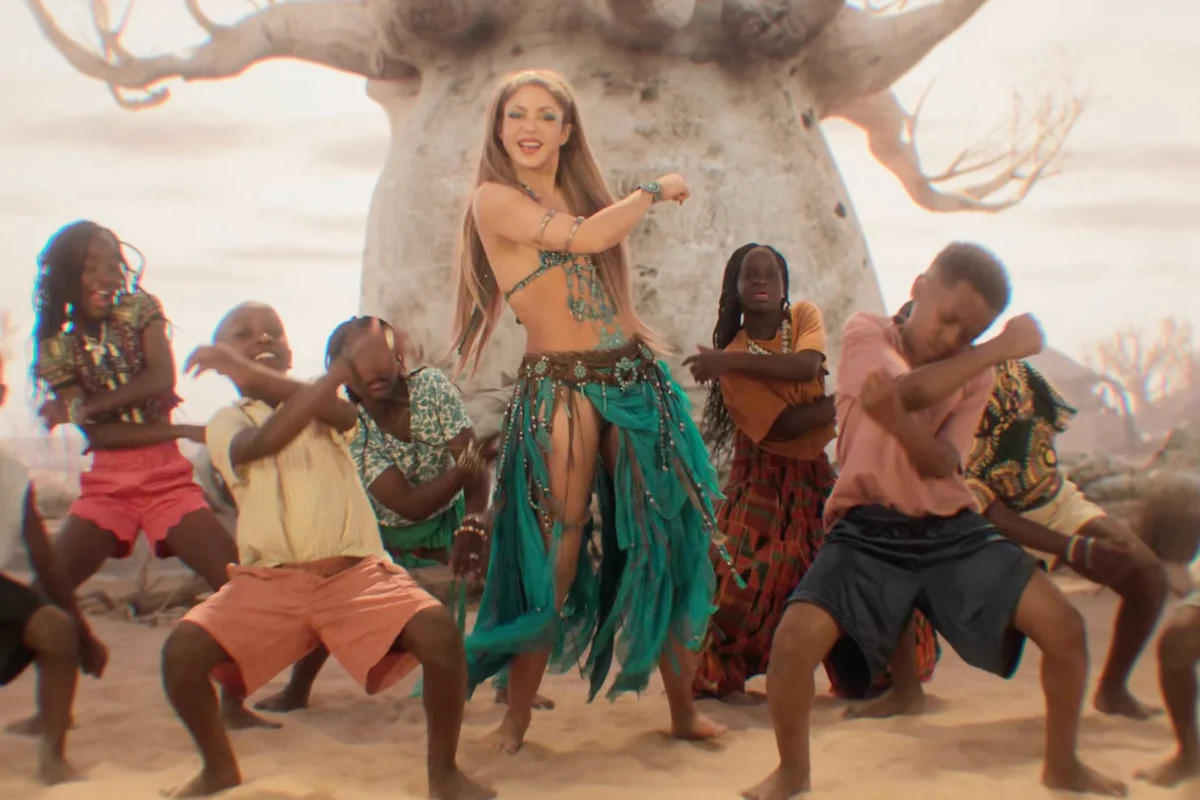
The vibrant and globe-trotting music video for "Dai Dai," the official song of the FIFA 2026 World Cup, has been released, featuring a constellation of global footballing talent and a powerful message of unity. The track, a collaboration between Colombian music icon Shakira and Nigerian superstar Burna Boy, aims to capture the spirit and excitement of the upcoming tournament, which will be jointly hosted by the United States, Canada, and Mexico. The visual spectacle, released on Saturday, May 23, offers a compelling narrative that intertwines the artistry of its lead performers with the universally recognized passion for the beautiful game.
The video opens with a powerful declaration, as global football legends Lionel Messi, Kylian Mbappé, and Erling Haaland step onto a virtual pitch to collectively announce, "We are ready," setting a tone of anticipation and readiness for the FIFA 2026 World Cup. This impactful introduction immediately grounds the song within the context of the tournament, underscoring its significance and the caliber of talent involved. Directed by the acclaimed Hannah Lux Davis, known for her work with numerous pop and R&B artists, the visual production is ambitious, spanning iconic landmarks and evocative landscapes.
A Journey Across Continents and Cultures
The narrative of the "Dai Dai" video begins with Shakira perched majestically atop the Angel of Independence in Mexico City, a symbolic nod to one of the tournament’s host nations. This striking visual then transitions to a more grounded, yet equally compelling, scene: Shakira dancing in a vast desert landscape alongside a group of African children. This imagery serves to highlight the global reach and inclusive nature of the World Cup, emphasizing that the sport transcends borders and unites people from all walks of life. The desert setting can be interpreted as representing the vastness of the world and the universal appeal of football.
The visual progression continues with the introduction of Burna Boy, whose energetic presence complements Shakira’s performance. As he delivers his verse, Shakira is depicted standing atop a luminous globe, set against a backdrop of a star-studded sky. This celestial imagery further reinforces the song’s global message, suggesting that the World Cup is an event that shines brightly on the world stage. The scene then shifts to a bustling soccer stadium, where Shakira is joined by a vibrant ensemble of female dancers. Their costumes are meticulously designed to represent the national flags of countries participating in the FIFA 2026 World Cup, creating a powerful visual tapestry of international diversity and solidarity. The inclusion of these dancers underscores the unifying power of the tournament, where nations come together not just to compete, but to celebrate a shared passion.
A Tribute to Footballing Legacies
The climax of the "Dai Dai" music video is a poignant montage of archival footage from past World Cup matches. This segment serves as a powerful tribute to the rich history and enduring legacy of the sport. Shakira’s voiceover during this section pays homage to some of the most iconic figures in football history, including Diego Maradona, Paolo Maldini, Romário, Cristiano Ronaldo, David Beckham, Kaká, and Lionel Messi. By invoking these legendary names, the video connects the current generation of fans and players to the storied past of the World Cup, emphasizing the continuity of passion and excellence across different eras.
Furthermore, the video explicitly mentions and visually represents several participating nations in the 2026 tournament, such as Brazil, Argentina, Colombia, the United States, and the Netherlands. This direct acknowledgment of the participating countries serves to build excitement and foster a sense of national pride among fans worldwide. It highlights the diverse array of talent and styles that will be on display during the tournament, promising a spectacle of high-quality football. The inclusion of specific national teams also serves to reinforce the global nature of the event and the immense stakes involved for each competing nation.
Shakira’s Enduring World Cup Connection

"Dai Dai" marks a significant milestone for Shakira, as it is the second time she has contributed an official song to the FIFA World Cup. Her previous anthem, the globally acclaimed "Waka Waka (This Time for Africa)," recorded for the 2010 World Cup in South Africa, remains one of the most successful and memorable World Cup songs in history. The success of "Waka Waka" cemented Shakira’s association with the tournament and established her as a voice that resonates with the spirit of global football. Her return for the 2026 tournament signifies a continued partnership and a testament to her ability to capture the essence of such a monumental event through music. The enduring popularity of "Waka Waka" suggests that "Dai Dai" has the potential to become another anthem that defines a generation of World Cup memories.
The FIFA 2026 World Cup: A New Era of Global Football
The FIFA 2026 World Cup is poised to be a historic event for several reasons. It will be the first World Cup to be hosted by three nations: the United States, Canada, and Mexico. This unprecedented co-hosting arrangement promises to bring a unique cultural blend and logistical challenge to the tournament, potentially fostering deeper cross-border collaboration and shared experiences among fans and participating teams. The tournament is scheduled to commence on June 11 at the iconic Estadio Azteca in Mexico City, a stadium with a rich World Cup history, and will conclude on July 19 at MetLife Stadium in New Jersey, which will be temporarily renamed New York New Jersey Stadium for the duration of the event. This geographically diverse hosting plan ensures that fans across North America will have the opportunity to experience the excitement of the World Cup firsthand.
The expansion of the tournament to include 48 teams, an increase from the previous 32, signifies a new era for the World Cup. This expansion aims to provide more opportunities for nations from around the globe to compete on the biggest stage, potentially increasing the diversity of playing styles and introducing new contenders to the global footballing landscape. This move is also seen as a strategic effort by FIFA to broaden the sport’s reach and popularity in emerging football markets. The increased number of matches will also lead to a more extensive and prolonged celebration of football, captivating audiences for over a month.
A Star-Studded Halftime Performance
Adding to the anticipation surrounding Shakira’s involvement in the 2026 World Cup, it has been announced that she will co-headline the halftime show at the World Cup final. Sharing this prestigious stage with music legends Madonna and K-Pop sensation BTS, Shakira is set to deliver a performance that is expected to be a global spectacle. This collaboration brings together artists from different genres and cultural backgrounds, mirroring the diverse and inclusive spirit of the World Cup itself. The combination of these three global superstars promises an unforgettable entertainment experience for billions of viewers worldwide, further amplifying the cultural significance of the tournament’s final match. The selection of these artists indicates a deliberate effort to appeal to a broad demographic, from established music enthusiasts to the younger generation of fans.
The Impact of "Dai Dai" and the World Cup
The release of "Dai Dai" and its accompanying music video serves as more than just a promotional tool for the FIFA 2026 World Cup; it is a cultural statement. The song and video encapsulate the excitement, unity, and global appeal of football. By featuring both established footballing legends and showcasing the diverse participating nations, the anthem aims to inspire a sense of shared anticipation and celebration. The collaboration between Shakira and Burna Boy, two artists with massive international followings and distinct musical styles, is a testament to the unifying power of music and sport.
The FIFA 2026 World Cup is projected to have a significant economic and social impact on the host nations and beyond. The influx of tourists, media attention, and infrastructure development associated with the tournament are expected to generate substantial economic benefits. Moreover, the World Cup has the potential to inspire a new generation of athletes and fans, fostering a greater appreciation for sportsmanship, teamwork, and cultural exchange. The themes of unity and global collaboration embedded within the "Dai Dai" anthem are particularly relevant in today’s interconnected world, offering a message of hope and shared experience through the universal language of football.
The video’s emphasis on the journey of the ball, the dedication of the players, and the passion of the fans highlights the core elements that make the World Cup such a captivating event. As the countdown to June 11 begins, the "Dai Dai" anthem stands as a powerful harbinger of the global celebration of football that awaits. The song’s infectious rhythm and inspiring lyrics, coupled with its visually rich narrative, are poised to become synonymous with the FIFA 2026 World Cup, creating lasting memories for fans around the world. The strategic inclusion of football’s most recognizable figures and the celebration of its rich history underscore the deep connection between music, sport, and culture that the World Cup consistently embodies.