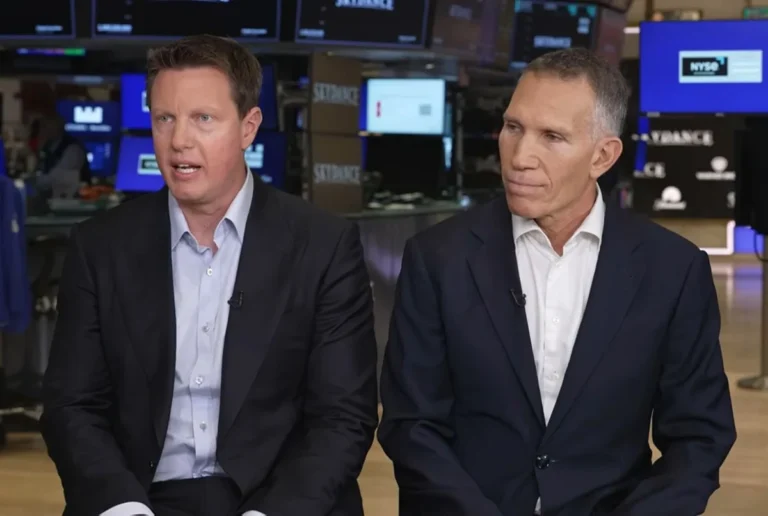



Comcast Corporation outperformed market expectations for the first quarter of 2026, reporting robust financial results driven by a historic month of sporting events and a notable stabilization in its broadband business. The Philadelphia-based telecommunications and media giant saw its shares surge by more than 6% in morning trading following the announcement, reflecting investor confidence in the company’s dual-CEO leadership structure and its pivot toward high-growth segments. Co-CEO Brian Roberts characterized the results as an encouraging sign that the company’s strategic refocusing is yielding tangible benefits, particularly as Comcast navigates a shifting landscape in both the connectivity and entertainment sectors.
Financial Overview and Market Performance
For the period ending March 31, 2026, Comcast reported overall revenue of $31.46 billion, a 5% increase compared to the same period in the previous year. This figure surpassed the average analyst estimates compiled by LSEG. Despite the revenue growth, the company’s net income saw a decline of nearly 36%, falling to $2.17 billion, or 60 cents per share, down from $3.38 billion, or 89 cents per share, in the prior-year quarter. However, when adjusting for one-time items, including amortization and significant capital investments, Comcast reported an adjusted earnings per share (EPS) of 79 cents, which beat the consensus Wall Street estimate.
The dip in net income was largely attributed to a roughly 17% decrease in adjusted earnings before interest, taxes, depreciation, and amortization (EBITDA), which fell to $7.93 billion. This decline was primarily driven by the massive upfront costs associated with broadcasting the Winter Olympics and the Super Bowl, as well as the acquisition costs for NBA media rights. Analysts noted that while these expenses weighed on short-term margins, they provided a critical platform for advertising revenue and subscriber acquisition for the company’s streaming service, Peacock.
The Broadband Pivot: Stabilizing the Core Business
A primary concern for Comcast investors in recent years has been the erosion of its broadband customer base due to aggressive competition from fixed wireless access (FWA) providers. In the first quarter of 2026, however, Comcast showed signs of stemming these losses. The company reported a loss of 65,000 broadband customers, a significant improvement over the 183,000 losses recorded during the same period in 2025.
The competitive landscape remains dominated by wireless giants Verizon and T-Mobile, which have utilized their 5G networks to offer low-cost home internet services. To counter this, Comcast has shifted its strategy toward value-added bundles and competitive pricing tiers. Co-CEO Mike Cavanagh noted during the earnings call that while fixed wireless continues to market aggressively across Comcast’s footprint, the company’s integrated approach is beginning to resonate with consumers.
Central to this strategy is the expansion of Comcast’s mobile business. The company added 435,000 new mobile lines during the quarter, bringing its total mobile customer base to 9.7 million. By requiring mobile customers to also subscribe to broadband services, Comcast is creating a "sticky" ecosystem that discourages churn. This week, the company launched "Mobile Plus" and "Mobile Select" plans, designed to further bridge the gap between its wireless and wireline offerings.
"Legendary February" and the NBCUniversal Surge
The standout performer of the quarter was the NBCUniversal media segment, which benefited from a rare alignment of major sporting events in February 2026. Dubbed "Legendary February" by the company, the month featured the Super Bowl, the Winter Olympics in Milano Cortina, and the NBA All-Star Weekend.
The media unit recorded a staggering 61% increase in revenue, reaching $7.28 billion for the quarter. Even when excluding the extraordinary impact of the Olympics and the Super Bowl, the unit’s revenue grew by 13%. Domestic advertising revenue for the media segment skyrocketed 135% to $3.45 billion. The Super Bowl alone proved to be a massive revenue generator, with NBC reportedly securing an average of $8 million for each 30-second commercial spot.
The heavy investment in sports also served as a powerful engine for Peacock, Comcast’s streaming platform. Peacock’s subscriber base grew 12% year-over-year to 46 million. Perhaps most significantly, the service nearly doubled its revenue to $2.1 billion compared to the prior year. While the streamer still recorded a quarterly loss of $432 million—widened from $215 million due to the high costs of sports rights—Cavanagh announced that Peacock is on track to achieve profitability for the first time in the upcoming quarter. This projected milestone is a critical indicator for Wall Street, which has shifted its focus from pure subscriber growth to bottom-line sustainability in the streaming sector.

Portfolio Optimization and the Versant Media Spin-off
The first quarter of 2026 marked the first reporting period since Comcast completed the spin-off of Versant Media. This move separated Comcast’s core growth assets from a portfolio of traditional cable networks, including CNBC and MSNBC, as well as digital businesses like Fandango.
According to Cavanagh, the spin-off has allowed the company to operate with a more focused portfolio. He highlighted that Comcast’s "six major growth drivers"—Broadband, Mobile, Streaming, Theme Parks, Studios, and Business Services—now account for more than 60% of total company revenue. This is a significant increase from three years ago, when these segments represented 50% of the top line. The restructuring is intended to insulate Comcast’s stock from the secular decline of linear television while doubling down on content creation and physical experiences.
Growth in Film Studios and Theme Parks
Beyond media and connectivity, Comcast’s "Content and Experiences" segment saw broad-based growth. Revenue for the film studio rose 21% to $3.43 billion, bolstered by a strong slate of theatrical releases and home entertainment performance.
The Universal theme parks division also reported a banner quarter, with revenue increasing 24% to $2.33 billion. The primary driver for this growth was the successful opening of Epic Universe in Orlando last May. As Universal’s most ambitious theme park project to date, Epic Universe has significantly increased the average revenue per capita at the company’s Florida resort, attracting international tourists and domestic visitors alike.
Future Outlook: 2026 FIFA World Cup and Beyond
Looking ahead, Comcast executives expressed optimism regarding the remainder of 2026. CFO Jason Armstrong pointed to the upcoming 2026 FIFA Men’s World Cup as the next major catalyst for the media segment. NBCUniversal’s Telemundo holds the Spanish-language rights for the tournament, which will be broadcast across both traditional television and Peacock starting in June. Historically, the World Cup has been a major driver of engagement and subscriber acquisition for Peacock’s Spanish-language offerings.
Additionally, the company is preparing for the continued rollout of its DOCSIS 4.0 technology, which promises symmetrical multi-gigabit speeds across its existing cable infrastructure. This technological upgrade is viewed as a vital defense against fiber-to-the-home competitors and high-end fixed wireless offerings.
Context and Industry Implications
Comcast’s performance serves as a barometer for the broader telecommunications and media industry. The transition from a traditional cable provider to a diversified technology and entertainment conglomerate is a path also being navigated by peers like Charter Communications and Warner Bros. Discovery. However, Comcast’s unique position—owning both the distribution "pipes" and the content "water"—gives it a strategic advantage in bundling.
The company’s ability to stabilize broadband losses while simultaneously scaling a streaming service toward profitability suggests that the "cable" business model is evolving rather than disappearing. By leveraging high-profile live sports as a loss leader to drive ecosystem engagement, Comcast is successfully pivoting toward a future where connectivity and content are inextricably linked.
As the second quarter begins, market analysts will be closely watching Peacock’s progress toward its profitability goal and the continued performance of Epic Universe. With the leadership transition to a co-CEO model now firmly established, Comcast appears to be executing a long-term plan to redefine itself for the digital age, balancing the heavy capital requirements of infrastructure and content with the necessity of returning value to shareholders.