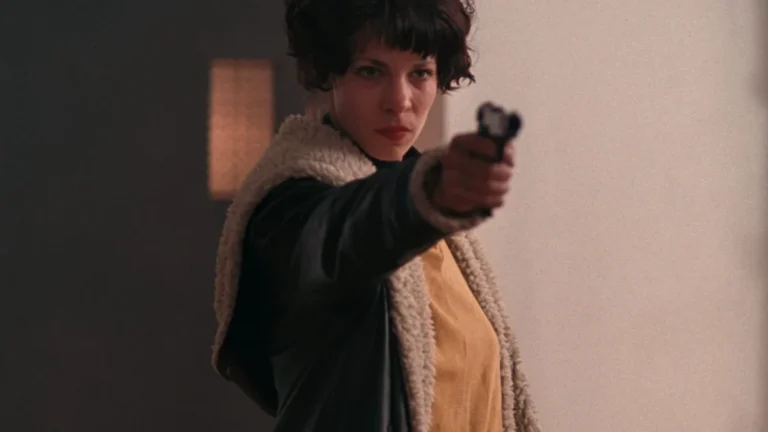



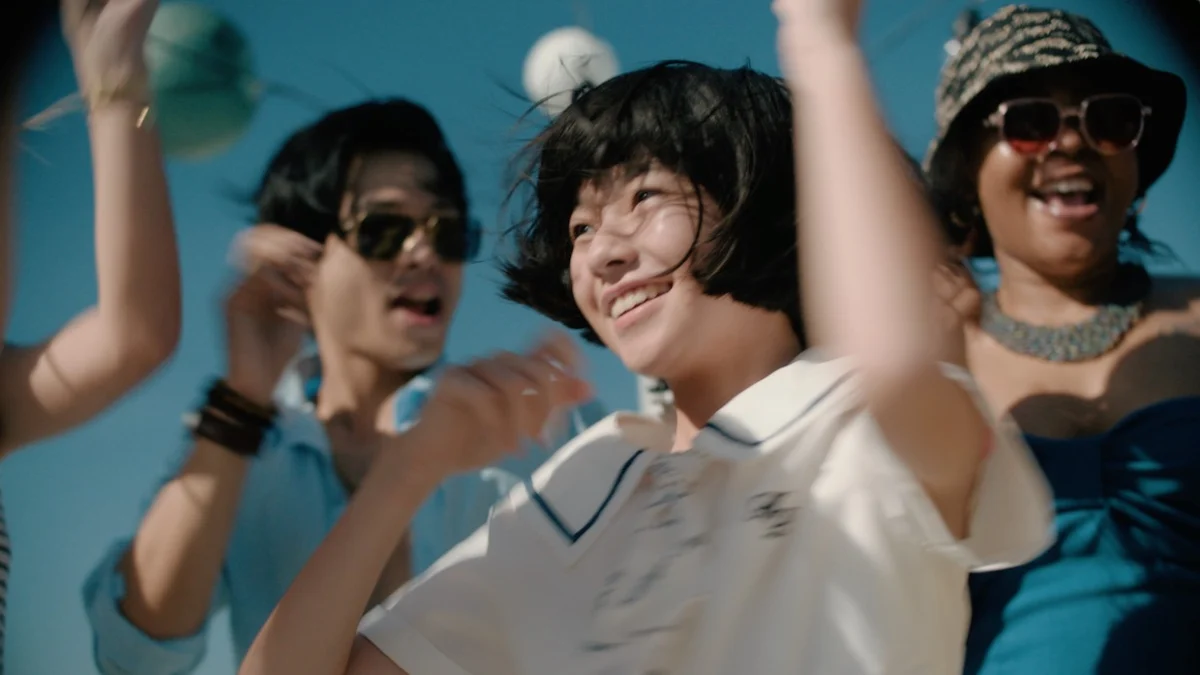
The release of Renoir (2026), the second feature film from acclaimed Japanese director Chie Hayakawa, marks a significant moment in contemporary world cinema, offering a poignant examination of childhood, mortality, and the shifting socioeconomic landscape of Japan. Following the international success of her 2022 debut, Plan 75, Hayakawa returns with a narrative that is both deeply personal and culturally resonant. Set against the backdrop of 1987, the film follows Fuki, played by newcomer Yui Suzuki, an 11-year-old girl navigating the terminal illness of her father during the height of Japan’s "bubble economy." By weaving together elements of autobiographical memory with broader societal critiques, Renoir serves as a companion piece to Hayakawa’s previous work, forming a diptych that explores the various facets of grief and the human condition within a rapidly changing nation.
Narrative Core and the 1987 Setting
Renoir centers on the internal life of Fuki, a preteenage girl whose worldview begins to darken as she witnesses her father’s health decline. Unlike traditional coming-of-age stories that lean into sentimentality, Hayakawa’s film adopts a more complex register, contrasting the mundane rituals of Japanese childhood with Fuki’s burgeoning interest in the macabre. The year 1987 is pivotal to the film’s atmosphere, representing a time of immense optimism and economic expansion. This was the early stage of the Japanese asset price bubble, a period from 1986 to 1991 characterized by skyrocketing real estate and stock prices, which radically reshaped the country’s economy a generation after its postwar recovery.
In this era, Japan was striving to establish itself as a global cultural and economic leader, often looking toward Western art and lifestyle with a sense of profound admiration. This cultural zeitgeist is encapsulated in Fuki’s fixation on a reproduction of Pierre-Auguste Renoir’s 1880 portrait, Irène Cahen d’Anvers (often referred to as "Little Irene"). The painting, a staple in many Japanese middle-class homes of the period, becomes a symbol of Fuki’s developing identity and her desire to understand her place in a world that feels increasingly fragile. Hayakawa uses this artifact to illustrate the "innocent" ambition of the 1980s, where the acquisition of Western replicas served as a badge of sophistication and a bridge to a perceived "First World" status.
Historical Context: The Japanese Bubble and the "Lost Decades"
To fully appreciate the thematic depth of Renoir, one must understand the economic and psychological landscape of 1980s Japan. The "miraculous" postwar recovery had peaked, and the country was awash in liquidity. Land prices in Tokyo were so high that the grounds of the Imperial Palace were famously said to be worth more than the entire state of California. This period of excess fostered a collective belief that the future would be indefinitely brighter.
However, Hayakawa’s film captures the isolation that existed beneath this veneer of prosperity. While the nation celebrated its wealth, individuals like Fuki’s parents faced personal crises that the burgeoning corporate culture was ill-equipped to handle. A subplot involving Fuki’s mother, who is forced by her employer to attend an anger-management course, highlights the early adoption of Western corporate practices and the humiliation inherent in being treated as a "productive unit" rather than a grieving human being. This tension between the individual and the system is a recurring theme in Hayakawa’s filmography, bridging the gap between the optimism of 1987 and the stagnation of the present day.
The Plan 75 Connection: A Study in Demographic Collapse
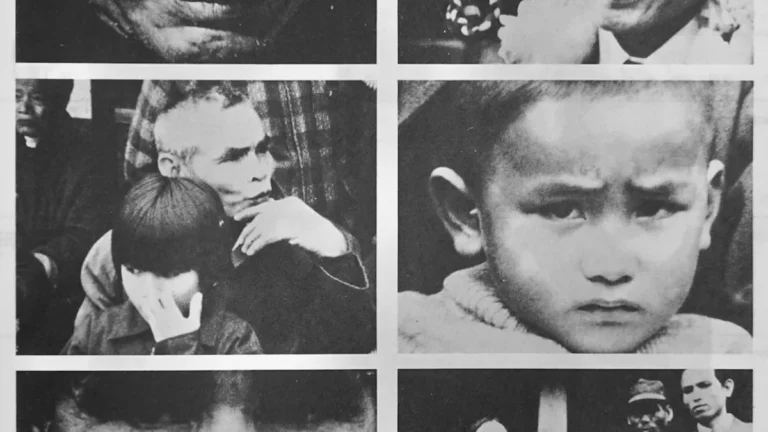
While Renoir looks backward at a period of growth, Hayakawa’s breakout film, Plan 75, looks forward to a dystopian but grounded future. In Plan 75, the Japanese government implements a program to incentivize euthanasia for citizens over the age of 75 as a solution to the country’s demographic crisis. The film was inspired by real-world data: it is estimated that by 2050, approximately one-third of Japan’s population will be over the age of 65.
The two films function as a fascinating study of grief across different generations. Where Plan 75 deals with the societal marginalization of the elderly based on their "productivity," Renoir explores the solitary nature of childhood grief in a society that demands conformity and optimism. Both films avoid "pat catharsis," instead opting for a sober realism that acknowledges the difficulty of reconciling personal suffering with societal expectations. The reception of Plan 75 in Japan was notably visceral, with many viewers describing it as "scarier than a horror movie" due to its proximity to current political discussions regarding the "burden" of an aging population.
Production and Creative Process
The production of Renoir highlights the growing trend of international co-productions in the Japanese film industry. Despite Japan having a robust domestic market, funding for original scripts that are not based on pre-existing intellectual property (IP)—such as manga, anime, or best-selling novels—remains scarce. Hayakawa has noted that approximately 90% of mainstream Japanese hits are adaptations of existing IP, which investors view as lower-risk opportunities.

To maintain her creative vision, Hayakawa sought support from European grants and international festivals, a path she also took with Plan 75. This approach allowed her to bypass the constraints of the traditional Japanese studio system. The film features a primarily Japanese crew, including cinematographer Hideho Urata, whose collaboration with Hayakawa has become a cornerstone of her visual style. Urata, who worked on Plan 75, brings a disciplined approach to shot composition, balancing the handheld energy used for specific characters with more static, contemplative frames that capture the stillness of domestic life.
The casting of Yui Suzuki as Fuki was another critical element of the production. Hayakawa selected Suzuki during the very first round of auditions, citing the young actress’s ability to blend a "childlike essence" with a "mature" presence. Suzuki’s performance is characterized by an absence of hesitation and a willingness to embrace the unconventional, including an imitation of a horse that was eventually written into the final script.
Societal Implications and the "Optimistic Pessimist"
Renoir arrives at a time when Japan is grappling with a general sense of helplessness, often referred to as the "Lost Decades" mindset. The transition from the carefree optimism of the 1980s to the technological and demographic anxieties of the 2020s has left many Japanese citizens feeling unable to resist the country’s various systemic problems. Hayakawa identifies herself as an "optimistic pessimist," a stance reflected in the tone of her films—sober and realistic, yet infused with a quiet compassion for her characters.
The film also touches on the shift in interpersonal relationships brought about by the digital age. By setting the film in 1987, Hayakawa explores a world before smartphones and the internet, where personal connections were more localized and, in her view, more "real." The subplot involving a telephone chat service serves as a precursor to modern social media, illustrating a burgeoning desire for connection in an increasingly atomized society.
Impact and Industry Reception
Renoir premiered at the Cannes Film Festival to critical acclaim, further solidifying Hayakawa’s reputation as one of the most important voices in contemporary Japanese cinema. Her ability to secure international funding and appeal to global audiences while telling specifically Japanese stories has made her a model for independent filmmakers in the region. The film’s expansion to major U.S. cities via Film Movement follows a successful run at New York’s IFC Center and the Seattle International Film Festival.
Critics have praised the film for its refusal to rely on cheap sentimentality. By focusing on the "solitary experience" of grief, Hayakawa challenges the audience to confront the uncomfortable realities of death and loss. The film’s visual beauty, characterized by its "wistful summer vibe," acts as a counterweight to the creeping onset of grief, creating a viewing experience that is both aesthetically pleasing and emotionally demanding.
Conclusion: A New Direction for Japanese Cinema
In the broader context of Japanese film history, Chie Hayakawa represents a shift away from the "Galapagos effect"—a term used to describe the isolation of the Japanese market—toward a more globalized approach. By addressing universal themes of mortality and societal decline through the lens of Japanese history and culture, she has created a body of work that resonates far beyond national borders.
Renoir stands as a testament to the power of original storytelling in an era dominated by franchises and adaptations. It invites viewers to reflect on their own relationship with the past and the ways in which societal structures shape our most private moments of suffering. As Japan continues to navigate its demographic and economic challenges, the films of Chie Hayakawa offer a necessary space for reflection, mourning, and, perhaps, a cautious form of hope. Through the eyes of Fuki and the timeless gaze of Renoir’s Little Irene, the film reminds us that while the world may change, the fundamental human experience of loss remains a shared, if lonely, journey.