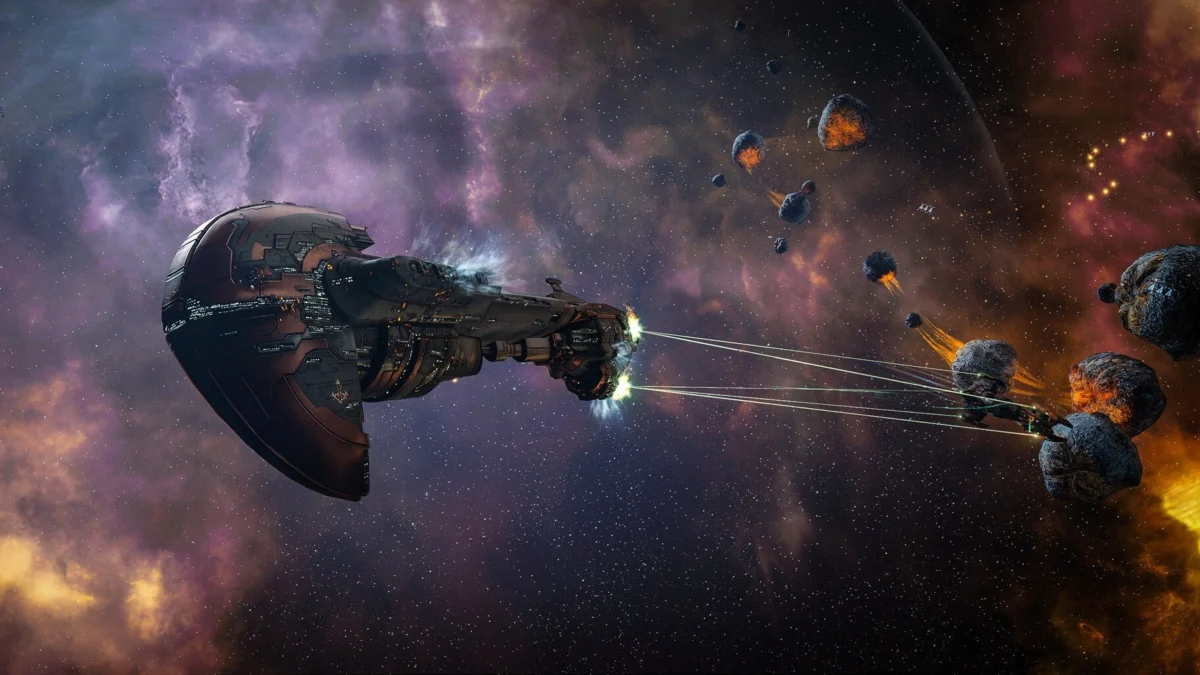
The landscape of the global massively multiplayer online (MMO) industry has shifted significantly with the announcement that CCP Games, the long-standing developer behind the iconic space-faring simulation EVE Online, has successfully negotiated its independence from the South Korean publisher Pearl Abyss. In a sweeping corporate restructuring, the studio has rebranded as Fenris Creations and concurrently entered into a high-profile research partnership with Google DeepMind. The transaction and associated partnership deal are valued at approximately $120 million (£88 million), marking a pivotal moment for the 22-year-old developer as it transitions back to a management-led ownership structure supported by strategic long-term investors, including Google.
This structural evolution marks the end of a seven-and-a-half-year chapter under the ownership of Pearl Abyss, the creators of Black Desert Online, who acquired the Icelandic developer in 2018 for an estimated $425 million. Under the new arrangement, Fenris Creations will be controlled by its senior management team and a consortium of investors. According to official statements, this new configuration is specifically designed to align the company’s governance with its long-term goals as a developer, publisher, and operator of persistent, player-driven virtual worlds. The studio emphasized that the shift provides the necessary independence to make strategic decisions for live-service games that are intended to operate for decades.
The Strategic Alliance with Google DeepMind
Central to the rebranding and the studio’s new direction is a sophisticated research partnership with Google DeepMind, the artificial intelligence laboratory responsible for some of the most significant breakthroughs in neural networks and machine learning. The partnership aims to utilize the vast, complex data sets and social dynamics of EVE Online to push the boundaries of AI research. Specifically, the collaboration will focus on three core pillars of artificial intelligence: long-horizon planning, memory, and continual learning.
Google DeepMind has historically used gaming environments as "training grounds" for its algorithms. From mastering Atari classics to defeating world champions in Go (AlphaGo) and professional players in StarCraft II (AlphaStar), the lab has consistently sought complex simulations to test AI capabilities. However, EVE Online represents a significant step up in complexity. Unlike a match-based game with a defined start and end, EVE Online is a persistent universe with a player-run economy, intricate political alliances, and a timeline that spans over two decades.
To facilitate this research without disrupting the live player experience, Google DeepMind will reportedly work with an offline, local test version of EVE Online. This "sandbox" version will allow researchers to run high-speed simulations and observe AI behavior in a controlled environment. Beyond pure research, the partnership also intends to "explore new gameplay experiences," suggesting that the technologies developed during this collaboration could eventually be integrated into the live EVE Online universe or future Fenris Creations projects.
Chronology of the Transition
The path to Fenris Creations’ independence began in 2018 when Pearl Abyss sought to diversify its portfolio by acquiring CCP Games. At the time, the acquisition was seen as a way for the South Korean firm to gain a foothold in the Western PC and console markets. Over the subsequent years, CCP Games continued to operate with a degree of autonomy, launching various expansions for EVE Online and experimenting with new titles, such as the upcoming blockchain-based project EVE Frontier.
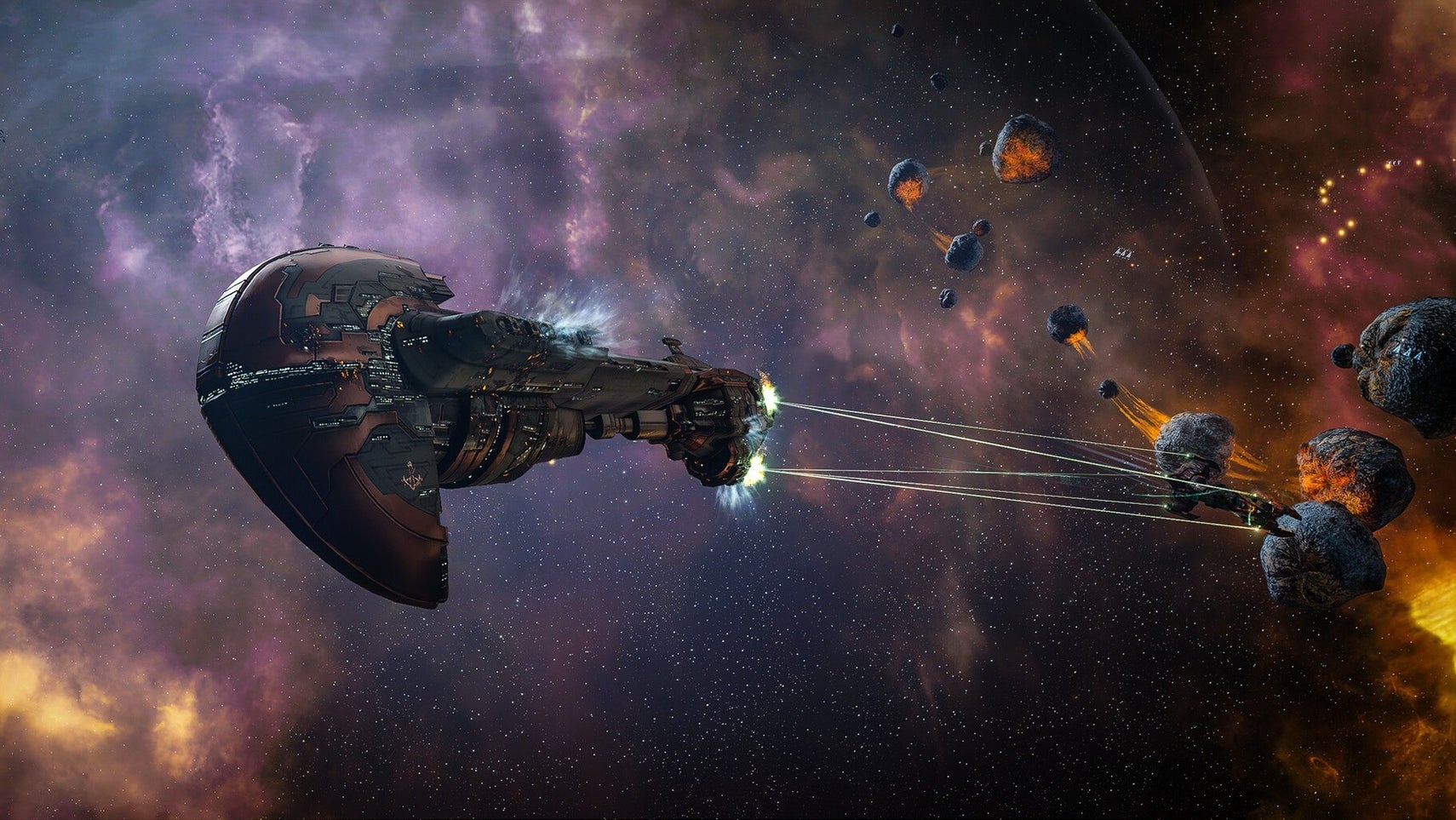
However, as the gaming industry faced shifting economic pressures and the rise of generative AI, the strategic needs of CCP Games began to diverge from those of its parent company. Negotiations for a management buyout and the inclusion of Google as a strategic partner intensified over the last year. The resulting $120 million deal allows Pearl Abyss to recoup a significant portion of its investment while granting Fenris Creations the freedom to pursue a research-heavy agenda that may not have fit within the traditional publishing model of Pearl Abyss.
The rebranding to Fenris Creations—a name likely inspired by Fenrir, the monstrous wolf of Norse mythology—signifies a return to the studio’s Icelandic roots while looking toward a more aggressive, independent future. The transition ensures that the intellectual property of EVE Online remains under the direct stewardship of the team that has guided it since its inception in 2003.
EVE Online as a Scientific Research Environment
The selection of EVE Online as a partner for Google DeepMind is not incidental. The game is frequently cited by economists, sociologists, and computer scientists as the most complex social simulation in existence. With a single-shard server architecture, thousands of players interact in the same space simultaneously, creating a level of emergent behavior that is impossible to replicate in smaller-scale games.
The "long-horizon planning" aspect of the research is particularly relevant to EVE’s gameplay. Players often engage in "Great Wars" that can last for years, requiring logistical planning, resource management, and diplomatic maneuvering that far exceeds the complexity of a standard strategy game. DeepMind’s interest in "continual learning" suggests a desire to create AI agents that do not just follow a static script but adapt to the ever-changing political and economic landscape of the New Eden galaxy.
In an offline test environment, these AI agents can be tasked with managing complex industrial chains or navigating the treacherous social waters of player corporations. The data gathered from these experiments could lead to breakthroughs in how AI handles uncertainty and multi-agent cooperation in the real world.
Official Responses and Leadership Vision
Hilmar Veigar Pétursson, the CEO of Fenris Creations, framed the move as a commitment to the longevity of the EVE universe. "Eve is built to endure – and it only works if you’re willing to keep pushing into the future," Pétursson stated. "This transition gives us direct ownership, clear accountability, and the independence to invest in worlds that grow over decades." He expressed gratitude toward Pearl Abyss for their support over the last seven years but noted that the new structure is better suited for a "living universe" designed to last "forever."
Demis Hassabis, Co-founder and CEO of Google DeepMind, shared a personal connection to the project. Hassabis, who began his career in the 1990s as a lead programmer on simulation games like Theme Park, has long advocated for the role of games in AI development. "I’ve known [Pétursson] for many years and long admired his work," Hassabis said. "I’m thrilled to partner with him and the fantastic team at Fenris Creations to explore new gaming experiences and advance AI research safely inside a player-driven universe as amazingly complex as Eve Online."

Hassabis highlighted that previous DeepMind projects like SIMA (a generalist AI agent for 3D virtual environments) and AlphaStar have proven that games are the "perfect training ground." The partnership with Fenris Creations represents the next logical step in this evolution: moving from match-based games to a persistent, infinite-horizon simulation.
Financial and Industry Implications
The $120 million valuation of the deal reflects the high premium placed on both the EVE Online IP and the data-rich environment it provides. For the broader gaming industry, this move signals a growing trend of "research-led development." As the costs of traditional game development skyrocket, studios are increasingly looking toward deep-tech partnerships to create more efficient development pipelines and more engaging player experiences.
Furthermore, the surge in player numbers for EVE Online—now in its 22nd year—defies the typical lifecycle of an MMO. While newer, high-budget titles often struggle to maintain a player base beyond their first six months, EVE has seen a recent influx of new pilots. Industry analysts attribute this to the game’s unique "hardcore" niche and its player-driven narrative, which provides a sense of agency rarely found in modern "theme park" MMOs.
The independence of Fenris Creations also places the studio in a unique position regarding its other projects. Free from the quarterly earnings pressures of a large public corporation like Pearl Abyss, the studio can take a more measured, long-term approach to its experimental titles, including those utilizing blockchain and advanced AI.
Future Outlook: Beyond the Rebrand
As Fenris Creations settles into its new headquarters and structure, the focus will turn to the integration of DeepMind’s findings into the EVE ecosystem. For the players, the immediate impact may be subtle, but the long-term potential is vast. The introduction of more sophisticated NPC behaviors, more dynamic economic simulations, and even AI-assisted community management could be on the horizon.
The partnership also sets a precedent for how tech giants like Google interact with the gaming sector. Rather than simply acquiring studios to bolster a subscription service, Google appears to be treating Fenris Creations as a laboratory for the future of general-purpose AI. This symbiotic relationship—where the developer gets funding and cutting-edge tech, and the researcher gets a world-class simulation—could become a blueprint for future collaborations in the digital age.
In the near term, Fenris Creations has reaffirmed its commitment to the EVE Online roadmap, ensuring that the transition will not result in any downtime or loss of service for the current player base. With the backing of Google and a renewed sense of independence, the studio is positioning itself to ensure that the stars of New Eden continue to shine for another twenty years.