
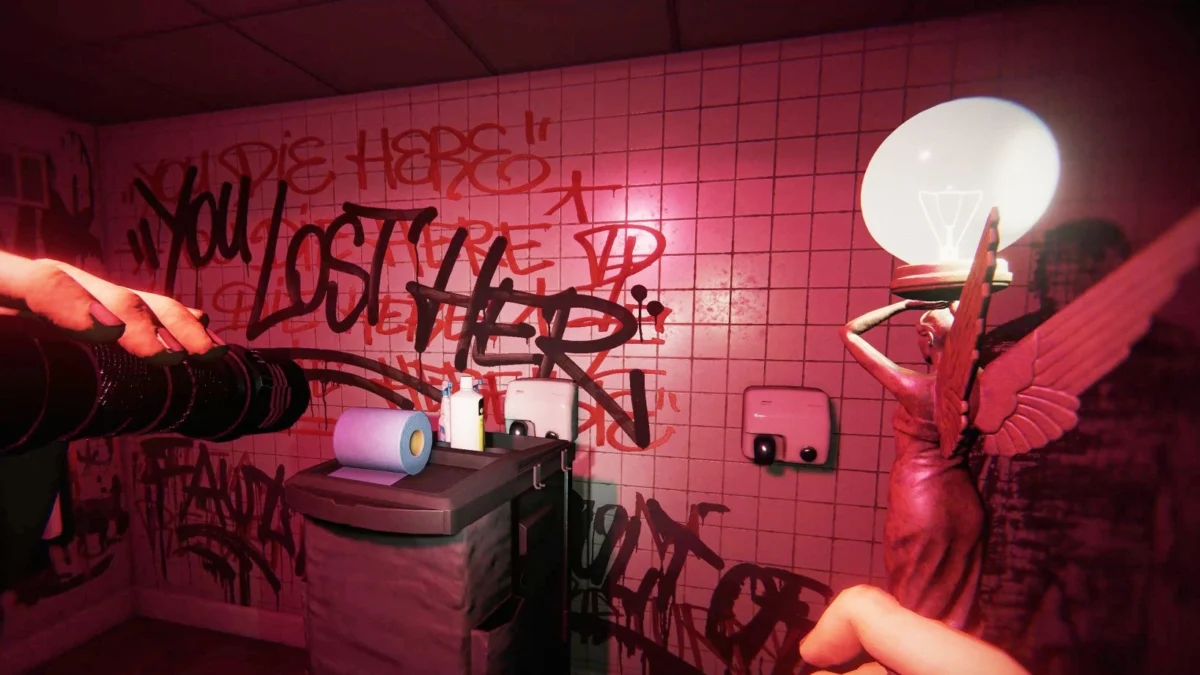
Kinetic Games has officially launched a high-profile, three-week crossover event titled Phasmophobia by Alan Wake, merging the investigative ghost-hunting mechanics of its flagship title with the psychological horror narrative of Remedy Entertainment’s acclaimed sequel. Beginning on May 12, the collaboration introduces a suite of thematic content, including reimagined environments, narrative-driven collectibles, and community-focused challenges. This partnership represents a significant milestone for Kinetic Games, aligning one of the most successful independent horror titles of the last decade with a premier AAA survival horror franchise. The event is scheduled to conclude on June 2, providing a limited window for players across PC and console platforms to experience the integration of the "Dark Place" within the Phasmophobia universe.
Core Features and Environmental Redesigns
The centerpiece of the collaboration is the transformation of four existing Phasmophobia maps into locales inspired by the atmospheric Pacific Northwest setting of Alan Wake 2. The selected locations—Nell’s Diner, Grafton Farmhouse, Bleasdale Farmhouse, and Camp Woodwind—have been meticulously reworked to incorporate the visual language of the Alan Wake series. Players will encounter altered lighting schemes, surreal graffiti, and environmental cues that mirror the shifting reality of the Dark Place.
Nell’s Diner, a pivotal location in the town of Bright Falls within the Alan Wake lore, serves as a primary point of interest for players seeking a direct aesthetic link to the Remedy universe. Meanwhile, the Grafton and Bleasdale Farmhouses, long-standing staples of the Phasmophobia experience, have been infused with the tension and supernatural dread characteristic of Alan Wake’s struggles. Camp Woodwind, a smaller and more claustrophobic map, has also undergone a thematic overhaul to heighten the sense of isolation.
Beyond visual changes, the event introduces new gameplay elements. Players can now equip character skins inspired by the Alan Wake series, allowing them to assume the likeness of the troubled novelist or other key figures. Central to the investigative loop of this event is the inclusion of manuscript pages. These items, written specifically for this collaboration by Remedy’s Creative Director Sam Lake, are scattered throughout the reimagined maps. Collecting these pages provides narrative context and bridges the gap between the two horror properties, rewarding players who engage with the lore-heavy aspects of the event.
Collaborative Development and Official Statements
The partnership between Kinetic Games and Remedy Entertainment was born from a mutual respect for each studio’s contribution to the horror genre. Sam Lake, who has become a synonymous figure with the Alan Wake franchise, expressed personal satisfaction with the project. Lake noted that the two franchises complement each other through their shared emphasis on atmosphere and the unknown. He warned participants that while the event offers a unique thrill, the "Dark Place" is notoriously difficult to escape—a nod to the internal logic of the Alan Wake narrative.
.jpg?width=570&quality=85&format=jpg&dpr=3)
Daniel Knight, CEO of Kinetic Games, echoed these sentiments, highlighting the influence of the Alan Wake series on the development team. Knight stated that the integration of Remedy’s IP into Phasmophobia felt like a natural progression, given the thematic overlaps between ghost hunting and the reality-warping powers of the Dark Place. The collaboration is seen as a way to reward the Phasmophobia community with high-quality content while paying homage to one of the most influential narrative horror games of the current console generation.
This event is not merely a cosmetic update; it is a strategic alignment. For Remedy Entertainment, it maintains the visibility of Alan Wake 2 following its successful 2023 launch. For Kinetic Games, it demonstrates the studio’s ability to handle major intellectual properties, further solidifying its standing in the industry as Phasmophobia prepares for a massive technical overhaul in the coming years.
Technical Evolution and the Road to 2026
The Alan Wake collaboration arrives at a pivotal moment in Phasmophobia’s lifecycle. Since its early access debut in 2020, the game has evolved from a viral sensation into a cornerstone of the co-op horror genre. Kinetic Games has recently detailed an ambitious roadmap that includes a transition to the Unity 6 engine. This move is expected to drastically improve lighting, performance, and environmental fidelity, addressing some of the long-standing technical limitations of the indie title.
The upcoming overhaul, slated for completion by 2026, is described by the developers as a transformation so significant that it will feel like a "new game." Key features of this roadmap include:
- Player Character Overhaul: A complete redesign of character models and animations to enhance immersion and customization.
- Unity 6 Integration: Leveraging advanced rendering techniques to create more realistic shadows and volumetric effects, which are critical for a game centered on darkness and light.
- Console Expansion: While currently available on Steam, PS5, PS VR2, and Xbox Series X/S, the studio is focusing on ensuring parity across all platforms, including future hardware iterations.
- Lore Expansion: The Alan Wake event serves as a precursor to more structured lore within Phasmophobia. The developers have indicated that narrative elements will become more prominent as the game moves toward its full 1.0 release.
These technical improvements are essential for the game’s longevity, especially as competition in the "investigative horror" subgenre increases. By collaborating with a studio known for technical excellence like Remedy, Kinetic Games is signaling its commitment to elevating its production values.
Contextualizing Phasmophobia’s Success
To understand the weight of this collaboration, one must look at the trajectory of Phasmophobia. Originally developed by Daniel Knight as a solo project, the game was heavily influenced by unexpected sources. Knight has previously revealed that the game’s initial development was inadvertently saved by The Witcher 3: Wild Hunt. During a period of creative stagnation, the asset-heavy nature and atmospheric storytelling of CD Projekt Red’s RPG inspired Knight to refine the "investigation" phase of Phasmophobia, moving away from simple jumpscares toward a more methodical, evidence-based gameplay loop.

This shift proved instrumental. Phasmophobia has since sold over 25 million copies, a staggering figure for an indie title. Its success has paved the way for a feature film adaptation, which is currently in development. The film aims to expand the game’s thin narrative framework into a broader cinematic universe, focusing on the professional and psychological toll of paranormal investigation. The inclusion of Sam Lake’s writing in the current Alan Wake event can be seen as an experiment in integrating professional screenwriting into the game’s ecosystem, potentially setting the stage for future narrative expansions.
Impact on the Horror Gaming Landscape
The Phasmophobia by Alan Wake event is emblematic of a broader trend in the gaming industry where indie hits and AAA giants engage in cross-promotional synergy. Such collaborations allow indie developers to tap into the prestige of established franchises, while AAA studios can reach the highly engaged, grassroots communities that sustain titles like Phasmophobia.
From a gameplay perspective, the crossover highlights the importance of "atmospheric horror." Both franchises rely on the tension of the unseen and the strategic use of light as a defensive tool. In Alan Wake, light is used to burn away the darkness protecting the "Taken," while in Phasmophobia, light is a dwindling resource that manages player sanity and provides a safe haven from spectral entities. This mechanical synchronicity makes the collaboration feel cohesive rather than forced.
Furthermore, the timing of the event is strategic. With the survival horror genre seeing a resurgence through remakes of Resident Evil and Silent Hill, as well as original titles like Alan Wake 2, players are increasingly seeking experiences that blend traditional scares with complex mechanics. Phasmophobia’s ability to remain relevant four years after its initial release—aided by events such as this—demonstrates the power of the "live-service" model when applied to the horror genre.
Conclusion and Player Accessibility
The Phasmophobia by Alan Wake event is a free update for all existing owners of the game. It is accessible across all current platforms, including the specialized PS VR2 version, which offers the most immersive way to experience the reworked environments. As the event progresses through its three-week duration, Kinetic Games plans to monitor community feedback and participation in the special challenges.
As players navigate the darkened halls of Bleasdale Farmhouse or search for Sam Lake’s manuscript pages in Nell’s Diner, they are participating in a unique moment of industry convergence. The success of this collaboration may determine the frequency and scale of future crossovers for Phasmophobia as it marches toward its massive 2026 overhaul and its eventual transition to the silver screen. For now, ghost hunters and fans of the Bright Falls mythos have until June 2 to confront the shadows of the Dark Place before the event concludes and the game returns to its standard investigative format.