


The digital asset landscape is witnessing a provocative shift in the intersection of memecoin culture and real-world behavior with the launch of GO, a new feature from the Solana-based platform Pump.Fun. Marketed under the slogan "pay anyone to do anything," the service allows users to post financial bounties in cryptocurrency for the performance of specific tasks, ranging from benign social media stunts to high-risk physical activities and ethically questionable public displays. One such bounty, valued at approximately $1,000 at current market rates, offers a reward in "fartcoin"—a memecoin with a market capitalization of roughly $130 million—to any individual who films themselves entering a crowded university lecture hall and shouting the token’s name into a megaphone while simulating flatulence.
The emergence of GO arrives at a critical juncture for Pump.Fun, which has established itself as one of the most profitable and fastest-growing entities in the decentralized finance (DeFi) sector over the past year. However, recent market data indicates a significant downturn for the platform, with user engagement reportedly plunging by as much as 80% from its peak. Industry analysts suggest that the introduction of the GO bounty system is a strategic attempt to revitalize the platform’s ecosystem by gamifying the "attention economy" and incentivizing real-world viral content to drive token liquidity.
The Mechanics of the GO Bounty System
The operational framework of GO relies on a decentralized escrow mechanism. Individual users or groups of investors can propose a task and deposit a specific amount of cryptocurrency—typically Solana (SOL) or various memecoins—into a smart contract. Other users can "pool" their resources to increase the total reward, creating a financial incentive for participants to fulfill the request. Each bounty is governed by a countdown clock; if the task is not completed and verified within the specified timeframe, the funds are returned to the original creators.
Pump.Fun has stated that it maintains a moderation layer to approve both the initial bounty submissions and the subsequent evidence provided by those claiming the rewards. However, the platform has provided limited transparency regarding the specific criteria used for these approvals or the size and qualifications of its moderation team. The company’s legal department has not responded to formal inquiries regarding the liability associated with these tasks or the potential for illegal activities to be funded through the service.
The platform’s Terms of Service (ToS) place the entirety of the legal and physical burden on the participants. According to the fine print, users are solely responsible for their "actions, decisions, wallet security, submissions, communications, and compliance with law." Furthermore, the terms explicitly state that crypto transfers and rewards are "not guaranteed," a clause that has raised concerns among consumer advocacy groups regarding the potential for "rug pulls" or arbitrary denials of payment after a task has been performed.
A Spectrum of Tasks: From Mundane to Dystopian
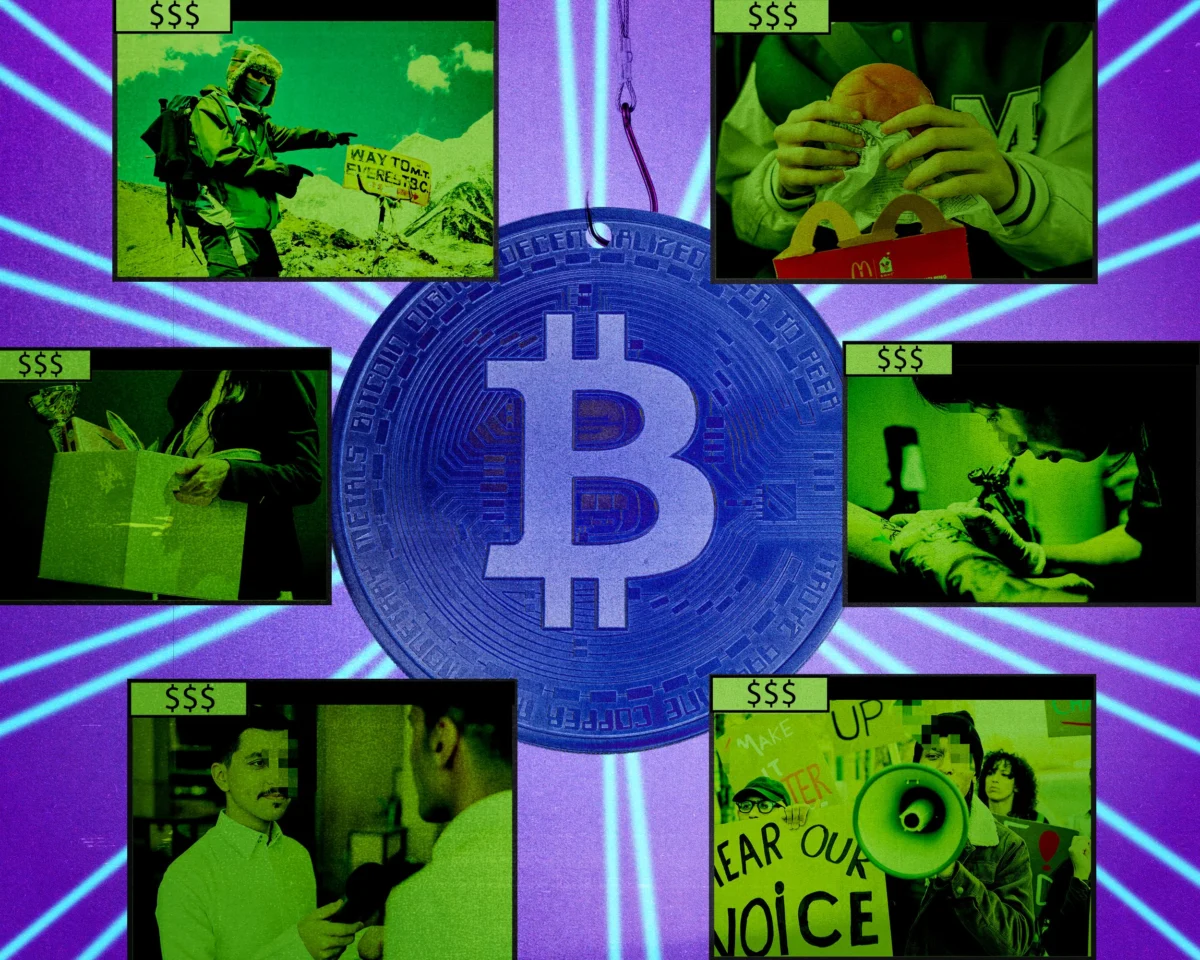
The initial rollout of GO has featured a diverse and often jarring array of requests. On the more mundane end of the spectrum, a bounty titled "Go to McDonalds and get a burger" offered a $215 reward. However, a closer inspection of the terms revealed that the payout was to be split among the first 20 valid entries, resulting in a per-person reward of $10.75—an amount that, in many regions, is less than the cost of the meal and the associated transportation.
As the platform has gained traction, the nature of the bounties has shifted toward more extreme and permanent actions. Multiple listings have requested that individuals receive permanent tattoos of various cryptocurrency names or logos on their bodies. In one documented case, a man in India reportedly had a memecoin name tattooed on his forehead in exchange for approximately $3,000 in digital assets. Other active bounties include:
- Employment Termination: A $3,000 bounty for a user to film themselves quitting their job on camera, with the prompt noting that the reward serves as a "severance package" for "chaos and creativity."
- Public Humiliation: Rewards for recording oneself asking gas station attendants for medication related to erectile dysfunction or interviewing vulnerable populations, such as the homeless, about their political affiliations for financial gain.
- High-Risk Stunts: Prompts to parachute into international sporting events, such as the World Cup, while wearing memecoin-themed costumes, or exploding vehicles in "balls of flame" to promote specific tokens.
Critics have noted a disturbing trend in the demographic participation of these bounties. A significant portion of the video replies depicting the more degrading or physically permanent tasks appears to originate from users in developing nations. This has led to accusations that the platform is "leveraging global inequality" to provide entertainment for wealthy crypto speculators in the West.
Ethical Implications and the Risk of Coercion
The launch of GO has sparked a heated debate within the technology and human rights sectors. Andrew Ford Lyons, a technologist specializing in digital security and safety for human rights organizations, expressed grave concerns over the platform’s incentivization of harassment and physical risk. In a statement to media outlets, Lyons characterized the service as an evolution of the digital economy that prioritizes engagement at the cost of human dignity.
"This is essentially what the digital economy is boiling down to: the monetization of desperation," Lyons noted. He argued that by placing a price tag on harassment or self-harm, platforms like Pump.Fun create a coercive environment where the financial "carrot" overrides personal safety and legal boundaries.
Furthermore, the lack of a robust verification process has introduced a new layer of fraud into the ecosystem. Many high-value bounties, such as the request for an exploding car, have been met with submissions consisting of AI-generated imagery or sophisticated deepfakes. Because Pump.Fun retains the right to select a "winner" based on unspecified "backroom criteria," participants who perform actual physical tasks have no formal recourse if the platform chooses an AI-generated entry as the victor.
Market Context and the Decline of the Memecoin "Supercycle"
The timing of the GO feature’s release is inseparable from the broader volatility of the Solana memecoin market. Throughout early 2024, Pump.Fun emerged as a dominant force, facilitating the launch of thousands of new tokens daily. At its peak, the platform was generating millions of dollars in transaction fees, capitalizing on a "supercycle" of speculative trading driven by social media hype.
However, the saturation of the market has led to a precipitous decline in the success rate of new tokens. Recent data suggests that less than 1% of tokens launched on Pump.Fun ever reach a market capitalization high enough to be listed on decentralized exchanges like Raydium. This "extinction rate" has cooled investor enthusiasm, leading to the 80% drop in active users.
The GO feature represents a pivot from pure financial speculation to a hybrid of "SocialFi" (social finance) and reality-based entertainment. By linking token value to real-world stunts, Pump.Fun is attempting to create a new form of utility for tokens that otherwise have no underlying technical or economic purpose.
Legal and Regulatory Scrutiny
Legal experts warn that Pump.Fun may be entering a regulatory minefield with the GO platform. While Section 230 of the Communications Decency Act in the United States generally protects platforms from liability for content posted by users, the active role of the platform in holding funds in escrow and "approving" tasks could potentially cross the line into "content creation" or "facilitation of illegal acts."
If a bounty leads to a participant being arrested for trespassing, disturbing the peace, or reckless endangerment, the platform’s role as the financier of the act could be subject to grand jury investigation or civil litigation. Additionally, the cross-border nature of cryptocurrency makes it difficult for a single jurisdiction to regulate the platform, though international authorities have recently become more aggressive in targeting "unregulated financial activity" and "harmful digital conduct."
The use of "fartcoin" and other similarly named assets as payment also highlights the ongoing struggle for the crypto industry to be taken seriously by traditional financial regulators. While the market cap of $130 million for a "fart-themed" currency suggests significant speculative interest, it also underscores the "absurdist" nature of the current market—a nature that the GO platform seems designed to exploit.
Broader Impact on the Digital Economy
The rise of "pay-to-perform" platforms like GO signals a shift in how value is assigned in the digital age. As traditional advertising revenue becomes more fragmented, creators and platforms are seeking more direct—and often more extreme—ways to monetize attention.
The long-term implications of such a system remain to be seen. While proponents argue that it is a pure expression of the free market and decentralized autonomy, detractors see it as a "race to the bottom" that incentivizes the degradation of the public square. As Pump.Fun continues to moderate its initial wave of bounties, the tech industry and regulatory bodies alike will be watching closely to see if this model of "chaos-as-a-service" becomes a permanent fixture of the crypto landscape or a cautionary tale of the limits of the attention economy.