

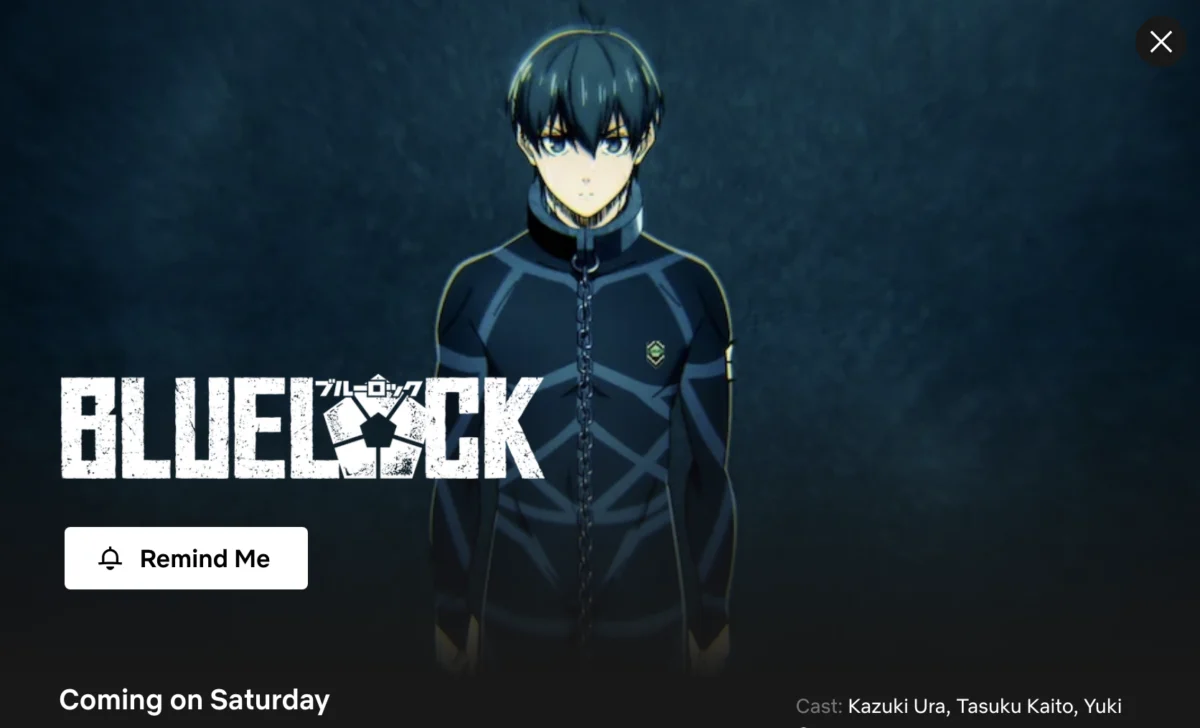
The highly anticipated first season of the acclaimed sports-thriller anime series, Blue Lock, is officially slated to join the Netflix US library on Saturday, April 25, 2026. This strategic acquisition underscores Netflix’s continued commitment to bolstering its anime catalog with popular licensed titles, bringing the high-stakes world of competitive soccer and egoistic ambition to a broader American audience. The move is expected to significantly increase the series’ visibility and potentially attract new viewers to the unique genre blend that Blue Lock represents.
The Genesis of a Phenomenon: From Manga to Anime
Blue Lock originates from the critically lauded manga series penned by Muneyuki Kaneshiro and vividly illustrated by Yusuke Nomura. The manga first began its serialization in Kodansha’s Weekly Shōnen Magazine in August 2018, quickly garnering a dedicated readership for its distinctive narrative approach to the sports genre. As of September 2025, the manga has published 38 volumes and boasts an impressive circulation of over 50 million copies worldwide, cementing its status as one of the most commercially successful and influential manga series of recent years. Its blend of intense athletic competition, psychological warfare, and unconventional character development struck a chord with readers, paving the way for its eventual anime adaptation.
The anime series, produced by the animation studio Eight Bit, known for its work on titles like That Time I Got Reincarnated as a Slime, first premiered in October 2022. The inaugural season, directed by Tetsuaki Watanabe and Shunsuke Ishikawa, brought Kaneshiro and Nomura’s vision to life with dynamic animation and a compelling soundtrack. Its initial broadcast was met with widespread enthusiasm, particularly for its unique premise and fast-paced action sequences, establishing Blue Lock as a significant new entry in the competitive sports anime landscape.
A Radical Vision for Japanese Soccer: The Blue Lock Project
At its core, Blue Lock presents a radical, almost dystopian, solution to a perceived crisis in Japanese soccer. The narrative posits that despite Japan’s respectable performance on the international stage, particularly among Asian nations, the country consistently falls short against European and South American powerhouses due to a lack of a truly "egoistic" striker. This perceived deficiency, the story argues, stems from a deeply ingrained cultural emphasis on teamwork and collective play, often at the expense of individual brilliance and ruthless self-assertion.
Enter Jinpachi Ego, a eccentric and visionary coach granted permission by the Japan Football Union to implement a drastic, unprecedented project: Blue Lock. This elite, isolated training facility is designed to recruit 300 of Japan’s most talented under-18 strikers. Ego’s singular, audacious goal is to identify and forge the "world’s best striker" – an individual possessing an unparalleled ego, an insatiable hunger for goals, and the willingness to crush the dreams of others to achieve their own. The facility itself is a crucible, subjecting the young players to grueling physical and psychological challenges, competitive matches where elimination is a constant threat, and a philosophy that prioritizes individual scoring ability above all else.
The protagonist, Yoichi Isagi, is one of the 299 hopefuls selected for Blue Lock. Initially a relatively conventional forward who values passing and team play, Isagi is forced to confront Ego’s radical philosophy and re-evaluate his entire approach to soccer. His journey within Blue Lock is one of intense self-discovery, where he must learn to embrace his inner "egoist" and leverage his unique spatial awareness and analytical skills to survive and advance. The series masterfully blends the exhilaration of sports action with the tension of a psychological thriller, as players form temporary alliances, betray one another, and constantly push their physical and mental limits in a high-stakes battle for survival. The ultimate prize: becoming Japan’s sole hope for World Cup glory, while the price of failure is being permanently banned from playing for the national team.
Netflix’s Expanding Anime Portfolio and Licensing Strategy
The addition of Blue Lock Season 1 to Netflix US is a significant development in the streaming giant’s ongoing strategy to solidify its position as a premier destination for anime content. Over the past few years, Netflix has invested heavily in both original anime productions and the acquisition of licensing rights for popular existing series. This dual approach aims to cater to both established anime fans and new viewers, offering a diverse range of genres and styles.
Industry analysts suggest that licensing popular, ongoing series like Blue Lock serves multiple purposes for Netflix. Firstly, it immediately boosts subscriber value by adding recognizable and highly sought-after content. Secondly, it helps to attract new subscribers who may specifically sign up to access these titles. Thirdly, it positions Netflix as a global platform for anime, rivaling other dedicated anime streaming services. The timing of Blue Lock‘s release on Netflix US, ahead of its confirmed second season, is particularly strategic, allowing new audiences to catch up on the foundational story before future installments become available. This staggered release model has proven effective in building anticipation and engagement for long-running series.
While Netflix has recently focused on global licensing deals, the US market remains a crucial territory for anime consumption. The increasing mainstream appeal of anime in North America makes titles like Blue Lock, with its distinctive premise and high production values (for its first season), particularly valuable assets. The series’ themes of individual ambition, intense competition, and the pursuit of excellence resonate broadly, extending its appeal beyond traditional anime demographics.
Fan Reception, Critical Acclaim, and Production Challenges
Blue Lock Season 1 was largely met with critical acclaim upon its initial release. Critics praised its fresh take on the sports genre, its compelling characters, and the psychological depth added by Jinpachi Ego’s controversial philosophy. The animation by Eight Bit was lauded for its dynamic action sequences, vibrant character designs, and effective portrayal of the intense energy on the soccer field. The series quickly built a strong international following, further cementing the manga’s global popularity.
However, the journey for Blue Lock has not been without its challenges, particularly concerning its animation quality in subsequent installments. While the initial season maintained a high standard, the second season of the anime, which has aired in other regions, became the subject of significant criticism from fans. Many viewers highlighted a noticeable decline in animation quality, pointing to inconsistencies in character models, less fluid movement during action sequences, and a general impression of rushed production. This feedback was particularly stark given the manga’s consistently fantastic and detailed illustrations by Yusuke Nomura, which set a high visual benchmark.
The disparity in animation quality between the manga and parts of the anime’s second season has sparked broader discussions within the anime community regarding production schedules, animator working conditions, and the pressures faced by studios to meet tight deadlines. For a series like Blue Lock, where the visual spectacle of high-intensity soccer matches and dramatic character expressions is paramount, animation quality is not merely an aesthetic concern but a fundamental element of storytelling. The hope among fans, now that Season 1 is arriving on Netflix, is that future productions will align more closely with the manga’s artistic excellence and the initial season’s high standards.
The Broader Impact and Implications
The arrival of Blue Lock Season 1 on Netflix US holds several implications for both the series and the wider anime industry. For Blue Lock, it represents a significant leap in global accessibility. While the series was previously available on other streaming platforms, Netflix’s massive subscriber base and prominent marketing capabilities will expose the anime to millions of potential new viewers. This could translate into increased manga sales in Western markets, greater engagement with merchandise, and heightened anticipation for future anime seasons and the recently announced film adaptation.
For Netflix, the acquisition reinforces its position as a major player in the anime streaming wars. By securing a popular and critically relevant title, Netflix strengthens its offering against competitors and signals its continued investment in diverse content. It also highlights a growing trend of major streaming platforms directly licensing titles that have already proven successful on other, often more niche, anime-focused services. This competitive landscape ultimately benefits viewers by providing more choices and easier access to a wider array of content.
Furthermore, Blue Lock‘s success contributes to the evolving narrative of sports anime. While traditional sports anime often emphasize teamwork, friendship, and perseverance, Blue Lock injects a potent dose of psychological thriller elements, individualism, and moral ambiguity. This genre innovation resonates with contemporary audiences who appreciate complex characters and narratives that challenge conventional tropes. Its exploration of "egoism" as a necessary trait for greatness, particularly in a team sport like soccer, provides a thought-provoking counter-narrative that distinguishes it from its predecessors.
Anticipation for a Global Phenomenon
The excitement surrounding Blue Lock‘s Netflix debut is palpable among existing fans and burgeoning anime enthusiasts alike. The series offers a unique blend of adrenaline-pumping soccer action, intense psychological drama, and compelling character arcs. Yoichi Isagi’s journey from a conventional striker to an egoistic predator, alongside the diverse and often ruthless cast of competitors, provides a captivating exploration of ambition, talent, and the price of achieving greatness.
As Blue Lock continues to expand its global footprint, its themes of self-discovery, competitive drive, and the relentless pursuit of one’s goals resonate universally. The Netflix release of Season 1 is not merely an addition to a streaming catalog; it is a gateway for millions to experience a groundbreaking sports anime that challenges conventions and redefines what it means to be the best. Fans can mark their calendars for April 25, 2026, to immerse themselves in the high-stakes, ego-driven world of the Blue Lock project.