



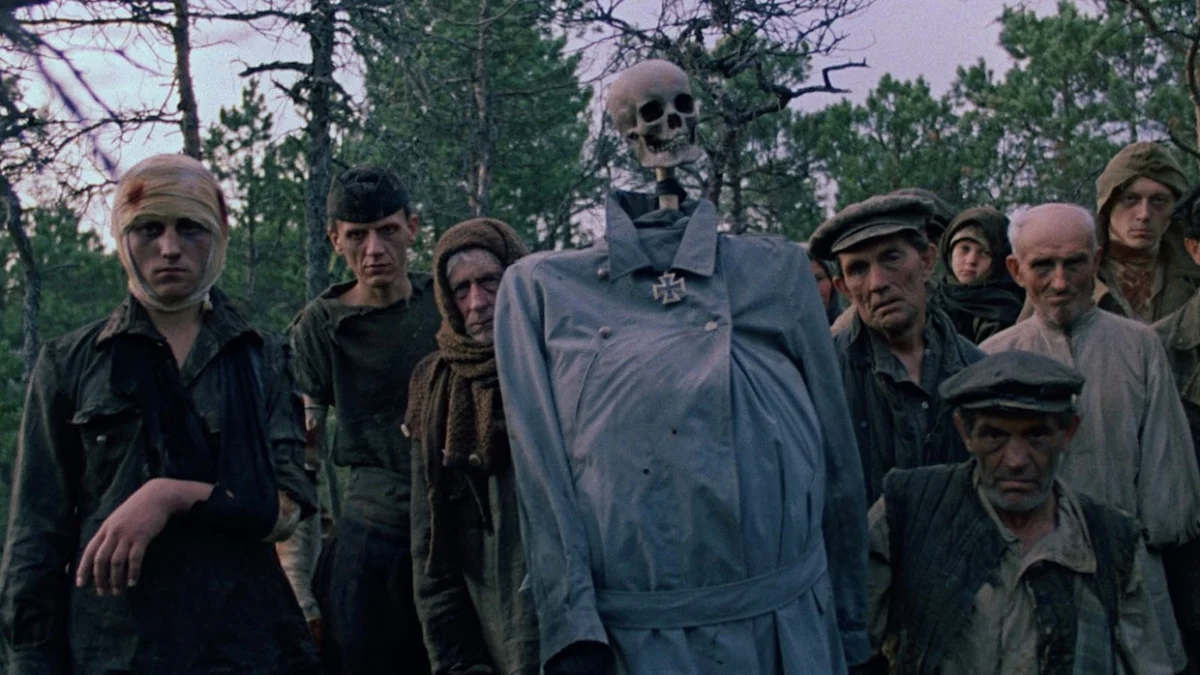
The American Cinematheque’s Bleak Week: Cinema of Despair, an event that began as a localized effort to provide counter-programming to the traditional summer blockbuster season, has officially transitioned into a worldwide cinematic movement. Originally launched in 2022 at the American Cinematheque’s Los Angeles venues, the festival has expanded for its latest iteration into 73 cities across the globe, partnering with nearly 100 theaters to bring a curated selection of somber, existential, and visceral films to international audiences. This expansion marks a significant milestone for repertory cinema, signaling a robust public appetite for challenging narratives that prioritize raw empathy and "unpleasant truths" over escapist entertainment.
The festival’s growth from a niche Los Angeles series to a global event starting in June reflects a shifting landscape in film exhibition. By inviting programmers from diverse regions to interpret the broad definition of "bleakness," the American Cinematheque has created a collaborative framework that allows for localized storytelling within a universal theme. From New York City and Chicago to London and Dallas, the 2024-2025 season represents the most curatorially focused version of the series to date, blending high-brow arthouse classics with gritty genre films and world-premiere restorations.
Historical Context and the Genesis of Despair
The origins of Bleak Week can be traced back to the pre-pandemic programming efforts of Chris LeMaire, the Director of Programming at the American Cinematheque. LeMaire had long established a reputation for championing "heavy" cinema, having previously organized high-profile screenings of rare Andrei Tarkovsky prints and facilitating the first-ever United States visit for Filipino auteur Lav Diaz. These filmmakers, known for their durational, often austere examinations of national history and political trauma, laid the philosophical groundwork for what would become Bleak Week.
In 2022, the inaugural season debuted with a 33-film slate that included some of the most harrowing works in film history. The lineup featured Pier Paolo Pasolini’s Salò, or the 120 Days of Sodom (1975), Elem Klimov’s Come and See (1985), and Ingmar Bergman’s Winter Light (1963). While these films are disparate in style and origin, they were united by a commitment to exploring the darker facets of the human experience. According to Grant Moninger, the Artistic Director of the American Cinematheque, the goal was to take LeMaire’s specialized programming and present it in a way that garnered broader recognition for world-renowned auteurs.
To maximize the impact of the first season, the Cinematheque broke its own internal convention of offering a variety of thematic options simultaneously. Instead, they filled the schedules of all three of their Los Angeles-based venues—the Aero, the Egyptian, and the Los Feliz 3—with "wall-to-wall despair." This immersive approach forced the audience to engage with the theme directly, sparking a conversation about the different "types" of bleakness found in cinema.
Chronology of Development and Major Milestones
Since its 2022 inception, Bleak Week has followed a rapid trajectory of growth and institutional validation:
- 2022: The first 33-film season launches in Los Angeles. The program is largely composed of established repertory classics.
- 2023: The festival gains international stature when legendary Hungarian director Béla Tarr, who had previously vowed never to return to the United States, agreed to attend the festival in person. His presence transformed the series from a local screening program into a major event on the international film festival circuit.
- 2024: The festival expands its scope to include tributes to modern masters of somber storytelling, such as Kenneth Lonergan, Lynne Ramsay, and Charlie Kaufman.
- 2025: A rare retrospective for independent maverick Jon Jost is held, further diversifying the aesthetic range of the "bleak" label.
- June Expansion: The current season sees the festival go global, reaching 73 cities and nearly 100 theaters, supported by major distributors like Janus Films and the American Genre Film Archive (AGFA).
Curatorial Philosophy and Programming Diversity
The current iteration of Bleak Week seeks to broaden the definition of despair by incorporating genre films and cult classics alongside traditional arthouse staples. While the foundational works of Béla Tarr and Ingmar Bergman remain central, the new lineup includes films like Richard Kelly’s satirical sci-fi Southland Tales (2006) and Mick Jackson’s harrowing nuclear war drama Threads (1984).
LeMaire’s programming strategy for the expansion has been one of "strategic accessibility." By anchoring the festival with high-profile names and retrospectives—such as those for Isabelle Huppert, Ari Aster, and Warwick Thornton—the festival creates an entry point for casual viewers. Once audiences are drawn in by a recognizable name, they are more likely to take a chance on rarer, more difficult films. For instance, the presence of Huppert and Aster in the lineup provided the necessary leverage to program the world premieres of restorations such as the Coen Brothers’ The Man Who Wasn’t There (2001) and Daniel Petrie’s rarely-seen Buster and Billie (1974).

A key component of the festival’s success is its collaborative nature. Rather than imposing a rigid schedule on participating theaters, the American Cinematheque provides a "giant spreadsheet" of resources, including past programs and upcoming restorations, allowing local programmers to tailor the "week" to their specific communities. In Milwaukee, for example, the Oriental Theater’s programming director, Kerstin Larson, chose to focus on a theme of labor and work-related bleakness, screening Chris Smith’s American Job (1996) alongside Béla Tarr’s The Turin Horse (2011).
Statistical Impact and Industry Support
The success of Bleak Week is reflected in both ticket sales and industry cooperation. In Los Angeles, retrospectives for filmmakers like Ari Aster have sold out within minutes of being announced. This level of engagement has caught the attention of major distributors. Janus Films and AGFA have begun coordinating their restoration release schedules to align with Bleak Week, recognizing the festival as a premier platform for debuting high-quality repertory prints.
The expansion to 73 cities suggests that the "cinema of despair" is not merely a regional preference but a global trend. This stands in stark contrast to recent media narratives regarding "Hopecore"—a purported trend in Hollywood toward uncynical, optimistic storytelling exemplified by upcoming projects like Project Hail Mary. While "Hopecore" suggests a move away from the grayscale aesthetics popularized by directors like Christopher Nolan, the widespread appetite for Bleak Week indicates that audiences still crave stories that reflect the "warts and all" reality of the human condition.
The Exclusion of Nonfiction and the Triumph of Art
One notable aspect of Bleak Week’s programming is the deliberate omission of documentary filmmaking. Despite the inherent bleakness of real-world atrocities, Moninger and LeMaire have opted to keep the focus on narrative cinema. The reasoning behind this is rooted in the festival’s ultimate goal: to celebrate the triumph of art.
Moninger argues that showing direct reflections of real-world suffering in a documentary format might feel exploitative under the "Bleak Week" banner. Instead, the festival focuses on how humans process grief, sorrow, and existential dread through the medium of fiction. By highlighting films that are "made by humans, for humans, about the human condition," the organizers posit that the festival is actually an optimistic endeavor. The ability to transform suffering into a cohesive work of art is, in itself, an act of hope.
Broader Implications for Cinema Culture
The global expansion of Bleak Week arrives at a time when the theatrical experience is under constant pressure from home streaming services. The festival’s success highlights the unique value of the communal cinematic experience, particularly when dealing with heavy or emotional subject matter. Moninger suggests that experiencing sorrow and grief collectively in a theater offers a form of catharsis that cannot be replicated in isolation.
Furthermore, Bleak Week serves as a vital support system for repertory theaters. By branding these difficult films under a recognizable and somewhat "cheeky" banner, the American Cinematheque has found a way to make challenging cinema marketable to a younger generation of cinephiles. The festival’s ability to sell out screenings of decades-old films demonstrates that there is a sustainable market for "difficult" art when it is presented with the right context and community engagement.
As Bleak Week continues its international rollout, it remains a testament to the enduring power of the human spirit to find meaning in despair. By providing a platform for both legendary auteurs and forgotten genre gems, the festival ensures that the "cinema of despair" continues to provoke, haunt, and ultimately unite audiences across the globe. The 2024-2025 season is not just a collection of sad movies; it is a global affirmation of the necessity of empathy in the face of an often-bleak world.