


The Bengali psychological mystery thriller Beline, a project meticulously crafted by director Samik Roy Choudhury over nearly a decade, has finally graced Indian cinemas on March 29, 2024. With its roots tracing back to around 2015 and principal photography commencing in 2021, Beline is a testament to patient filmmaking and a deeply personal vision. Produced by Harit Ratna and Manisha Ratna under the Dristishree Arts banner, the film delves into the profound isolation of an elderly man whose life is irrevocably altered by an accidental phone call. This narrative, penned by Roy Choudhury himself, who also wrote the story and screenplay, marks a significant evolution from his previous work as a VFX technical director on acclaimed Hollywood productions such as Life of Pi, Night at the Museum: Battle of the Smithsonian, and The Mummy: Tomb of the Dragon Emperor. His directorial journey prior to Beline includes the feature film D Major and a collection of short films, each building towards this ambitious foray into psychological suspense.
A Life Defined by Solitude and Routine
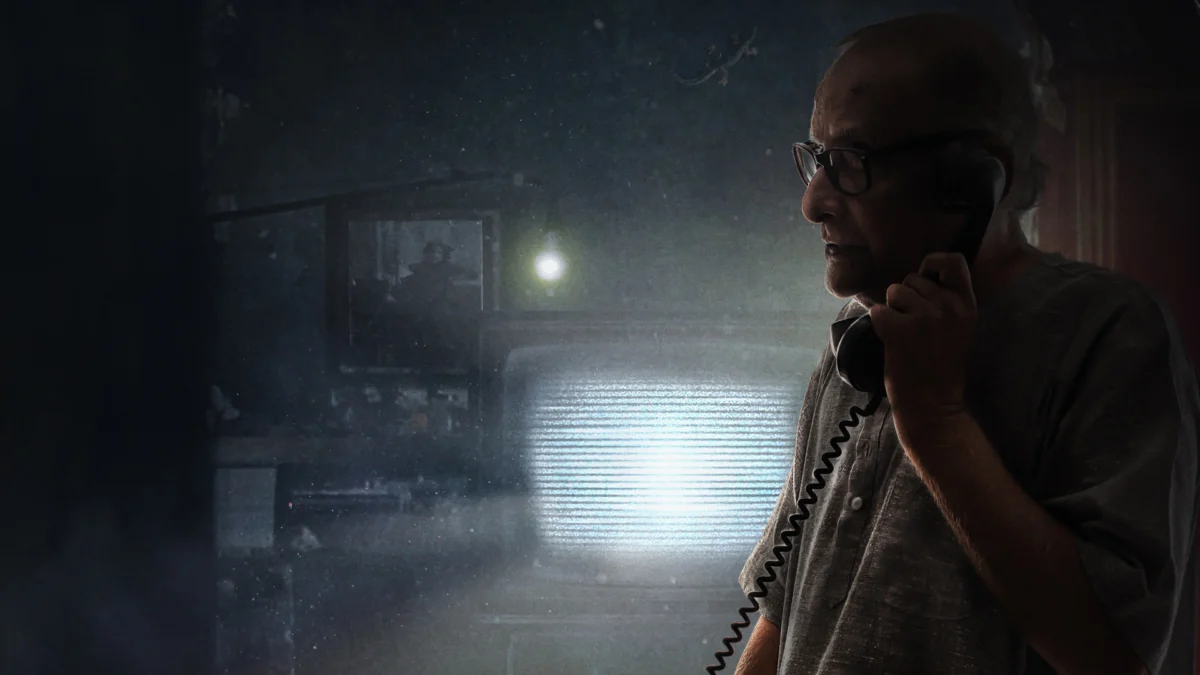
At its core, Beline presents the poignant portrait of an elderly gentleman living in self-imposed solitude. His days are characterized by a monotonous rhythm: waking, eating, engaging in solitary indoor games, and occasional, uninspired strolls through his neighbourhood. The bulk of his waking hours, however, are consumed by the flickering glow of Bengali television serials. These on-screen narratives and their characters have, over time, become surrogate companions, blurring the lines between fiction and his stark reality. The film subtly hints at a lingering human connection, even in his advanced age, through his interactions with his domestic help, suggesting that the pervasive grip of loneliness has not entirely extinguished his fundamental human desires and curiosities. This carefully constructed existence, seemingly immutable, is about to be shattered by an unexpected intrusion.
The Unforeseen Intrusion: A Wrong Number, A Pandora’s Box
The catalyst for the narrative’s dramatic shift is a seemingly innocuous wrong number. A young woman’s voice crackles through his landline, an accidental connection that quickly transcends the boundaries of a simple misdial. What begins as a brief, disorienting exchange gradually morphs into something far more pervasive and consuming. The elderly protagonist finds himself drawn into the woman’s private world, not through physical presence, but through the auditory portal of the telephone. He begins to clandestinely listen to her conversations, becoming an unwitting, yet deeply invested, observer of her tumultuous relationship.
As he absorbs the raw details of their arguments, the simmering suspicions, the palpable sexual frustrations, and the increasingly disturbing patterns of behaviour, a fascinating psychological mechanism is at play. The protagonist begins to construct an imagined reality, populating the narrative with the faces of actors from his beloved television serials. This act of substitution serves as a coping mechanism, a way to process and perhaps sanitize the unsettling truths he is overhearing, transforming the raw edges of the couple’s reality into a more palatable, albeit distorted, on-screen drama.
Voyeurism as a Narrative Engine: The Telephone as a Transgressive Tool
Beline masterfully employs voyeurism as its central thematic and narrative engine, albeit through the less conventional medium of overhearing rather than direct observation. The protagonist does not trespass into the couple’s physical space; instead, the telephone becomes his instrument of intrusion, a digital conduit that allows him to penetrate the most intimate corners of their private lives. This act of listening quickly devolves into an addiction, eclipsing his friendships, his daily responsibilities, and virtually every other facet of his existence. The film’s efficacy lies in its stark portrayal of how easily benign curiosity can metastasize into a consuming obsession, particularly when it offers a compelling escape from the crushing weight of isolation. This journey from passive listener to active participant in a fabricated drama highlights the human need for connection, even if that connection is unhealthy and built on deception.
Exploring the Depths of Loneliness and Unfulfilled Desire
Beyond its suspenseful plot, Beline offers a profound commentary on the universal themes of loneliness and sexual dissatisfaction. The elderly man’s solitary existence is a tapestry woven from lingering memories, unfulfilled desires, and a deep-seated yearning for meaningful intimacy that has long eluded him. Simultaneously, the young woman, despite sharing her life with a partner, experiences her own distinct form of isolation—one characterized by emotional neglect and a sense of incomplete sexual fulfillment. Their lives, though outwardly disparate, become intricately linked by a shared intensity of unmet needs, a silent acknowledgment of the void within. This parallel exploration of isolation, manifesting in different forms but driven by similar underlying human impulses, forms the emotional bedrock of the film.
Societal Critiques Embedded in the Narrative
Beline also wields its premise to deliver pointed critiques of patriarchy, the nuanced position of women within Bengali society, and the destructive forces of toxic masculinity. The relationship overheard through the telephone is a stark depiction of suspicion, possessiveness, unequal power dynamics, and, disturbingly, escalating violence. The film ventures into territory rarely explored with such candor in mainstream Bengali cinema, openly addressing female sexuality, including desire and self-pleasure. The sex scenes, deliberately rendered as awkward rather than overtly titillating, serve a higher narrative purpose. They effectively expose the emotional discomfort and profound incompatibility between the couple, eschewing simple erotic spectacle for a more complex, character-driven portrayal. This unflinching honesty in depicting sexual dynamics, within the confines of a thriller, adds significant depth and realism to the film’s social commentary.
The Unveiling of a Calculated Twist
Despite its strengths, Beline is not without its narrative challenges. The central twist, while impactful, gradually becomes discernible as the storytelling progresses. The narrative, at times, signals its intentions a touch too overtly, making the protagonist’s imagined realities and the couple’s crisis, violence, sexuality, and revenge increasingly interconnected, guiding the audience towards a particular conclusion. However, the revelation is not merely a shock tactic. It functions as a logical culmination, providing a coherent explanation for the fragmented images, sounds, and narrative threads meticulously woven throughout the film from its inception. This approach ensures that the twist, while perhaps anticipated, feels earned rather than gratuitous.
A Masterclass in Fragmented Storytelling
Director Samik Roy Choudhury reaffirms his prowess as a skilled storyteller, particularly in his adeptness at constructing mystery through fragmented pieces. Rather than resorting to overt exposition, he strategically places essential clues within the visual and auditory landscape, inviting the audience to actively participate in assembling the puzzle. This method results in a narrative that is generally compact and controlled, even as the escalating tension makes the eventual destination more predictable. This immersive approach draws the viewer deeper into the protagonist’s subjective experience, blurring the lines between observer and participant.
Stellar Performances Anchor the Psychological Drama
The film is significantly elevated by the compelling performances of its lead actors. Paran Bandopadhyay delivers a truly impressive portrayal of the elderly protagonist, transcending his often-associated comedic persona. He fully embodies the character’s profound loneliness, his insatiable curiosity, his simmering desires, and his underlying psychological instability. Bandopadhyay’s performance masterfully avoids eliciting outright sympathy, yet it renders the protagonist’s gradual descent into obsession utterly believable and, at times, deeply unsettling. His nuanced portrayal allows the audience to witness the character’s internal struggles without necessarily condoning his actions.
Sreya Bhattacharya matches Bandopadhyay’s intensity with an equally strong performance in a multifaceted role that demands a delicate balance between vulnerability, sexuality, frustration, and fear. She navigates the complex emotional landscape of the young woman with remarkable skill, avoiding any hint of excessive theatricality. Tathagata Mukherjee provides a convincing counterpoint as her live-in partner, creating a palpable tension in their scenes together. This chemistry between Bhattacharya and Mukherjee is crucial for rendering the old man’s obsession plausible, even as the audience begins to question the veracity of what they are privy to. The dynamic between the couple, as perceived through the protagonist’s distorted lens, is the very engine of the film’s suspense.
Visual and Auditory Design: Crafting an Atmosphere of Isolation
The technical aspects of Beline play a crucial role in amplifying its psychological impact. Supriyo Dutta’s cinematography skillfully utilizes the protagonist’s confined interior space, employing light, shadow, and the strategic positioning of figures to create a pervasive sense of his home being both a physical location and a direct projection of his internal state of mind. This visual language underscores his isolation and the subjective nature of his reality. Tapan Seth’s art direction further reinforces the character’s solitude through meticulously chosen details, such as the worn television set, the antiquated landline telephone, and the generally familiar, yet somewhat dated, domestic environment. These elements contribute to a tangible atmosphere of stagnation and isolation.
Sanglap Bhowmik’s lean editing avoids encumbering the narrative with unnecessary explanations, a crucial restraint given the mystery’s reliance on the intricate interplay between what is heard, what is seen, and what the protagonist imagines. Tamal Kanti Haldar’s evocative music, coupled with the masterful sound design and mixing by Abhik and Ayan, significantly bolsters the film’s central concept. In a film where listening takes precedence over physical observation, voices, telephone static, and sounds emanating from beyond the visible frame become indispensable narrative tools, transcending their roles as mere background elements. This sonic emphasis is critical to the film’s immersive quality, placing the audience directly within the protagonist’s auditory experience.
Conclusion: A Thought-Provoking Exploration of the Human Psyche
While Beline may falter slightly in its predictability of the central twist, a consequence of the increasingly pronounced psychological and visual cues, its overall impact remains significant. The director’s meticulous attention to detail, the narrative’s consistent tone, and the undeniable strength of the central performances more than compensate for this minor weakness. The film’s deliberate awkwardness in its depiction of sex, its unsettling atmosphere, and its occasionally disturbing content coalesce to offer a thoughtful and unflinching exploration of loneliness, voyeurism, patriarchal structures, and the inherent potential for self-destruction. Ultimately, Beline stands as a compelling testament to the fact that a truly gripping psychological thriller can emerge from a minimalist framework—a handful of characters, a confined setting, and the deeply unsettling act of eavesdropping on a reality that was never intended for one’s ears. The film leaves a lasting impression, prompting reflection on the universal human condition and the myriad ways in which isolation can shape perception and drive behaviour.