

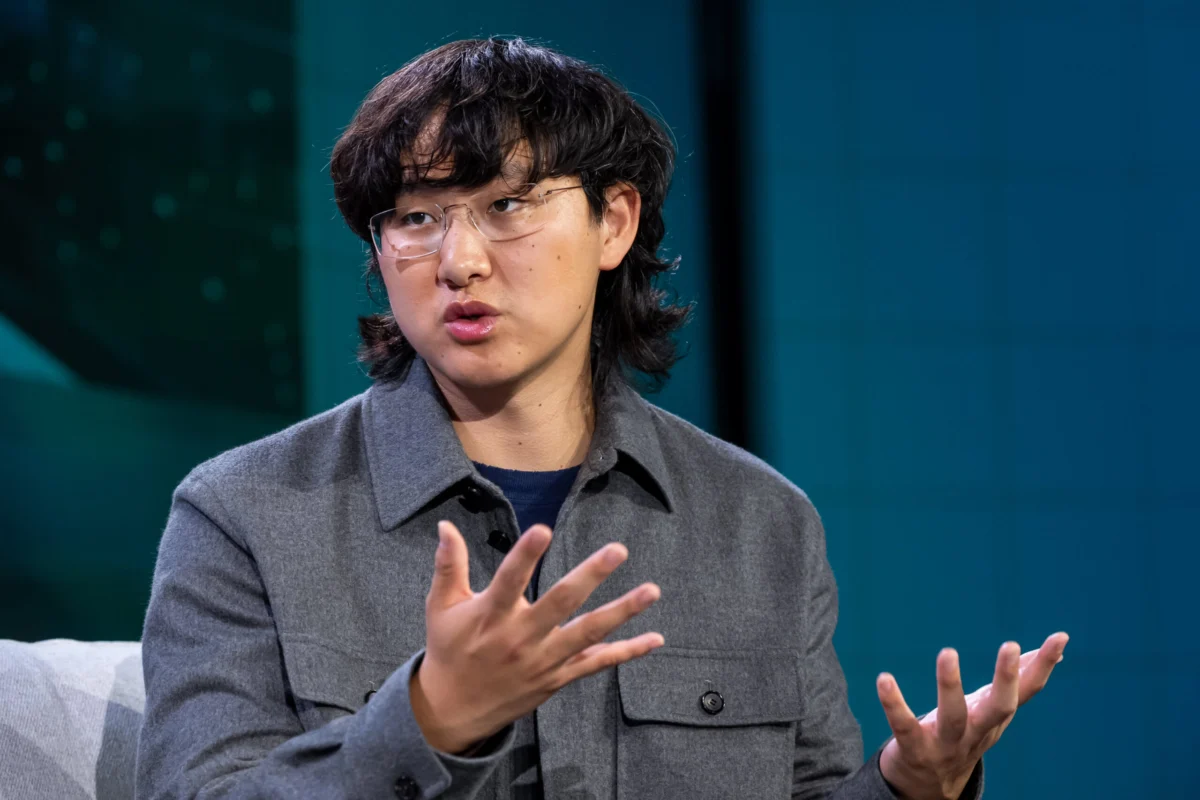
The cornerstone of Wang’s tenure thus far was the April 2026 debut of Muse Spark, a proprietary foundation model designed to serve as the engine for Meta’s diverse ecosystem of applications. This release marked a fundamental departure from Meta’s long-standing "open weight" philosophy, popularized by its Llama series of models. Under the banner of the newly formed Meta Superintelligence Labs (MSL), Wang was tasked with providing the technical "sizzle" necessary to compete in the generative AI arms race. While Muse Spark has been integrated into core products like Facebook, Instagram, and the Ray-Ban Meta smart glasses, the transition has not been without significant friction, both internally and within the broader developer community.
A Strategic Pivot: From Open Source to Proprietary Power
Meta’s journey into the current AI era began with a strategy that many analysts now view as a miscalculation. By releasing the Llama family of models as open-source—allowing developers to download and modify the code for free—CEO Mark Zuckerberg initially hoped to establish Meta as the industry standard for AI infrastructure. However, this approach lacked a direct monetization path and allowed competitors to benefit from Meta’s research without providing reciprocal value. The strategy reached a breaking point in April 2025 with the release of Llama 4, which failed to achieve the "frontier" status necessary to rival OpenAI’s GPT-4 or Google’s Gemini.
In a move that stunned the technology sector in June 2025, Zuckerberg pivoted, committing $14.3 billion to secure roughly half of Scale AI’s assets and the leadership of Alexandr Wang. The goal was a "strategic rebuild" of Meta’s AI architecture. This shift culminated in the Muse Spark model, which is proprietary and designed for internal optimization. Thomas Randall, an analyst at Info-Tech Research Group, notes that while the route was not optimized, the vision is finally becoming clear. "Meta needs to have a consistent, reliable proprietary model that they themselves own," Randall stated, suggesting that without this intervention, the company would have been "lost" in the rapidly evolving market.
Chronology of Meta’s AI Transformation
The past fourteen months have seen a rapid succession of events that have reshaped Meta’s corporate identity:

- April 2025: The launch of Llama 4 receives a lukewarm reception from the developer community, failing to bridge the performance gap with proprietary competitors.
- June 2025: Meta announces a $14.3 billion investment in Scale AI, bringing Alexandr Wang and his top lieutenants to head the Meta Superintelligence Labs.
- September 2025: At the Meta Connect conference, Zuckerberg showcases AI-driven features in the Ray-Ban Meta glasses, signaling a move toward hardware-integrated AI.
- January 2026: Meta initiates a series of workforce reductions, specifically targeting departments within Reality Labs to redirect funding toward AI compute and talent.
- April 2026: Muse Spark is officially released, serving as Meta’s first major proprietary foundation model.
- May 2026: Meta begins testing AI-driven subscription services, offering a premium tier starting at $7.99 per month to diversify revenue beyond advertising.
- June 2026: One year after the Wang acquisition, Meta reports a 33% increase in Q1 revenue, yet faces an 18% decline in stock price over the previous 12 months.
Financial Performance and the Monetization Gap
Despite the technical milestones achieved under Wang, investor sentiment remains cautious. Meta’s stock has underperformed the broader megacap technology sector, dropping 18% over the last year. This decline stands in stark contrast to the company’s robust revenue growth, which hit 33% in the first quarter of 2026—the fastest expansion rate since 2021. The disconnect lies in the source of that revenue: approximately 98% of Meta’s income still originates from online advertising.
Wall Street is increasingly looking for "proof points" that AI can generate new, independent revenue streams. Ralph Schackart, an analyst at William Blair, emphasized that investors are seeking a "new AI-first product" that can be commercialized beyond simply enhancing existing ad models. While AI has undoubtedly improved ad targeting and engagement on Instagram and Facebook, the lack of a successful standalone AI product—similar to ChatGPT or Microsoft’s Copilot—remains a point of contention. The recent introduction of subscription plans starting at $7.99 per month is seen as a first step, but history suggests Meta has struggled to sell products that are not subsidized by ads.
The Developer Dilemma and Loss of Trust
One of the most significant hurdles facing Alexandr Wang is the erosion of trust within the developer community. By pivoting away from the open-source Llama project to the closed Muse Spark model, Meta has alienated the very innovators who once championed its platforms. Rob May, CEO of the startup Neurometric, characterized the AI community’s current attitude toward Meta as one of indifference. "I think the AI community largely ignores Meta at this point," May said, noting that Muse Spark was perceived as a "yawn" because it lacks the accessibility that defined Meta’s previous efforts.
Furthermore, developers have reported a breakdown in communication with the company. While Meta was once proactive in courting third-party coders, it has recently focused almost exclusively on internal applications. This "walled garden" approach may protect Meta’s $200 billion annual advertising business, but critics like Krish Subramanian of KOI AI warn that it could prevent Meta from becoming a primary platform for the next generation of AI applications. The lack of an available API for Muse Spark during its first several months has allowed Google and Microsoft to solidify their relationships with enterprise developers.
Internal Turmoil and Operational Challenges
The transition to an AI-first company has also taken a toll on Meta’s internal culture. In May 2026, the company laid off approximately 8,000 employees, a move that followed several other rounds of cuts throughout the year. These layoffs targeted various departments, including trust and safety teams, raising concerns about the ethical guardrails surrounding Wang’s new models. Sources familiar with the matter indicate that the cuts have strained morale, even as the company pours billions into AI hardware and executive salaries.

At the leadership level, reports of tension have emerged. While Muse Spark was considered an internal success, the pressure on Wang and fellow high-profile hire Nat Friedman (former GitHub CEO) is immense. They are expected to deliver rapid revenue growth to justify the $14.3 billion spent to bring them on board. Within the company, some observers suggest that if the newcomers fail to meet these high expectations, Zuckerberg may turn to long-time lieutenant and CTO Andrew Bosworth to consolidate control over the AI labs. For his part, Wang has dismissed reports of internal conflict, describing Muse Spark as merely an "appetizer" for more powerful models currently in development.
Broader Implications and the Path to Credibility
Meta’s massive investment in AI must also be viewed through the lens of its previous experimental failures. The company’s foray into the metaverse and virtual reality has resulted in over $80 billion in cumulative losses since late 2020. Howard Yu, a professor at the International Institute for Management Development, suggests that Zuckerberg’s credibility with investors is reaching its limit. "I think the virtual reality foray may have burned up a lot of his goodwill," Yu noted, adding that the success of the AI transition is now a referendum on Zuckerberg’s leadership.
To regain market confidence, Meta must demonstrate that its AI strategy offers a unique advantage. Andrew Moore, CEO of Lovelace and former Google Cloud AI chief, suggests that Meta could find a niche by focusing on "computationally efficient" proprietary models. If Wang can deliver models that provide high-level performance at a fraction of the energy and latency costs of competitors, Meta could attract enterprise clients who are currently wary of the rising costs of AI implementation.
As Meta prepares to release the API for Muse Spark to outside partners later this month, the tech industry will be watching closely. A Meta spokesperson reiterated the company’s commitment to safety and its plan to eventually re-engage with the developer ecosystem. However, the ultimate measure of success for Alexandr Wang and Mark Zuckerberg will not be the technical sophistication of their models, but their ability to prove that Meta can thrive in an AI-dominated economy where "likes" and "shares" are no longer the only currency that matters.