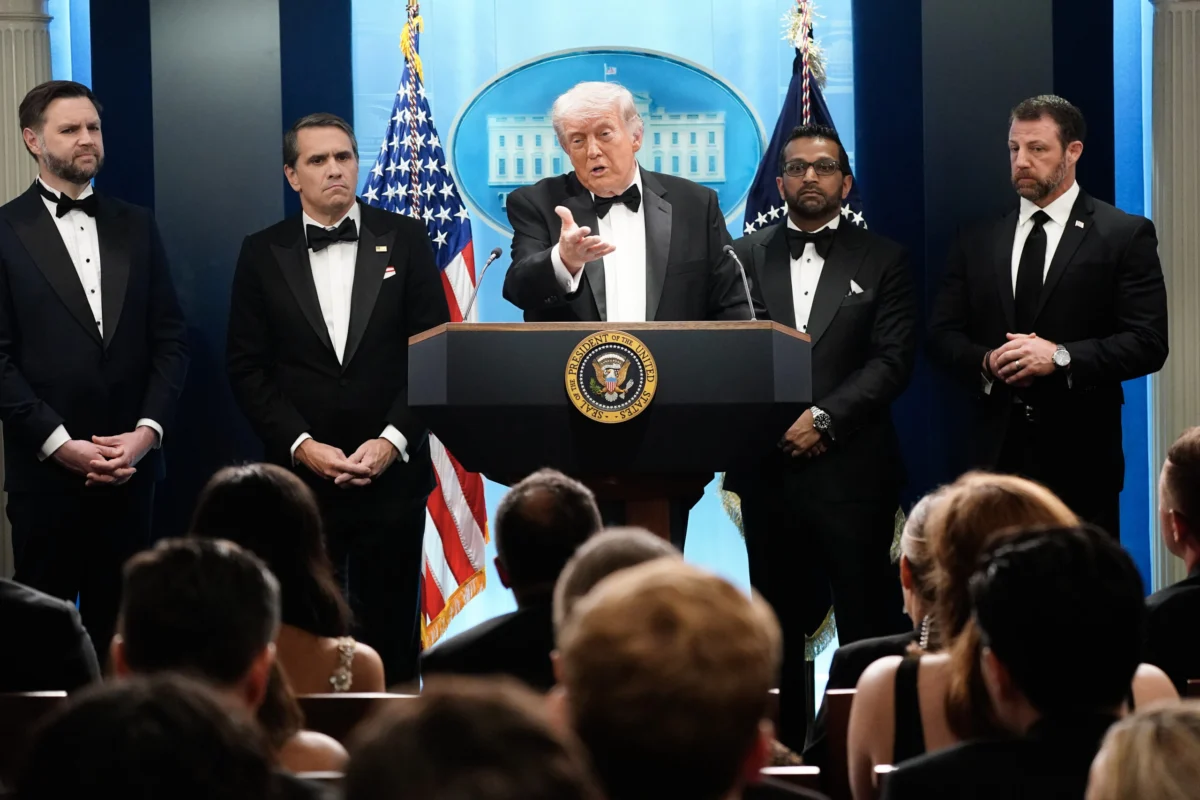
A California man has been identified as the suspect in the attempted shooting at the White House Correspondents’ Association dinner on Saturday night, an incident that sent shockwaves through the nation’s capital and prompted the swift evacuation of President Donald Trump and First Lady Melania Trump. The event, a cornerstone of Washington D.C.’s social and political calendar, was abruptly canceled, raising significant questions about security protocols for high-profile gatherings and the safety of public figures.
The Associated Press identified the suspect as 31-year-old Cole Tomas Allen. The incident unfolded with alarming speed at the Washington Hilton ballroom, a venue renowned for hosting numerous prestigious events. Shots were fired as Allen allegedly attempted to breach a security checkpoint, leading to an immediate and chaotic scene. President Trump, moments after being rushed to safety, shared a photo of the suspect and a video clip showing him charging through the checkpoint, describing him as "armed with multiple weapons." Trump also confirmed that a Secret Service officer was shot during the confrontation, but credited a "very good bulletproof vest" with saving the officer’s life.
The White House Correspondents’ Dinner: A Tradition Under Threat
The White House Correspondents’ Association Dinner, often referred to simply as the WHCD, is an annual gathering of journalists, politicians, celebrities, and often the President of the United States. Established in 1914, the WHCA’s mission is to represent the White House press corps in its dealings with the Executive Branch. The dinner itself, while a social highlight, also serves a more serious purpose: to celebrate the First Amendment and raise money for journalism scholarships. It is typically held on the last Saturday of April and draws thousands of attendees, making it one of the most high-profile annual events in Washington, D.C.
Over the decades, the WHCD has evolved from a relatively small gathering into a star-studded affair, attracting significant media attention. Its prestige naturally necessitates robust security measures, especially with the President and Vice President, along with numerous cabinet members, members of Congress, and international dignitaries, often in attendance. The Washington Hilton, a sprawling complex in Dupont Circle, is a frequent host, accustomed to accommodating large crowds and implementing extensive security plans in coordination with the Secret Service, Metropolitan Police Department (MPD), and other federal agencies. The sheer scale of the event, with hundreds of tables spread across multiple ballrooms and reception areas, presents a complex security challenge, requiring meticulous planning for access control, perimeter security, and emergency response.
Past dinners have generally proceeded without major security breaches, relying on a multi-layered approach involving credential checks, metal detectors, K-9 units, and a visible and plainclothes presence of law enforcement. However, the incident on Saturday night unequivocally demonstrated the persistent vulnerabilities inherent in even the most fortified environments, forcing a reevaluation of what was previously considered an adequate security posture for such an iconic gathering. The attempted shooting not only disrupted a cherished tradition but also underscored the increasing threats faced by public figures and the institutions they represent, highlighting the critical need for constant adaptation in security strategies.
Chronology of a Crisis: The Events of Saturday Night
The sequence of events on Saturday night unfolded rapidly, transforming a festive occasion into a scene of panic and heightened alert.
- Early Evening (6:00 PM – 7:30 PM EDT): Guests begin arriving at the Washington Hilton, making their way through initial security checkpoints, presenting invitations, and navigating the bustling pre-dinner receptions. The atmosphere is reportedly convivial, with attendees mingling and anticipating the evening’s program, which typically includes comedic remarks from a host and the President.
- Approx. 7:45 PM – 8:00 PM EDT: President Donald Trump and First Lady Melania Trump arrive at the venue, their presence signifying the imminent start of the main program. They are escorted to the main ballroom, surrounded by a detail of Secret Service agents, as is standard protocol for presidential movements in public.
- Approx. 8:15 PM – 8:30 PM EDT: The President and First Lady are seated at the head table. The dinner program is either underway or about to commence. At this point, Cole Tomas Allen, reportedly a guest at the Washington Hilton, allegedly attempts to breach a secondary security checkpoint, possibly a more secure inner perimeter established closer to the main stage and presidential area.
- Moment of Confrontation and Shots Fired: As Allen attempts to charge through the checkpoint, Secret Service agents and potentially other law enforcement personnel intervene. A struggle ensues. During this confrontation, shots are fired. Details remain under investigation, but it is confirmed that one Secret Service officer sustained an injury from a gunshot, although his bulletproof vest prevented a fatal wound. The specific number of shots fired and the exact sequence of events leading to the officer’s injury are critical aspects of the ongoing investigation.
- Presidential Evacuation (Immediate): Upon the sound of gunfire and the confirmed security breach, Secret Service agents swiftly move to protect the President and First Lady. Adhering to established emergency protocols, they are immediately rushed off the stage and evacuated from the ballroom, securing them to a safer location within the hotel or away from the immediate vicinity. This rapid response is a testament to the extensive training and readiness of presidential protective details.
- Chaos and Confusion: Within the ballroom, the sound of gunfire triggers immediate panic. Guests, initially unsure of the source or nature of the disturbance, react with fear and confusion. Many drop to the floor, take cover under tables, or attempt to move away from the perceived threat. Law enforcement personnel present within the ballroom quickly move to secure the area, directing guests, and attempting to ascertain the full scope of the threat.
- Suspect Apprehension: During or immediately after the exchange of gunfire, Secret Service agents successfully apprehend Cole Tomas Allen. President Trump later lauded the speed and efficacy of the agents, remarking, "They drew those guns so fast, they looked like Matt Dillon," referring to the quick-drawing U.S. Marshal from the classic Western series Gunsmoke. Allen was taken into custody, and initial assessments indicated he was not struck by gunfire during the incident.
- Dinner Cancellation and Investigation Begins: Following the apprehension of the suspect and the evacuation of the President, the White House Correspondents’ Association, in consultation with security agencies, makes the decision to cancel the remainder of the dinner. The immediate focus shifts to securing the scene, attending to the injured officer and suspect, and launching a comprehensive investigation into the incident. The Washington Hilton ballroom becomes a crime scene, with federal and local investigators beginning to process evidence.
- Presidential Briefing (Post-Evacuation): Shortly after being secured, President Trump addresses the press, providing initial details and confirming the apprehension of the suspect and the officer’s injury. He emphasizes the seriousness of the event and the need to prevent such incidents.
- Official Press Briefings (Later Evening): U.S. Attorney Jeanine Shapiro and Metropolitan Police Department interim police chief Jeffery W. Carroll hold separate press briefings to provide updates on the investigation, identify the suspect, and announce preliminary charges.
This detailed chronology underscores the dynamic and unpredictable nature of security incidents, highlighting the critical role of rapid response and coordinated efforts among multiple law enforcement agencies in protecting high-value targets and managing large-scale public events.
The Suspect and the Charges: Cole Tomas Allen Identified
The individual at the center of this security breach has been identified as Cole Tomas Allen, a 31-year-old man from California. While initial details about Allen’s background and motives remain limited as the investigation progresses, authorities quickly moved to outline the severe charges he faces. U.S. Attorney Jeanine Shapiro confirmed that Allen is being charged with using a firearm in the commission of a crime and assaulting a federal officer with a dangerous weapon. Shapiro indicated that "many more charges" are likely to be filed as the investigation unfolds, suggesting a broad scope of potential federal offenses.
The charges laid against Allen carry significant penalties under federal law. Assaulting a federal officer with a dangerous weapon, particularly when a firearm is involved and an injury occurs, can result in lengthy prison sentences. The use of a firearm in the commission of a felony further compounds these penalties, often mandating consecutive sentences. These charges reflect the gravity of attacking law enforcement personnel, especially those tasked with protecting the President and other high-ranking officials. The fact that Allen was reportedly "armed with multiple weapons," as stated by President Trump, could lead to additional charges related to illegal possession or intent to commit further harm, depending on the nature and legality of the firearms and other implements found.
Authorities believe Allen acted alone, a detail that, if confirmed, simplifies the investigative scope but does not diminish the severity of the threat. The Metropolitan Police Department (MPD) interim police chief Jeffery W. Carroll noted that Allen was reportedly a guest at the Washington Hilton, raising questions about how he might have gained access to the proximity of the event and whether his presence at the hotel was coincidental or part of a premeditated plan to target the dinner. The investigation will undoubtedly delve into Allen’s travel history, his digital footprint, any known associations, and his mental state to construct a comprehensive profile and understand his motivations. Both Allen and the injured Secret Service officer are undergoing evaluation for injuries, though Carroll confirmed Allen was not struck by gunfire during the incident.
Official Response and Security Measures
The immediate aftermath of the attempted shooting saw a coordinated response from multiple agencies. The Secret Service, with its primary mission of protecting the President and other dignitaries, led the on-site operational response, ensuring the safety of the President and First Lady and apprehending the suspect. Their swift action in evacuating the President and neutralizing the threat was a critical factor in preventing further escalation. The Metropolitan Police Department (MPD) provided crucial support, securing the broader perimeter around the Washington Hilton and assisting with the initial investigation. The Federal Bureau of Investigation (FBI) is expected to play a significant role, given the federal nature of the charges and the potential national security implications.
The White House Correspondents’ Association (WHCA) quickly issued a statement expressing profound regret over the incident and prioritizing the safety of all attendees. While initially vague on rescheduling, President Trump and the WHCA later vowed to reschedule the event within 30 days, signaling a determination not to let such an act derail a significant journalistic tradition. However, the decision to reschedule will undoubtedly be contingent on a thorough review of security protocols and assurances that such an incident cannot be repeated.
Presidential Reaction and Public Discourse
President Trump’s immediate reaction was delivered with characteristic directness. Addressing the press shortly after his evacuation, he praised the Secret Service agents, comparing their quick draw to the fictional Marshal Matt Dillon, a comment that sparked a brief moment of online confusion. While some on social media platform X (formerly Twitter) pondered if Trump was referring to actor Matt Dillon, others correctly pointed to James Arness’s iconic Gunsmoke character. This tangential discussion, however, momentarily overshadowed the gravity of the event, illustrating how presidential remarks, even in crisis, can sometimes create secondary narratives.
Beyond the "Matt Dillon" comment, Trump emphasized the suspect’s apparent mental state, calling him "a sick person, a very sick person," and lamenting that "we don’t want things like this to happen." His comments, while condemning the act, also initiated a broader public conversation about mental health and its potential role in acts of violence, a recurring theme in discussions surrounding gun violence and public safety. The President’s assertion that he "fought like hell to stay" at the dinner but yielded to "protocol" highlighted the strict adherence to security procedures that govern presidential movements during emergencies.
Implications for Future High-Profile Events
The attempted shooting at the WHCD will undoubtedly trigger a comprehensive review of security protocols for all major events involving high-profile figures, particularly the President. Security experts anticipate several key areas of re-evaluation:
- Layered Security Enhancements: Expect even more stringent multi-layered security measures, including enhanced credentialing processes, more sophisticated screening technologies, and potentially expanded secure perimeters around venues.
- Threat Assessment and Intelligence Sharing: There will likely be a renewed focus on intelligence gathering and threat assessment, particularly regarding individuals who might pose a risk at such events, including scrutinizing guest lists more thoroughly and monitoring online activity for potential threats.
- Emergency Response Drills: Agencies may increase the frequency and realism of emergency response drills for events with presidential attendance, ensuring seamless coordination between the Secret Service, local police, and venue security.
- Venue Selection and Design: Future event organizers and security planners may place greater emphasis on the inherent security features of potential venues, favoring those that offer more easily controllable access points and robust internal security infrastructure.
Beyond the immediate security implications, the incident also touches upon broader issues. The freedom of the press and its access to public figures, a cornerstone of democratic governance, could face new challenges. While security is paramount, there is a delicate balance to be struck to avoid creating an environment of excessive restriction that could impede the work of journalists or make public engagement impossible. Politically, such an attack can be exploited to fuel narratives around national security, gun control, and political polarization, further entrenching divisions in public discourse. The incident serves as a stark reminder of the ever-present threat of violence in a highly charged political climate.
Conclusion: A Nation Reflects on Safety
The attempted shooting at the White House Correspondents’ Association dinner was a chilling reminder of the persistent threats faced by public officials and the institutions they represent. While the swift action of the Secret Service prevented a greater tragedy, the incident underscores the continuous need for vigilance, adaptability, and unwavering commitment to security in an unpredictable world. The ongoing investigation into Cole Tomas Allen’s motives and background will be crucial in understanding the precise nature of the threat and informing future security strategies. As Washington D.C. and the nation reflect on the events of that Saturday night, the incident leaves an indelible mark, prompting a re-evaluation of safety, access, and the very nature of public engagement in an increasingly complex environment. More details are expected to emerge as the investigation continues.