
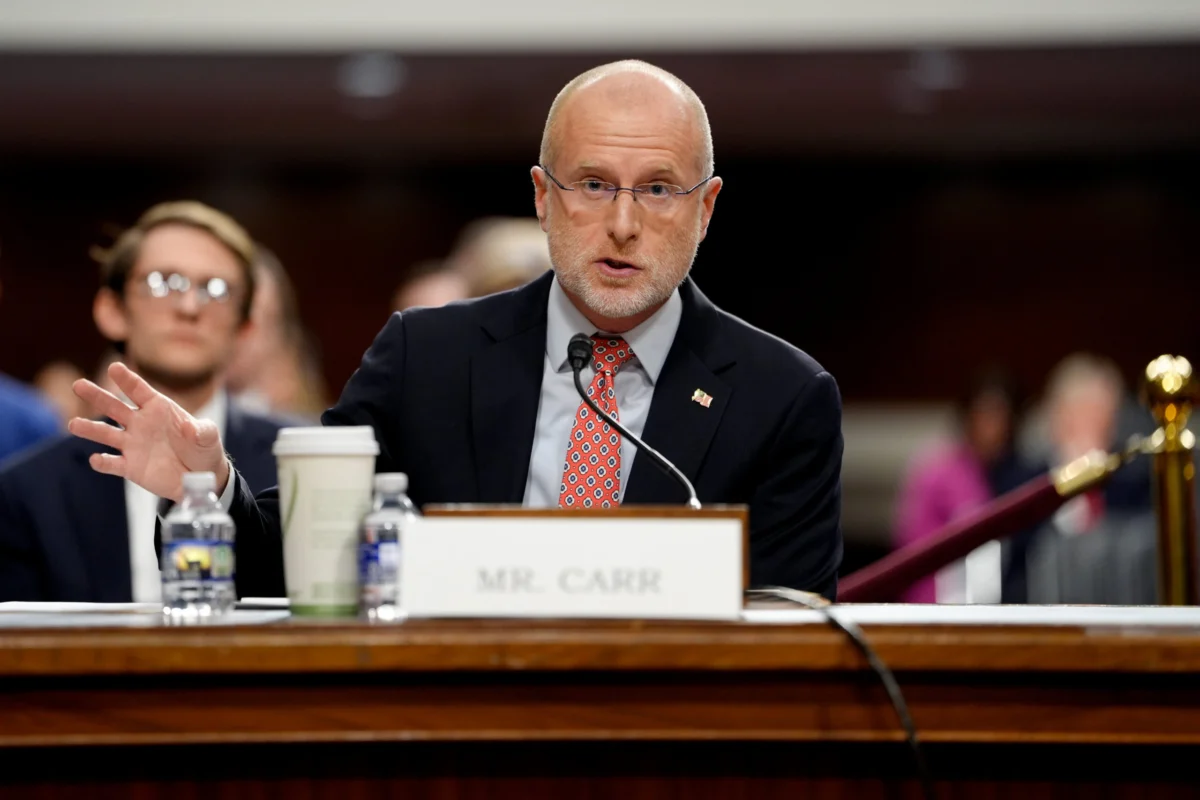
The Federal Communications Commission (FCC) has formally initiated an accelerated review process for the broadcast station licenses held by The Walt Disney Company, a move that significantly advances a long-running federal inquiry into the media giant’s corporate practices. According to an official letter issued on Tuesday by FCC Chairman Brendan Carr, the agency is demanding that Disney-owned ABC television stations file for early license renewals, moving up a timeline that was originally slated to span from 2028 through 2031. This administrative order is rooted in an ongoing investigation regarding Disney’s diversity, equity, and inclusion (DEI) initiatives, which the commission began scrutinizing last year for potential violations of federal law and regulatory standards.
The FCC’s directive gives Disney a 30-day window—setting a firm deadline of May 28—to submit the necessary filings for eight of its most prominent "Owned and Operated" (O&O) stations. The order specifically targets stations in major markets, including three in California and others located in Illinois, New York, Texas, North Carolina, and Pennsylvania. While Disney’s network of hundreds of local affiliates remains unaffected by this specific order, the scrutiny of its core O&O stations represents a significant escalation in the regulatory pressure facing the company.
The Regulatory Framework and the Scope of the Inquiry
Under the Communications Act of 1934, the FCC is tasked with ensuring that broadcast licensees operate in the "public interest, convenience, and necessity." Central to this mandate is the requirement that broadcasters adhere to non-discrimination policies. The current investigation, which launched in March of the previous year, seeks to determine if Disney’s internal DEI mandates have crossed the threshold into unlawful discrimination.
The FCC’s letter indicates that while Disney has provided responses to two previous inquiries, the agency deems further action "appropriate" to determine the company’s continued fitness to hold public airwave licenses. The investigation focuses on whether Disney’s hiring and content-production guidelines infringe upon the FCC’s rules regarding equal employment opportunities and the broader prohibition of discriminatory practices within the telecommunications sector.
Disney has maintained a firm stance in defense of its operations. In a statement released Tuesday, the company emphasized its adherence to regulatory requirements. "ABC and its stations have a long record of operating in full compliance with FCC rules and serving their local communities with trusted news, emergency information, and public-interest programming," the company stated. "We are confident that record demonstrates our continued qualifications as licensees under the Communications Act and the First Amendment and are prepared to show that through the appropriate legal channels."
A Timeline of Escalating Tensions
The move to accelerate Disney’s license review does not exist in a vacuum; it follows a period of heightened friction between the media company and various political entities. The timeline of this investigation reveals a confluence of regulatory oversight and high-profile public controversies.
March 2024: The FCC officially opens an investigation into Disney’s broadcast stations, citing concerns over DEI policies and potential violations of the Communications Act.
September 2024: Tensions between the network and political conservatives spike following comments made by late-night host Jimmy Kimmel regarding conservative activist Charlie Kirk. The incident led to a temporary suspension of "Jimmy Kimmel Live!" and prompted Chairman Brendan Carr to suggest that broadcast licenses could be subject to revocation if stations fail to meet their public interest obligations.
February 2025: The FCC expands its DEI-related inquiries to include other major media conglomerates, including Comcast (owner of NBCUniversal) and Paramount. This signals a broader shift in the commission’s enforcement priorities under Chairman Carr’s leadership.
Late April 2025: President Donald Trump renews calls for ABC to take action against Jimmy Kimmel following a monologue in which the host referred to First Lady Melania Trump as an "expectant widow." The comment, made shortly before an alleged security incident at the White House Correspondents’ Dinner, sparked a fresh wave of executive-level criticism toward ABC’s parent company.
Tuesday, April 29, 2025: The FCC issues the letter ordering Disney to file for early license renewals for its eight O&O stations, citing the need for an immediate and thorough review of the company’s compliance with non-discrimination rules.
Internal Dissent and Constitutional Concerns
The FCC’s decision has exposed a sharp divide within the commission itself. FCC Commissioner Anna Gomez, a Democratic appointee, issued a scathing critique of the order shortly after it was announced. In a post on the social media platform X, Gomez characterized the move as "unprecedented, unlawful, and going nowhere." She further labeled the action a "political stunt" and encouraged the affected companies to challenge the order in court, asserting that the First Amendment provides a robust defense against such regulatory maneuvers.
The debate centers on the extent of the FCC’s authority to use license renewals as a tool for addressing corporate policies or speech content. Legal experts and First Amendment advocates have warned that using the licensing process to punish a broadcaster for the perceived political leanings of its talent or its internal corporate philosophy could set a dangerous precedent.
Jameel Jaffer, executive director at the Knight First Amendment Institute at Columbia University, expressed deep concern over the implications of the FCC’s current trajectory. "The FCC has no authority to cancel broadcasters’ licenses because of their perceived political views," Jaffer noted in a statement. He argued that attempts to consolidate control over media organizations through regulatory pressure could be "corrosive to democracy" and fundamentally "offensive to the First Amendment."
Broader Implications for the Media Industry
The investigation into Disney is part of a wider regulatory strategy under Chairman Brendan Carr, who was appointed by President Trump to lead the commission. Carr has been vocal about his desire to rein in what he perceives as the ideological overreach of major media and technology companies. By targeting DEI efforts through the lens of "unlawful discrimination," the FCC is testing a new legal theory that could have far-reaching consequences for how American corporations structure their human resources and social responsibility programs.
The inclusion of Comcast and Paramount in similar inquiries suggests that the entire broadcast television industry is entering a period of increased regulatory risk. Traditionally, broadcast license renewals are considered routine administrative procedures, provided the station has maintained its technical standards and avoided major legal infractions. The shift toward reviewing licenses based on "character qualifications" related to corporate DEI policies represents a significant departure from historical norms.
For Disney, the stakes are high. The eight stations subject to the early review—including WABC-TV in New York and KABC-TV in Los Angeles—are among the most profitable and influential in the country. Losing these licenses would not only be a financial catastrophe but would also dismantle the backbone of the ABC television network’s distribution model.
Financial and Market Context
Investors have been closely monitoring Disney’s regulatory challenges. While the company’s stock has shown resilience amid a broader recovery in the entertainment sector, the threat of federal intervention in its core broadcasting business introduces a layer of uncertainty. Analysts suggest that if the FCC successfully uses DEI policies as a grounds for license challenges, it could trigger a wave of litigation that may last for years, potentially reaching the Supreme Court.
Furthermore, the "early review" mechanism bypasses the standard eight-year renewal cycle, forcing Disney to expend significant legal and administrative resources to defend its licenses years ahead of schedule. This move is seen by some industry observers as a "regulatory audit" intended to force transparency regarding internal Disney memos, hiring quotas, and diversity metrics that are typically kept private.
Conclusion and Future Outlook
As the May 28 deadline approaches, the legal teams at Disney and ABC are expected to prepare a comprehensive defense of their broadcasting record. The focus will likely remain on the "public interest" programming the stations provide, ranging from local news to emergency broadcasts, which the company argues outweighs any concerns regarding corporate DEI initiatives.
The outcome of this accelerated review will serve as a bellwether for the future of media regulation in the United States. If the FCC succeeds in linking license eligibility to corporate social policies, it will fundamentally alter the relationship between the federal government and the private media sector. Conversely, if Disney successfully challenges the order in federal court, it could result in a judicial ruling that strictly limits the FCC’s ability to intervene in the internal management of broadcast companies.
For now, the industry remains in a state of high alert. With the FCC signaling that it is prepared to take "appropriate action" against some of the world’s largest media entities, the line between regulatory oversight and political accountability has become increasingly blurred. The coming weeks will determine whether Disney’s "long record of compliance" is sufficient to withstand a commission that appears determined to redefine the rules of the American airwaves.