
Tony Leung Chiu-wai, the venerable Hong Kong actor whose career has become synonymous with the global ascent of East Asian cinema, recently made a rare appearance in New York to mark a significant milestone in his four-decade-long career. The visit served a dual purpose: the promotion of his latest feature, Silent Friend, directed by the Academy Award-nominated Hungarian filmmaker Ildikó Enyedi, and the celebration of his prolific body of work through a comprehensive retrospective hosted by Film at Lincoln Center. This visit, his first to the city for promotional purposes in nearly a quarter-century, underscores Leung’s enduring relevance in an evolving international film landscape. Silent Friend, which arrived in U.S. theaters on May 8 via the distributor 1-2 Special, presents Leung in a role that bridges the gap between scientific inquiry and philosophical contemplation, a departure from the high-octane action and period dramas that defined his early fame.
The Narrative Architecture of Silent Friend
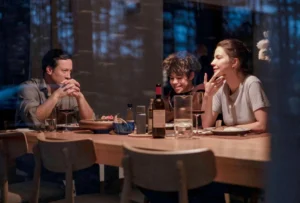
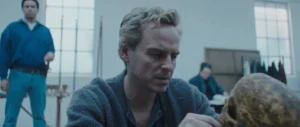
The film Silent Friend is structured as a triptych, weaving together three distinct narratives centered around a singular ginkgo tree located in a botanical garden in Marburg, Germany. The stories are set in 1908, 1972, and 2020, respectively, exploring the intersections of human life and the botanical world across more than a century. Leung anchors the final segment of the film, portraying a neuroscientist whose research into the brain activity of newborns is abruptly derailed by the onset of the COVID-19 pandemic.
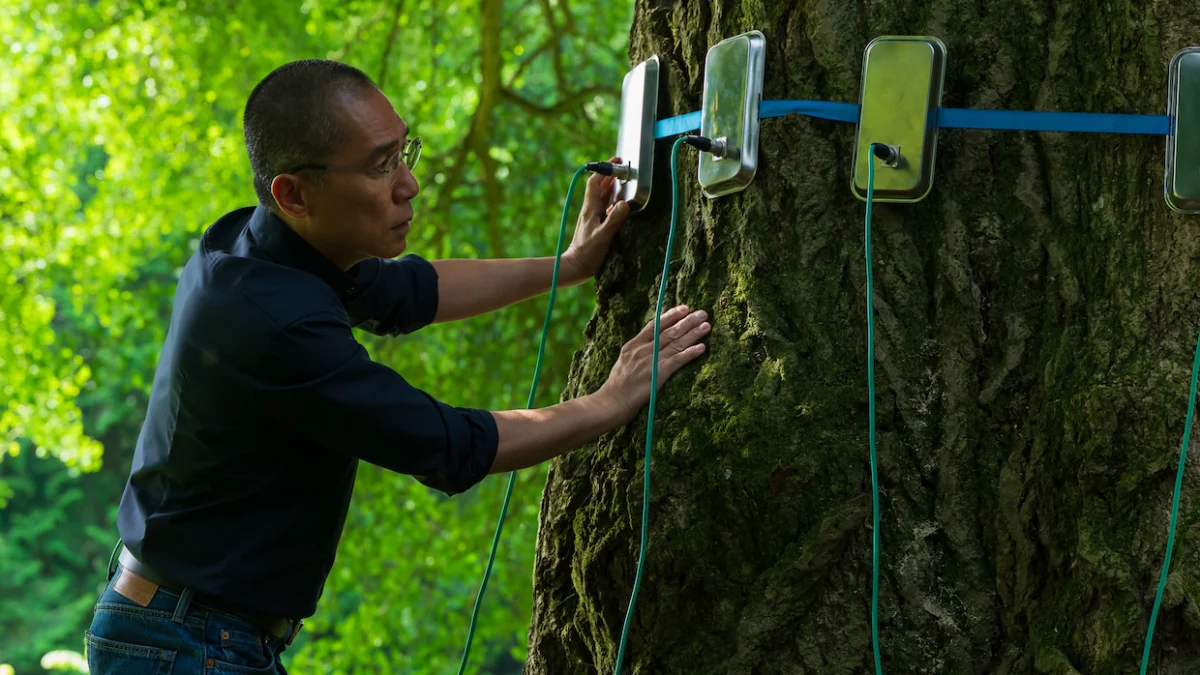
During his period of professional isolation, Leung’s character develops a profound connection with the nearly 200-year-old ginkgo tree. The narrative follows his attempts to establish a neurological link between human consciousness and the sentient life of the plant. To prepare for the role, Leung dedicated six months to intensive research, collaborating with neuroscientists from various academic institutions to understand early cognitive development and the mechanics of electroencephalogram (EEG) studies. This commitment to authenticity extended to his linguistic delivery; Leung hired a British tutor to cultivate a subtle accent, reflecting his character’s hypothetical education at institutions such as Oxford or Cambridge.
A Legacy of Versatility: From TVB to Global Icon
Leung’s trajectory to becoming one of the most respected actors in world cinema began in 1982 when he joined the actor training class at Television Broadcasts Limited (TVB) in Hong Kong. Initially gaining popularity as a co-host of the children’s program 430 Space Shuttle, he quickly transitioned to scripted television, becoming one of the "Five Tiger Generals" of TVB alongside contemporaries like Andy Lau. His early work in television provided a foundation for a film career that has spanned every conceivable genre, including romance, wuxia, crime thrillers, and avant-garde drama.
His filmography reads as a chronicle of the "Golden Age" of Hong Kong cinema and the subsequent "New Wave." Leung has been a muse for some of the world’s most distinguished auteurs. His collaborations with Wong Kar-wai, most notably in In the Mood for Love (2000), earned him the Best Actor award at the Cannes Film Festival, making him the first Hong Kong actor to receive the honor. His work with John Woo in Hard Boiled (1992) redefined the "heroic bloodshed" genre, while his roles in Hou Hsiao-hsien’s A City of Sadness (1989) and Ang Lee’s Lust, Caution (2007) showcased his ability to navigate complex historical and political narratives.
The "Leung Gaze" and the Art of Interiority
A recurring theme in the critical analysis of Leung’s work is his "penetrating gaze," a stylistic hallmark that allows him to convey profound emotional depth with minimal dialogue. Director Ildikó Enyedi noted that this quality was essential for his role in Silent Friend. She observed that Leung possesses a "gentle but strong attention to the world," comparing his presence to that of a monk or a dedicated scientist. According to Enyedi, Leung’s ability to remain curious and avoid "ready-made answers" during performances is what distinguishes him from actors who merely impersonate scientific figures.
Leung has attributed this characteristic to a difficult childhood, during which he learned to isolate himself and hide his feelings. This psychological defense mechanism evolved into a professional asset, allowing him to inhabit characters with a sense of guarded empathy. Whether playing a lonely journalist in 1960s Hong Kong or a weary neuroscientist in pandemic-era Germany, Leung’s performances are characterized by an internal stillness that invites the audience into the character’s psyche.
Navigating Different Cinematic Systems
Throughout his career, Leung has adapted to vastly different production environments. In his discussion regarding the 1995 film Cyclo, directed by Tran Anh Hung, Leung highlighted the collaborative and improvisational nature of independent international productions. Despite the challenges of filming in Vietnam under strict censorship—where the crew could not view dailies until leaving the country—Leung maintained a close relationship with the director to ensure the emotional integrity of the performance.

In contrast, Leung’s recent foray into the Marvel Cinematic Universe as Xu Wenwu in Shang-Chi and the Legend of the Ten Rings (2021) required a different discipline. He noted that Hollywood productions operate with a high degree of rigidity, where scripts are strictly followed and improvisation is limited. However, Leung’s approach to his characters remains consistent: he prioritizes the relationship with the director over the script itself. He maintains that his instinct regarding a director’s personality is the primary factor in his decision to accept a project.
Exploring the Mind of the Antagonist
In recent years, Leung has pivoted toward playing more morally ambiguous or outright villainous characters. His portrayal of the real-estate tycoon Henry Ching Yat-yin in The Goldfinger (2023) and the corrupt police officer in Where the Wind Blows (2022) demonstrates a desire to explore mindsets that differ significantly from his own. The Goldfinger, based on the real-life Carrian Group scandal that rocked Hong Kong in the 1980s, required Leung to portray a character shrouded in mystery. Despite extensive research into the historical figure George Tan, Leung found that the character remained elusive, requiring him to rely on literary accounts and his own creative interpretation to fill the gaps.
Leung has expressed a particular fondness for his darker roles, citing the 1998 film The Longest Nite, directed by Patrick Yau and produced by Johnnie To, as a career highlight. The film, known for its nihilistic tone and lack of a formal script during production, allowed Leung to explore a level of darkness he rarely encounters in his personal life.
Broader Implications and Future Endeavors
The release of Silent Friend and the accompanying retrospective in New York signal a broader recognition of Leung’s contribution to the global arts. As the film industry continues to grapple with the effects of the pandemic and the shifting dynamics of international distribution, Leung’s career serves as a bridge between the traditional cinema of the 20th century and the multi-platform, globalized industry of the 21st.
Looking ahead, Leung confirmed that he is set to reunite with director Johnnie To for a new project. While the film is currently in the scripting phase and Leung remains committed to two other upcoming productions, the collaboration is tentatively scheduled for late 2027. This reunion is highly anticipated by cinephiles, as To and Leung have previously collaborated on some of the most influential works in the Hong Kong crime genre.
Scientific and Philosophical Context in Silent Friend
The central premise of Silent Friend—the consciousness of plants—is supported by an emerging field of botanical research. While traditional neuroscience focuses on animal and human nervous systems, "plant neurobiology" explores how plants perceive and respond to their environment through chemical and electrical signaling. By portraying a neuroscientist who takes these theories seriously, Leung’s character reflects a real-world shift in how humanity perceives its relationship with the natural world.
The ginkgo tree itself, often referred to as a "living fossil," is a fitting symbol for the film’s themes of endurance and memory. Having survived for over 200 million years, the species represents a form of biological continuity that stands in stark contrast to the fleeting, often chaotic nature of human history depicted in the film’s three timelines.
Conclusion
Tony Leung Chiu-wai’s participation in Silent Friend represents more than just a new role in a distinguished career; it is a reflection of an artist continuing to challenge the boundaries of his craft. From the bustling television sets of 1980s Hong Kong to the quiet botanical gardens of Germany, Leung has remained a steady presence in an ever-changing medium. As he moves toward his fifth decade in the industry, his focus on empathy, intellectual curiosity, and the "silent" power of the image ensures that his influence will continue to be felt by audiences and filmmakers alike across the globe.