


The entertainment industry stands at a pivotal crossroads, caught between the existential threat of automation and the urgent necessity for fiscal sustainability. In response to these dual pressures, a new hybrid production entity, Innovative Dreams, has officially launched, signaling a shift in how content is conceived, captured, and polished. Backed by the cloud infrastructure of Amazon Web Services (AWS) and the generative technology of AI startup Luma, Innovative Dreams represents a sophisticated synthesis of traditional cinematography and cutting-edge artificial intelligence. The studio aims to address the escalating costs of production while attempting to anchor high-budget filmmaking within Southern California, a region that has seen a significant exodus of production activity in recent years.
The Emergence of a Hybrid Production Model
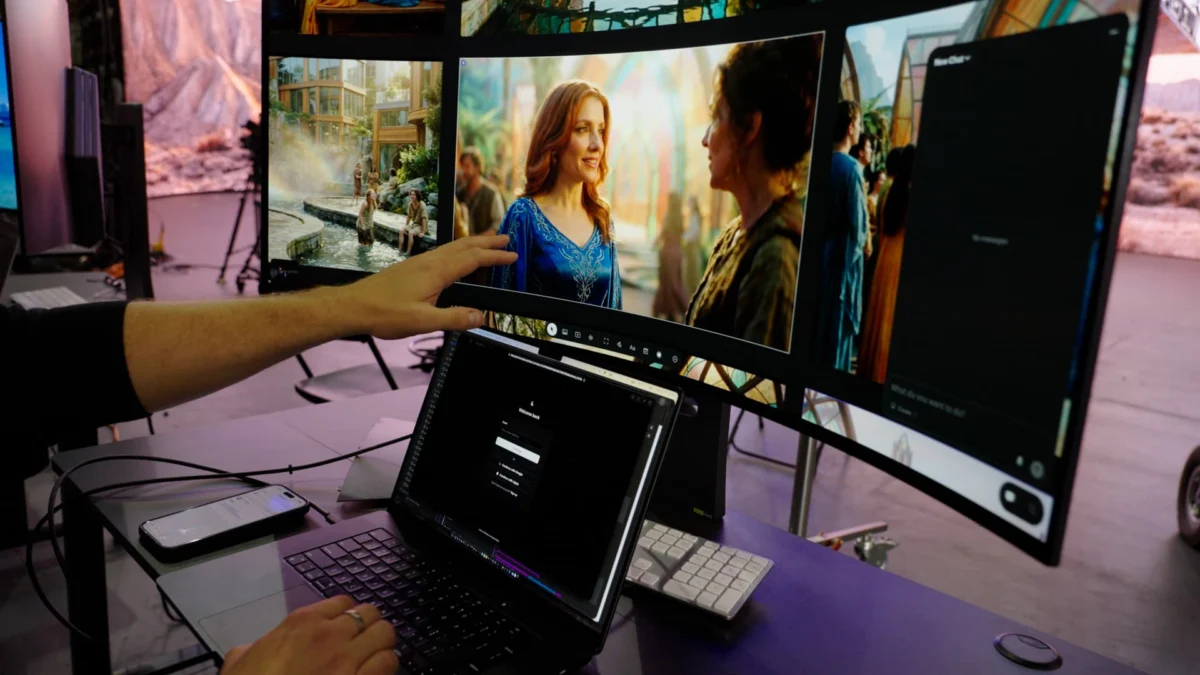
Innovative Dreams is not a traditional visual effects house, nor is it a purely synthetic content generator. Instead, it functions as a "hybrid" production services company. The facility utilizes a combination of physical cameras and massive LED volumes—often referred to as "virtual production"—integrated with a suite of generative AI tools. These tools are utilized throughout the entire lifecycle of a project, from pre-visualization and shooting to final post-production.
By leveraging technologies such as Luma’s generative models, Google’s Nano Banana, and Bytedance’s SeeDream, the studio claims it can dramatically compress production timelines and reduce overhead. CEO Jon Erwin, a veteran director and founder of the Wonder Project, describes the workflow as a fusion of human performance and digital flexibility. Rather than replacing the actor with a digital avatar or a text-to-video prompt, the technology maps high-fidelity performance capture onto digital assets. This allows filmmakers to maintain the nuances of an actor’s performance, the specificities of lens choice, and the director’s framing while digitally altering environments, wardrobe, and makeup in real-time or near-real-time.
From Proof of Concept to Commercial Application
The genesis of Innovative Dreams can be traced back to the production of the historical drama "House of David," a series produced by Erwin’s Wonder Project for Amazon Prime Video. During the filming of the series, which required expansive historical settings and international locales, Erwin began experimenting with AI to solve logistical and budgetary hurdles. The success of these experiments—using AI to generate complex historical backgrounds and digital extensions—served as the catalyst for a dedicated venture.
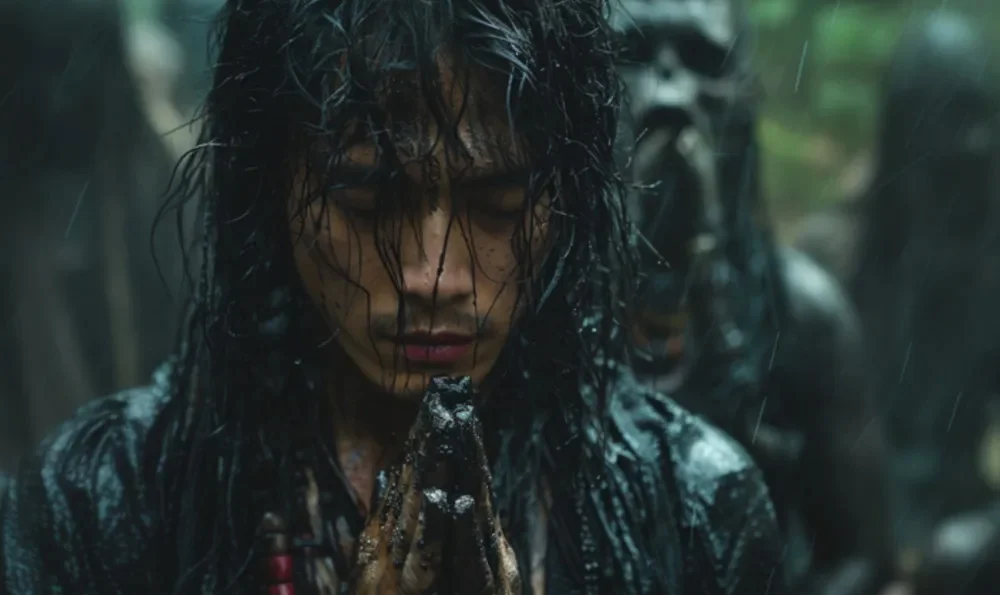
The first major test of the Innovative Dreams workflow is "The Old Stories: Moses," a three-part series starring Academy Award winner Ben Kingsley. The production metrics for the project are starkly different from traditional Hollywood standards. The series, which features scenes in 40 distinct global locations, was filmed in its entirety on a virtual soundstage in just one week. Under a traditional production model, a project of this scale would typically require five to six weeks of filming, alongside millions of dollars in travel, logistics, and location scouting fees. By projecting global footage onto the LED walls and using AI to harmonize the lighting and assets, the studio achieved a level of scale that Erwin asserts would have been impossible under a standard television budget.
Strategic Partnerships and Infrastructure
The heavy computational requirements of real-time AI video generation necessitated a partnership with major technology players. Amazon Web Services (AWS) has joined the venture as both an investor and an infrastructure partner. AWS provides the cloud-based backbone and AI architecture required to process the massive datasets involved in hybrid production. This partnership is part of a broader strategic move by Amazon to deepen its footprint in the media and entertainment sector, offering tools that allow for decentralized collaboration and accelerated production cycles.
Samira Bakhtiar, General Manager of Media, Entertainment, Games, and Sports at AWS, emphasized that the goal is to provide filmmakers with tools that were previously inaccessible due to cost or technical complexity. The integration of cloud computing allows for a seamless flow of data between the physical set and the digital rendering engines, facilitating a level of scalability that traditional local servers cannot match.
Simultaneously, the involvement of Luma—an AI startup recently valued at over $4 billion—provides the creative "intelligence" of the operation. Luma’s new agent tools allow multiple AI services to operate within a collaborative workspace. This partnership is bidirectional; while Innovative Dreams uses Luma’s tools, Erwin’s team provides direct feedback to Luma’s engineers, effectively shaping the development of the software to meet the specific demands of high-end narrative filmmaking.

The Economic Context of Modern Hollywood
The launch of Innovative Dreams comes during a period of profound instability for the Los Angeles film industry. The entertainment sector has been reeling from a series of systemic shocks, beginning with the COVID-19 pandemic and followed by the historic dual strikes of the Writers Guild of America (WGA) and the Screen Actors Guild (SAG-AFTRA) in 2023. These strikes were driven largely by concerns over the use of AI and the protection of intellectual property, as well as the erosion of traditional residual pay in the streaming era.
Data from Los Angeles County illustrates a sobering reality: the region has lost more than 40,000 entertainment industry jobs since 2022. Production activity in the city has plummeted to its lowest levels since 1995, as studios increasingly move productions to tax-incentive-heavy regions like Georgia, the United Kingdom, and Canada. Entertainment attorney Jonathan Handel notes that across the board, industry spending and production volume are down by 25% to 35% compared to pre-pandemic levels.
In this environment, Innovative Dreams positions itself as a potential savior for the local industry. By reducing the cost of production through AI and virtual stages, Erwin argues that high-scale projects can once again be filmed in Southern California. "There’s just an alarming lack of green lights, especially in America," Erwin stated, suggesting that the current model of filmmaking has become economically unsustainable.
Labor Implications and the Future of Entry-Level Work
Despite the optimistic outlook from the studio’s founders, the rise of AI-integrated production raises significant questions regarding labor displacement. The ability to digitally generate sets, costumes, and makeup directly impacts the demand for physical set designers, costumers, and makeup artists. While Erwin contends that the "best" workers will adapt and use these tools to enhance their craft, industry analysts remain cautious.
One of the primary concerns highlighted by legal experts is the impact on the industry’s "on-ramps." Traditionally, entry-level roles in wardrobe, set construction, and production assistance have served as the training ground for future industry leaders. As AI automates these foundational tasks, the pathway for new talent to enter the industry may shrink. Handel observes that the tension between job displacement and job augmentation has not yet reached a resolution, leaving the workforce in a state of persistent anxiety.
However, the counter-argument posed by Innovative Dreams is one of survival. If the cost of domestic production remains prohibitively high, the jobs will not simply change; they will disappear entirely from the local market. By creating a more efficient method of production, the studio aims to keep the core creative team—directors, actors, and cinematographers—working in Los Angeles.
Analysis of Long-term Industry Impact
The trajectory of Innovative Dreams suggests a future where the distinction between "live action" and "animation" continues to blur. The move toward hybrid production reflects a broader trend in the tech-heavy "creator economy" that is now bleeding into prestige television and feature films.
The success of this model will likely depend on three factors:
- Visual Fidelity: Audiences must remain unable to distinguish between AI-augmented environments and physical locations.
- Creative Control: Directors must feel that the AI tools are serving their vision rather than dictating it.
- Regulatory and Guild Approval: As the industry moves forward, the agreements reached during the 2023 strikes will be tested by the practical application of tools like those used at Innovative Dreams.
As "The Old Stories: Moses" prepares for its spring debut, the industry will be watching closely. If the series achieves high production values at a fraction of the traditional cost, it may serve as the blueprint for a new era of Hollywood production—one where the soundstage is no longer a confined space, but a gateway to a digitally infinite world. For the workers of Los Angeles, the hope is that this technological leap will stabilize an industry in flux, even as it fundamentally redefines the nature of their work.