Warner Bros. Games has released Lego Batman: Legacy of the Dark Knight, a title that serves as both a comprehensive mechanical evolution of the long-running Lego franchise and an exhaustive digital museum of the Caped Crusader’s eighty-year history. This latest installment moves beyond the self-contained narratives of its predecessors—Lego Batman: The Videogame (2008), Lego Batman 2: DC Super Heroes (2012), and Lego Batman 3: Beyond Gotham (2014)—to embrace a meta-textual approach that celebrates the character’s diverse incarnations across comics, television, and cinema. By synthesizing the "Freeflow" combat mechanics popularized by Rocksteady Studios’ Arkham series with the irreverent, brick-based humor characteristic of TT Games, the title attempts to deliver a definitive Batman experience that appeals to both nostalgic adult collectors and younger audiences.
A Synthesis of Combat and Traversal Mechanics
The primary mechanical foundation of Legacy of the Dark Knight is a direct homage to the Arkham trilogy. For the first time in a Lego-branded title, the combat system moves away from simple button-mashing toward a sophisticated "counter-and-strike" loop. Players are frequently positioned against large groups of adversaries—often referred to as "school buses of baddies"—requiring precise timing to execute counters, dodges, and charged ultimate abilities. This shift in design philosophy brings a rhythmic quality to the brawls that mirrors the tactical depth of high-budget action titles while maintaining the accessibility required for a family-friendly game.
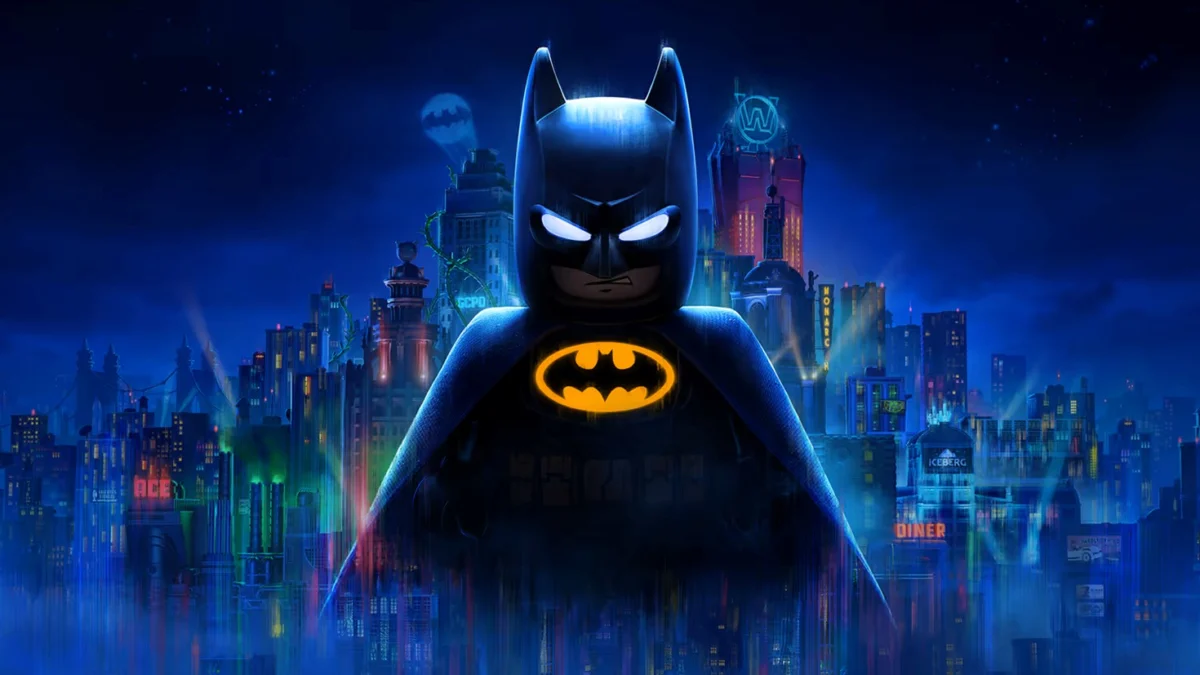
The open-world traversal further reinforces this connection to the Arkham games. The game’s Gotham City is designed around verticality, encouraging players to utilize a "rush-up-and-glide" mechanic to navigate between skyscrapers. While previous Lego titles featured flight, the weight and momentum of the gliding in Legacy of the Dark Knight are specifically tuned to evoke the sensation of Batman’s cape catching the wind. The inclusion of a "boost grapple" provides the necessary velocity to maintain aerial movement, though technical analysis suggests the physics are slightly more forgiving and less tethered to realistic momentum than the systems found in Arkham City.
Cinematic Integration and Narrative Structure
The campaign of Legacy of the Dark Knight functions as a curated journey through Batman’s cinematic history. Rather than adhering to a single storyline, the missions are structured as "riffs" on iconic scenes from the last four decades of film. This includes:
- The Burton Era: A recreation of the Flugelheim Museum from the 1989 Batman and the deployment of the Penguin’s army from Batman Returns.
- The Schumacher Era: Despite the critical reception of the mid-90s films, the game includes a comedic interpretation of the Clooney-era Batman, complete with voice acting that mimics Arnold Schwarzenegger’s Mr. Freeze.
- The Nolan Trilogy: The tutorial level is a direct reference to the League of Shadows’ Himalayan training sequence from Batman Begins, and the "standout moment" of the mid-game is a mechanical recreation of the high-stakes sequences from The Dark Knight.
- The Modern Era: Players have access to the Batmobile from the 2022 Matt Reeves film, as well as the "Tumbler" from the Dark Knight trilogy.
This "Jeph Loeb-style" narrative approach—referencing the writer known for Batman: The Long Halloween and Hush—allows the game to cycle through a "stacked deck" of famous villains, including Poison Ivy, Two-Face, and more obscure references like Bat-Mite and the Grey Ghost.

Co-operative Gameplay and Character Dynamics
Central to the Lego gaming experience is the couch co-op mechanic, which Legacy of the Dark Knight utilizes to differentiate its roster. Each mission requires a duo, with sidekicks providing essential utility for puzzle-solving. The roster includes a variety of characters with specialized skill sets:
- Catwoman: Equipped with the ability to cut glass and climb designated walls, she also utilizes a feline companion for navigating vents and small spaces.
- Robin: Functions as a technical specialist, using tethers to connect objects and prying open environmental obstacles.
- Commissioner Gordon: A rare inclusion in the combat roster, Gordon utilizes a specialized firearm capable of jamming machinery.
- Talia al Ghul: Features a unique power set that plays a pivotal role in late-game puzzles, though the developers have kept the specifics of her mechanics under wraps to avoid spoilers.
- Batgirl: While possessing a drone for hacking and tethering, her gameplay sections have been noted as being slightly slower in pace compared to the high-mobility characters like Catwoman.
The Open-World Environment: A Living Gotham
The open-world Gotham City serves as a hub for both scripted missions and emergent gameplay. The city is divided into distinct districts that blend Gothic architecture with modern urban decay, providing a moody backdrop for exploration. Activities within the open world include:
- Brawl Intervention: Spontaneous combat encounters that trigger as players navigate the streets.
- Vehicle Pursuits: Dynamic chases involving "bad drivers" that utilize the game’s simplified driving physics.
- Riddler Challenges: A staple of the Batman franchise, these puzzles require environmental interaction and the use of "Detective Mode."
- Waynetech Caches: Hidden collectibles that provide currency for upgrades, though critics have noted that the skill trees and gadget upgrades offer less impact on gameplay than the core combat mechanics.
The Batcave serves as the player’s primary base of operations. It is a highly customizable space where players can display unlockable suits, store their vehicle collection, and expand the facility using the currency found throughout the city.

Technical Innovations and Design Philosophy
To mitigate the "inscrutable" nature of some Lego puzzle designs, the developers have introduced a streamlined "Detective Mode." This visual overlay highlights points of interest and clarifies the path forward, ensuring that the game’s "smash and build" loop remains fluid. This loop—smashing environmental objects to build unlikely Lego devices—remains the core of the puzzle-solving experience, though it is handled with a level of visual flair and humor that distinguishes it from earlier titles.
Furthermore, the game introduces a simplified stealth system. While not as robust as the "Predator" sequences in the Arkham games, it allows players to navigate security cameras, observe patrol routes, and perform silent takedowns before retreating into the shadows. This adds a layer of tactical variety to the missions, moving the game closer to a true "Batman simulator" within the Lego framework.
Broader Impact and Industry Context
Lego Batman: Legacy of the Dark Knight arrives at a significant juncture for the Batman brand in video games. Following the mixed reception of other DC-based titles, this game represents a "return to basics" by focusing on the core appeal of the character: his history, his gadgets, and his city.

The game’s design reflects the current state of the Batman comics, which are currently split between the "Absolute" line (a darker, more experimental take) and more lighthearted runs. By incorporating references to production designer Anton Furst, comic legends Frank Miller and Alan Moore, and modern writers like Scott Snyder and Matt Fraction, the game positions itself as a universal bridge for the fandom. It acknowledges that there is no "one true Batman," but rather a collection of interpretations that all have a place in the Lego universe.
From a business perspective, the title reinforces the strength of the partnership between Warner Bros. Discovery and the Lego Group. By leveraging decades of intellectual property, the game acts as a cross-generational marketing tool, appealing to parents who grew up with the 1989 film and children who are being introduced to the character through modern animation and toys.
In conclusion, Lego Batman: Legacy of the Dark Knight is a meticulous assembly of Batman’s multi-media history. While it occasionally suffers from minor technical glitches—such as characters becoming stuck on the edges of the Lego geometry—and possesses a somewhat shallow upgrade system, its core strengths lie in its charm, its mechanical competence, and its overwhelming respect for the source material. It is a title that understands the inherent joy of the character, proving that even in a world made of plastic bricks, the Dark Knight remains a compelling and versatile icon.