
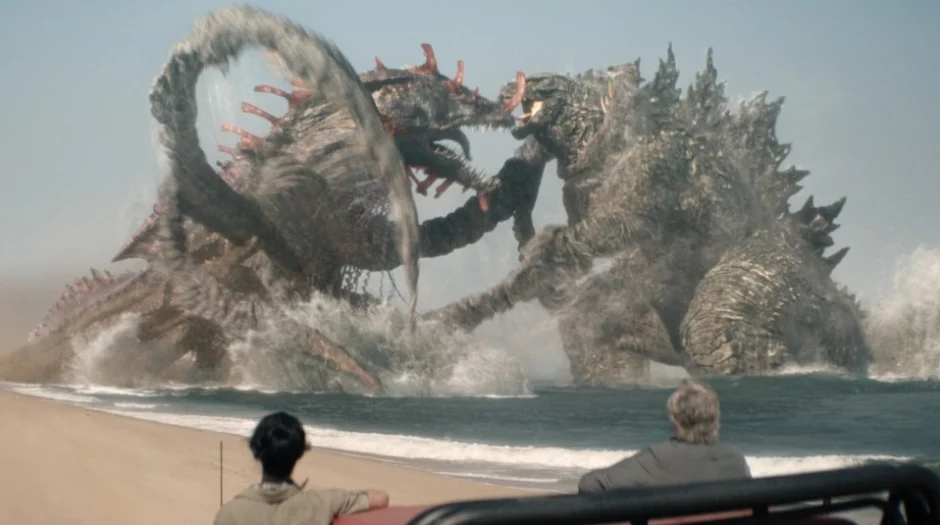
Apple TV+ continues its deep dive into the science fiction and fantasy realm with the highly anticipated second season of Monarch: Legacy of Monsters. This latest installment of the Monsterverse franchise explodes onto the screen with ten colossal episodes, introducing a menagerie of signature new creatures and pushing the boundaries of visual effects. The immense undertaking of bringing these titans and their chaotic battles to life was shouldered by a formidable coalition of visual effects studios, including Eyeline, Rising Sun Pictures, Rodeo FX, Trixter, Distillery VFX, Vitality VFX, Crafty Apes, Mist VFX, and Outpost VFX. Together, they crafted an astonishing 3,000 visual effects shots, a testament to the scale and ambition of this ambitious series.

The inherent nature of participating in the Monsterverse means that Monarch: Legacy of Monsters is intrinsically linked to its cinematic predecessors. The series’ visual aesthetics and narrative threads draw inspiration from a rich tapestry of previous projects, which themselves are rooted in the groundbreaking visual language of classic cinema. Sean Konrad, the Visual Effects Supervisor for Monarch: Legacy of Monsters, highlighted this connection, noting the deliberate evocation of films like Francis Ford Coppola’s Apocalypse Now within the Skull Island sequences. "It’s interesting the way that Kong: Skull Island is a genre reinterpretation film," Konrad stated. "That was something we definitely wanted to evoke while we were in the Skull Island scenes. The director felt strongly about trying to use those motifs and ideas. But ultimately, we are a TV show, so we didn’t want to make those too ‘hitting you over the head,’ but bring those ideas into account." This careful balance between homage and originality underscores the creative team’s approach to honoring the Monsterverse’s legacy while forging its own distinct identity.

Weaving Cinematic Threads into the Monsterverse Narrative
The creative process for Monarch: Legacy of Monsters Season 2 involved meticulously integrating iconic cinematic moments and visual cues into the ongoing saga of Monarch and the colossal creatures they track. One such instance draws a striking parallel to Ridley Scott’s seminal sci-fi horror film Alien. In a tense scene set within a transport pod, character Lee Shaw (portrayed by Kurt Russell) makes a harrowing escape from Axis Mundi, only to find himself with an unwelcome stowaway: a menacing scarab. Konrad elaborated on the visual approach for this sequence, explaining, "The thing that Ben Nott [cinematographer] and I talked about is the big strobing lights from some of the scenes in the original Alien. We used that to lean into the idea of Shaw losing track of the scarab periodically and that allowed us to move it wherever we needed to for the shots." This deliberate use of lighting and pacing not only pays homage to a classic film but also serves a crucial narrative function, heightening the suspense and the sense of vulnerability as Shaw contends with the unseen threat.

The sheer scale of the Monsterverse’s titans also presented unique challenges and opportunities for creative problem-solving. In one pivotal scene, an ordinary irrigation ditch is dramatically transformed into a massive impact point, the result of a devastating tentacle strike from the formidable Titan X. This cratered landscape provides temporary refuge for Cate Randa (Anna Sawai) as Kong engages in a colossal battle. "Once the directors, writers, and production designer all understood scale, they were able to find unique ways to play with it," Konrad observed. He further detailed the practical considerations that led to this visual solution: "That location was used as a palm tree and rubber plantation, so there was already an irrigation ditch being dug there. We were like, ‘Okay, cool. It’s sort of the size of the tip of the tentacle. Let’s add in a little breakup around the edges to make it look like it’s something intentional.’" This example demonstrates how the production team creatively repurposed existing elements of the environment to serve the epic narrative, blending the natural with the extraordinary to create believable yet awe-inspiring moments.

The Genesis of New Kaiju: Titan X and the Scarab Invasion
Season 2 introduces the terrifying new creature, Titan X, a being specifically designed for this iteration of the Monsterverse. The design process for Titan X was extensive, with its visual identity locked down well in advance of principal photography. Konrad shared insights into the iterative nature of creature design: "Definitely some aspects of Titan X changed as we built the physical one. The first renders you’re like, ‘I don’t like this but like that.’ Then you see it moving and go, ‘I don’t like this about its motion. Can we change that?’" The design team drew inspiration from a diverse array of natural forms, including Portuguese man o’ wars, eels, and crocodiles, seeking to create a creature that was both alien and grounded in biological possibility.

Konrad further elaborated on the unique design philosophy for Titan X’s appendages, noting, "In the animated series, Kong fights a tentacle creature and then in Kong: Skull Island there’s the octopus, so how do we make our interpretation of that unique? We wanted the tentacles to be like appendages that have a physical relationship to Titan X’s locomotion, so while it’s walking on land, it’s using them to pull itself forward. And then figuring out how that musculature would work as well as giving the tentacles more independent control when Titan X is fighting." This focus on functional anatomy and dynamic interaction distinguishes Titan X from previous tentacled adversaries in the Monsterverse, imbuing it with a terrifying sense of agency and physicality.

The introduction of swarms of scarabs presented another significant visual effects challenge, particularly in scenes depicting their invasion of a seaside village. "That was definitely tricky," admitted Konrad. "We had those creatures designed early on because we had to have the physical prop built. We worked with this company called Formation Effects, which was spun out of Weta FX to build physical props for those sets. We had a good design idea. Rising Sun Pictures took on the test of making them actually move." The evolution of the scarabs’ movement was a meticulous process. Early iterations featured a more upright and wild gait, which were deemed too clumsy. The final design settled on a more controlled, almost pogo-like movement of their bodies, while their faces maintained a more static, menacing expression. The sheer volume of scarabs also necessitated sophisticated crowd simulation techniques. "Once we started populating the crowd simulation, we were like, ‘We need to make these have much more distinct movements.’ There is an interesting variety in the way that they move in Episode 205, especially when they trample over Shaw in the village square." The integration of practical effects, such as collapsing structures and flying debris, alongside the digital scarabs, created a visceral and believable sense of chaos.

Strategic Posing and Emotional Resonance
The emotional impact of a creature on the audience is not solely determined by its design but also by how it is presented onscreen. Konrad emphasized the critical role of posing and framing in shaping the viewer’s perception of the monsters. "What we found is its face naturally had a more aggressive versus sympathetic angles, so depending on what direction the snout was pointed, you get a different impression," he explained. "You can do the usual stuff of changing lip corners, opening the eyes more or less, as the eyes are an important part. Sometimes we would even change lensing and camera distances so we could get more perspective out of the eyes to help sell that empathetic moment, versus when we would have it looking down, you’ve narrowed the eyes and that lesser screen presence created a more aggressive stance." This nuanced approach to creature performance, akin to acting, allows for a deeper connection with even the most monstrous beings, fostering a sense of empathy or dread as intended by the narrative.

Navigating the Mythology: Godzilla’s Dream Sequence
The reintroduction of iconic kaiju like Godzilla also required careful narrative and visual consideration, particularly given the established lore of the Monsterverse. In Episode 206, the series ventures into Tokyo, a city synonymous with Godzilla’s destructive power. However, within the established canon, Godzilla has not been publicly seen since 2014. To navigate this narrative constraint, the production team devised a clever solution: the Tokyo sequence is depicted as a dream sequence, representing Kentaro’s deepest fears. "The scene in Episode 206 where we go to Tokyo was something we wanted to do, but in the mythology and canon, Godzilla has not been seen in public since 2014," Konrad stated. "We can definitely bend the rules by saying, ‘Godzilla has been seen by certain parts of Monarch but not photographed.’ Basically, what that means is that the iconic scene in Tokyo had to be a dream sequence where Kentaro is imagining his worse fears. That was a fun little thing to do." This creative interpretation not only allows for the inclusion of a beloved character but also adds a psychological layer to the narrative, exploring the characters’ internal struggles and anxieties. The team deliberately revisited locations from Season 1 to enhance the personal resonance of these memory-laden sequences, making the dreamscape feel both familiar and deeply unsettling.

The Art of Creature Feature: Practicality and CG Synergy
A key strategy employed by the Monarch: Legacy of Monsters production team to manage the extensive visual effects requirements was to prioritize location shooting. "Creatures were the major focus, which mean a lot of location shooting to reduce the environmental work," Konrad explained. "Anytime we would need a set extension we would try to work with production design to make sure that we had at least 180 degrees of a set to shoot into. If for whatever reason the coverage wasn’t working, at least we had something to anchor into and shoot practical. If the budget for a scene started getting too big, we could go back to that coverage." This pragmatic approach ensured that even when digital environments were required, there was a solid foundation of practical elements to draw from, grounding the fantastical elements in a tangible reality and providing flexibility in post-production.

The Intricacies of Kong’s Screen Presence
One of the most visually stunning and technically challenging sequences in the season is the 180-degree helicopter wrap-around of Kong in the opening of Episode 202. Konrad described the complexity involved: "That was hard to get a plate for and then once you got the plate, it’s a 1,000-frame shot where Kong is grabbing plants, trees and vines and stomping on the ground and casting shadows, which mean you had to replace large sections that he’s interacting with." The scene further escalates in difficulty as Kong enters the water, requiring a convincing transition of his fur from dry to wet. "Having the fur transition from dry to wet inside of a scene sounds like it should be an easy problem, but it’s still complicated to get those look development variances transitioning over. Making the wetness cling to the fur in the right way, and then making it a good shot, was also quite challenging." Despite the immense technical hurdles, the team successfully executed the shot, even having to speed it up four times to achieve the desired effect. Konrad expressed his pride in the outcome, stating, "How do you find those key moments where you want to make things work and tell the story with everything in the frame. That was hard. It’s also one of my favorite shots that we’ve ever done."

From Comic Pages to Screen: The Vine Strangler’s Journey
The development of the Vine Strangler, a creature featured in Episode 209, exemplifies the long-term creative vision that underpins the Monsterverse. Konrad revealed that he had encountered the Vine Strangler in the appendix of a comic book during the research for Season 1. An early iteration of the creature was even developed for the opening scene of Episode 101, but logistical challenges prevented its inclusion at the time. "But then we couldn’t find a location that worked for the creature, so we ended up scratching that idea and coming up with the big monster fight between the crab and the bamboo spider. That worked out well." However, the concept of the Vine Strangler lingered. As the team began planning for the second season, the original concept art was revisited. "As we were planning out this season, I brought out the concept art that we had done and showed it to our directors and writers. They were like, ‘We should do something with that.’ We found an awesome location for it." This lengthy gestation period, from initial inspiration to eventual on-screen realization, highlights the dedication to developing and integrating compelling creature designs within the Monsterverse narrative, a process that can span years of conceptualization and refinement. The successful integration of the Vine Strangler into the fabric of Season 2 is a testament to the team’s commitment to drawing from the rich lore of the franchise and bringing its most imaginative elements to life.