


The independent development studio 22cans, led by industry veteran Peter Molyneux, has officially released Masters of Albion into Steam Early Access, marking a significant return to the "god game" genre for the controversial designer. The title represents a stylistic and mechanical culmination of Molyneux’s career, blending the omnipotent perspective of Black & White, the industrial management of Legacy, and the whimsical, third-person adventuring of the Fable series. While the launch has been met with a mixture of curiosity and skepticism due to the studio’s previous history with Early Access development, the initial release offers a complex, if technically unrefined, simulation of a magical world under siege.
The Hybrid Architecture of Masters of Albion
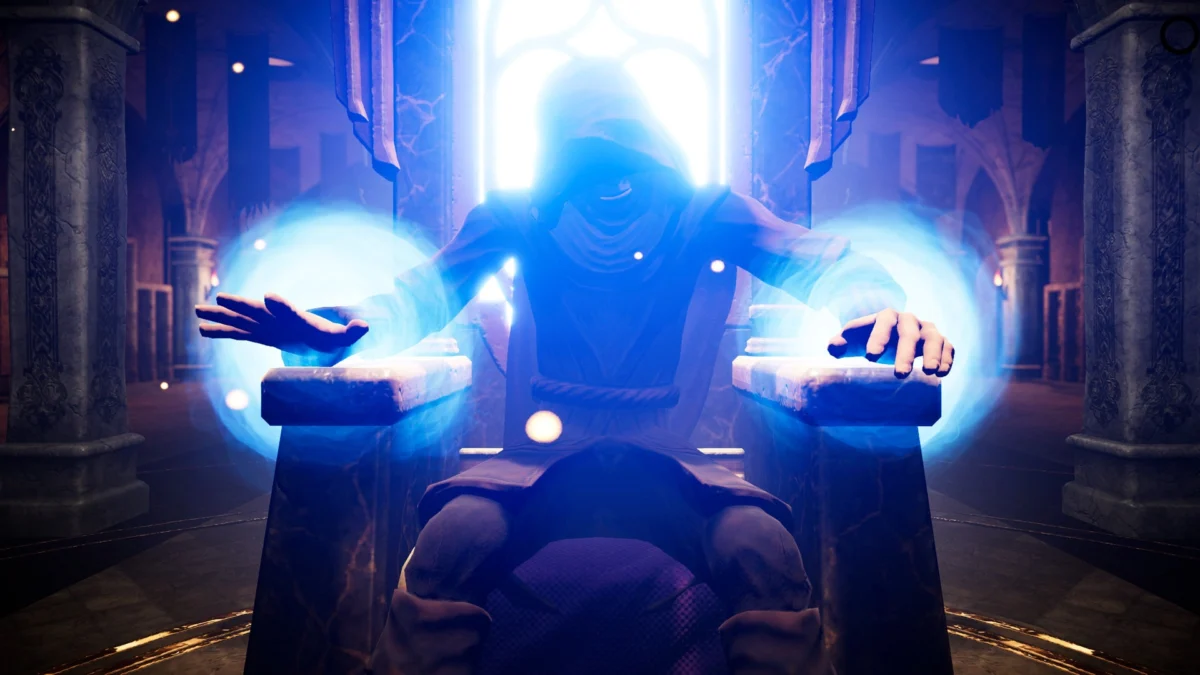
Masters of Albion is built upon three distinct but interconnected gameplay pillars: real-time tactical defense, granular business management, and third-person action-adventure exploration. At the center of these systems is the player’s "Hand," a disembodied, oversized appendage that serves as the primary interface for interacting with the world. This mechanic, a direct evolution of the cursor system found in Molyneux’s 2001 hit Black & White, emphasizes tactility and physical interaction. Players can use the hand to physically lob projectiles at enemies, move non-player characters (NPCs) across the map, or manually assemble food items on a production line.
The game’s setting, while sharing the name "Albion" with the Fable franchise, is a distinct interpretation of a mythic, bucolic Britain. It features a narrative centered on a "Chosen One" summoned to the village of Oakridge to combat a rising tide of magical tyranny and ancient calamity. The atmosphere is heavily influenced by British folklore, featuring regional accents, dark fairytale aesthetics, and an original score by Fable composer Russell Shaw.
Historical Context and the Legacy of 22cans
The release of Masters of Albion cannot be viewed in isolation from the history of its developer, 22cans. Founded by Molyneux after his departure from Lionhead Studios, 22cans has had a tumultuous relationship with the Early Access model. The studio’s previous project, Godus, became a symbol of development stagnation after spending eleven years in Steam Early Access before being delisted in 2023. Godus Wars, a combat-focused spin-off, suffered a similar fate, leaving many backers and players wary of the studio’s long-term commitments.
Furthermore, Masters of Albion appears to incorporate systems originally developed for Legacy, a 2023 business simulation title that utilized blockchain technology. The transition from a cryptocurrency-focused project to a traditional god sim suggests a pivot in studio strategy. By returning to the familiar tropes of Albion and god-like powers, 22cans is attempting to regain the trust of a core gaming audience that remembers Molyneux for his foundational work on Populous and Dungeon Keeper.
Technical Performance and Early Access Hurdles
As of its Early Access debut, Masters of Albion exhibits the technical instability often associated with pre-release software. Independent testing on high-specification hardware has revealed erratic performance, with frame rates frequently struggling to maintain a stable 30fps. The user interface (UI) has also drawn criticism for being counter-intuitive; for example, basic functions such as quitting to the main menu or adjusting screen resolution are either hidden behind multiple sub-menus or tied directly to Windows system settings rather than in-game toggles.
Additional technical issues reported by early users include:

- Inoperative Features: Deep Learning Super Sampling (DLSS) support has been reported as non-functional in several builds.
- Save System Limitations: The current version lacks support for multiple save slots, a standard feature in modern simulation games.
- Visual Feedback: The game has been noted for "woolly" feedback, where critical information—such as the cost of raw materials or the comparative stats of weapons—is obscured from the player.
Gameplay Loop: From Industrialist to Guardian
The core gameplay loop of Masters of Albion is dictated by a day-night cycle. During the daylight hours, the game functions primarily as a business and town-management simulator. Players must fulfill orders delivered via hot air balloon by designing and manufacturing goods. This "industrialist" phase requires players to assemble prototypes—such as pies or sandwiches—by choosing specific ingredients to meet cryptic client demands.
Once a design is finalized, players must manage a linear production chain involving farms, mills, and bakeries. Efficiency is achieved through careful building placement to minimize NPC walking distances. However, players have noted that the economy is currently tuned to be highly demanding, often requiring long periods of manual intervention (using the "Hand" to speed up buildings) to generate enough gold for progression.
As night falls, the game shifts into a tactical defense mode. Undead hordes emerge from spawn points to attack the settlement. Players must use a combination of:
- Tower Defense: Constructing turrets and walls to channel enemy movement.
- Real-Time Tactics: Moving a small group of "Hero" characters around the battlefield.
- Direct Combat: Possessing a Hero to fight from a third-person perspective using rudimentary melee and magic systems.
- God Powers: Using the Hand to rain fireballs or lightning upon the attackers.
Exploration and World Expansion
To expand their influence, players must venture into areas of the map obscured by fog. Because the player’s "godly" powers are restricted to controlled territory, they must possess a Hero and explore the environment in a traditional third-person mode. This phase of the game involves repairing ancient beacons to clear the mist and claim new land.

The world of Albion is described as visually striking, featuring diverse biomes such as rolling hills, dense forests, and rugged coastal cliffs. However, the current Early Access build offers limited interactivity in these zones. Aside from occasional treasure chests, caves, and "fetch" quests (such as kicking chickens or exterminating pests), the third-person exploration serves primarily as a bridge between the more complex management and combat systems.
Development Timeline and Future Roadmap
The development of Masters of Albion was officially unveiled at Gamescom 2024, where Molyneux emphasized the return to his "god game" roots. Following the initial reveal, the studio moved quickly toward an Early Access release to gather player feedback.
According to 22cans, the current version represents approximately 15 to 20 hours of core gameplay, though the final release is targeted to offer between 20 and 40 hours. The studio has outlined several major additions planned for the roadmap:
- Master Mode: A high-difficulty setting that reduces the time available for daytime preparation.
- Rogue Mode: A permadeath-inspired challenge mode for veteran players.
- Expanded Map: Several regions of Albion currently remain cordoned off and will be unlocked in future updates.
- Morality System: While currently in its infancy, a system of moral choices—a staple of Molyneux’s previous work—is expected to be fleshed out to impact how the world reacts to the player.
Analysis of Implications
The success or failure of Masters of Albion carries significant weight for the reputation of Peter Molyneux and the viability of 22cans. For Molyneux, the game is a chance at professional redemption following a decade of projects that were criticized for over-promising and under-delivering. For the broader industry, the game serves as a test case for whether a "genre-mashup" can maintain long-term engagement or if the disparate systems will eventually feel repetitive.

Industry analysts suggest that the heavy focus on micro-management and "clicker" style mechanics in the production phase may be a polarizing element. While some players find the assembly of goods engrossing, others argue it detracts from the "godly" power fantasy. The reliance on manual "waggling" to speed up production suggests a mobile-gaming influence that may clash with the expectations of a premium PC audience.
Conclusion and Market Reception
Masters of Albion enters a crowded market of simulation and survival games, but its unique pedigree and nostalgic appeal give it a distinct advantage. The initial reception highlights a game that is "charming and tactile" but burdened by technical debt and a lack of polish. The "Molyneux Factor"—a blend of innovative ideas and ambitious scope—is clearly present, but the long-term outlook remains tethered to the studio’s ability to deliver on its Early Access promises.
As 22cans begins the process of balancing the economy and refining the UI, the gaming community remains cautiously observant. If the studio can navigate the pitfalls that sank Godus, Masters of Albion could stand as a successful modern evolution of the god sim. If not, it may become another chapter in the complicated history of one of gaming’s most storied designers. For now, the game remains a work in progress, offering a glimpse into a whimsical, chaotic, and deeply British vision of divinity.