The 2026 media upfronts and Newfronts presentations in New York City have signaled a definitive turning point in the evolution of the entertainment industry, as the boundary between traditional studio-produced programming and independent creator content has effectively vanished. Throughout a week characterized by high-stakes pitches to advertisers at iconic venues like Lincoln Center, major media conglomerates—including Warner Bros. Discovery, Fox Corp., and Amazon—pivoted their strategies to place digital influencers and social media personalities at the forefront of their portfolios. This transition comes at a time when the advertising industry is grappling with the fragmentation of audiences and the skyrocketing costs of live sports rights, leading executives to seek more cost-effective, high-engagement alternatives to fill the void left by traditional linear television.
The Economic Engine of the Creator Economy
The financial impetus behind this shift is substantial. According to a comprehensive report recently released by the Interactive Advertising Bureau (IAB), advertiser spending on creator-led content reached a staggering $37 billion in 2025. The momentum is only accelerating; the IAB projects that by the end of 2026, this figure will climb to $44 billion. This growth represents a significant portion of the nearly $300 billion digital advertising market, which celebrated its 30th anniversary this year.
The shift is driven by a fundamental change in how advertisers perceive value. While traditional television spots offer broad reach, creator content offers deep community engagement. Brian Albert, the Managing Director of YouTube Solutions, highlighted this during the YouTube Brandcast event on May 13, 2026. Albert noted that creators are no longer just "internet famous" but are the primary storytellers and tastemakers for the current generation. He emphasized that these personalities command a level of trust and community loyalty that traditional media brands struggle to replicate, making them indispensable partners for marketers looking to build long-term brand equity.
A Chronology of Integration: From Social Media to the Upfront Stage
The integration of creators into the "upfronts"—the annual period where television networks sell the bulk of their advertising inventory for the upcoming season—has been a multi-year progression. Historically, upfronts were the exclusive domain of broadcast networks like NBC, ABC, and CBS, showcasing high-budget dramas and sitcoms.
- 2023–2024: Traditional networks began experimenting with "influencer-led" marketing campaigns to supplement their linear broadcasts.
- 2025: Video podcasts emerged as a breakthrough medium, with companies like Amazon and Spotify aggressively bidding for exclusive rights to top-tier shows, moving them from audio-only platforms to video-centric streaming services.
- 2026: The current cycle marks the first time that creator content has been presented as a core pillar of the programming slate alongside major league sports and premium scripted content.
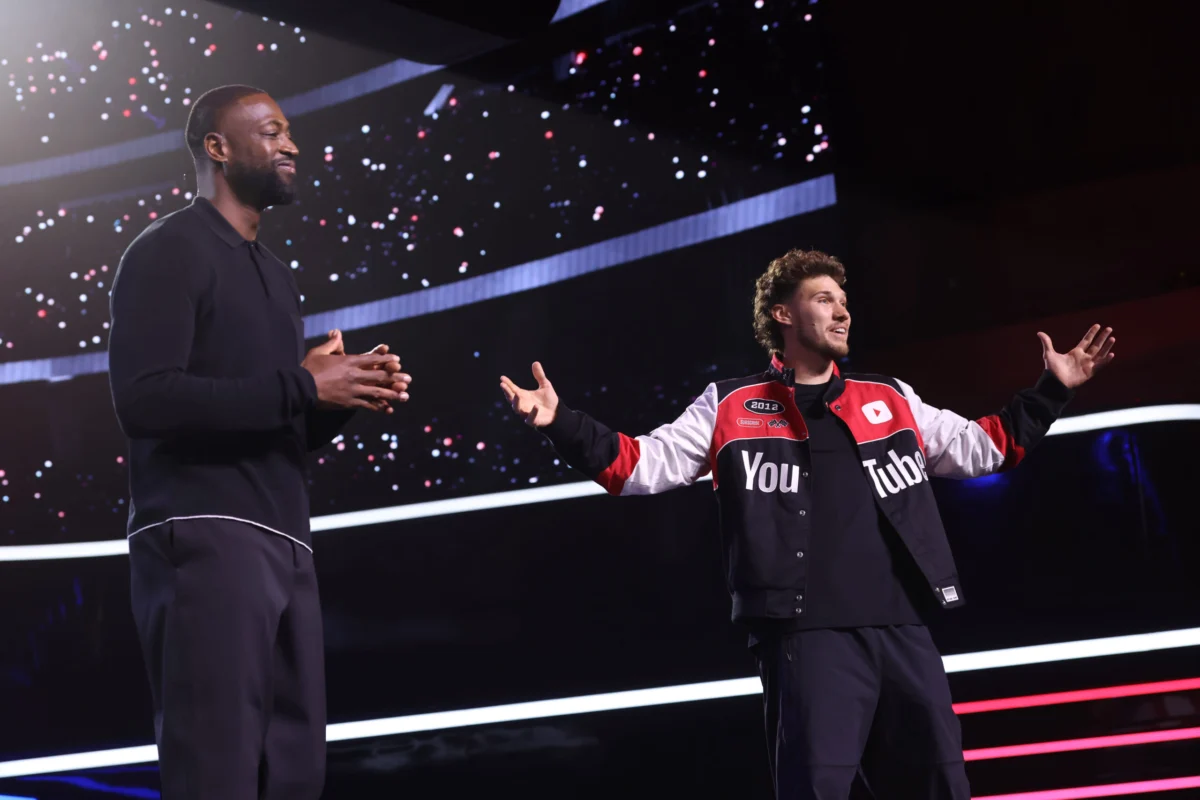
At the YouTube Brandcast, the presence of NBA legend Dwyane Wade alongside YouTube star Jesse "Jesser" Riedel exemplified this new reality. Personalities such as comedian Trevor Noah and podcast host Alex Cooper were positioned not as digital add-ons, but as the main attractions capable of drawing millions of viewers across multiple devices.
The Dominance of YouTube and the Streaming Hierarchy
The competitive landscape of the streaming era is currently being defined by viewership data from Nielsen’s monthly "The Gauge" reports. As of February 2026, YouTube has solidified its position as the most-watched streaming platform in the United States, accounting for 12.7% of all streaming viewership. This puts it significantly ahead of Netflix, which holds the second-place spot at 8.4%.
This dominance is largely attributed to the platform’s ability to host a diverse array of content, from "Ms. Rachel" for toddlers to high-production video podcasts and tutorials. For advertisers, this translates to "more bang for their buck." Industry executives have noted that while media companies are paying record-breaking premiums for live sports rights—particularly the NFL—creator content offers a way to capture the same younger demographics at a fraction of the production cost.
Strategic Pivots by Legacy Media: WBD and Fox
Legacy media companies are not standing idly by as digital platforms capture ad dollars. Instead, they are aggressively co-opting the creator model to bolster their own ecosystems. Warner Bros. Discovery (WBD) has been a pioneer in this regard, particularly within its unscripted divisions.

Karen Bronzo, Chief Global Marketing Officer for U.S. Networks and News at WBD, explained that the company is leaning into creators who already have established fanbases in niche categories like food and home improvement. During WBD’s presentation, the company announced an expansion of The Food Network’s digital footprint with a new YouTube-original series featuring chef Esther Choi. By leveraging social media channels to launch new IP, WBD can cultivate a "one-to-one relationship" with viewers before transitioning that content to its cable networks or the Max streaming service. This strategy has also been applied to long-standing events like the "Puppy Bowl," which now serves as a massive generator of short-form social content.
Similarly, Fox Corp. has launched Fox Creator Studios, a division dedicated to developing creator-led, digital-first formats. The initiative is spearheaded by established Fox talent like Gordon Ramsay, who shared the stage with Tom Brady during Fox’s upfront pitch. Fox’s strategy centers heavily on its free, ad-supported streaming service (FAST), Tubi. By inking deals with YouTube personalities like Jesser to create exclusive soccer-focused content, Tubi is successfully migrating Gen Z audiences from social platforms to its own ad-supported environment.
Amazon’s "360-Degree" Approach to Talent
Amazon’s Prime Video has also intensified its focus on the creator economy, specifically through high-profile talent acquisitions. Angie More, Head of Creator Advertising Partnerships at Amazon, noted that the landscape of podcasting has evolved into a "360-degree" experience. Audiences now consume content across long-form video, mid-form clips, and social media snippets.
The centerpiece of Amazon’s strategy this year was a multi-year deal with Oprah Winfrey for "The Oprah Podcast." This partnership includes not only new audio and video episodes but also the rights to Winfrey’s extensive library of past content. By positioning Winfrey—a traditional media titan—as a "creator" in the modern sense, Amazon is blurring the lines between classic celebrity and digital-first influencer.
Analysis of Implications: The "Singular View" of Content
The merging of these two worlds has profound implications for the future of media buying and production. Julie Clark, Senior Vice President of Media and Entertainment at TransUnion, suggests that we are moving toward a "singular view" of the content landscape. In this new paradigm, the distinction between a studio-led blockbuster and a viral long-form video podcast is increasingly irrelevant to the consumer and, consequently, to the advertiser.
For marketers, this shift offers several advantages:
- Targeting and Data: Creator platforms provide granular data on audience demographics and interests that traditional linear TV cannot match.
- Brand Safety vs. Authenticity: While studio content is traditionally seen as "safer," the high level of trust in creators allows for more authentic brand integrations that resonate more deeply with younger consumers.
- Cost Efficiency: Advertising in creator-led environments often provides a lower entry price than premium sports or scripted dramas, while offering higher engagement rates.
However, the shift also presents challenges. As traditional media companies become more reliant on digital creators, they may face increased competition for talent and a potential dilution of their brand identity. Furthermore, the volatility of the "viral" nature of creator content can make long-term planning more difficult for risk-averse advertisers.
Conclusion: A New Era for the Upfronts
As the 2026 upfront season concludes, the message from media companies is clear: the creator economy is no longer a peripheral experiment; it is the engine of future growth. The multi-billion dollar commitments being made by advertisers reflect a recognition that the path to reaching the next generation of consumers lies in the hands of the storytellers who have built their own empires on social platforms. Whether it is through Gordon Ramsay’s digital kitchen or Oprah Winfrey’s video podcasts, the traditional media landscape has been permanently reshaped by the influence, authenticity, and economic power of the creator.