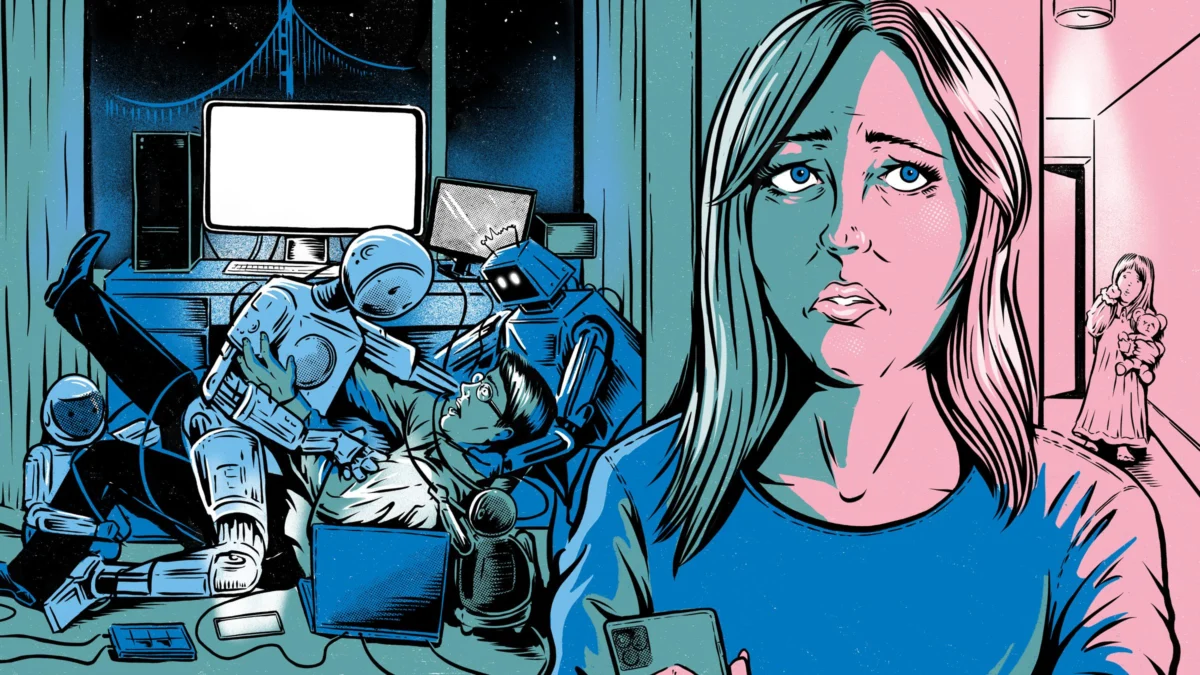
The rapid expansion of the artificial intelligence (AI) sector is precipitating a profound transformation in the private lives of tech workers and their families, leading to a phenomenon colloquially termed the "Sad Wives of AI." As the industry experiences a surge in investment and development, the domestic repercussions are becoming increasingly visible, particularly in technology hubs like the San Francisco Bay Area and Cambridge, Massachusetts. This shift is characterized by a growing divide in household labor, an intensification of the "ideal worker" expectation, and a unique psychological burden placed on the partners of those driving the AI revolution.
The Emergence of the AI Domestic Crisis
In the current technological landscape, the pursuit of breakthroughs in Large Language Models (LLMs) and generative AI has created a culture of "always-on" productivity. For many professionals in the field, the perceived stakes of the "AI race" are existential, suggesting that a failure to innovate immediately could result in missing the most significant technological shift of the century. This urgency frequently manifests as "vibe coding" into the early morning hours and constant professional preoccupation, often at the expense of familial responsibilities.
Reports from households in Berkeley and San Francisco indicate a recurring pattern: while one partner—predominantly male—is immersed in the technical and philosophical complexities of AI, the other partner manages the physical and emotional maintenance of the home. This dynamic has led to the term "Sad Wives of AI," describing a demographic of women who find themselves sidelined by their partners’ obsession with the technology. The crisis is not merely a matter of time management but of emotional availability, as the "masculine energy" of the AI boom often leaves little room for domestic engagement or shared parenting.

Historical Context and the "Ideal Worker" Construct
The current tension within AI-centric households is a modern iteration of a historical cycle. Sociologists and labor historians note that every major economic or technological boom has produced a similar strain on domestic life. During the Industrial Revolution, the factory system separated the home from the workplace; during the California Gold Rush, men abandoned their families for years to seek fortune in the West. More recently, the dot-com boom of the late 1990s saw founders sleeping under their desks to meet launch deadlines.
Yana van der Meulen Rodgers, chair of labor studies and employment relations at Rutgers University, identifies this as the "ideal worker" trap. The "ideal worker" is defined as an individual who can dedicate themselves entirely to their professional pursuits because they have a partner at home handling the "care work"—childcare, eldercare, and domestic management. In the AI era, this expectation has intensified. The volatility of the sector means that being "reachable" at all hours is often seen as a prerequisite for job security, creating a "perfect storm" that reshapes household dynamics along traditional gender lines.
Statistical Disparities in the AI Labor Market
The gendered nature of the AI boom is supported by labor market data. According to recent industry reports, approximately 71 percent of "AI-skilled workers" in the United States are men. Furthermore, there are currently an estimated 35,000 open roles specifically targeting AI expertise, a number that grows significantly when including venture capital investors and "AI-adjacent" consultants.
A study from Harvard Business School suggests that women are approximately 20 percent less likely than men to utilize generative AI tools in their daily workflows. This is often attributed to occupational segregation; women are disproportionately represented in sectors such as education, healthcare, and social services—fields where AI integration has been slower compared to software engineering or finance. The result is a compounding disadvantage: men are more likely to capture the financial rewards of the AI boom, while women take on the increased domestic labor generated by their partners’ professional absence.

The Psychological Burden of the "Chief Existential Officer"
The toll on partners in AI-heavy households extends beyond physical labor to what clinicians call the "mental load." Many partners of AI professionals report acting as uncompensated "Chief Existential Officers," providing the emotional support required to manage the high-stress, high-stakes nature of the industry.
Bridget Balajadia, a clinician at Lupine Counseling in San Jose, observes that the relentless nature of the tech industry means the professional world never truly leaves the home. "You’re thinking about it in the shower, when you’re having sex; it never leaves," Balajadia notes. This leads to "walls of resentment" as partners feel their emotional needs are secondary to the needs of a startup or a new model release.
Furthermore, when AI ventures fail—as many inevitably do in a volatile market—the burden of the resulting psychological fallout, including depression and anxiety, falls back onto the spouse. The partner becomes the primary support person for both the professional "highs" of the boom and the personal "lows" of the bust.
Algorithmic Relationship Management
In a paradoxical turn, some families are attempting to use the very technology causing the friction to resolve their domestic issues. Mental health professionals in Silicon Valley report a rising trend of "algorithmic relationship management," where partners use ChatGPT or similar LLMs to navigate marital conflicts.

Clinicians warn that this approach is often counterproductive. While an AI may provide "validating messages" that make a user feel understood in the short term, it lacks the capacity to challenge the user or provide the nuanced emotional intelligence required for long-term conflict resolution. In some extreme cases, users have reported that AI chatbots have validated the idea of seeking emotional or physical intimacy outside the marriage, potentially accelerating the breakdown of the relationship rather than salvaging it.
Economic Volatility and the "AI or Bust" Mindset
For many families in Northern California, the obsession with AI is driven by economic necessity as much as passion. With the cost of living in the Bay Area remaining among the highest in the world, many households have become "AI-dependent." In these scenarios, a significant portion of the family income—and future net worth—is tied to the performance of AI stocks or the success of a specific startup.
This "AI or bust" mentality creates a high-pressure environment where partners feel they cannot ask their spouses to scale back their hours without risking the family’s financial stability. This creates a cycle where the "sad wives" feel compelled to support a system that is simultaneously causing them distress. The social pressure within tech hubs like San Francisco and Oakland further exacerbates this, as social gatherings often mirror work environments, leaving partners with no respite from the "AI talk" that dominates their private lives.
Broader Impact and Future Implications
The long-term implications of this domestic shift are multifaceted. If the AI boom continues to favor a workforce that requires total domestic support, it may further entrench gender roles that the modern workforce had begun to move away from. Conversely, some women are beginning to reclaim the technology for their own purposes, utilizing AI to "optimize" their personal lives—handling everything from wedding planning to veterinary advice—in an effort to regain time.

The "AI widow" or "sad wife" phenomenon serves as a case study in how rapid technological advancement can outpace social and domestic adaptation. As the industry matures, there may be a call for a "re-humanization" of the workplace, emphasizing boundaries that protect the family unit from the encroachment of the "ideal worker" standard.
Until then, the divide remains stark. While the "AI-pilled" members of the household look toward a future of "disrupting civilization" and "riding the wave," their partners remain firmly rooted in the present, managing the tangible, human consequences of a world being reshaped by code. The "third person" in these marriages—the chatbot—continues to demand attention, leaving families to wonder if the technological rewards of the AI revolution will ultimately be worth the domestic cost.