Versant Media Group, the newly independent entity comprising a diverse portfolio of television networks and digital assets formerly under Comcast Corporation, released its inaugural earnings report on Tuesday, offering Wall Street its first comprehensive look at the financial health of the standalone venture. The report arrives at a critical juncture for the media industry, as traditional cable networks grapple with the persistent headwinds of cord-cutting while racing to establish sustainable digital and direct-to-consumer footprints.
According to the filings, Versant reported full-year revenue of approximately $6.69 billion for the fiscal year 2025, marking a 5% decline compared to the previous year. This figure reflects the company’s final operational cycle while still under the umbrella of Comcast’s NBCUniversal, serving as a baseline for its future as an independent, Nasdaq-listed corporation. Despite the revenue contraction, the company demonstrated significant profitability, reporting a net income of $930 million and a standalone adjusted EBITDA (earnings before interest, taxes, depreciation, and amortization) of $2.18 billion.
A Deep Dive into the Fiscal 2025 Financial Performance
The 2025 fiscal data highlights the dual nature of Versant’s current business model: a highly profitable but shrinking linear core and a smaller but growing digital platform segment. Linear distribution revenue, which remains the company’s primary engine, fell by 5.4% to $4.1 billion. This decline is largely attributed to the ongoing erosion of the traditional pay-TV bundle, as consumers increasingly migrate to streaming services.
Advertising revenue faced even steeper challenges, dropping nearly 9% to $1.58 billion. The decline in ad spend on linear channels is a trend felt across the media landscape, driven by a combination of lower viewership numbers and a broader shift of marketing budgets toward targeted digital environments. However, Versant executives noted that certain premium properties within the portfolio continue to command significant interest from blue-chip advertisers, particularly in the news and sports-adjacent categories.
For the fourth quarter ending December 31, 2025, the financial picture remained consistent with the full-year trend. Total revenue for the quarter was $1.61 billion, a nearly 7% decrease from the same period in 2024. Within this quarter, linear distribution revenue slipped almost 6% to $997 million, while advertising revenue saw a 9% decline to $370 million. Standalone adjusted EBITDA for the quarter was reported at $521 million, representing a 19% year-over-year decrease.
Capital Allocation and Shareholder Returns
Despite the revenue headwinds, Versant’s management team is leaning into its status as a high-margin, low-debt entity to attract investors. On Tuesday, the company’s board of directors declared a quarterly dividend of 37.5 cents per share. This represents an annualized dividend of $1.50 per share, a move designed to signal financial stability and a commitment to returning value to shareholders.
Furthermore, the board authorized a $1 billion share repurchase program. This aggressive buyback strategy is common among "spin-off" companies that generate significant free cash flow but face limited growth in their legacy sectors. By reducing the share count, Versant aims to bolster earnings per share and demonstrate confidence in its long-term valuation.
"Returning capital to shareholders remains a top priority for us, alongside disciplined investing to support long-term growth," stated Anand Kini, Versant’s Chief Operating Officer and Chief Financial Officer, during the earnings call. Kini emphasized that the company’s lean debt profile provides it with the flexibility to navigate a volatile media market while still rewarding its investor base.
The Chronology of the Comcast Spinoff
The emergence of Versant Media Group as an independent player is the result of a multi-year strategic realignment by Comcast. The process officially began in late 2024 when Comcast announced its intention to spin off its cable networks into a separate publicly traded company. Throughout 2025, Versant’s management team worked behind the scenes to decouple these assets from NBCUniversal’s corporate infrastructure, establishing independent financial, legal, and operational systems.
Versant officially marked its first day as a standalone company in early January 2026, debuting on the Nasdaq under the ticker symbol "VSNT." The spinoff allowed Comcast to focus on its core growth pillars—broadband, wireless, theme parks, and the Peacock streaming service—while giving Versant the autonomy to manage its specialized portfolio of "linear-heavy" assets without the burden of competing for capital within a massive conglomerate.
The Portfolio: Balancing Legacy Power with Digital Growth
Versant’s portfolio is a mix of established household names and niche digital platforms. Its linear television roster includes:
- CNBC: The global leader in business news and real-time financial market coverage.
- MS Now: A rebranded news and information outlet focused on modern viewership habits.
- USA Network: A top-rated entertainment channel known for its mix of live sports (including WWE and Premier League) and procedural dramas.
- Golf Channel: The primary destination for golf enthusiasts and tournament coverage.
- Syfy, E!, and Oxygen: Niche entertainment networks catering to science fiction, celebrity culture, and true crime audiences, respectively.
While these networks provide the bulk of the company’s current revenue, the "Platforms" segment is where Versant sees its future. This unit includes:
- Fandango: The leading movie ticketing and digital movie store.
- Rotten Tomatoes: The industry-standard review aggregation site.
- GolfNow and Sports Engine: Digital tools for tee-time bookings and youth sports management.
In 2025, the platform business was the only segment to show year-over-year growth. Non-pay TV revenue reached 19% of the company’s total revenue, amounting to approximately $826 million. Platforms revenue remained roughly flat for the fourth quarter at $202 million, but executives view this as a foundational stage for more aggressive expansion.
Strategic Pivot: The Road to 50% Digital Revenue
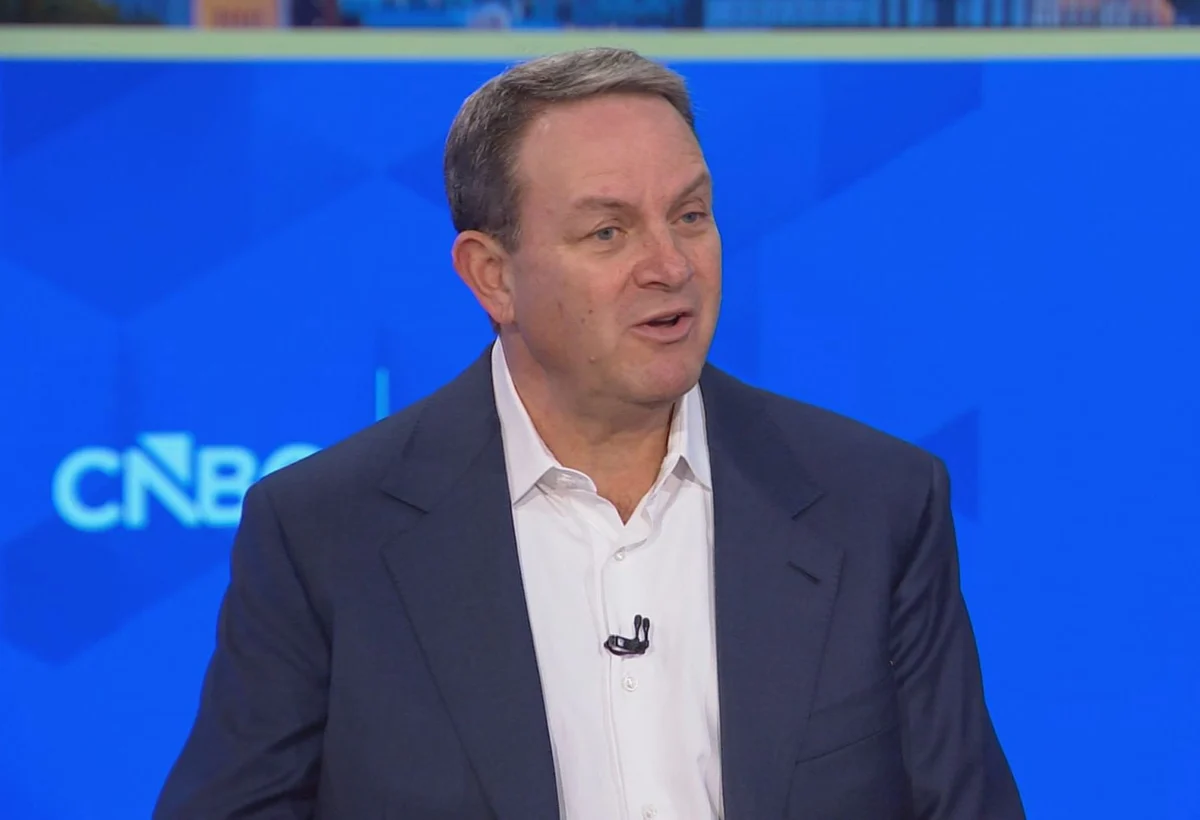
The central theme of Versant’s inaugural earnings call was "transition." CEO Mark Lazarus outlined an ambitious roadmap to transform the company from a cable-centric broadcaster into a diversified digital media powerhouse. Currently, more than 80% of revenue is tied to the traditional pay-TV ecosystem. However, Lazarus stated that the goal is to reach a 50/50 split between legacy revenue and "modern" revenue streams—including digital, platform, subscription, and transactional businesses.
"In the next three to five years, we are looking to increase the share of digital and platform revenue to 33%, with the ultimate goal of getting closer to 50%," Lazarus told analysts.
To achieve this, Versant is betting on several key initiatives:
- MS Now Direct-to-Consumer: The company plans to launch a standalone streaming product for its news brand, aiming to capture audiences who have abandoned traditional cable.
- CNBC Pro and Retail Products: Expanding CNBC’s subscription-based financial tools to cater to the growing demographic of individual retail investors.
- Fandango at Home: The 2026 launch of an ad-supported version of its digital movie service is expected to tap into the booming FAST (Free Ad-Supported Streaming TV) market.
- Transactional Expansion: Leveraging GolfNow and Sports Engine to create a more robust ecosystem of transactional fees and subscription services within the sports community.
Industry Analysis and the "Spin-Off" Strategy
Market analysts view Versant as a test case for the "Value-Oriented Spin-Off" model in media. Similar to how other conglomerates have handled their legacy assets, the goal is to harvest the significant cash flows of declining businesses (linear TV) to fund the transition into higher-growth areas (digital platforms).
The challenge for Versant lies in the pace of the transition. If the decline of linear TV accelerates faster than the growth of its digital platforms, the company could face margin compression. However, by starting with a relatively clean balance sheet—unlike some of its debt-laden peers in the media space—Versant has a "longer runway" to execute its pivot.
The 2025 results show that while the company is not immune to industry-wide declines, it remains a formidable cash generator. The 19% EBITDA margin in Q4, while lower than previous years, still represents a level of profitability that many pure-play streaming companies have yet to achieve.
Conclusion and Future Outlook
As Versant Media Group moves deeper into 2026, the focus will remain on stabilizing its linear advertising base while aggressively scaling its digital footprint. The company has positioned 2026 as a "year of transition," where the operational independence gained from the Comcast spinoff will be put to the test.
With a billion-dollar buyback program and a healthy dividend, management has clearly signaled that they believe the stock is undervalued relative to its cash-generating potential. However, the true measure of Versant’s success will be its ability to hit the 50% digital revenue target. If Mark Lazarus and his team can successfully migrate the influence of brands like CNBC and USA Network into the digital age, Versant may provide a blueprint for how legacy media companies can survive and thrive in a post-cable world.
For now, investors appear to be taking a "wait and see" approach, balancing the reality of a 5% revenue decline against the promise of a leaner, more agile, and shareholder-friendly media organization. The next several quarters will be vital in determining if Versant’s digital growth can outpace the gravity of the traditional television market.