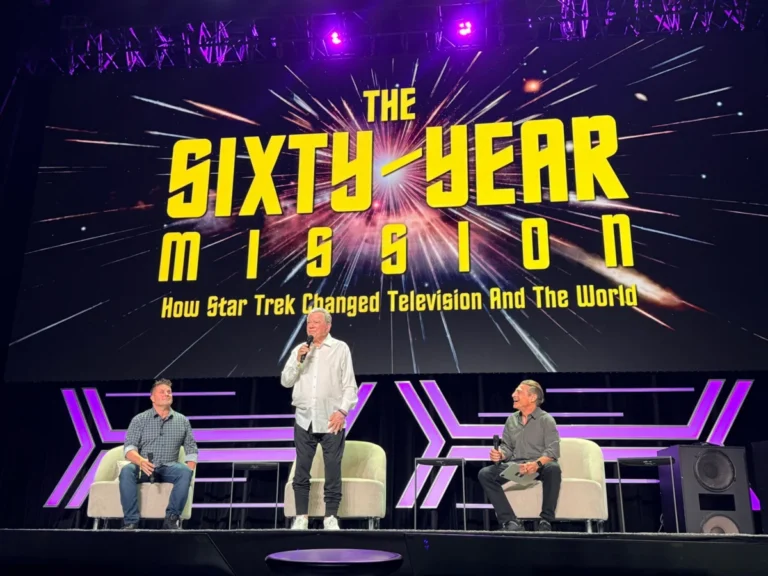


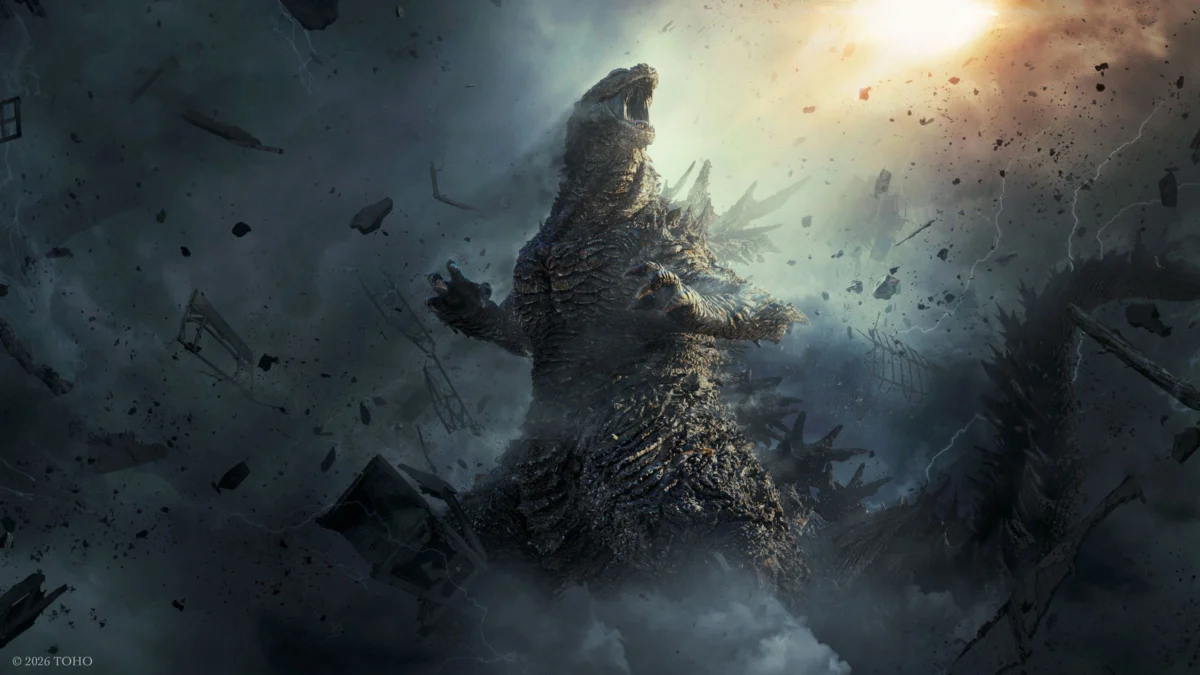
The cinematic legacy of the world’s most famous giant monster reached a fever pitch at New York Comic Con, where actor Seth Green took the stage to introduce the highly anticipated upcoming installment in Toho’s historic franchise. Addressing a packed auditorium of eager fans, Green lauded the filmmakers behind Godzilla Minus Zero, asserting that the creative team has successfully engineered kaiju that transcend digital renderings to feel physically tangible and deeply unsettling. As the 39th film in the sprawling franchise, Godzilla Minus Zero carries the immense weight of following its critically acclaimed and commercially triumphant predecessor, Godzilla Minus One. With visionary director Takashi Yamazaki at the helm and a returning crew of groundbreaking technical artists, the new feature promises to redefine the boundaries of monster cinema through innovative sound design and unprecedented visual effects engineering.
The Genesis of Terror: Sound Design at the Dam
Achieving the visceral terror praised by Green required an extraordinary, unconventional approach to audio engineering. Because kaiju are mythical creatures existing entirely within the realm of imagination, making their presence believable on screen relies heavily on acoustic realism. To accomplish this, sound designer Natsuko Inoue and her team abandoned traditional studio recording methods in favor of a massive, real-world acoustic experiment.
The audio team transported heavy-duty commercial speakers to the precipice of an outdoor dam, projecting the monstrous roars of Godzilla and his iconic three-headed nemesis, King Ghidorah, across the expansive valley. The resulting sound waves interacted naturally with the environment, capturing genuine reverberations, spatial echoes, and atmospheric reflections that microphones picked up and translated into bone-shaking audio.
This audacious production method was not without its civilian casualties. Hisafumi Takeuchi, a sound team member, recounted the unexpected disruptions caused during testing. While casual park-goers and picnickers experienced sudden, deafening disruptions, local dog walkers bore the brunt of the chaos. Domestic pets across the vicinity panicked, barking frantically in defensive fury against invisible, deafening digital titans echoing off concrete walls.
Despite initial anxieties regarding the feasibility of the dam recording sessions, Inoue knew the experiment was a success the moment the first test roar reverberated through the canyon. The natural acoustic bounce grounded the fantastical creatures in reality, providing a tangible auditory anchor for the audience. For other specialized sound effects, such as Ghidorah’s expansive, dragon-like wings, the foley team utilized clever analog techniques, manipulating rubber fisherman’s suits and mixing those tactile textures with the mechanical wheezes of accordion-like air ducts.
A Technical Marvel: The Visual Effects Evolution
The auditory terror of Godzilla Minus Zero is matched only by its cutting-edge visual fidelity, spearheaded by Oscar-winning visual effects artist Tatsuji Nojima. Dubbed by Green as the "first Gen Z Oscar-winner" for his foundational work on the previous film, Nojima’s journey into professional visual effects reads like a modern digital fairytale. Beginning as a teenage hobbyist tinkering with animation, Nojima eventually secured a position as a compositor at the renowned animation house Shirogumi.
Director Takashi Yamazaki’s attention was captured when he accidentally stumbled upon a crude animation of ocean waves Nojima was developing independently. Recognizing raw, elite talent, Yamazaki challenged the young artist to refine the render. Nojima returned with a fully realized simulation of ocean water crashing over rocks that was entirely indistinguishable from live-action footage. That single test convinced Yamazaki that Nojima was ready to spearhead the visual effects for the franchise.
The technical demands of Godzilla Minus Zero dwarf those of its predecessor. Nojima detailed the staggering computational power required for a specific trailer sequence depicting Godzilla erupting from the ocean while in hot pursuit of a seaplane. While Godzilla Minus One required the simulation of 200 million particles to achieve realistic whitewater effects, the upcoming sequel exponentially raised the stakes. Due to the expansive scale dictated by the new IMAX aspect ratio and the total absence of a live-action photography plate—meaning the scene is almost entirely computer-generated—Nojima’s team had to simulate an unprecedented two billion particles.
Contextualizing the Franchise: From Post-War Malaise to Global Phenomenon
The staggering ambition of Godzilla Minus Zero arrives at a time of unprecedented financial and critical health for the Toho franchise. Its predecessor, Godzilla Minus One, shattered international box office expectations by grossing $114 million globally, proving that compelling human-centric storytelling combined with high-concept monster destruction could captivate worldwide audiences. Set against the harrowing backdrop of post-World War II Japan, the 2023 film resonated deeply by anchoring its spectacle in themes of national trauma, recovery, and societal resilience.
Building upon a narrative that blends historical melancholy with apocalyptic devastation presents a formidable challenge. However, promotional footage screened at New York Comic Con indicates that the upcoming sequel pivots toward intense, high-octane spectacle. The trailer teased breathless aerial dogfights and a titanic, punch-heavy showdown between Godzilla and King Ghidorah, signaling a thrilling tonal expansion of the modern Toho cinematic universe.
The Cultural and Historic Significance of Godzilla’s Birthday
The release strategy for Godzilla Minus Zero carries deep historic reverence. The film is scheduled to premiere in Japanese theaters on November 3, a date permanently etched into cinematic history as Godzilla’s official birthday. On this exact day in 1954, director Ishirō Honda released the original, genre-defining masterpiece that birthed the kaiju genre as a metaphorical response to atomic anxiety. Following its domestic premiere, the film will roll out to US audiences shortly thereafter on November 6.
Industry Implications and the Future of Monster Cinema
The immense anticipation surrounding Godzilla Minus Zero highlights a significant shift in the global film landscape. Japanese kaiju productions, once relegated to niche status in Western markets, now command mainstream theatrical attention, competing directly with Hollywood blockbuster franchises. The success of Toho’s current creative era demonstrates that audiences increasingly value localized authenticity, daring directorial visions, and innovative technical craftsmanship over homogenized studio formulas.
As Tatsuji Nojima, Takashi Yamazaki, and their dedicated crew push the boundaries of particle simulation and acoustic world-building, the cultural impact of the king of the monsters continues to evolve. With state-of-the-art digital artistry backing nearly seven decades of cinematic heritage, Godzilla Minus Zero stands as a testament to the enduring power of practical ingenuity paired with cutting-edge technology. When the film finally hits theaters this November, it will not merely continue a historic franchise—it will challenge the entire entertainment industry to rethink the intersection of scale, emotion, and technical execution on the silver screen.