



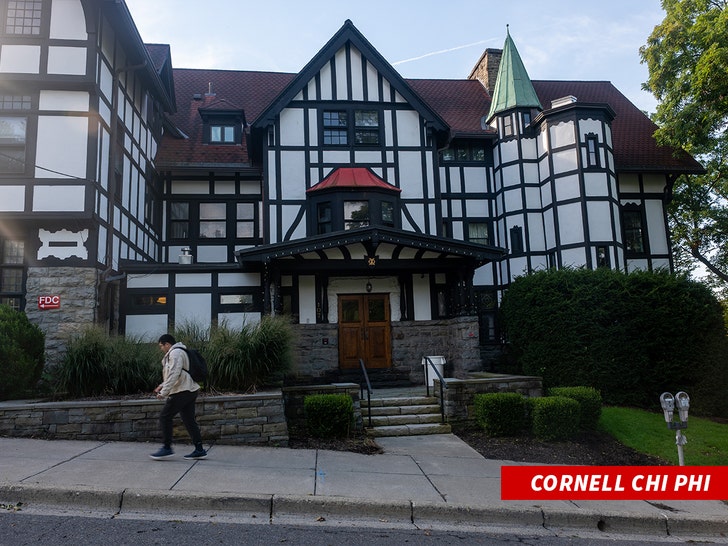
In the ongoing legal and social fallout surrounding the high-profile civil lawsuit involving Cornell University and its now-scrutinized Greek life system, new details have emerged from investigative transcripts that shed light on the night of an alleged gang rape. Newly obtained police interview records reveal that key witnesses—specifically a resident fraternity brother and his girlfriend—stated that the plaintiff, referred to in legal filings as Jane Doe, appeared entirely coherent, sober, and calm during the October 2024 gathering at the Chi Phi fraternity house.
The statements, provided to law enforcement late last year, offer a contrasting perspective to the allegations leveled in Doe’s civil complaint. However, they also introduce complex layers of campus dynamics, peer observations, and the retrospective realization of events that continue to reverberate across the Ivy League campus.

Chronology of Events and Police Involvement
The sequence of events leading up to the police investigation began in the fall of 2024, culminating in formal reports made to the Cornell University Police Department (CUPD). According to the timeline established by investigative records:
- October 2024: The fraternity party takes place at the Chi Phi house, serving as the backdrop for the alleged incident involving Jane Doe and several members of the fraternity.
- November 8, 2024: Jane Doe officially approaches the Cornell University Police Department to report the alleged assault.
- November 14, 2024: Doe provides a formal, sworn statement to CUPD investigators detailing her account of the night.
- November 21, 2024: A resident fraternity brother who served as the party’s DJ—and who is not a defendant in Doe’s civil lawsuit—is interviewed by law enforcement regarding his observations.
- December 17, 2024: The DJ’s girlfriend provides her formal testimony to investigators, more than a month after Doe initiated contact with university police.
Witness Testimony: The Fraternity Brother’s Account
The fraternity brother, whose bedroom was allegedly the site of the incident, spoke candidly to investigators about his movements and observations during the October party. Functioning as the house DJ for the evening, the student returned to his quarters at various points throughout the night.
During one of these visits, he recalled finding Jane Doe inside the room alongside Jonathan Newell, who appeared to be experiencing physical illness, vomiting into a bowl or bucket. According to the transcript, Doe actively engaged with the resident, repeatedly assuring him that everything was under control and that she was tending to Newell. The witness noted that Doe subtly maneuvered to block the doorway, effectively discouraging him from entering his own room.
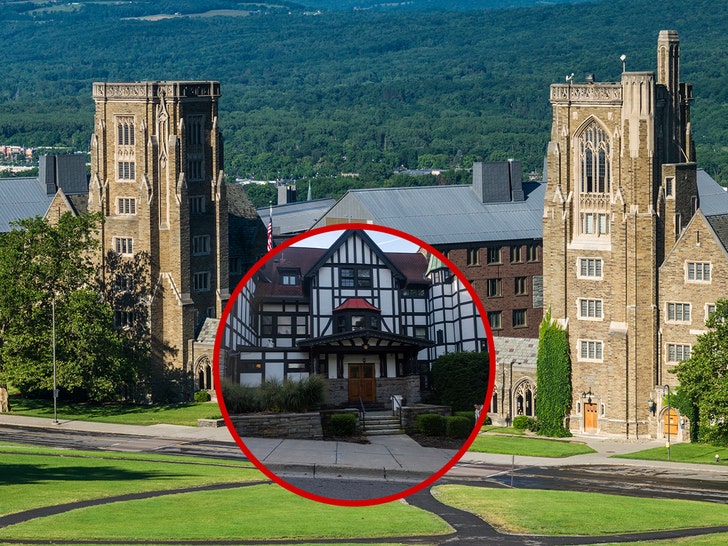
Later in the evening, the DJ returned to find multiple individuals present in the room. He described Doe as being fully clothed, reclining on a bed, and actively engaging in conversation with the other occupants. Quantifying her sobriety on a scale of one to ten, the witness estimated her intoxication level to be remarkably low, between a 1 and a 2, emphasizing that she spoke clearly and coherently.
Wishing to use his room, the DJ instructed the occupants to clear out so he and his girlfriend could spend time there. Shortly thereafter, the DJ, his girlfriend, Gillio Lopes, and several others left the premises to get food at a local McDonald’s. Upon returning to the house, he found the room vacant and retired for the night.
The following morning, the resident awoke to rumors circulating among his fraternity brothers regarding what he termed a "consensual act." When pressed by police to clarify what he meant, the DJ stated that Matthew Ingalls, Winston Lee, Gillio Lopes, and Jonathan Newell had each independently acknowledged engaging in consensual sexual activity with Doe. The rationale behind why multiple fraternity members felt compelled to explicitly characterize the encounters as consensual mere hours after the party concluded remains a point of ambiguity in the investigative record. The DJ maintained that, throughout all his interactions with Doe that evening, she exhibited no signs of wanting to leave or feeling compelled to stay.
The Girlfriend’s Perspective: Calm Departures and Retrospective Doubt
Complementing her partner’s testimony, the DJ’s girlfriend provided investigators with her recollection of the night’s final hours. She recounted returning from the McDonald’s run to find several fraternity members gathered outside the bedroom, visibly uncertain about what was transpiring inside. Expressing confusion, she noted her surprise upon learning that individuals had been cycling in and out of the room over the course of the evening.
She admitted to police that the situation "didn’t sound like something good" was unfolding behind closed doors. Shortly after her return, someone—presumed to be her boyfriend—instructed the group to disperse. As the room cleared, she observed Jane Doe exiting alongside four or five men.
While she described the sheer number of men accompanying Doe as somewhat startling, she corroborated her partner’s observation that Doe showed no visible signs of distress. At the time, the witness stated she felt no immediate cause for concern, operating under the assumption that the interactions were consensual because neither Doe nor the men appeared agitated, anxious, or upset.

However, the witness’s perspective evolved significantly in the weeks following the incident as details of Doe’s allegations—including claims regarding potential intoxicants and non-consensual acts—began to circulate. She expressed experiencing a sense of personal guilt for not intervening or offering assistance, despite reiterating that outward appearances at the time offered no definitive indicator that anything was amiss.
Broader Implications for Campus Safety and Greek Life
The release of these witness transcripts highlights the profound evidentiary and psychological complexities inherent in collegiate sexual assault investigations. Cases involving multiple parties, alcohol consumption, and shared living spaces frequently present stark contradictions between contemporaneous outward behaviors and subsequent legal claims.
For institutions like Cornell University, allegations involving recognized fraternities such as Chi Phi place immense pressure on administrative oversight, disciplinary procedures, and campus safety protocols. The university has faced heightened scrutiny from student advocacy groups, alumni, and legal representatives as both criminal inquiries and civil litigation progress through the judicial system.

Legal analysts note that witness testimony regarding sobriety and demeanor often plays a critical role in civil proceedings, where the burden of proof relies heavily on establishing whether a plaintiff possessed the capacity to consent and whether defendants reasonably believed consent was given. At the same time, trauma-informed advocates frequently emphasize that victims of assault may not always exhibit traditional outward signs of distress, panic, or physical resistance during or immediately after an incident due to physiological fear responses such as freezing or compartmentalization.
As the legal proceedings continue to unfold, the statements from the Chi Phi residents provide a granular, minute-by-minute account of the social environment inside the fraternity house that October night—leaving investigators, the court, and the university community to weigh these witness recollections against the serious allegations brought forward by the plaintiff.