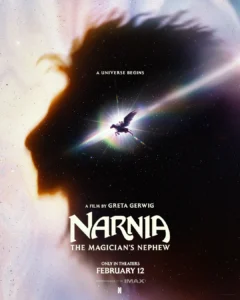

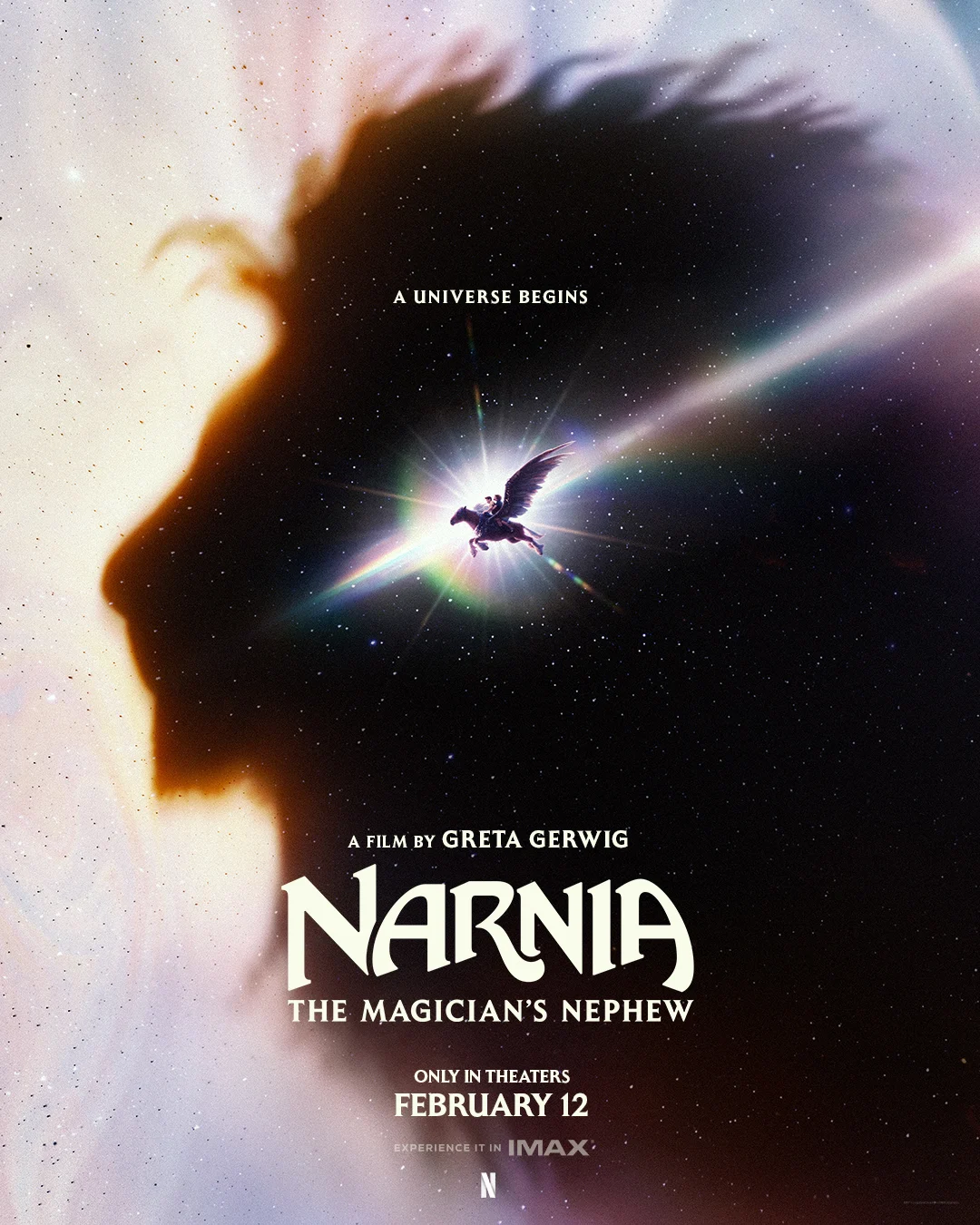
Netflix has officially initiated the promotional campaign for its highly anticipated adaptation of C.S. Lewis’s The Chronicles of Narnia: The Magician’s Nephew, helmed by Academy Award-nominated filmmaker Greta Gerwig. The streaming giant released the film’s first official poster via social media channels on October 12, serving as a prelude to the debut of the project’s inaugural trailer, which is scheduled for release on October 13 at 2 PM ET (7 PM BST). This reveal marks a significant escalation in the marketing cycle for the film, which has been under intense industry scrutiny since the partnership between Netflix and The C.S. Lewis Company was first announced.
The artwork features a striking silhouette of the Great Lion, Aslan, rendered in a cosmic aesthetic where his mane dissolves into a nebula of stars. This visual choice emphasizes the film’s thematic focus on the creation mythos central to the Narnian lore, specifically the moment Aslan sings the world into existence. At the center of the poster, Digory and Polly are depicted soaring upon the back of the winged horse, Fledge, traversing a prismatic expanse of light. The tagline, "A Universe Begins," underscores the scale of Gerwig’s vision, while the inclusion of IMAX branding confirms that Netflix intends for this production to be a tentpole theatrical event rather than a traditional direct-to-streaming release.
Chronology of Production and Marketing
The journey toward this first look has been marked by a carefully managed series of reveals. Following the acquisition of the Narnia rights in 2018, Netflix took a measured approach to development, eventually entrusting Gerwig with the franchise in 2023. The timeline of public information has accelerated rapidly in recent months:
- September 2026: Empire Magazine secured a world-exclusive feature, providing the first concrete details regarding the film’s aesthetic, which draws heavily from 1950s sensibilities and "glam rock" influences.
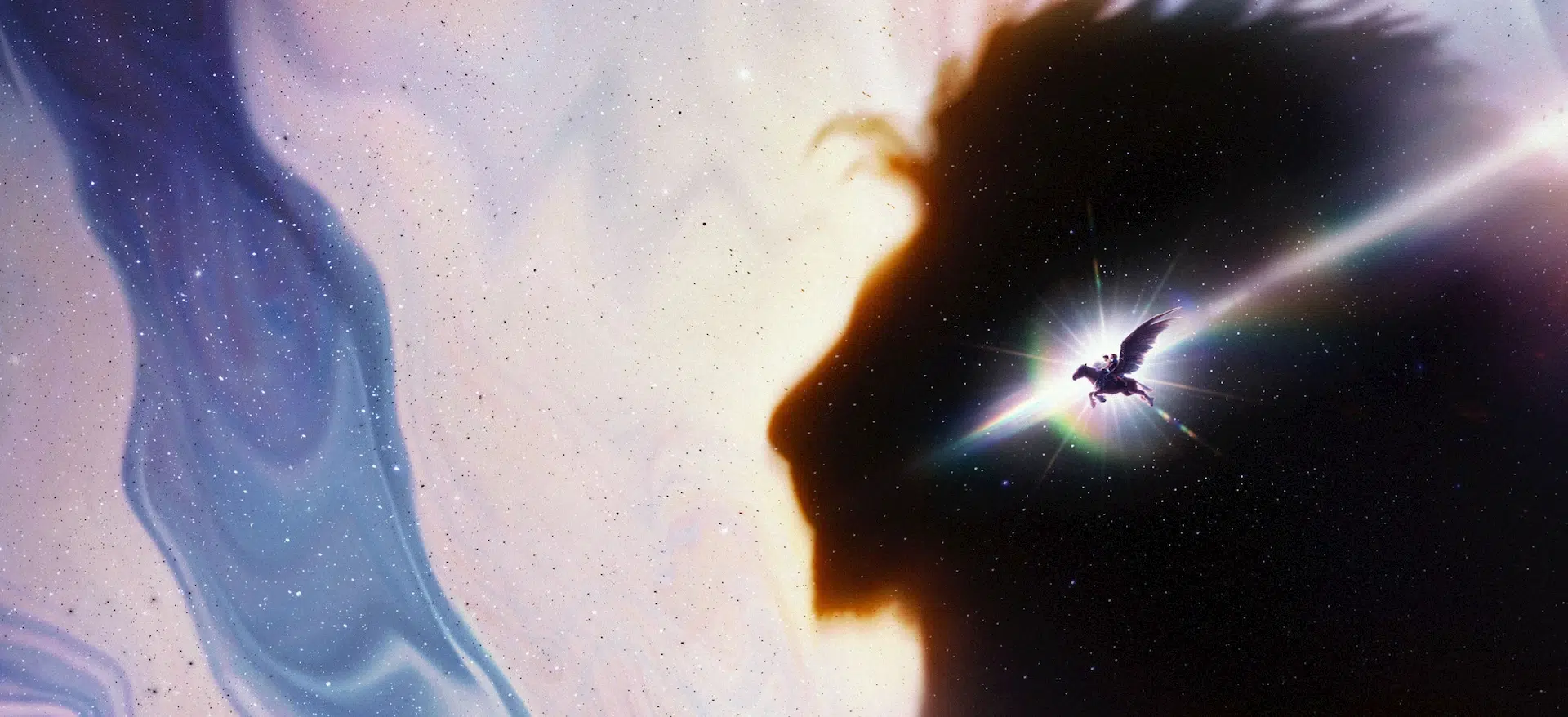
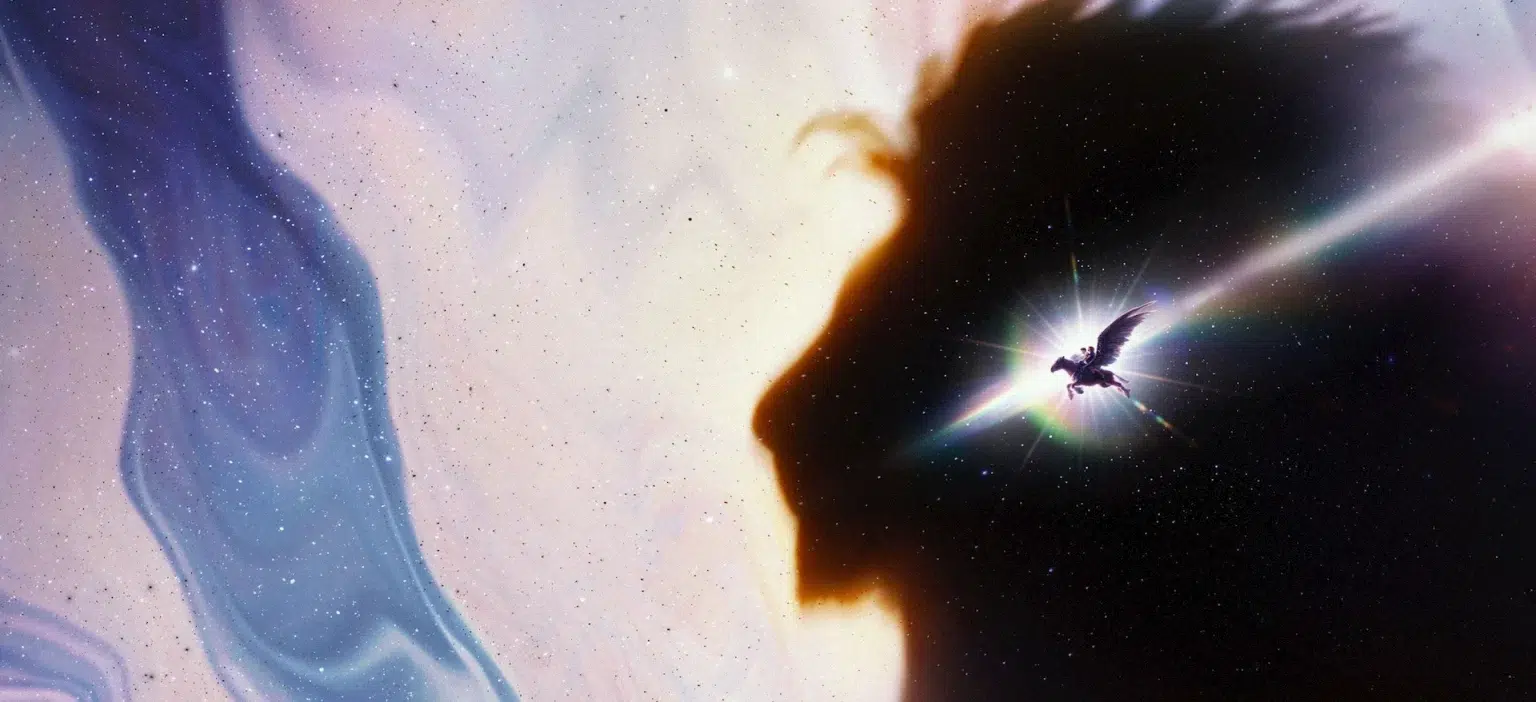
- Early October 2026: Netflix updated its internal metadata and promotional assets, including the release of high-resolution widescreen key art that expands on the color palette of the initial poster.
- October 13, 2026: Scheduled release of the first official trailer, expected to provide a definitive look at the tone of the film and the visual effects work overseen by the production team.
- February 10, 2027: Start of exclusive IMAX sneak previews.
- February 12, 2027: The wide theatrical release of The Magician’s Nephew.
- April 2, 2027: The film’s streaming debut on Netflix.
Analyzing the Creative Direction
Greta Gerwig’s interpretation of The Magician’s Nephew appears to diverge significantly from the 2005–2010 Walden Media/Disney trilogy. Whereas those films maintained a grounded, high-fantasy aesthetic consistent with early 20th-century sensibilities, Gerwig has opted for a more stylized, cosmic approach.
The decision to shift the setting from the book’s 1900 timeline to the 1950s suggests an intention to align the film more closely with the publication era of Lewis’s original works, while simultaneously allowing for the inclusion of the "rock opera" influence Gerwig has alluded to in interviews. This stylistic departure is further evidenced by the design of Aslan, who, as confirmed by Empire, features heterochromia and distinct facial markings inspired by the late David Bowie. Industry analysts suggest that this aesthetic shift is a strategic move to differentiate the new franchise from its predecessors and establish a distinct, auteur-driven visual language that appeals to both long-time fans and a modern, design-conscious audience.
Casting and Production Context
The casting choices have been a primary driver of public interest, particularly the announcement that Meryl Streep will provide the voice for Aslan. This choice of voice talent—coupled with the visual homage to David Bowie—indicates that Gerwig is prioritizing a sophisticated, ethereal portrayal of the character.
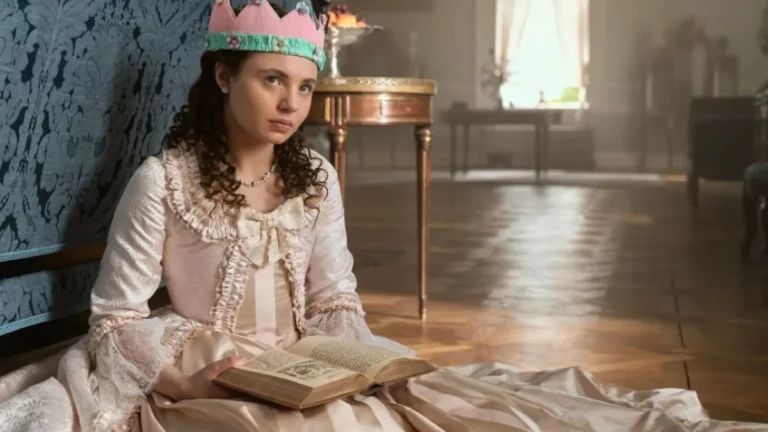
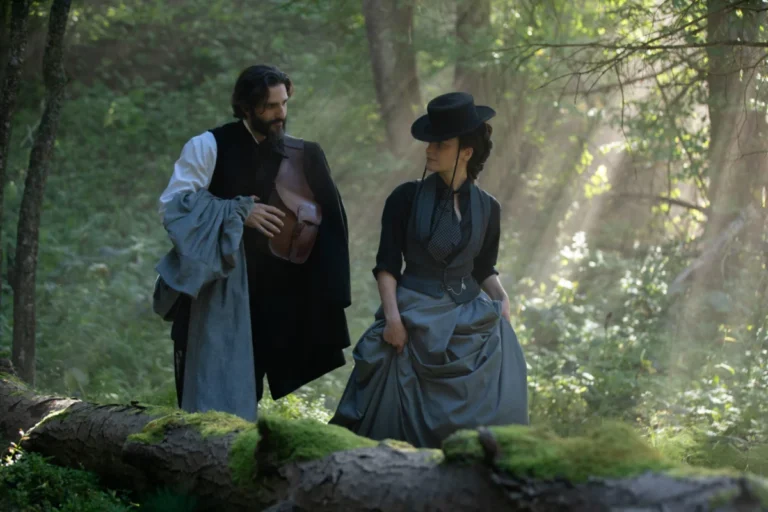
The supporting cast, which includes Daniel Craig as Uncle Andrew Ketterley and Emma Mackey as Jadis, represents a high-caliber assembly for a fantasy production. Craig’s character, described by Gerwig as "the stupidest magician in the world who actually made magic," suggests that the film will balance its cosmic stakes with the dry, often eccentric humor inherent in Lewis’s writing. Emma Mackey’s portrayal of Jadis, characterized by glam-rock-inspired costuming and a cold, imposing presence, serves as the primary antagonist of this origin story.
Data and Industry Implications
The distribution strategy for The Magician’s Nephew represents a departure from Netflix’s standard operating procedure. By securing a 49-day theatrical window—the longest in the company’s history for an original English-language film—Netflix is signaling a shift in its business model.
- Distribution: Sony Pictures Entertainment will handle international distribution, a move intended to maximize box office reach in territories where Netflix’s domestic marketing dominance may be less effective.
- Budget and Scale: While official production budgets remain undisclosed, the commitment to IMAX, the inclusion of A-list talent, and the long lead time suggest a budget consistent with major studio blockbusters.
- Theatrical-First Strategy: The "event" nature of this release is a direct response to the evolving landscape of the entertainment industry, where high-concept fantasy films increasingly require the social and sensory experience of a cinema to achieve cultural penetration.
Official Responses and Public Reception
While Netflix has not issued a formal press release regarding the trailer, the social media engagement surrounding the poster reveal has been robust. Community discourse has centered on the "cosmic" tone of the art, with many noting that it successfully captures the sense of wonder associated with the creation of Narnia.
Gerwig’s recent public comments have emphasized the "rock opera" nature of the film, suggesting that music will play a pivotal role in the narrative. The inclusion of subtle nods to 1970s British rock culture—specifically the influences of The Who and David Bowie—has generated significant speculation regarding the film’s sound design and soundtrack, which will likely be a focal point of the upcoming trailer.
Broader Impact on the Fantasy Genre
The successful relaunch of the Narnia property is a high-stakes endeavor for Netflix. As the platform seeks to bolster its library of intellectual property to compete with long-standing fantasy franchises such as The Lord of the Rings and Harry Potter, the performance of The Magician’s Nephew will serve as a bellwether for the viability of future Narnia adaptations.
If the film succeeds, it will likely pave the way for a multi-year, multi-film strategy that could encompass the entirety of the Narnia cycle. The decision to begin with The Magician’s Nephew—a prequel to the most famous entry, The Lion, the Witch and the Wardrobe—allows Gerwig to establish the laws of the universe before the Pevensie children arrive, providing a foundation that is both narratively cohesive and visually distinct.
As the industry prepares for the trailer release on October 13, the primary question for audiences and investors alike remains whether this infusion of auteur-driven, high-concept fantasy can reinvigorate a beloved literary property for a new generation. With its intentional 1950s aesthetic, experimental visual effects, and a cast led by some of the most respected actors in the industry, The Magician’s Nephew stands as one of the most closely watched cinematic projects currently in development. The upcoming trailer is expected to provide the final piece of the puzzle, clarifying exactly how these disparate elements—from Bowie-inspired lions to glam-rock sorceresses—coalesce into the vision Gerwig has promised.