


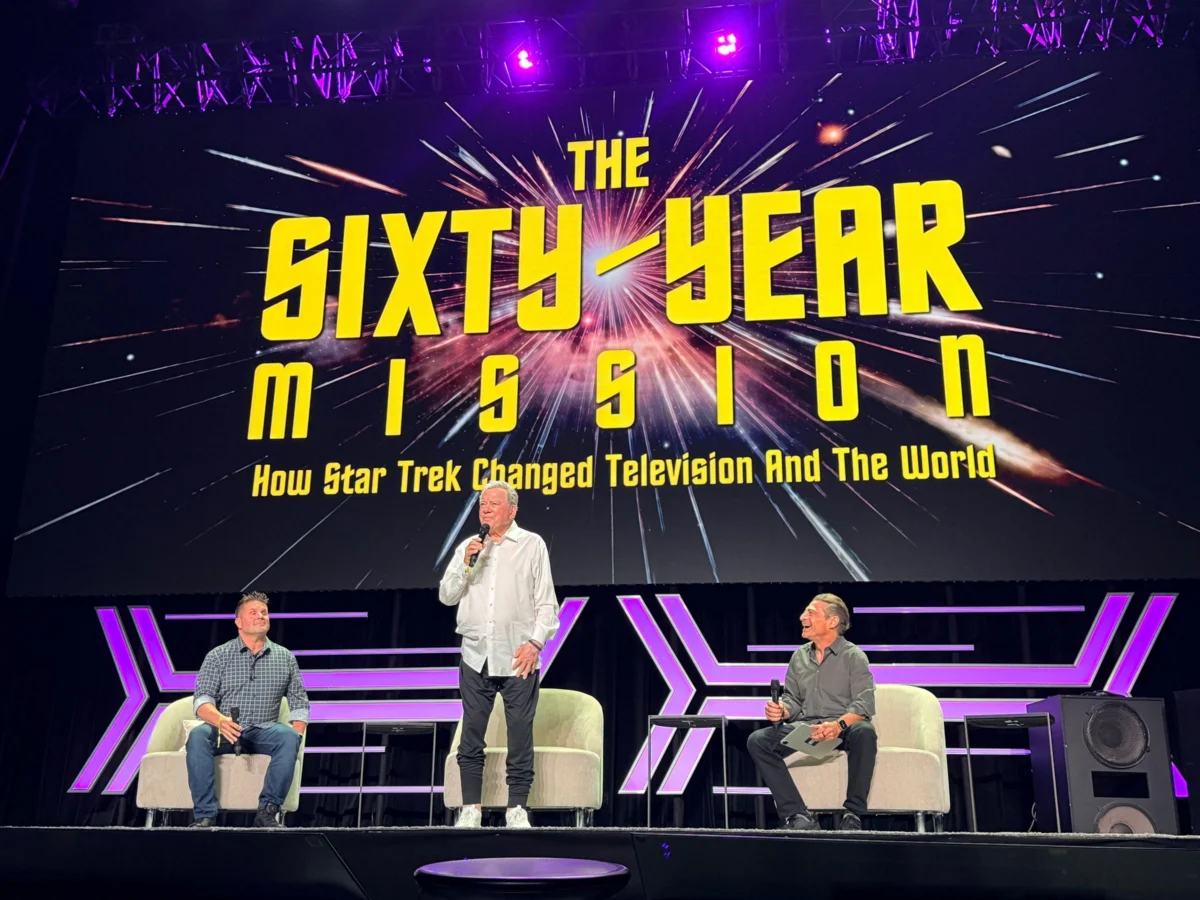
The enduring cultural footprint of one of science fictions most celebrated franchises was brought into sharp focus this past weekend as iconic actor William Shatner took the stage at the Regal Times Square theater. The occasion was the high-profile New York premiere of The Sixty-Year Mission: How Star Trek Changed Television and the World, a feature-length documentary screened concurrently with its debut at the annual New York Comic Con.
Addressing an eager audience of devoted fans, industry insiders, and critics, Shatner offered a characteristically candid assessment of the project. While expressing initial uncertainty over how the crowds would receive the retrospective film, the 95-year-old legendary performer—who famously brought Captain James T. Kirk to life on television and in subsequent feature films—assured attendees that the documentary was crafted with profound dedication. Maybe you’ll like it, maybe you won’t, Shatner remarked to the theater, before concluding, but you’re going to see a lovely film made by people who cared.
The Sixty-Year Mission is written and directed by Mark A. Altman, creator of the Inglorious Treksperts podcast and a prominent chronicler of science fiction television history. Focusing primarily on the foundational television series that ran from 1966 to 1969, the documentary explores the original shows cultural resonance, its complex production history, and its deep entanglement with the tumultuous political and social climate of the 1960s. Following its premiere during the bustling New York Comic Con weekend, the film has rolled out to select theaters nationwide, drawing praise for its comprehensive look at a television milestone that fundamentally altered the landscape of modern entertainment.
A Chronological Genesis: From 1960s Television to Modern Cultural Touchstone
To understand the weight of The Sixty-Year Mission, industry analysts note that one must examine the improbable origins of the Star Trek phenomenon. Created by visionary television producer and writer Gene Roddenberry, the original series debuted on the NBC network on September 8, 1966. At a time when American society was fractured by civil rights struggles, the escalating Vietnam War, and the existential anxieties of the Cold War, Roddenberry proposed an optimistic, pluralistic future for humanity.
However, the path of the original series was far from smooth. The initial pilot episode, titled The Cage and starring Jeffrey Hunter as Captain Christopher Pike, was rejected by NBC executives in 1964 as being too cerebral and slow-paced for mainstream television audiences. Demonstrating rare institutional faith in the concept, the network commissioned a second pilot, Where No Man Has Gone Before. This iteration introduced William Shatner as Captain James T. Kirk, Leonard Nimoy as the half-human, half-Vulcan science officer Mr. Spock, and DeForest Kelley as Doctor Leonard McCoy.
Despite securing a three-season run, the series struggled consistently with low Nielsen television ratings, facing constant threats of cancellation before NBC finally pulled the plug in 1969. Yet, the show found a transformative second life in syndication throughout the 1970s. This delayed-fuse phenomenon galvanized a grassroots fan movement, laying the groundwork for the modern convention circuit and paving the way for a multibillion-dollar multimedia franchise that now includes numerous television spin-offs, animated series, and over a dozen feature films.
Documentary Perspectives and Deep Historical Context
Mark A. Altman’s documentary captures this sprawling historical arc by weaving together archival footage, rare behind-the-scenes material, and extensive contemporary interviews. Altman explained during the press tour that audiences have been consistently surprised by how effectively the film illustrates the direct correlation between the sociopolitical pressures of the 1960s and the creative decisions made on the set of Desilu Productions.
I think audiences are pleasantly surprised that Sixty-Year Mission shows how the sixties shaped Star Trek, Altman noted. To articulate this connection, the documentary features a diverse roster of prominent franchise alumni and cultural commentators. Among them are Simon Pegg, who portrayed Chief Engineer Montgomery Scott in the modern cinematic reboot trilogy; Jonathan Frakes and Brent Spiner, beloved veterans of Star Trek: The Next Generation; and George Takei, who played the USS Enterprise helmsman Hikaru Sulu.
Takei contributes some of the films most poignant and harrowing moments, providing an emotional firsthand account of his childhood incarceration in American concentration camps for Japanese Americans during World War II. These personal testimonies underscore the documentary’s thematic exploration of civil liberties and systemic prejudice. Furthermore, the film highlights the groundbreaking casting of Nichelle Nichols as Lieutenant Uhura. Mary L. Trump, a vocal franchise enthusiast and psychologist, appears in the documentary to praise the profound cultural impact of Nichols’ representation, noting how seeing a Black woman in a position of command on bridge of a starship inspired generations of marginalized viewers.
The Political Paradox of Gene Roddenberry
At the heart of the documentary lies an exploration of the complex worldview of Gene Roddenberry. A decorated World War II bomber pilot, Roddenberry subsequently spent several years working within traditionally conservative institutions, including the Los Angeles Police Department, before transitioning into a career as a television writer and producer.
This unusual background forged a distinct political paradox that Altman argues became the ideological DNA of Star Trek. Captain Kirk was effectively JFK: Space Captain, Altman asserts, drawing a direct parallel between President John F. Kennedy’s visionary New Frontier domestic and foreign policy initiative and the exploratory mandate of the starship Enterprise.
Yet, William Shatner admits that neither he nor his fellow cast members fully grasped these grand philosophical underpinnings during the frenetic, day-to-day grind of television production in the mid-1960s. I didn’t think in those terms when they offered me the role, reflected Shatner, who served as an executive producer on The Sixty-Year Mission. I thought, I got a regular paid job. Only later did the magic of Star Trek happen.
That magic, according to Shatner, manifested primarily in the profound and lasting impact the show exerted on the personal lives of its viewers. Altman attributes the enduring accessibility of the franchise to a specific ideological tension embedded within its core storytelling. Roddenberry was liberal on social issues but hard-nosed on defense, and that is absolutely what Star Trek is, Altman explains. We need our phasers to defeat the Klingons, but we believe in a diverse crew. This friction between maintaining security in a hostile galaxy and pursuing utopian diplomatic ideals allowed the series to resonate across a remarkably broad ideological spectrum.
Modern Relevance: Diversity, LGBTQ+ Representation, and Artificial Intelligence
The Sixty-Year Mission arrives at a moment when the Star Trek franchise continues to expand its boundaries regarding representation and social commentary. In contemporary installments such as Star Trek: Starfleet Academy, the franchise is actively breaking new ground. Actor Karim Diané, who portrays Jay-Den Kraag—noted as the first openly gay Klingon character in the history of the intellectual property—discusses the profound weight of carrying such representation forward in the current media landscape.
I wish I could release the DMs because the love I’ve gotten is overwhelming, Diané stated, highlighting the intense emotional connection contemporary viewers maintain with the universe Roddenberry initiated sixty years ago.
Beyond social representation, the documentary and its surrounding promotional discussions pivot toward technological anxieties that feel remarkably prescient in 2026. As contemporary political figures and Silicon Valley leaders engage in fierce debates regarding the rapid commercialization and deployment of artificial intelligence and artificial superintelligence, the Star Trek franchise’s historical treatment of synthetic lifeforms offers a compelling lens for analysis.
Throughout the decades, the franchise has repeatedly interrogated the ethical boundaries of artificial intelligence. The most iconic synthetic character in television history, the android Lieutenant Commander Data—portrayed by Brent Spiner in Star Trek: The Next Generation—served as an idealized artistic exploration of machine sentience. Data frequently struggled to be understood by his human colleagues, existing in a unique ontological space where he possessed intellectual capabilities far surpassing those of organic humans while lacking native emotional intelligence. This narrative tension culminated in landmark storytelling, most notably the classic second-season episode The Measure of a Man, which legally and philosophically examined whether an artificial being possessed autonomous civil rights or merely functioned as corporate property.
Reflecting on the stark contrast between his fictional television counterpart and the rapid, profit-driven corporate deployment of modern artificial intelligence systems, Spiner offered a sharp critique during the press engagements surrounding the documentary’s release. If only AI could be what Data was: responsible, truly concerned about humanity, considering what serves humans best as opposed to what serves profit best, Spiner observed.
Industry Implications and Future Outlook
Media analysts observing the rollout of The Sixty-Year Mission note that the documentary capitalizes effectively on the lucrative nostalgia economy while simultaneously offering substantive academic and cultural criticism. By bridging the generational gap between the 1960s television pioneers and contemporary streaming-era actors like Diané, the film reinforces Star Trek’s unique status as a living mythology rather than a static piece of pop culture history.
As select theatrical screenings continue across North America and discussions regarding digital distribution unfold, the documentary stands as a testament to the durability of a television experiment that nearly failed to survive its initial three-season broadcast order. For William Shatner, looking back on six decades of science fiction history from the stage in Times Square, the journey from a modest television contract to an enduring global phenomenon remains a staggering achievement—one that continues to shape how generations of viewers imagine the ultimate destiny of humanity among the stars.