


In a definitive move to consolidate two of Hollywood’s most storied pillars into a singular, forward-looking enterprise, David Ellison, CEO of Paramount Skydance, announced on Friday that the combined media conglomerate will officially operate under the name Skydance upon the finalization of its merger with Warner Bros. Discovery. The transition, scheduled to conclude next week, marks the end of a grueling, year-long period of corporate restructuring and competitive bidding that has fundamentally altered the landscape of the global entertainment industry.
The decision to adopt the Skydance moniker serves as a strategic branding maneuver designed to provide a unified corporate identity while allowing the individual legacies of Paramount Pictures and Warner Bros.—both of which boast over a century of cinematic history—to persist as autonomous, prestigious production labels. Under the new structure, the combined entity will transition to the ticker symbol “SKYD,” signaling a new chapter for shareholders and industry analysts alike.
A Historic Consolidation of Assets
The merger, valued at approximately $110 billion on an enterprise basis, brings together a vast library of intellectual property, production facilities, and streaming infrastructure. By integrating Paramount’s expansive television and film portfolio with Warner Bros. Discovery’s premium content engine, the new Skydance aims to create a dominant powerhouse capable of competing directly with the tech-native streamers that have disrupted traditional media models over the past decade.
David Ellison’s vision, as outlined in a social media statement released Friday, emphasizes the preservation of heritage alongside the pursuit of modern scalability. “Paramount and Warner Bros. shaped over a century of culture,” Ellison wrote. “By combining them, we aren’t rewriting history—we’re equipping these iconic studios with a more powerful engine. Together, we are Skydance: a creative-first home for bold, quality storytelling.”
Ellison was adamant that the rebranding process was not intended to obscure the identities of the underlying studios. “We never wanted a new corporate identity to diminish, alter or overshadow either one,” he noted. “Instead, we wanted a name that would give the combined company an identity of its own while allowing Paramount and Warner Bros.—and all our extraordinary brands—to remain in the spotlight.”
Chronology of the Acquisition
The path to this consolidation has been marked by rapid-fire dealmaking and complex regulatory hurdles. The trajectory began in August 2025, when Skydance—the production house previously best known for high-octane blockbusters such as the Mission: Impossible franchise and Top Gun: Maverick—successfully closed its acquisition of Paramount. This move provided Ellison with the foundational infrastructure to seek further expansion.
Following the Paramount integration, Ellison pivoted his focus toward Warner Bros. Discovery. His pursuit of the media giant ignited a intense bidding war, as various interests vied for control of one of the world’s most extensive content libraries. In February 2026, the deal was struck, cementing the agreement that would ultimately join the two conglomerates.
The journey was not without opposition. The merger faced a significant legal challenge initiated by a coalition of state attorneys general, who raised concerns regarding market concentration and the potential for reduced competition in the media sector. After months of litigation and negotiation, the parties successfully reached a settlement earlier this week, paving the way for the deal to close this coming Tuesday.

Leadership and Governance Structure
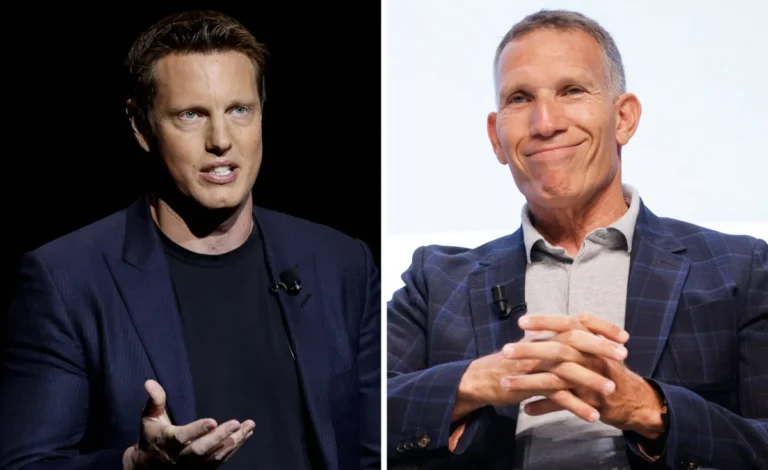
Upon the official closing of the merger, the leadership structure will reflect the magnitude of the integration. David Ellison will transition into a co-CEO role, sharing the helm with Ynon Kreiz, the outgoing CEO of Mattel. The partnership is viewed by analysts as a strategic blend of creative production prowess and seasoned corporate management. Kreiz, who successfully steered Mattel through a major cultural and financial revitalization, brings a wealth of experience in managing global brand portfolios and consumer products, which will be essential as the new Skydance looks to monetize its combined intellectual property across multiple revenue streams.
Data-Driven Market Outlook
The scale of the combined operation is best illustrated by the sheer volume of content projected for the coming year. According to data provided by Rentrak, the combined Paramount and Warner Bros. studios are slated to release 35 feature films in the upcoming calendar year. This output represents one of the most aggressive production slates in the industry, underscoring the company’s commitment to theatrical distribution as a core pillar of its revenue model.
Furthermore, the integration of streaming platforms—including Paramount+ and Max—remains a critical point of focus for investors. The combined subscriber base, along with the efficiency gains expected from merging redundant departments and back-office operations, is expected to provide the capital necessary for sustained investment in high-budget, tentpole productions.
Industry Implications and Strategic Challenges
The emergence of Skydance as a singular, $110 billion entity creates a new tier of competition within the “Big Five” film studios. By consolidating distribution pipelines and production resources, the company is positioned to lower its per-unit production costs while maintaining a high frequency of content releases.
However, the merger also faces long-term structural challenges. Industry analysts point to the ongoing decline of linear television as a primary headwind. While the new Skydance controls a significant portion of the premium cable landscape, the migration of audiences to on-demand platforms necessitates a delicate balancing act between maximizing carriage fees from traditional cable operators and aggressively growing direct-to-consumer digital subscriptions.
Additionally, the integration of two distinct corporate cultures poses a significant managerial hurdle. Paramount and Warner Bros. have historically operated under different creative philosophies and operational workflows. The success of the "Skydance" brand will depend largely on whether Ellison and Kreiz can foster an environment that encourages creative risk-taking while maintaining the financial discipline required to service the debt load incurred during the acquisition process.
The Road Ahead
As Tuesday’s closing date approaches, the industry is watching closely to see how the rebranding will manifest in the company’s day-to-day operations. The move to a single ticker, "SKYD," marks the final step in a multi-year effort to restructure Hollywood’s legacy players for the streaming era.
For David Ellison, the transformation of his eponymous production company into a global media titan represents a historic shift in the hierarchy of power within the entertainment sector. By positioning Skydance as a "creative-first" home, the leadership is signaling that despite the massive scale and financial engineering involved in the merger, the company’s long-term viability remains tethered to its ability to capture the public imagination through high-quality storytelling.
With the legal barriers removed and the leadership team finalized, the newly formed Skydance will soon enter a critical phase of implementation. Whether the company can successfully leverage its combined library to reclaim lost market share from Silicon Valley giants remains the central question for the industry in the years to follow. For now, the transition serves as a stark reminder of the fluidity of the media landscape, where century-old empires can be reimagined, merged, and rebranded in the span of just eighteen months.