
The 2026 MTV Video Music Awards (VMAs) concluded on Sunday night at the Peacock Theater in Los Angeles, marking a significant pivot for the long-running franchise. By blending the high-octane spectacle of established global icons like Taylor Swift and Madonna with the raw, viral-ready performances of emerging artists, the production successfully navigated the challenges of a modern, fragmented media landscape. The ceremony, which aired on CBS, reached a massive multi-generational audience, bolstered by a strategic lead-in from professional football, solidifying its position as a cultural touchstone in an era dominated by streaming and algorithm-driven music discovery.
A Night of Iconic Returns and Emerging Voices
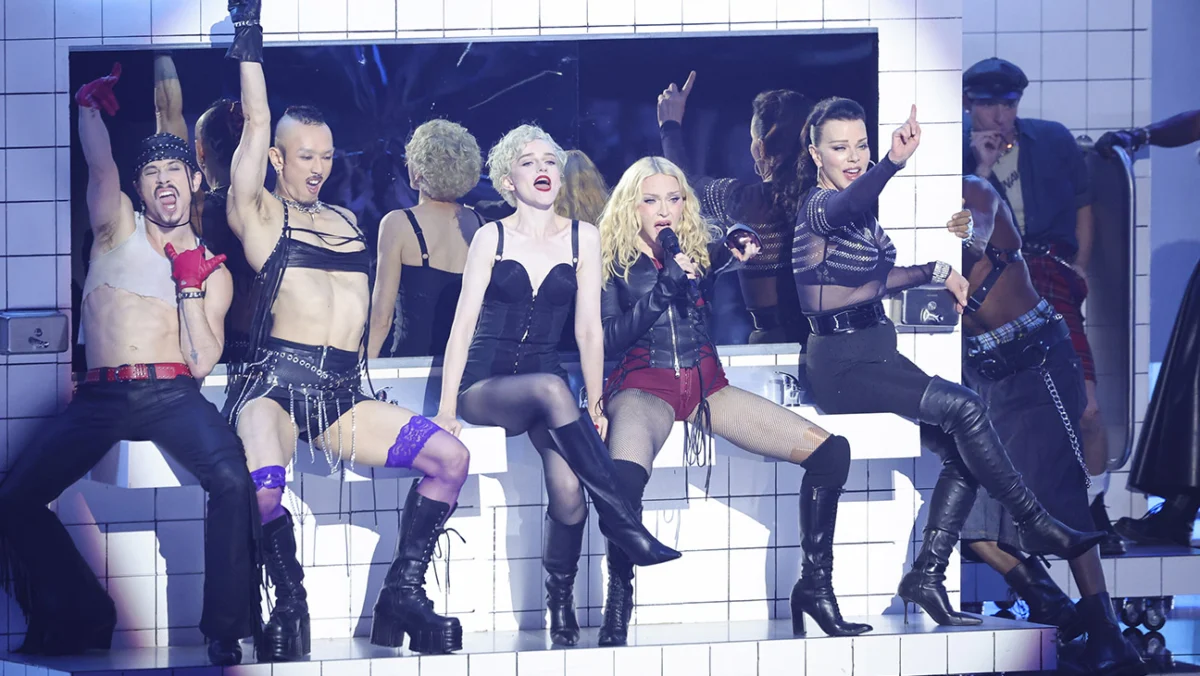
The event’s structure was carefully curated to bridge the gap between the music industry’s past and its future. Madonna, who maintained her status as a titan of the medium by securing seven awards—the highest count of the evening—opened the ceremony in a collaborative performance with Sabrina Carpenter and Charli xcx. This opening set the tone for the night: a display of influence and legacy.
As the evening progressed, the transition between eras became a central theme. Taylor Swift concluded the show by claiming the Video of the Year award for her latest visual project, The Fate of Ophelia. During her acceptance speech, Swift dedicated the honor to Dolly Parton, a move that echoed the night’s broader narrative of honoring foundational artists. In addition to her win, Swift utilized the VMA stage to provide a sneak peek of her upcoming music video, Patient Zero, leveraging the live broadcast to generate immediate social media traction.
Chronology of the 2026 Ceremony
The production was marked by a series of meticulously timed sequences. Despite a broadcast delay necessitated by the preceding football game, the live proceedings at the Peacock Theater commenced strictly at 4:30 p.m. PT.
- The Opening: Madonna, accompanied by Carpenter and Charli xcx, established the show’s high-energy aesthetic.
- Mid-Show Highlights: The program featured a diverse roster of performers, including Raye, Sombr, and Lisa, whose stage production drew inspiration from the aesthetics of Bangkok.
- The Tributes: The broadcast dedicated significant time to honoring the legacies of Dolly Parton and George Michael. The Michael tribute featured a surprise appearance by Adam Lambert, whose rendition of Freedom! served as a focal point for the segment.
- The Vanguard Presentation: The ceremony honored Nirvana with the Video Vanguard Award, a moment characterized by both nostalgia and spontaneous energy, as the band’s Pat Smear appeared onstage while smoking, sparking widespread social media discussion.
- The Closing: Taylor Swift’s win for Video of the Year provided the final punctuation mark for the broadcast.
Strategic Shifts in Programming and Demographic Reach
The decision to broadcast the 2026 VMAs on CBS, rather than exclusively on MTV, represented a calculated shift in distribution strategy. Producers noted that the move was essential for capturing a broader demographic. While MTV’s traditional audience has historically skewed younger and more male-centric, the CBS broadcast tapped into a family-oriented and sports-adjacent viewer base.
Producer Van Toffler, reflecting on the ratings success the day after the event, noted that the “secret sauce” involved an evolution in how music is consumed. In the 1980s and 1990s, music audiences were often segmented by genre and age. Today, the ubiquity of streaming platforms has flattened these hierarchies. Listeners are as likely to engage with a classic 1970s anthem as they are with a track released the previous week. This democratization of taste allowed the producers to integrate legacy artists like Madonna and tributes to Dolly Parton alongside modern breakouts like Sienna Spiro and the collective Gener8ion.

The Role of Remote and Pre-Taped Performances
The 2026 ceremony also demonstrated a shift in how major events handle artist availability. With global touring schedules often precluding in-person attendance, producers utilized remote and pre-taped segments to ensure top-tier talent remained involved.
The tribute to Dolly Parton, performed by Kacey Musgraves, was pre-recorded at the venue days prior due to Musgraves’ touring obligations. The production team collaborated closely with Parton’s estate to intersperse archival footage of the country icon, creating a seamless narrative that bridged the gap between Musgraves’ contemporary interpretation and the original source material. Similarly, Bruno Mars, unable to attend due to a conflicting tour, contributed a remote performance that met the show’s high production standards, underscoring the adaptability of modern award show logistics.
Analyzing the Industry Impact
The inclusion of burgeoning talent such as Sienna Spiro, whose performance was cited by production staff as a personal highlight of the night, indicates a return to the VMAs’ original purpose: acting as a launchpad for new artists. In an era where viral success is often ephemeral, the VMA stage provides a rare, legitimate global platform that can influence streaming algorithms overnight.
The collaborative process behind these performances has also become more decentralized. Toffler highlighted that the era of the “over-produced” artist is waning; instead, successful producers now act as facilitators. By providing the best available audio-visual technology and listening to the creative visions of the artists—such as Madonna’s independent orchestration of her segment—the show maintained a level of authenticity that resonated with viewers.
Cultural Implications and Legacy
The 2026 MTV Video Music Awards served as a case study in how heritage brands can evolve to maintain relevance. By prioritizing the intersection of generations, the ceremony avoided the trap of becoming a niche event. The integration of Nirvana, an act that defined the aesthetic of early MTV, alongside modern pop stars, signaled that the network is moving toward a model of “curated history.”
Moreover, the spontaneous elements—such as Pat Smear’s smoking during the Nirvana tribute—served as reminders that, despite the high-tech, multi-platform nature of the production, the human element of live performance remains unpredictable. This unpredictability, coupled with a robust cross-generational lineup, ensured that the event remained a dominant force in the cultural conversation.
Looking ahead, the success of the 2026 event suggests that the future of music awards lies in this hybrid model: high-prestige legacy tributes, strategic integration of viral newcomers, and a distribution footprint that extends far beyond cable television into the mainstream broadcasting sphere. As the industry continues to grapple with the fragmentation of audiences, the VMAs have established a framework that allows for both the celebration of the past and the immediate, rapid elevation of the future. The high engagement levels observed across digital platforms in the hours following the broadcast confirm that, when curated with an eye toward both history and novelty, the traditional music award show remains a powerful, if evolving, cultural engine.