


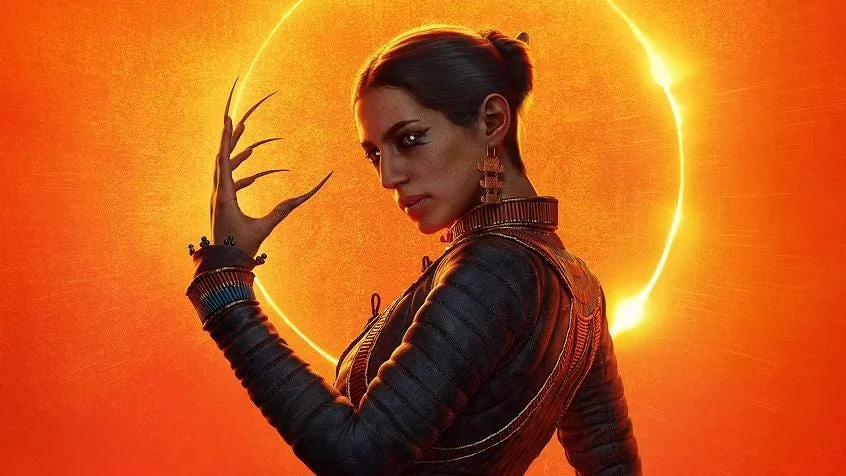
The recent release of the medieval dark fantasy RPG The Blood of Dawnwalker, developed by the Warsaw-based studio Rebel Wolves, has ignited a significant conversation regarding game design philosophy and the balance between narrative immersion and player empowerment. At the heart of this discussion is the game’s core mechanic: a dual-form system that forces players to toggle between human and vampire states, each with distinct power scaling and survival requirements. According to studio leadership, the marked disparity in lethality between the protagonist’s two forms is a calculated creative choice rather than a balancing oversight.
The game, which hit the market in early September, quickly reached the milestone of one million copies sold within its first 72 hours of availability. Despite this commercial success, early player feedback identified a sharp contrast in difficulty levels depending on the time of day and the protagonist’s current form. For many players, the transition from the vulnerable human state during daylight hours to the apex-predator vampire state at night feels like a shift from a survival-horror experience to an action-heavy power fantasy.
Design Philosophy and the Dawnwalker Archetype
Konrad Tomaszkiewicz, the game director for The Blood of Dawnwalker, has clarified that the intent was to evoke a sense of inherent inequality. The design inspiration drew from traditional folklore, specifically the concept of the werewolf, where human vulnerability is juxtaposed against supernatural might.
"When I created the idea for the protagonist, the Dawnwalker, it was supposed to be something like the werewolf, where in the day as a human, you are significantly weaker than at night," Tomaszkiewicz stated. He explained that this design serves a specific narrative purpose: it prevents the "superhero creep" often found in RPGs, where developers feel compelled to introduce progressively stronger villains to match the player’s exponential growth. By keeping the human form grounded and susceptible to physical threats, the narrative maintains tension and stakes that would otherwise be lost if the player were perpetually overpowered.
Technical Disparity: Claws vs. Steel
The gameplay mechanics reinforce this power gap through two distinct progression systems. In his analysis of the game’s mechanics, Tomaszkiewicz highlighted that the vampire form is designed to reward natural progression, whereas the human form demands active resource management.
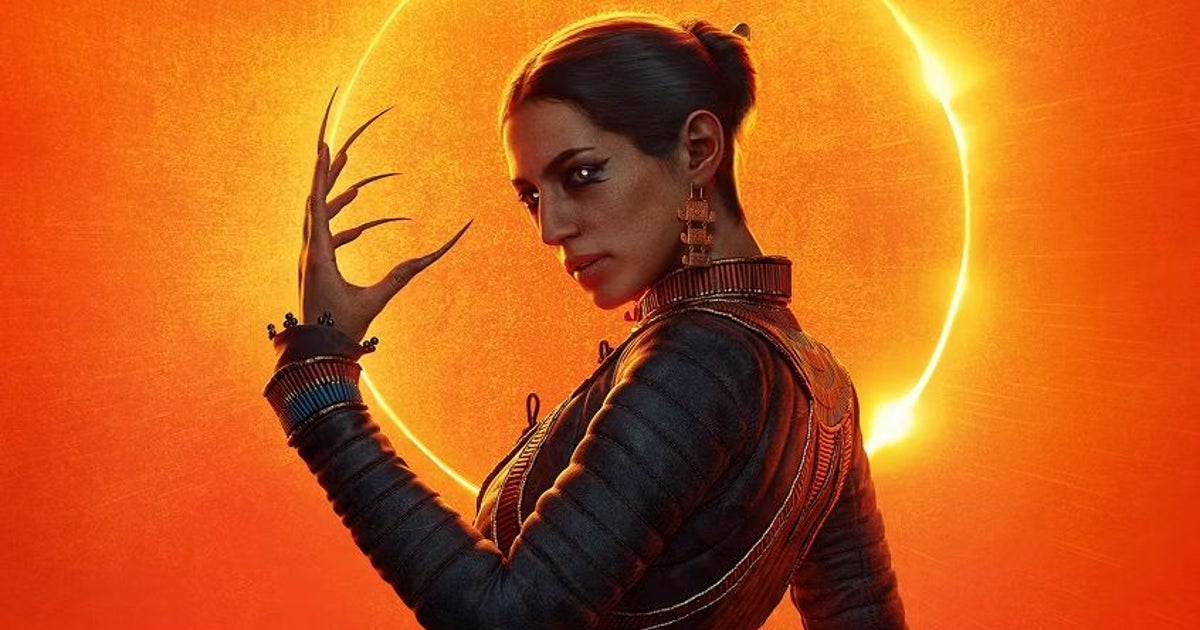
In the vampire form, combat efficacy is tied directly to the character’s level. As the player levels up, the damage output of the character’s claws scales automatically. This removes the need for players to hunt for rare items or spend skill points specifically to maintain relevance in combat. Conversely, the human form relies heavily on traditional RPG loops: players must find, purchase, or craft superior swords and armor to remain competitive.
Survival mechanics further emphasize this divide. Healing in human form is strictly dependent on the consumption of crafted potions, a limited resource that requires scavenging and preparation. In contrast, the vampire form offers multiple avenues for regeneration:
- Lifesteal: Attacking enemies can be spec-ed to replenish health directly.
- Blood Consumption: Consuming blood vials, or feeding on animals and NPCs, serves as an immediate and replenishing health source.
- Regenerative Pools: Developing vampire skills provides additional segments to the health bar, which automatically regenerate after combat encounters.
The Role of Witchcraft in Human Viability
To ensure that the game remains accessible and engaging for those who prefer the human playstyle, Rebel Wolves integrated a system of witchcraft. This allows the human form to utilize powerful, albeit context-specific, abilities. However, these abilities are largely inaccessible at night, creating a trade-off: the human form gains magical versatility during the day, while the vampire form gains raw physical dominance at night.
This duality was a response to internal concerns that a strictly "weaker" human form would feel punishing to the point of being unplayable. Tomaszkiewicz noted that the development team recognized the need for "freedom of choice." If the human experience felt too restrictive or lacked sufficient utility, players would inevitably gravitate toward the night cycle, ignoring half of the game’s content. Consequently, witchcraft was introduced not as an equivalent to vampiric strength, but as a tactical alternative that allows the player to reach the game’s conclusion through different narrative branches.
Chronology of Development and Market Reception
The development of The Blood of Dawnwalker has been marked by a transparent, if experimental, approach to game design. Early prototypes of the game featured a significantly stricter time-cycle mechanic, which forced players to adhere to a rigid schedule. While the final version of the game retains the day/night transitions, the mechanics have been softened to prevent the "hard blockers" that existed in earlier builds.
- Early Development (2022-2023): Rebel Wolves focuses on the "freedom of choice" mantra, testing the limits of the time-based power shift.
- Early September 2024: The title is officially released. It achieves rapid commercial success, selling one million units in three days.
- Late September 2024: Player discourse centers on the difficulty spikes, particularly regarding the transition from daylight to night.
- Early October 2024: The studio announces the first major patch, aimed at resolving performance issues and technical bugs reported by the community.
Broader Implications for the Genre
The critical reception of The Blood of Dawnwalker suggests that while the player base generally appreciates the ambition of the time-based mechanics, there is a clear divide regarding the resulting difficulty curve. For many, the "weakness" of the human form is viewed as a narrative-driven obstacle that adds depth to the role-playing experience. For others, it presents a barrier to entry that necessitates a more cautious, deliberate playstyle.
The studio has confirmed that while this specific time-mechanic is central to the identity of The Blood of Dawnwalker, it is not a guaranteed feature for future entries in the franchise. The focus, according to the director, remains on the player’s ability to approach the game in multiple ways—whether that means relying on stealth, aggressive combat, or the strategic use of allies and magic to circumvent the inherent disadvantages of being human.
Looking Ahead
As Rebel Wolves prepares to deploy its first major update, the focus is squarely on technical optimization rather than a fundamental restructuring of the core gameplay. The studio appears confident that the current difficulty disparity is a feature, not a bug. By maintaining the vulnerability of the human form, they preserve the core theme of the game: that the path to power is a transition, and that the struggle for survival in a hostile, medieval world is what defines the player’s journey.
Ultimately, the data suggests that players are willing to accept such design choices if they are clearly communicated and consistently applied. The ongoing success of the title, coupled with the upcoming patch, indicates that The Blood of Dawnwalker will remain a point of study for developers looking to balance asymmetrical gameplay in the RPG genre. For now, the message from the developers is clear: if you are struggling in the daylight, it is because you are not meant to be a predator until the sun goes down.