
The 83rd Venice International Film Festival concluded its prestigious run on the historic Lido island, culminating in a star-studded awards ceremony inside the Sala Grande that celebrated the finest achievements in global cinema for the 2026 calendar year. As one of the oldest and most revered film festivals in the world—standing alongside the Cannes Film Festival and the Berlin International Film Festival as a premier showcase for cinematic art—this year’s edition drew intense international media scrutiny, high-profile industry executives, and thousands of cinephiles.
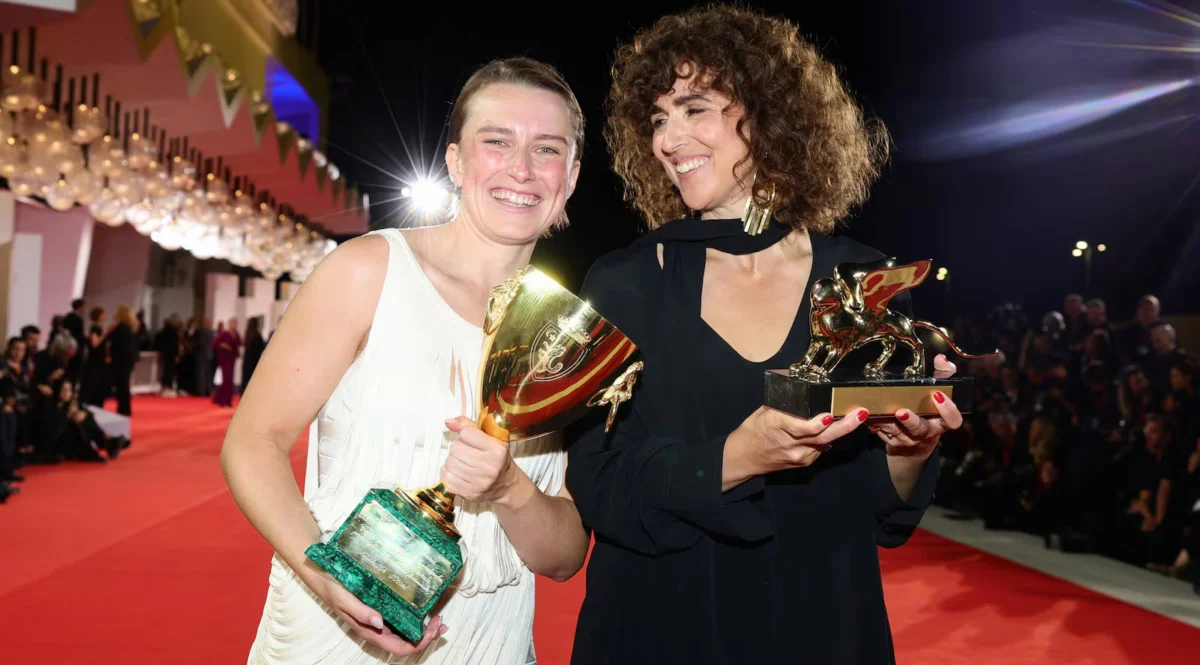
The climax of the festival arrived with the announcement of the Golden Lion, Venice’s highest honor, which was awarded to the Danish historical drama Woman Unknown (Kvinde Ukendt), directed by May el-Toukhy. The victory marked a historic moment for the festival while simultaneously igniting robust debates among critics and industry insiders regarding the criteria utilized by the international competition jury.
Main Competition Results and Jury Decisions
The main competition jury, presided over by acclaimed American actress and director Maggie Gyllenhaal and supported by a diverse panel of international filmmakers, artists, and scholars—including Kaouther Ben Hania, Daniel Blumberg, Francesco Casetti, Xavier Giannoli, Shahrbanoo Sadat, and Johnnie To—evaluated 21 feature films over the course of the multi-week festival.
The official palmares highlighted a diverse array of international storytelling:

- Golden Lion for Best Film: Woman Unknown (Kvinde Ukendt) by May el-Toukhy
- Silver Lion Grand Jury Prize: Possible Love by Lee Chang-dong
- Silver Lion Award for Best Director: Ilya Khrzhanovsky for Dau
- Coppa Volpi for Best Actress: Mathilde Arcel for Woman Unknown (Kvinde Ukendt)
- Coppa Volpi for Best Actor: John Malkovich for Wild Horse Nine (directed by Martin McDonagh)
- Award for Best Screenplay: Stéphane Brizé, Coralie Amedeo, and Olivier Gorce for A Good Little Soldier (Un bon petit soldat)
- Special Jury Prize: NAZA by Yuval Abraham and Rachel Szor
- Marcello Mastroianni Award for Best Young Actor or Actress: Malou Khebizi in A Place to Heal (15/18) (directed by Cédric Kahn)
- "Luigi De Laurentiis" Venice Award for a Debut Film: House of the Wind (La maison du vent) by Auguste Bernard Kouemo Yanghu
- Armani Beauty Audience Award: I Matter (Eu contez) by Alina Şerban
Chronology and Festival Timeline
The 83rd edition of the Venice International Film Festival commenced in late August, bringing a wave of high-profile red-carpet premieres, press conferences, and industry networking events to the Venetian Lido. Over the span of nearly two weeks, the festival screened dozens of high-profile international titles across its primary competition, out-of-competition, and Orizzonti sections.
The initial days of the festival were dominated by early buzz surrounding major auteur projects, including Lee Chang-dong’s contemplative drama Possible Love and Martin McDonagh’s character-driven feature Wild Horse Nine, which immediately established themselves as critical frontrunners. Mid-festival screenings introduced audiences to historical dramas, complex geopolitical documentaries like NAZA, and daring directorial experiments.
As the festival drew to a close at the end of the second week, the industry turned its attention to the deliberations of the Maggie Gyllenhaal-led jury. Observers noted that the competition lineup featured a comparatively modest representation of female directors in the main slate, a statistical reality that often places heightened pressure on the few women-led projects selected for top-tier contention. The festival officially concluded with the weekend awards gala, followed by traditional screenings of the winning titles for press and public audiences.
Critical Analysis and Industry Implications
The awarding of the Golden Lion to May el-Toukhy’s Woman Unknown generated immediate analytical discourse throughout the international film community. Set in post-World War II Denmark, the narrative follows a woman navigating intense public scrutiny and societal accusations in a fractured postwar society. Alongside the top prize, lead actress Mathilde Arcel secured the Coppa Volpi for Best Actress, reinforcing the film’s strong dramatic foundation.
However, the decision sparked familiar debates regarding festival jury dynamics versus critical consensus. While Woman Unknown was recognized as a competent and socially resonant historical drama, many accredited critics and industry analysts argued that structurally ambitious masterpieces within the lineup—most notably Lee Chang-dong’s Possible Love, which ultimately claimed the Silver Lion Grand Jury Prize—demonstrated higher levels of cinematic innovation and narrative complexity.

Jury President Maggie Gyllenhaal addressed some of these artistic choices during post-ceremony press engagements, defending the top winner by describing its emotional resonance as striking the jury with the intensity of a "laser beam." Analysts noted that juries frequently prioritize thematic urgency, historical context, and emotional directness over formal experimentation when selecting their top laureates, a trend mirrored earlier in the year at the Cannes Film Festival.
Beyond the top prize, several other wins carry significant momentum heading into the upcoming international awards season. John Malkovich’s powerful turn in Martin McDonagh’s Wild Horse Nine earned him the Coppa Volpi for Best Actor, instantly positioning him as a formidable contender in the early conversations for the Academy Awards and other major global accolades. Furthermore, the recognition of projects like NAZA and debut features in the Orizzonti section underscores the festival’s ongoing commitment to highlighting urgent socio-political documentaries and emerging voices from underrepresented cinematic regions.
Orizzonti Section and Horizon Honors
In addition to the main competition, the Orizzonti jury—chaired by French filmmaker Valérie Donzelli and accompanied by Peter Becker, Elizabeth Lo, David Pablos, and Barbara Ronchi—reviewed 19 features dedicated to showcasing new aesthetic and expressive trends in international cinema.
The Orizzonti awards recognized the following works:
- Orizzonti Award for Best Film: Diane in the Loop (Un détour par Diane) by Raphaël Balboni and Ann Sirot
- Orizzonti Award for Best Director: Jacqueline Lentzou for A Day in the Life of Jo: Chapter Phaedra
- Special Orizzonti Jury Prize: House of the Wind (La maison du vent) by Auguste Bernard Kouemo Yanghu
- Orizzonti Award for Best Actress: Laleh Marzban in Falling House (Moragheb)
- Orizzonti Award for Best Actor: Riccardo Scamarcio in The Children of the Monkey (I figli della scimmia)
- Orizzonti Award for Best Screenplay: Damiano Femfert and Tommaso Landucci for The Children of the Monkey
Broader Impact on the Global Film Market
The conclusion of the 83rd Venice International Film Festival signals the official kickoff of the autumn film festival circuit, which serves as the primary launchpad for international contenders vying for box office success and awards recognition over the coming months. Films that secured major prizes on the Lido—particularly distribution-ready titles like Possible Love, Woman Unknown, and Wild Horse Nine—are expected to command aggressive acquisitions from global distributors, setting the stage for wide theatrical rollouts and eventual awards campaigns across North America, Europe, and Asia. As these recognized titles transition from festival exhibition to commercial release, their performance will ultimately test whether the jury’s bold selections resonate with broader audiences and industry voters alike.