
The Karlovy Vary International Film Festival stands as one of Europe’s most enduring cultural institutions, navigating nearly a century of geopolitical upheaval, occupation, state communism, and eventual democratic restoration. Marking its diamond anniversary—celebrating 60 editions over an 80-year span—the 2026 iteration of the festival, often styled as "Vary Special," reaffirmed its position at the intersection of Eastern European heritage and progressive global cinema. Set against the architectural backdrop of its Brutalist headquarters, the Hotel Thermal, the event continues to balance its complex historical inheritance with a forward-looking curatorial mandate, drawing cinephiles, industry professionals, and international directors to the historic Czech spa town.
Historical Chronology and Evolution
The origins of the festival trace back to 1946, when the first edition was held in a newly restored Czechoslovakia following the conclusion of Nazi occupation. Remarkably, the event predated the inaugural Cannes Film Festival by a matter of weeks, establishing early ambitions for international cinematic prominence.

Following the 1948 Czechoslovak coup d’état and the subsequent establishment of a communist regime, the festival’s trajectory shifted under state control. By 1958, the International Federation of Film Producers Associations (FIAPF) designated Karlovy Vary a category-A film festival, placing it in the highest tier of global cinematic events. However, ideological pressures soon intervened. In 1959, geopolitical dictates from the Soviet Union mandated that Karlovy Vary alternate years with the Moscow International Film Festival, a restrictive arrangement that persisted until 1994—two years after the dissolution of Czechoslovakia and the emergence of the independent Czech Republic.
Today, the festival successfully separates its architectural and cultural legacy from its historical ideological baggage. The Hotel Thermal, while retaining the nostalgic ambiance of a mid-century sanatorium, serves as a bustling hub for international film distribution, repertory screenings, and competitive showcases.
Retrospective Programming: Out of the Past – KVIFF 60/80
To commemorate its 80th anniversary and 60th edition, the festival curated a dedicated retrospective section titled "Out of the Past – KVIFF 60/80," designed to map milestone moments from its extensive history. The program bridged post-war European cinema with the turbulent political realities of the twentieth century.

Among the historical highlights was Powell and Pressburger’s fabulist war melodrama, A Matter of Life and Death (1946), which reached Czechoslovak audiences shortly after the end of World War II. The retrospective also showcased past Crystal Globe winners, including Ján Kadár and Elmar Klos’s acclaimed courtroom drama The Defendant (1964), and Ken Loach’s Kes (1970), which secured top honors immediately following the suppression of the Prague Spring.
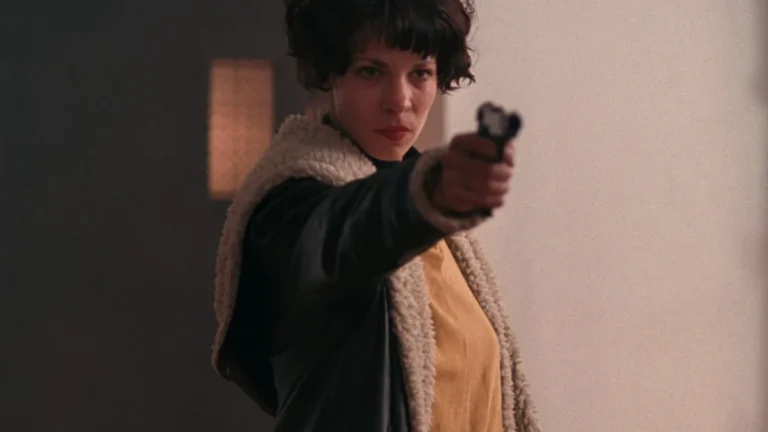
Furthermore, the section honored previously suppressed and censored works, such as Slovak director Juraj Jakubisko’s Birds, Orphans and Fools (1969), which remained shelved by state authorities until 1990. Alongside Eastern European deep cuts, the retrospective highlighted the festival’s historical engagement with global cinema movements, featuring works like Glauber Rocha’s foundational Brazilian Cinema Novo debut, Barravento (1962). Modern digital restorations anchored the repertory offerings, notably Jonathan Glazer’s Sexy Beast (2000) and Věra Chytilová’s 1988 psychosexual tragicomedy Tainted Horseplay.
Competitive Sections and Critical Standouts
Karlovy Vary maintains two primary competitive pillars: the Crystal Globe competition, which focuses on established and mid-career international auteurs, and the Proxima section, dedicated to emerging voices and risk-taking cinematic art.

In the Crystal Globe competition, international recognition went to Aung Phyoe’s Fruit Gathering, a romance set among seamstresses in Yangon, Myanmar, which claimed the festival’s highest honor. Additionally, Slovak auteur Ivan Ostrochovský’s Only Beautiful Things to Look At received the FIPRESCI prize from international film critics.
However, one of the most widely discussed entries in the non-awarded slate was the Bulgarian-directed feature Black Money for White Nights, helmed by Kristina Grozeva and Petar Valchanov. The narrative follows an elderly couple who pocket minor workplace bribes over a lifetime to fund a dream trip to St. Petersburg. The arrival of their final savings coincides precisely with the onset of the full-scale invasion of Ukraine. Rather than functioning as a direct exposé of contemporary corruption, the film operates as a satirical fable regarding political detachment, utilizing heightened chromatic aesthetics and literal set design—such as living room wallpaper depicting birch forests—to visualize the shattering of romanticized Soviet nostalgia by modern geopolitical violence.
Proxima Section and Emerging Voices
The Proxima section, which was restructured five years ago to replace the regionally restricted East of the West competition, continues to serve as a borderless showcase for youthful artistic expression. The section’s Grand Prix was awarded to Lover, Not a Fighter, the debut feature by Slovak director Martina Buchelová.

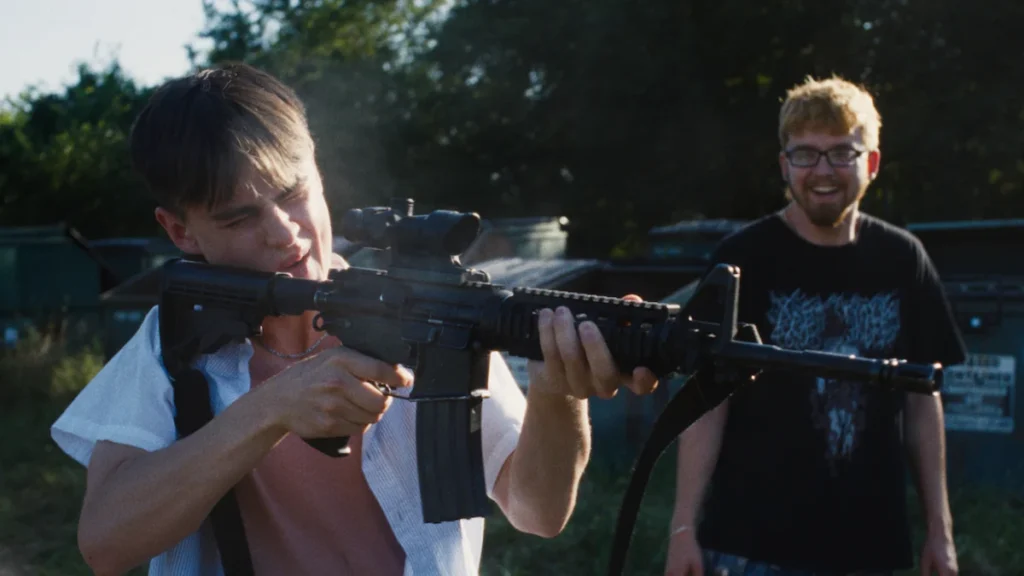
The film follows a twenty-year-old protagonist navigating self-destructive impulses and romance against the backdrop of his family’s impending relocation to a bunker. Buchelová’s formal approach relies on a fragmented montage incorporating vertical phone footage and reflexive subtitled text, establishing an intimate connection with contemporary youth culture and digital communication habits.
Cannes Highlights and Political Cinema
The festival also welcomed prominent titles from the recent Cannes Film Festival circuit, notably two features sharing a thematic focus on historical memory and time: Emmanuel Marre’s A Man of His Time and Sandra Wollner’s Everytime.
Marre’s A Man of His Time presents a 155-minute character study of Henri, a political climber navigating the compromises of the Vichy regime. Utilizing static, observational cinematography by Olivier Boonjing and a restrained lead performance by Swann Arlaud, the film examines the mechanics of creeping fascism and moral accommodation.

Conversely, Sandra Wollner’s Everytime explores childhood grief and familial separation through the lens of urban realism and hallucinogenic memory structures. Sharing a cinematographer, Gregory Oke, with Charlotte Wells’s acclaimed Aftersun (2022), Wollner’s feature employs distinct visual strategies to examine trauma and the limits of narrative reconstruction.
Institutional Legacy and Industry Impact
As the Karlovy Vary International Film Festival concludes its diamond anniversary edition, industry analysts note its enduring economic and cultural significance for the Central European region. Operating with strict ticketing protocols—such as a limit of three tickets per day per attendee to ensure balanced access—the festival remains accessible to both public audiences and accredited industry members.
By maintaining a dual focus on historical retrospectives and cutting-edge international debuts, KVIFF reinforces its institutional durability. The event’s ability to critically engage with its complex totalitarian past while championing contemporary global storytelling ensures its continued status as a premier fixture on the international film festival calendar.