


Comcast Corporation on Thursday reported its second-quarter financial results for 2026, revealing a complex landscape of record-breaking milestones for its media division contrasted against persistent headwinds in its traditional broadband and connectivity business. The quarterly performance arrives at a pivotal moment for the Philadelphia-based conglomerate, coming just weeks after the official announcement that the company will undergo a massive structural transformation, spinning off its media and technology wings into a separate, publicly traded entity. The results underscore the strategic rationale behind this separation: while NBCUniversal is riding a wave of streaming profitability and high-profile content success, the core cable business continues to navigate a saturated market defined by aggressive competition from 5G providers and shifting consumer preferences.
Financial Performance and Market Expectations
For the quarter ending June 30, 2026, Comcast reported overall revenue of $29.94 billion. While this figure represented a slight nominal decrease of 1.2% compared to the same period in the previous year, it comfortably surpassed the $29.3 billion consensus estimate provided by analysts via LSEG. When adjusted on a pro-forma basis to account for the impact of the Versant spinoff completed earlier this year, Comcast’s quarterly revenue actually reflected a robust 4.7% increase.
The company’s profitability remained a point of strength for investors. Comcast reported adjusted earnings per share (EPS) of $1.04, beating the Wall Street estimate of 97 cents. Net income attributable to the company stood at $3.53 billion. These figures provided a degree of reassurance to the market as the company begins the arduous process of decoupling its massive infrastructure from its content production and distribution arms.
The NBCUniversal Surge: Peacock Hits Profitability
The standout performer of the quarter was undoubtedly the Content and Experiences segment, which houses the NBCUniversal portfolio. Revenue for this division surged by nearly 23% year-over-year to $10.73 billion. This growth was fueled by a combination of high-stakes live sports, a revitalized film studio, and a historic milestone for the company’s streaming platform.
Peacock, NBCUniversal’s flagship streaming service, achieved profitability during the second quarter for the first time since its launch. This achievement marks a significant turning point in the "streaming wars," as legacy media companies have long struggled to move their digital platforms into the black. The service was bolstered by a heavy slate of "must-see" content, including the NBA postseason and the start of the FIFA World Cup in mid-June. The World Cup, which aired in Spanish on the Telemundo network and streamed on Peacock, was a primary driver of engagement.
Beyond sports, the reality television phenomenon "Love Island USA" contributed to June becoming the most-viewed month in Peacock’s history. The service added 2 million net new subscribers during the quarter, bringing its total global subscriber base to 48 million.
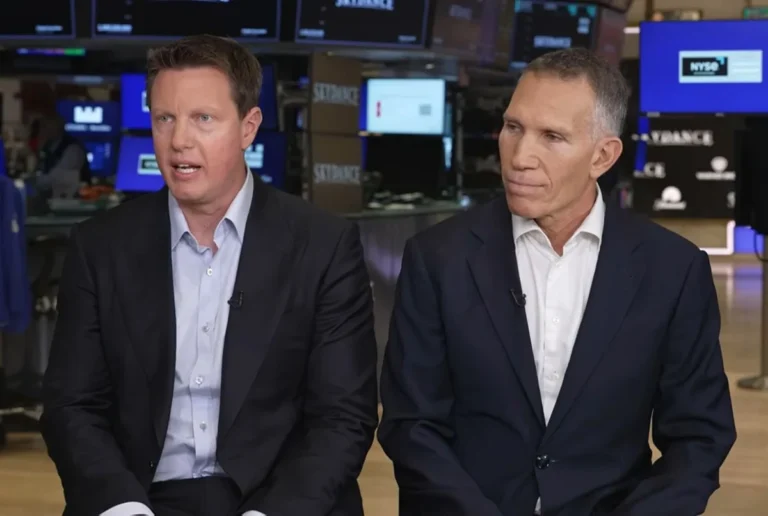
Despite the breakthrough, Mike Cavanagh, who serves as co-CEO and is slated to lead the standalone NBCUniversal entity, cautioned investors that streaming profitability might remain "lumpy" in the short term. He noted that the timing of sports licensing costs and major content releases would cause fluctuations, but emphasized that the annual trajectory for Peacock is one of steady improvement.
Connectivity and Platforms: Navigating the Broadband Plateau
While the media arm flourished, the Connectivity and Platforms segment—comprising Xfinity-branded broadband, mobile, and cable TV—faced a more challenging environment. Revenue for this segment declined by 3% to $19.8 billion, while earnings before interest, taxes, depreciation, and amortization (EBITDA) dropped nearly 6% to $7.96 billion.
The primary driver of this decline remains the intense competition in the domestic broadband market. Comcast reported a loss of 167,000 residential broadband customers during the quarter. This trend is largely attributed to the rise of Fixed Wireless Access (FWA) alternatives provided by 5G mobile carriers, which have aggressively courted price-sensitive consumers. Additionally, the company lost 280,000 cable TV subscribers as the industry-wide trend of "cord-cutting" shows no signs of abating.
To counter these losses, Comcast has leaned heavily into its mobile strategy. Xfinity Mobile remained a significant bright spot, recording another quarter of record additions and bringing its total to 10.2 million lines. Management views mobile not just as a standalone revenue stream, but as a critical retention tool for its broadband business. By bundling high-speed internet with competitive mobile plans, Comcast aims to stabilize its connectivity ecosystem and improve customer lifetime value.
Theme Parks and Consumer Sentiment
The entertainment division’s theme park unit saw a modest revenue increase of nearly 3%, though the results reflected a tale of two geographies. While domestic revenue in Orlando, Florida, remained a significant contributor, softness at international parks served as a drag on overall performance.
In Orlando, Comcast executives noted a slight dip in attendance during the quarter. Mike Cavanagh attributed this to broader macroeconomic factors, including "weakness in consumer sentiment and higher travel costs affecting demand." However, the company remains bullish on the long-term prospects of its parks division. The highly anticipated Universal Epic Universe is scheduled to open its doors on May 22, 2025, and is expected to serve as a massive catalyst for tourism in the Florida region. Management expressed confidence that as economic conditions stabilize, attendance figures will return to their historical growth trajectory.
The Path to Separation: A One-Year Timeline
The Q2 earnings call was the first major opportunity for leadership to address the impending corporate split since its announcement on June 29, 2026. The plan involves dividing Comcast into two independent, publicly traded companies: one focused on the "Connectivity and Platforms" business (broadband, mobile, and cable) and the other on "Media and Tech" (NBCUniversal and associated digital assets).
Co-CEO Brian Roberts opened the investor call by expressing a high degree of optimism regarding the separation. Roberts noted that after weeks of internal and external consultations, he feels "more positive and energized" about the move than he did on the day of the announcement. He argued that the new structure would grant both entities the "freedom to pursue the priorities that matter most to their futures."
Mike Cavanagh confirmed that the operational work required to facilitate the spin-off began immediately following the June announcement. The company has set a target for the completion of the separation within approximately one year. This timeline suggests a mid-2027 target for the debut of the two separate entities on the public markets.
Chronology of Recent Strategic Shifts
To understand the context of the Q2 2026 results, it is necessary to look at the timeline of Comcast’s strategic evolution over the past three years:
- October 2023: Comcast begins signaling concerns over broadband saturation as 5G competitors start gaining significant market share.
- January 2025: The company officially shifts its primary growth strategy toward mobile integration, acknowledging that broadband growth has reached a plateau.
- April 2025: Universal provides a first look at "Stardust Racers" and other attractions for the upcoming Epic Universe, signaling a massive investment in physical experiences.
- January 2026: Comcast completes the spinoff of Versant Media Group, a precursor to the larger structural changes announced later in the year.
- June 29, 2026: Comcast announces the definitive plan to split into two separate public companies, effectively ending the era of the "mega-conglomerate" that combined pipes and content under one roof.
- July 2026: Q2 results confirm the first profitable quarter for Peacock, validating the company’s multi-billion dollar investment in streaming.
Industry Implications and Analysis
The divergence in Comcast’s Q2 results reflects a broader trend within the media and telecommunications industry. For years, the prevailing wisdom was that "content is king," but that content needed a "pipe" to reach the consumer. However, the rise of independent streaming services and the commoditization of internet access have changed the valuation math for investors.
By splitting the companies, Comcast is effectively allowing the market to value the two businesses differently. The connectivity business is increasingly viewed as a utility-like entity—steady cash flow with lower growth prospects—while the media business is viewed as a high-growth, high-risk content engine.
The profitability of Peacock is a vital signal to the market. It suggests that the "scale-at-all-costs" era of streaming is being replaced by an era of fiscal discipline and targeted content spend. Furthermore, the success of Telemundo and Spanish-language World Cup coverage highlights Comcast’s successful diversification of its audience base, a strategy that will be critical for the standalone NBCUniversal entity.
As the company moves toward its 2027 separation deadline, the focus will remain on whether the connectivity side can stem the loss of broadband subscribers and whether the media side can maintain its streaming momentum without the safety net of the cable division’s massive cash flow. For now, the Q2 results suggest that while the transition will be complex, the individual components of the Comcast empire are finding their footing in a rapidly changing digital economy.